Sequencing numbers Numbers Worksheets for Ages 5-6
3 filtered results
-
From - To
Welcome to our Sequencing Numbers Worksheets for Ages 5-6! These engaging worksheets are designed to help young learners develop essential math skills by mastering the concept of number sequencing. Our fun, interactive activities encourage children to practice arranging numbers in the correct order, enhancing their understanding of numerical relationships. With colorful illustrations and easy-to-follow instructions, these printable resources make learning enjoyable and effective. Perfect for early childhood education, these worksheets support foundational math skills, helping kids build confidence as they progress. Explore our collection today and watch your child excel in number sequencing while having fun!
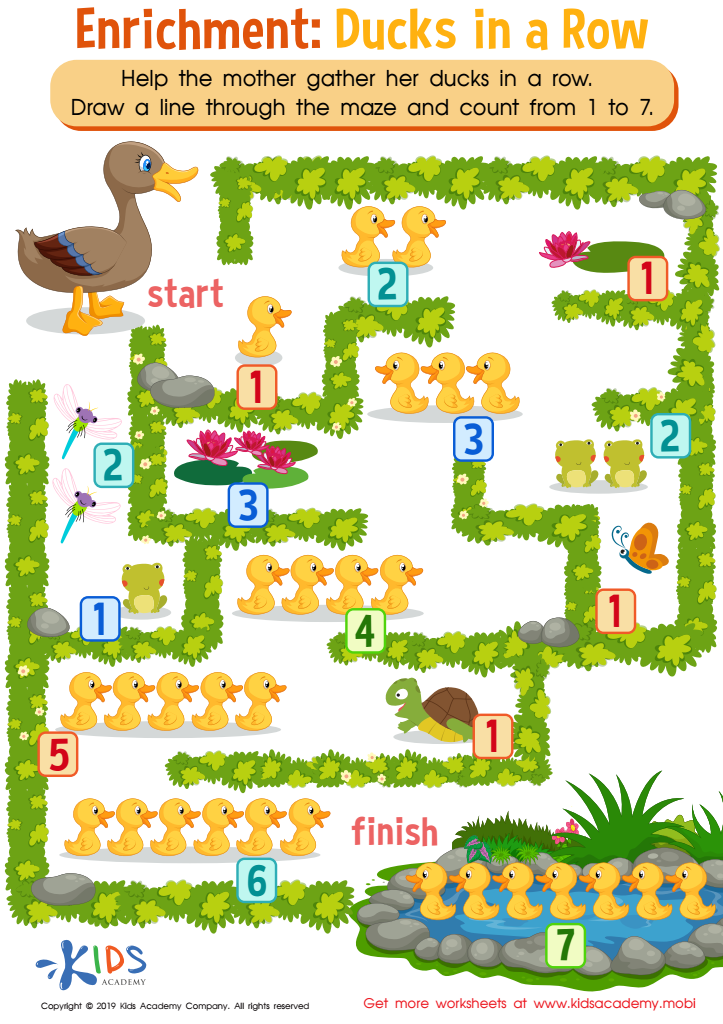
Ducks in a Row Worksheet
 Assign to My Students
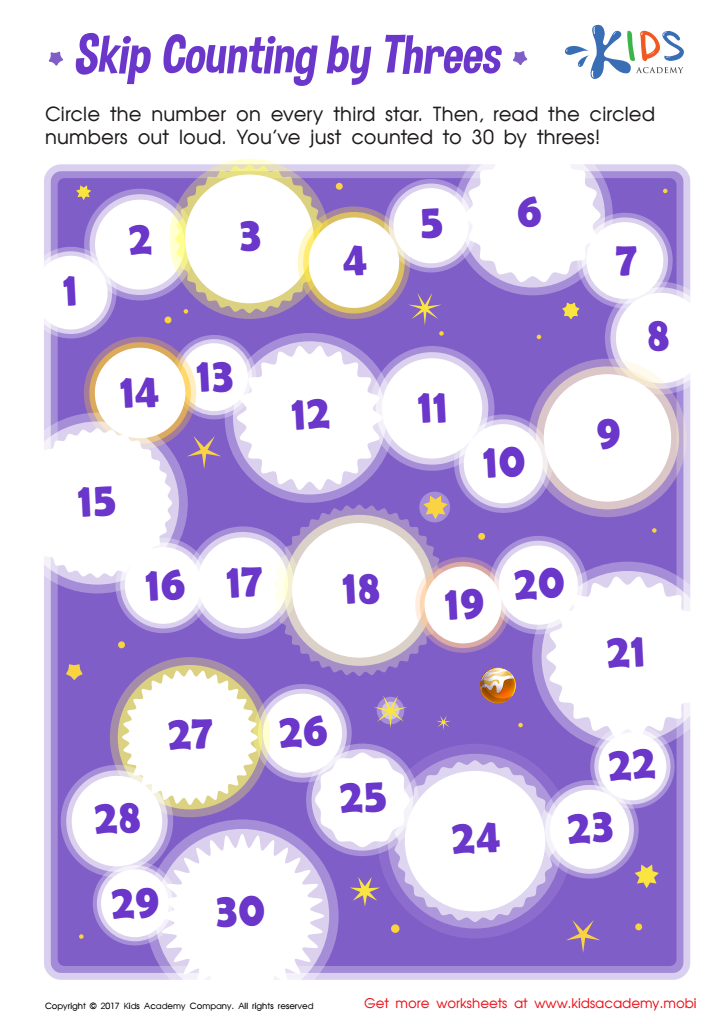
Skip Counting By Three Printable
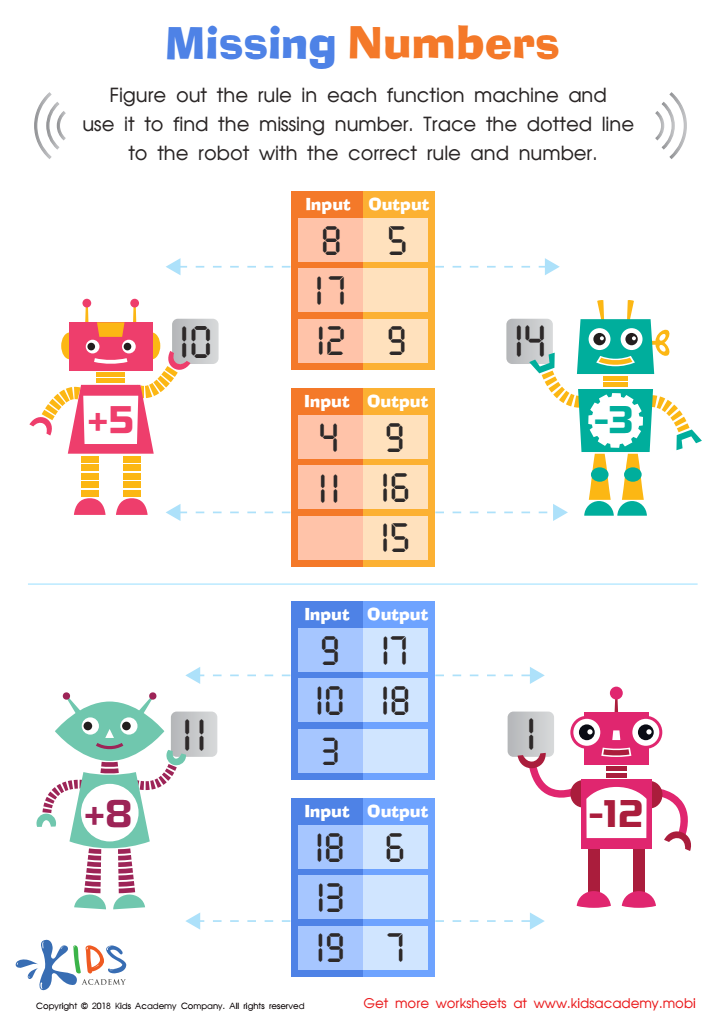
Missing Numbers Worksheet








Sequencing numbers is a fundamental skill for children aged 5-6 that lays the groundwork for future learning. It helps young learners understand order and relationships among numbers, fostering essential mathematical reasoning. By mastering sequencing, children can develop skills necessary for counting, addition, and subtraction, leading to greater confidence in their math abilities.
Moreover, sequencing encourages logical thinking and enhances cognitive development. When children arrange numbers in order, they practice critical skills like organizing information, recognizing patterns, and problem-solving. This builds their ability to tackle more complex concepts later in school.
Parents and teachers also play a crucial role in reinforcing sequencing skills. Implementing fun activities, such as number lines, counting games, or sequences in everyday life (like arranging objects by size), can enhance engagement and facilitate learning.
Additionally, understanding sequencing allows children to grasp the concept of time, as they learn to order events and understand the flow of daily activities. Ultimately, emphasizing sequencing numbers not only aids in mathematical understanding but also equips children with vital life skills that benefit their overall development. Through early intervention, adults can help children build a strong foundation for future learning challenges.








