Sorting skills Numbers Worksheets for Ages 5-6
5 filtered results
-
From - To
Enhance your child's cognitive development with our engaging Sorting Skills Numbers Worksheets for ages 5-6! Designed to make learning fun, these activities help young learners identify, categorize, and sort numbers through colorful illustrations and interactive tasks. Each worksheet promotes critical thinking and problem-solving while reinforcing foundational math skills. As children practice sorting numbers in various contexts, they build essential skills in organization and comparison. Perfect for homeschooling or classroom use, these worksheets cater to different learning styles, ensuring every child stays engaged. Download our Sorting Skills Numbers Worksheets today and watch your child excel in their number recognition journey!
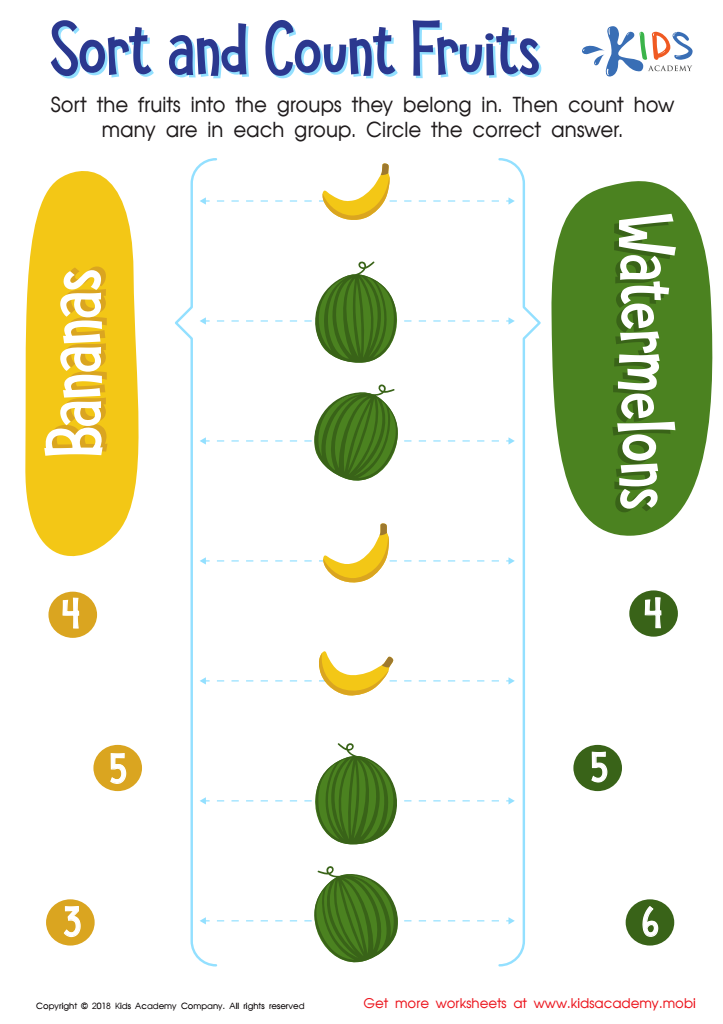
Sort and Count Fruits Worksheet
 Assign to My Students
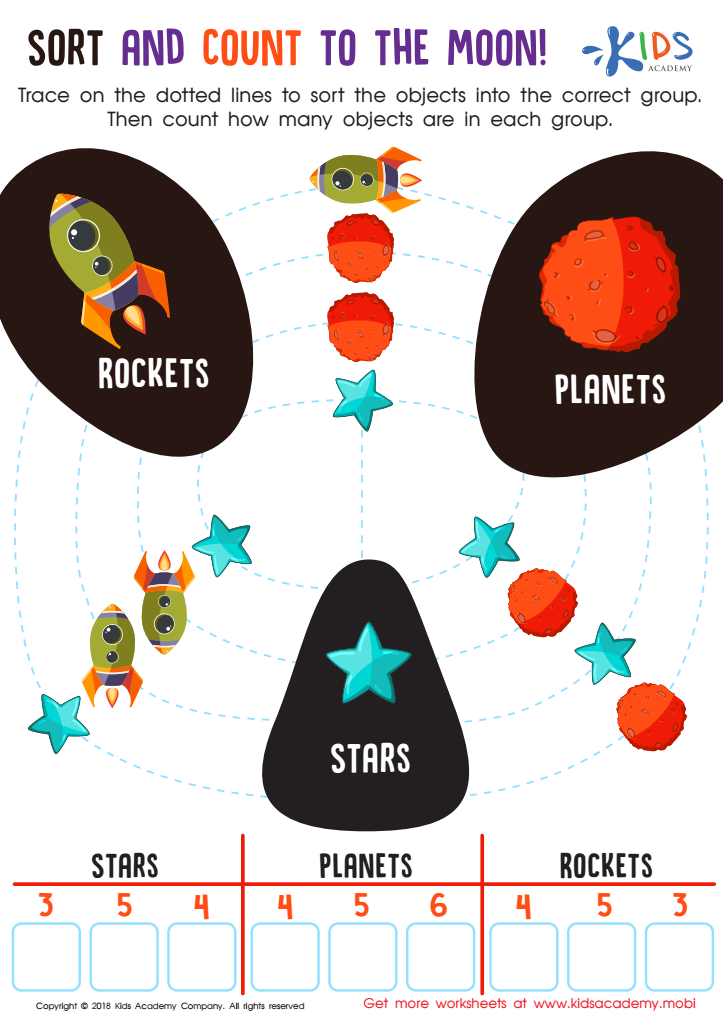
Sort and Count to the Moon Worksheet
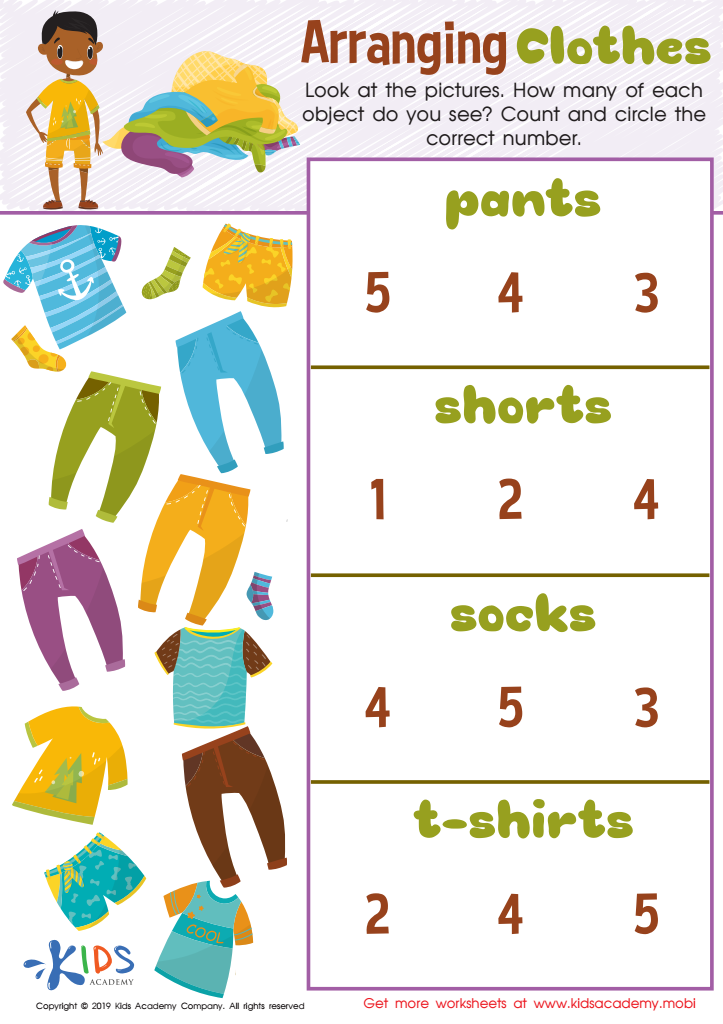
Arranging Clothes Worksheet
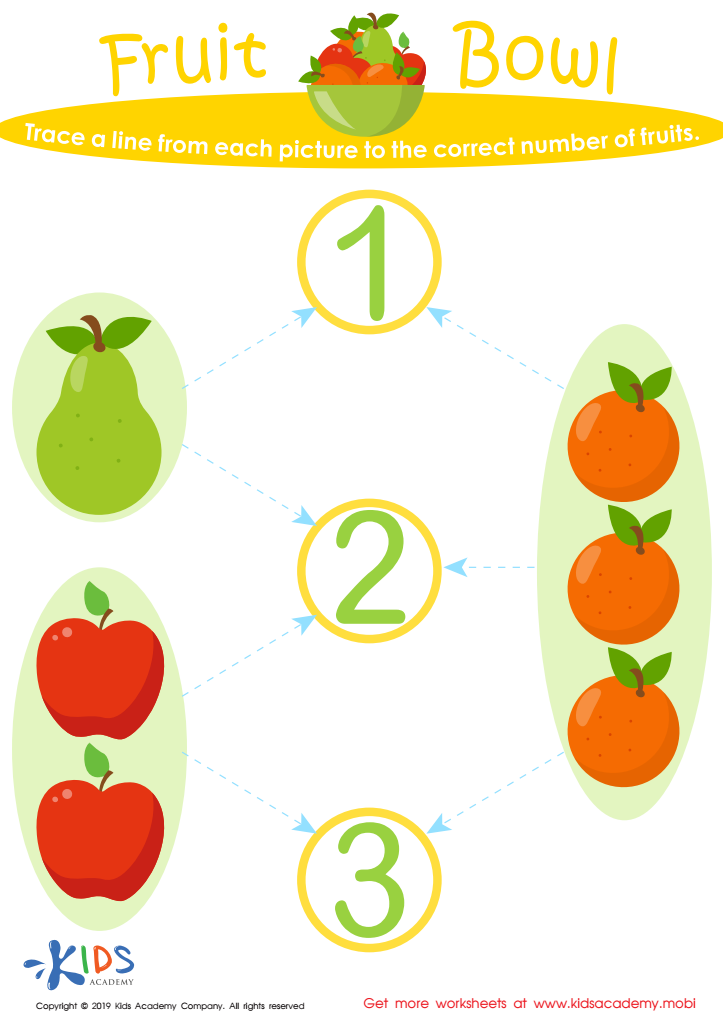
Fruit Bowl Worksheet
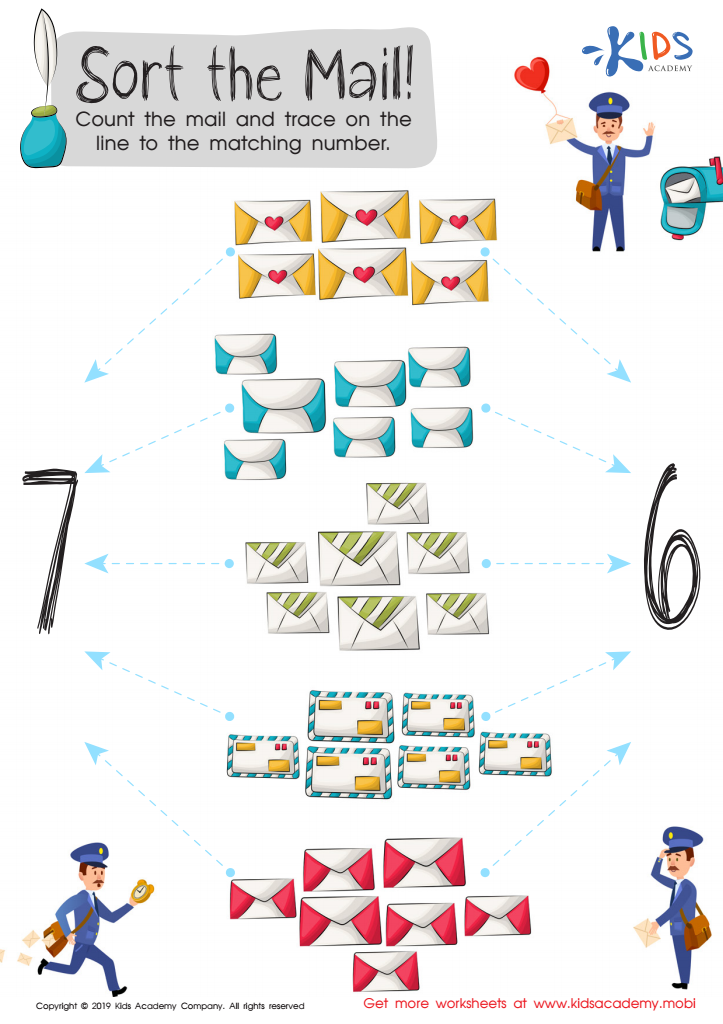
Sort the Mail Worksheet








Sorting skills, particularly concerning numbers, are foundational elements in early childhood education for children aged 5 to 6. These skills are crucial for several reasons.
Firstly, sorting enhances cognitive development. When children categorize numbers, they learn critical thinking and problem-solving skills. By distinguishing between different quantities, they develop an understanding of numerical relationships, such as greater than and less than, laying the groundwork for later math concepts.
Secondly, sorting activities foster fine motor skills and improve hand-eye coordination as children manipulate physical objects. These practical skills are essential as they set the stage for writing and other intricate tasks.
Additionally, sorting nurtures patterns recognition, enabling children to predict and make connections in number sequences. This understanding is vital for advanced mathematical concepts, such as addition and subtraction.
Lastly, sorting encourages organizational skills and focuses attention – attributes of successful learners. Educators and parents should prioritize activities that help build these skills, integrating them into everyday routines.
In conclusion, sorting skills involving numbers play a profound role in children's mathematical readiness, cognitive abilities, and overall development, making it essential for educators and parents to invest time and resources in cultivating these skills during early childhood.








