Understanding comparisons Numbers Worksheets for Ages 5-6
3 filtered results
-
From - To
Enhance your child's early math skills with our "Understanding Comparisons Numbers Worksheets" designed for ages 5-6. These engaging worksheets help young learners grasp essential concepts of greater than, less than, and equal to through interactive activities. By comparing numbers and objects, children will develop critical thinking and analytical skills while building confidence in their math abilities. Our carefully curated exercises encourage hands-on learning, fostering an exciting environment that keeps kids motivated. Perfect for at-home practice or classroom use, these worksheets are an essential resource for parents and teachers aiming to strengthen foundational math knowledge in young learners.
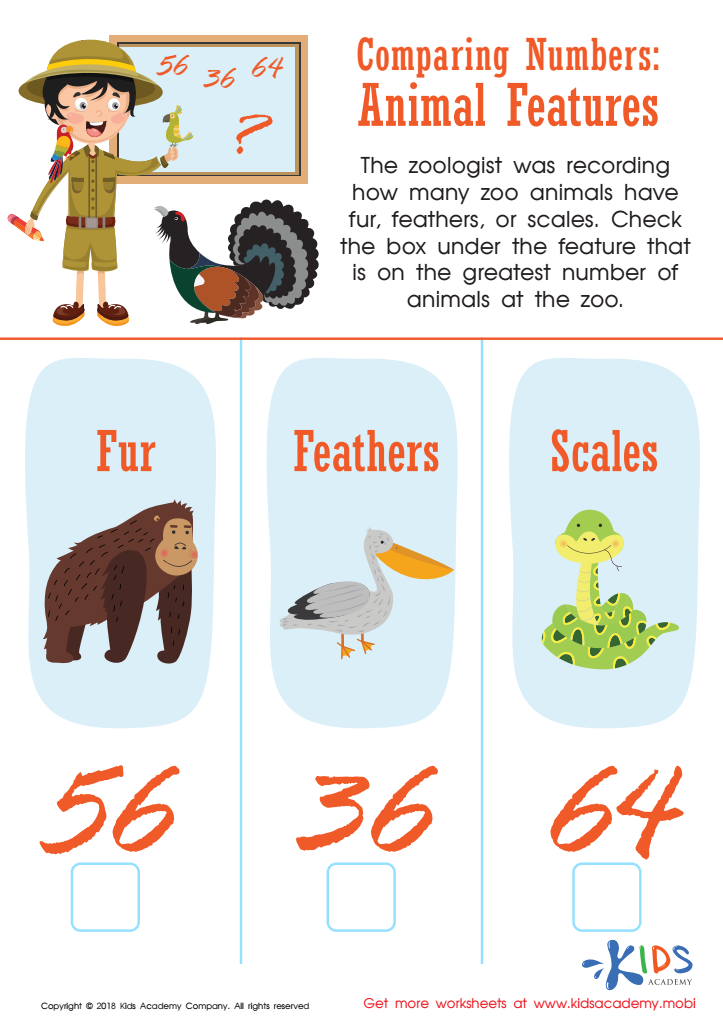
Animal Features Worksheet
 Assign to My Students
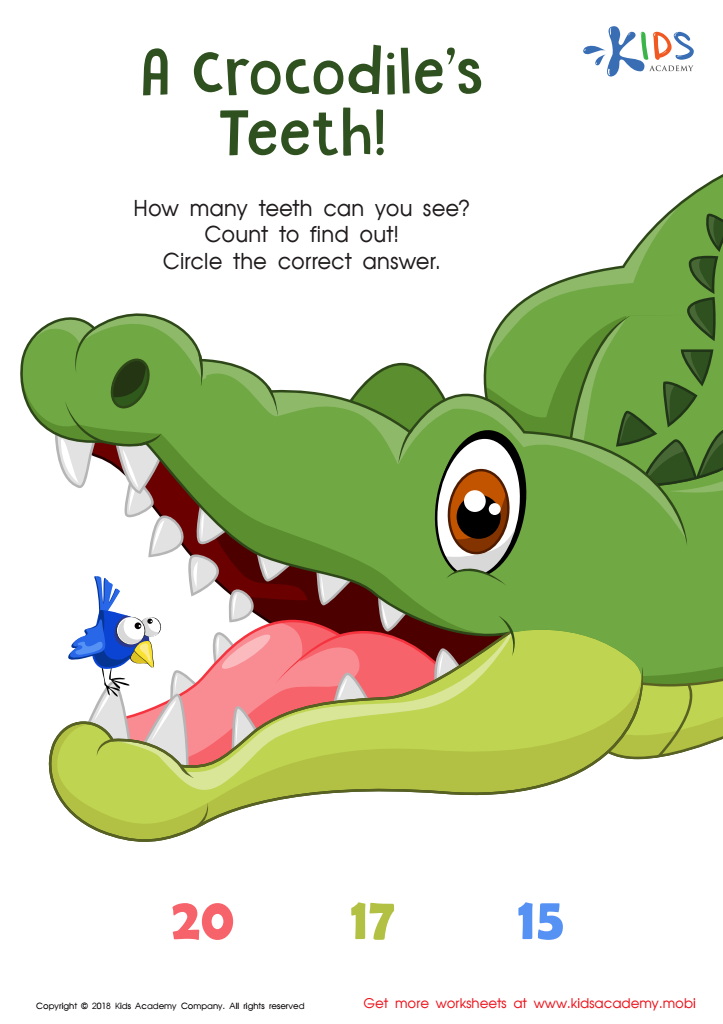
A Crocodile's Teeth Worksheet
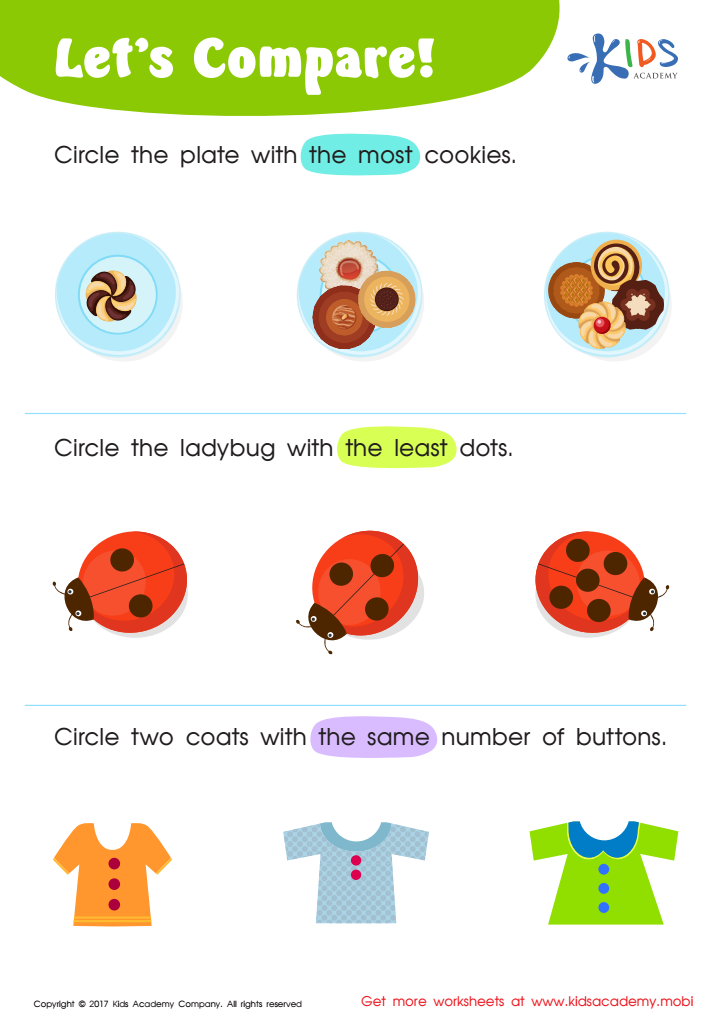
Matching: Classifying Toys by Size Worksheet


.jpg)




Understanding comparisons and numbers is crucial for children aged 5-6, as it lays the foundation for their mathematical skills and critical thinking. During these formative years, children develop foundational concepts essential for future academic success. Learning to compare numbers helps them understand quantities, leading to skills like addition, subtraction, and problem-solving.
When parents and teachers emphasize numeral comparisons, they encourage children to explore ideas like “more than,” “less than,” and “equal to.” This fosters analytical thinking as children learn to categorize and sort objects based on quantity. Engaging in such comparisons also enhances vocabulary, as children learn specific terms related to numbers.
Moreover, mastering these concepts promotes confidence in young learners. Children who feel secure in their understanding of numbers are more likely to participate actively in math-related activities, building a positive attitude towards the subject. Additionally, these skills are applicable in everyday situations, such as sharing toys or counting snacks, making math a relatable and enjoyable experience.
Ultimately, supporting children in their understanding of comparisons and numbers empowers them to navigate not only mathematical challenges but also everyday decisions, establishing a strong foundation for lifelong learning. Encouraging discussions surrounding these concepts at home and in classrooms greatly benefits children’s holistic development.








