Understanding graphs Numbers Worksheets for Ages 5-6
3 filtered results
-
From - To
Our "Understanding Graphs Numbers Worksheets for Ages 5-6" are expertly designed to introduce young learners to the basics of graphing. These engaging, printable worksheets help children develop essential skills in counting, analyzing data, and interpreting simple graphs. Jam-packed with fun activities, kids will have the opportunity to create their own bar graphs, tally charts, and pictographs, taking their data analysis skills to the next level. Perfect for home or classroom use, these worksheets are tailored to suit early learners and encourage a solid mathematical foundation in an enjoyable and interactive way.
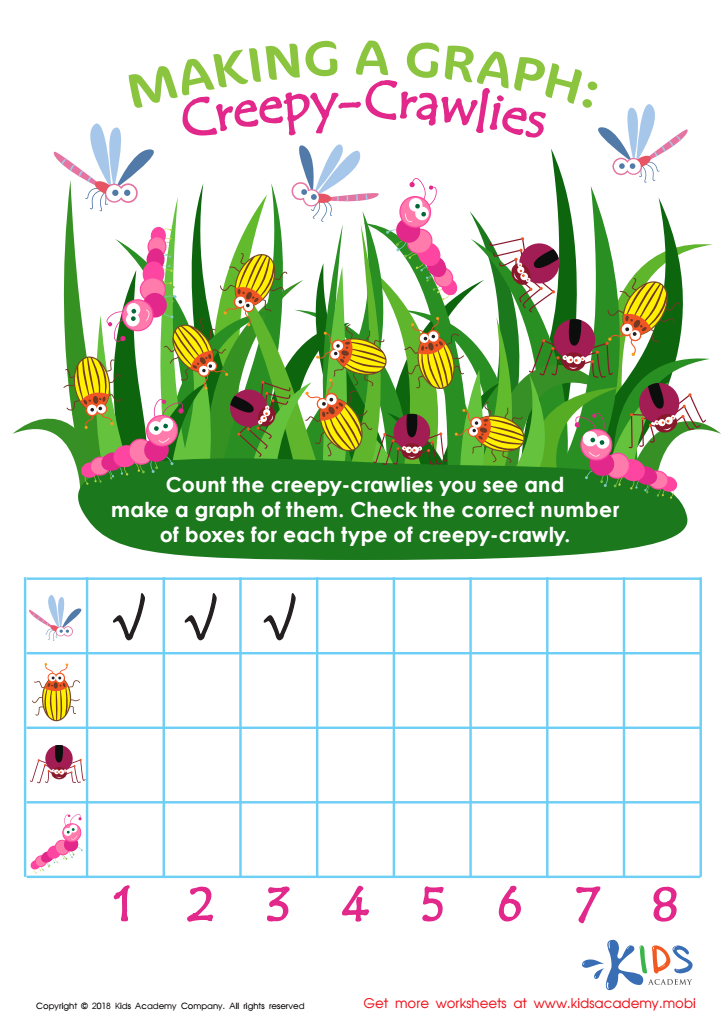
Making a Graph: Creepy Crawlies Worksheet
 Assign to My Students
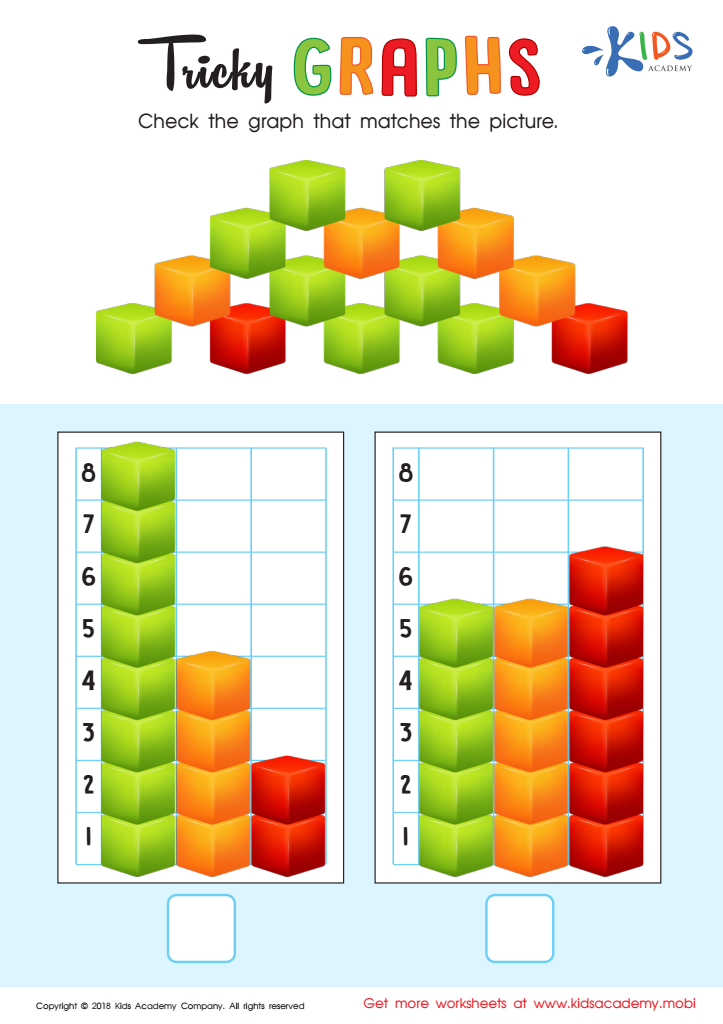
Tricky Graphs Worksheet
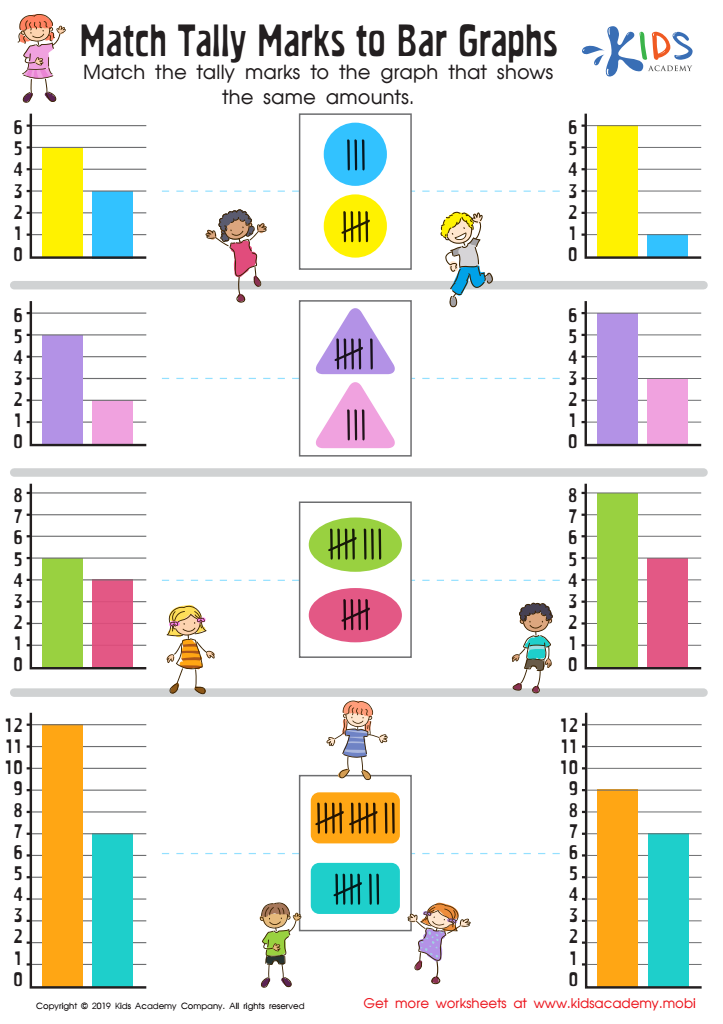
Match Tally Marks to Bar Graphs Worksheet








Understanding graphs and numbers at an early age is crucial for children's cognitive and academic development. For children ages 5-6, learning these concepts isn't just about math; it's about laying a foundation for critical thinking and problem-solving skills that they will use throughout their lives. Graphs help children visualize data, recognize patterns, and make sense of information in a way that words alone cannot achieve. This visual understanding aids in grasping more complex ideas as they grow.
Engaging with graphs encourages kids to compare quantities, understand relationships, and draw conclusions from visual data. At the same time, developing number sense—such as recognizing numbers, counting, and basic addition or subtraction—forms the basis for more advanced math concepts. Introducing these topics in a simple, playful manner helps children become comfortable and confident with numbers, reducing math anxiety that can develop later on.
For both parents and teachers, supporting these early mathematical skills fosters a positive attitude towards learning. Interactive activities like counting objects, sorting them into categories, and making simple bar graphs or pie charts with everyday items engage children in a fun and meaningful way. By prioritizing these skills at an early age, we're setting children up for greater success in school and life.








