Animal Classification Math Worksheets for Ages 5-6
3 filtered results
-
From - To
Discover an exciting way to teach young learners math with our Animal Classification Math Worksheets for Ages 5-6! These engaging worksheets blend essential math skills with fun animal facts. Children will enjoy sorting and categorizing different animals while sharpening their counting, addition, and subtraction abilities. Designed to captivate curious minds, these activities are perfect for both classroom use and homeschooling. With colorful illustrations and simple exercises, kids will develop critical thinking and problem-solving skills in a playful, educational setting. Help your child explore the wonders of math and the animal kingdom today!
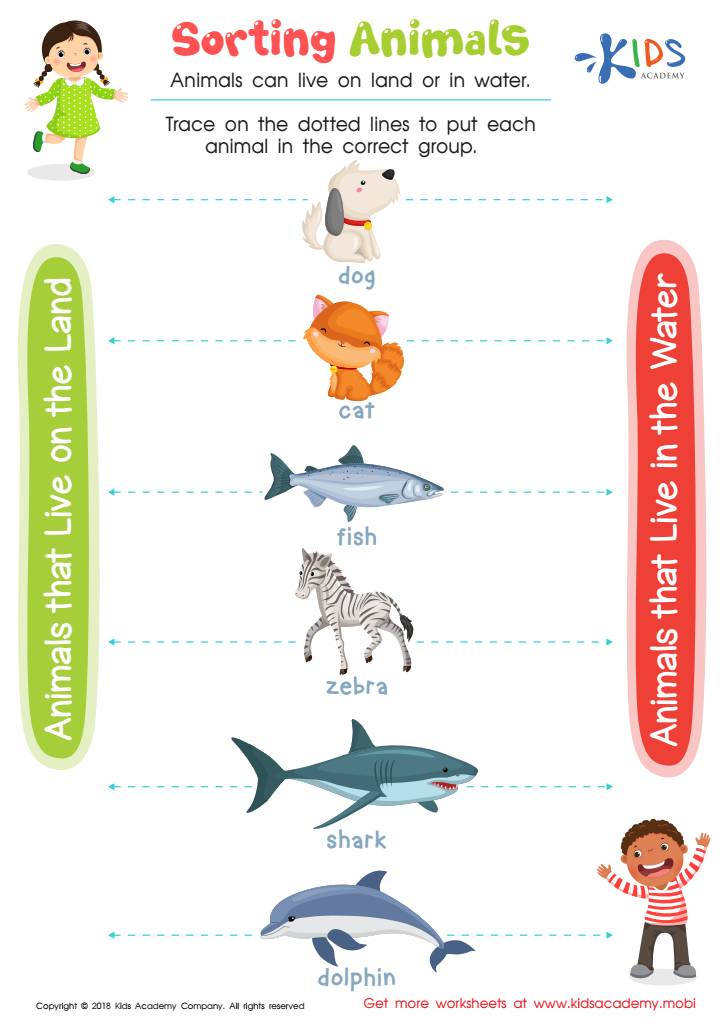
Sorting Animals Worksheet
 Assign to My Students
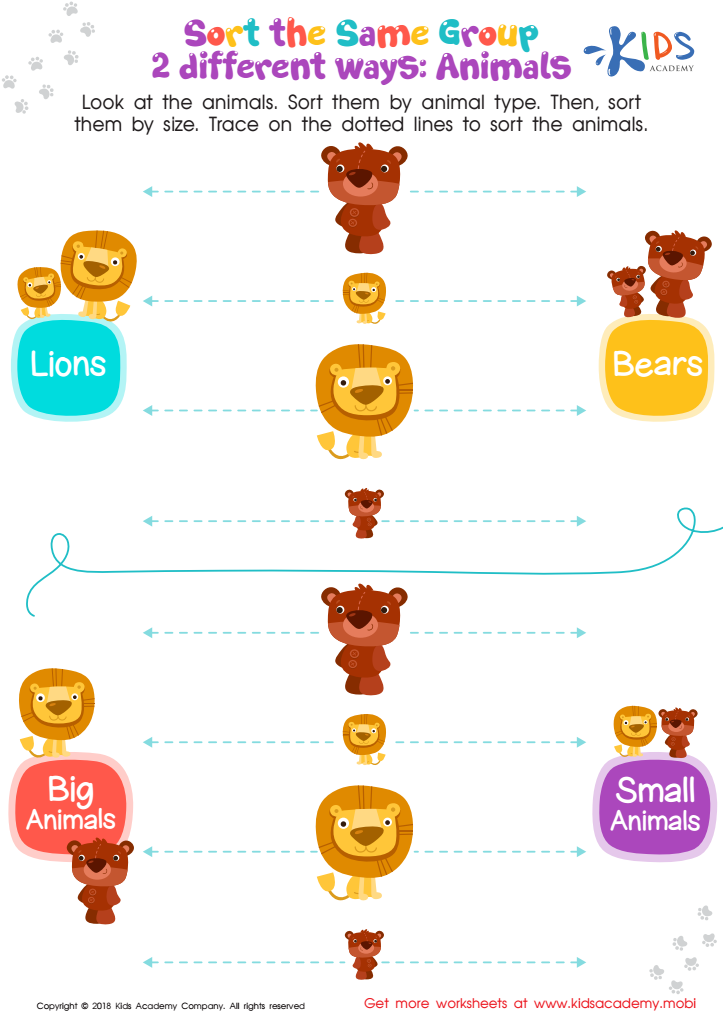
Sort the Same Group 2 Different Ways: Animals Worksheet
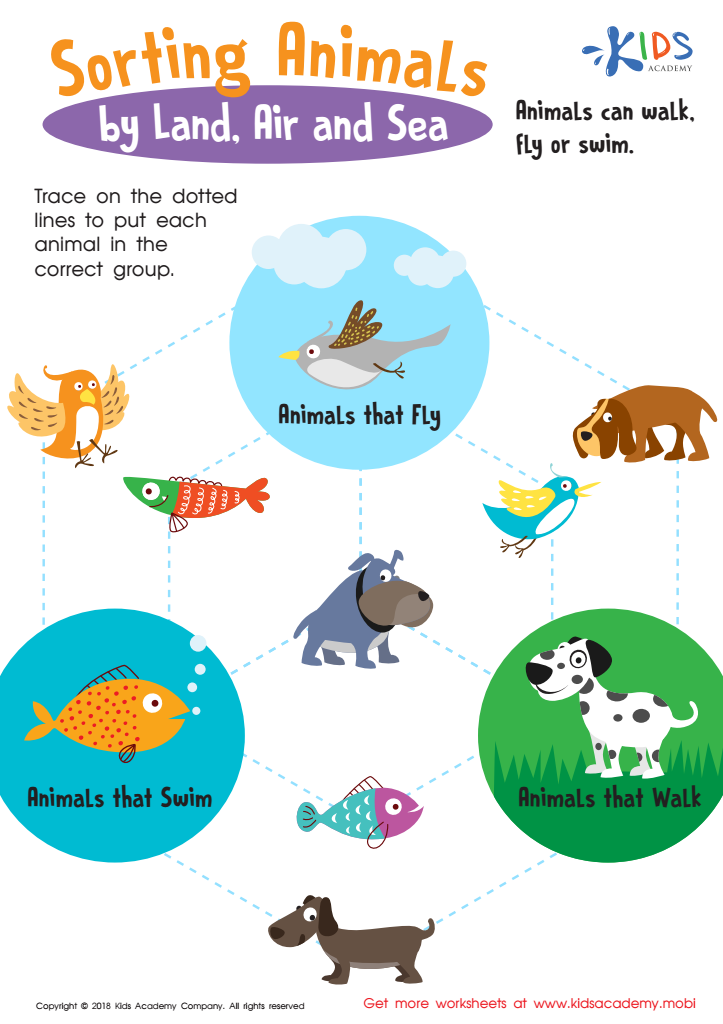
Sorting Animals by Land, Air and Sea Worksheet







Introducing Animal Classification Math to children aged 5-6 offers numerous educational benefits that parents and teachers should embrace. This activity intersects basic math skills with biological concepts, providing a holistic learning experience. First, it enhances cognitive skills by encouraging logical thinking and pattern recognition. Children learn to categorize animals based on specific criteria like size, habitat, or number of legs, which sharpens their analytical and classification abilities.
Secondly, integrating math with animal classification covers foundational math competencies such as sorting, comparing, and sequencing. For instance, counting the number of legs or grouping animals with similar characteristics engages young minds in basic arithmetic. These activities also improve memory and attention to detail.
Furthermore, the subject matter of animals captivates young learners who are naturally curious about the world around them. This intrigue boosts engagement and fosters a love for learning. It links abstract math concepts to real-world applications, making learning both fun and meaningful.
Lastly, this approach fosters a multidisciplinary understanding, bridging biology and mathematics. Such integrated learning experiences are crucial for developing versatile thinking. In conclusion, Animal Classification Math for young children supports cognitive development, foundational math skills, and nurtures a lifelong curiosity about nature and science.








