Basic geometry Math Worksheets for Ages 5-6
3 filtered results
-
From - To
Introducing our engaging Basic Geometry Math Worksheets designed specifically for children aged 5-6! These worksheets provide a fun and interactive way for young learners to explore the fundamental concepts of geometry. Children will delight in identifying shapes, understanding basic spatial relationships, and developing their problem-solving skills through playful activities. Each worksheet is crafted to enhance visual perception and shape recognition while fostering creativity and critical thinking. Perfect for at-home learning or classroom use, our worksheets are simple, colorful, and captivating, making learning geometry an enjoyable experience for every child. Get started today and nurture a lifelong love for math and shapes!
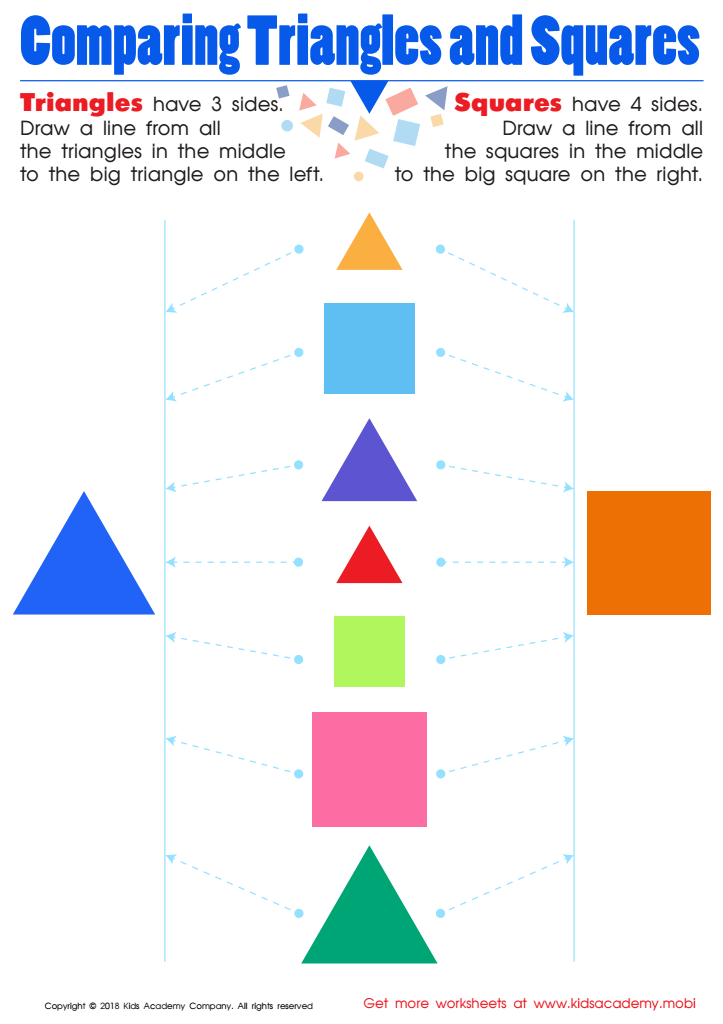
Comparing Triangles Squares Worksheet
 Assign to My Students
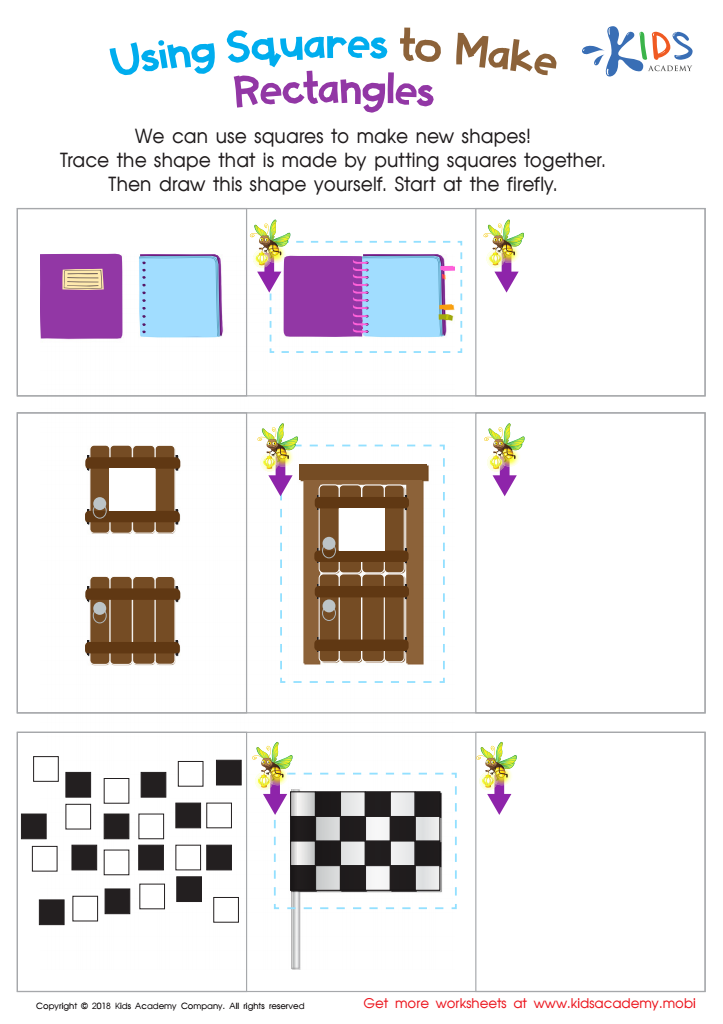
Using Squares to Make Rectangles Worksheet
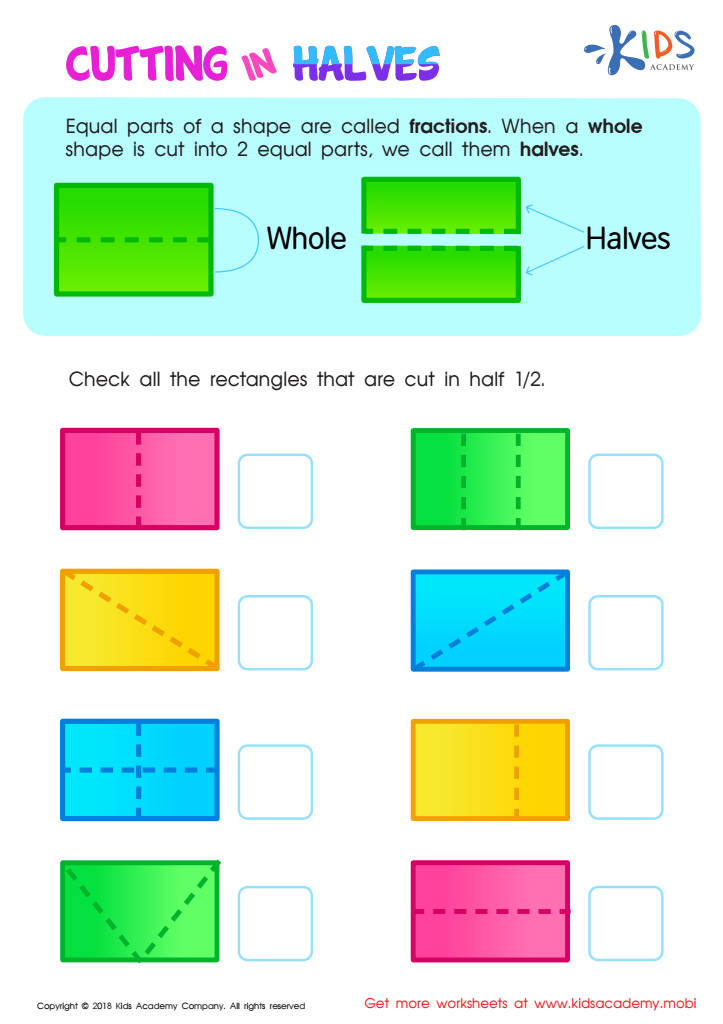
Cutting in Halves Worksheet








Parents and teachers should prioritize basic geometry for children aged 5-6 because it lays a foundational understanding of essential mathematical concepts. At this age, children begin to learn about shapes, space, and spatial relationships. Engaging with geometry helps them recognize and categorize objects in their world, fostering critical thinking and observational skills.
Understanding basic geometry nurtures both cognitive and fine motor development. Activities like drawing shapes, constructing models, or using blocks enhance hand-eye coordination while amplifying creativity. Additionally, geometry introduces the vocabulary of mathematics, helping young learners articulate their ideas, which builds communication skills.
Moreover, early exposure to geometry boosts problem-solving abilities. Children learn to identify patterns and make connections, which is vital as they progress in their educational journey. The skills acquired through geometric concepts often carry over into other areas of math and science, creating a well-rounded learner.
Finally, by integrating geometric learning into everyday activities—like cooking (measuring shapes) or arts and crafts (creating designs)—parents and teachers can make learning fun and relevant. Overall, an early focus on geometry equips children with essential skills that are crucial for their future academic success and everyday life.








