Comparing objects Math Worksheets for Ages 5-6
6 filtered results
-
From - To
Enhance your child's math skills with our engaging Comparing Objects math worksheets designed for ages 5-6! These interactive worksheets introduce young learners to the concepts of comparison by encouraging them to identify similarities and differences among various objects. With colorful illustrations and age-appropriate activities, children will practice comparing sizes, shapes, and quantities. Each worksheet is crafted to promote critical thinking and develop early math skills essential for school readiness. Whether at home or in the classroom, our worksheets make learning fun and enjoyable. Start building a strong mathematical foundation for your child today with our thoughtfully designed resources!
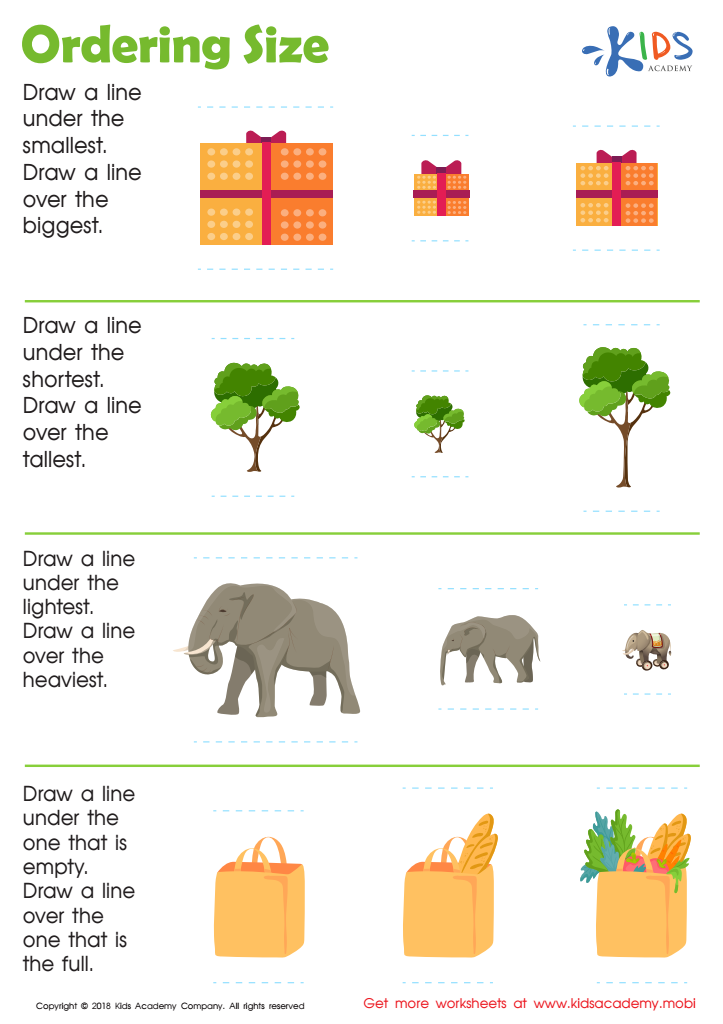
Ordering Size Worksheet
 Assign to My Students
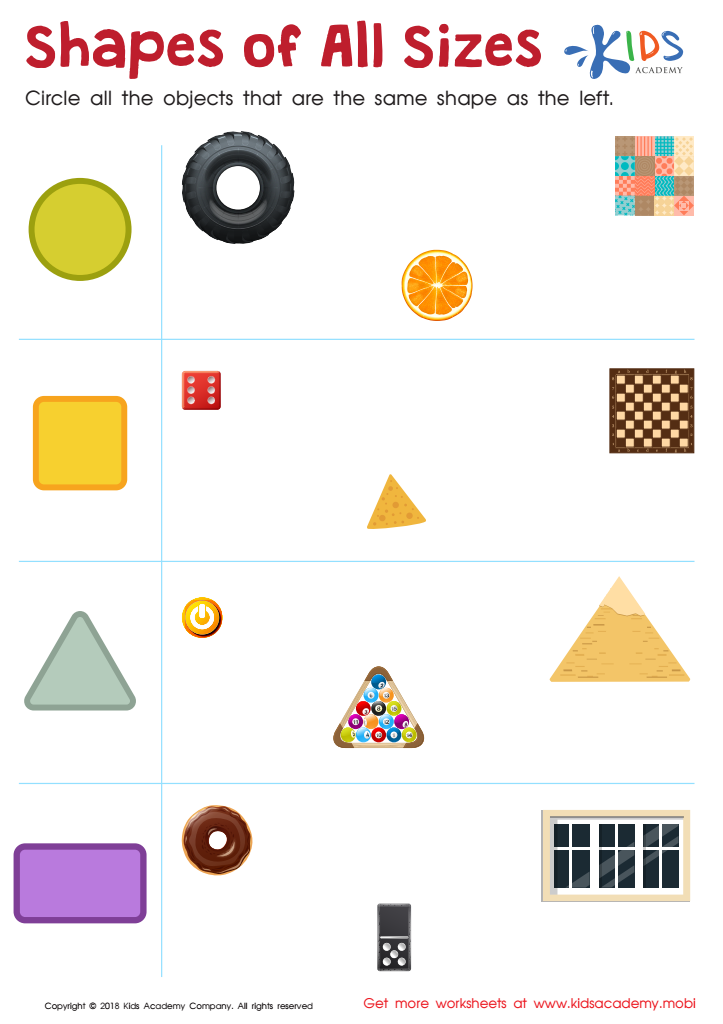
Shapes of All Sizes Worksheet
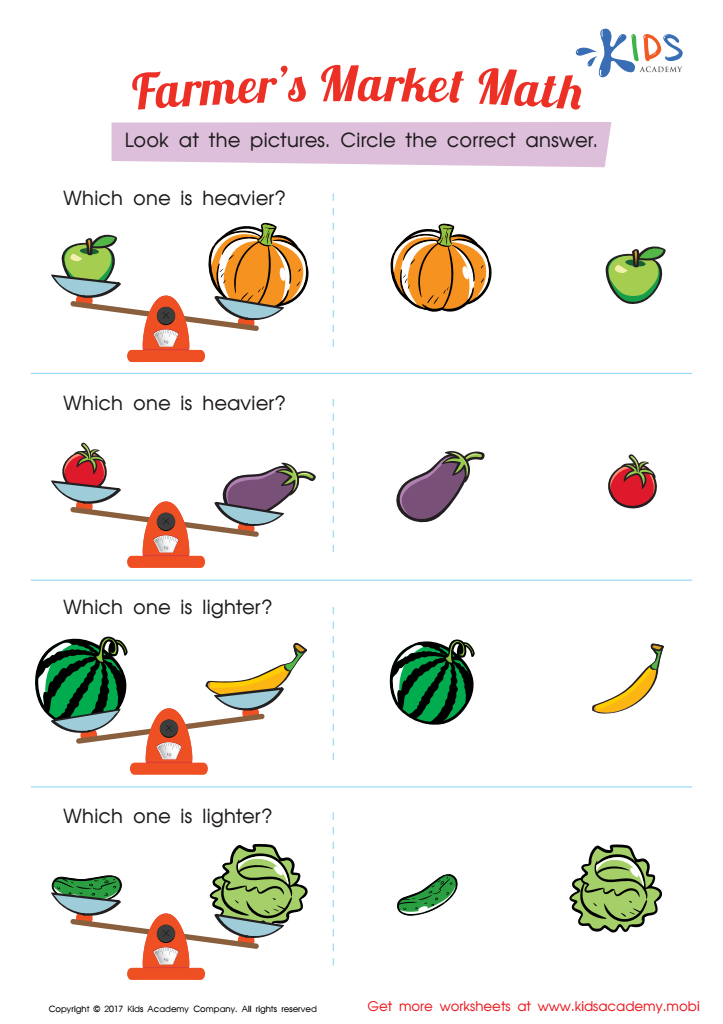
Which One Is Heavier Worksheet
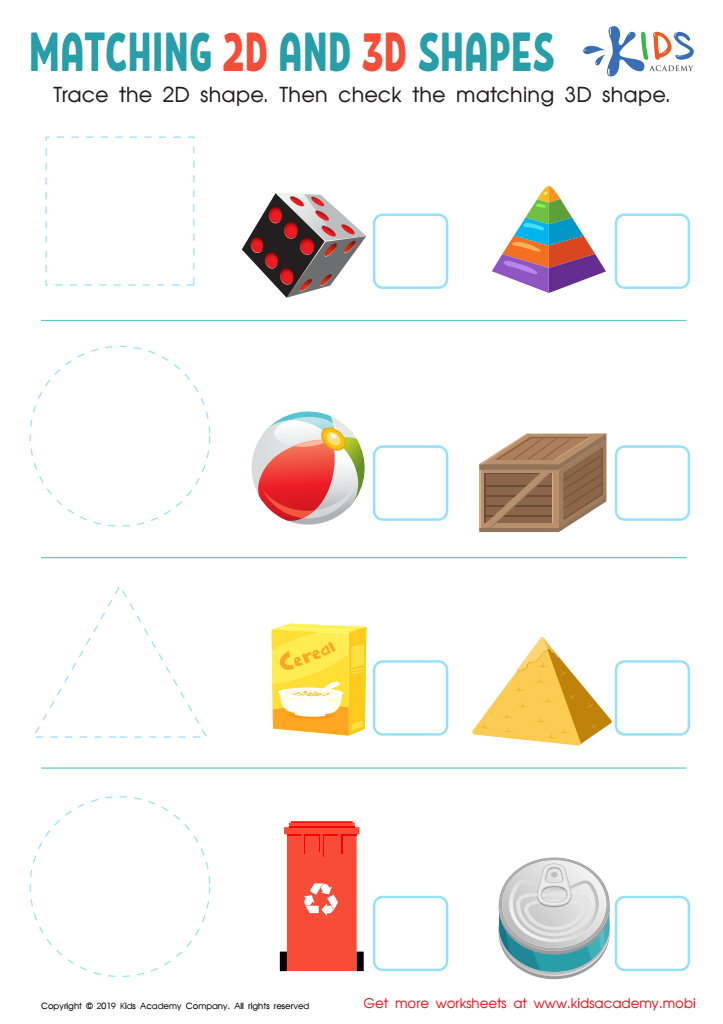
Matching 2D and 3D Shapes Worksheet
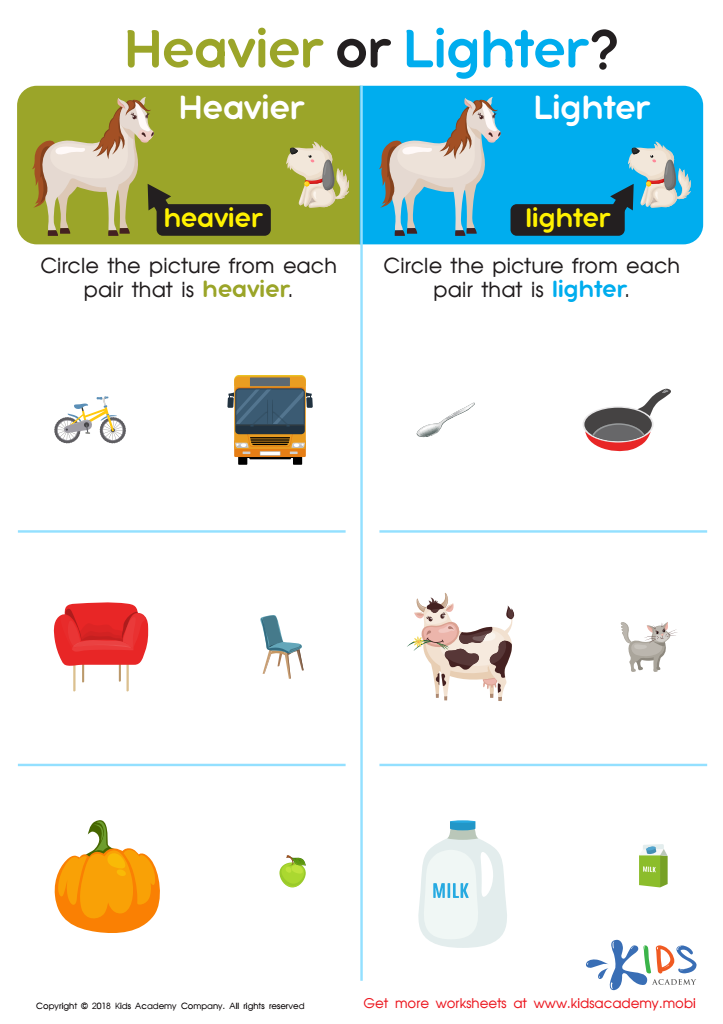
Heavier or Lighter? Worksheet
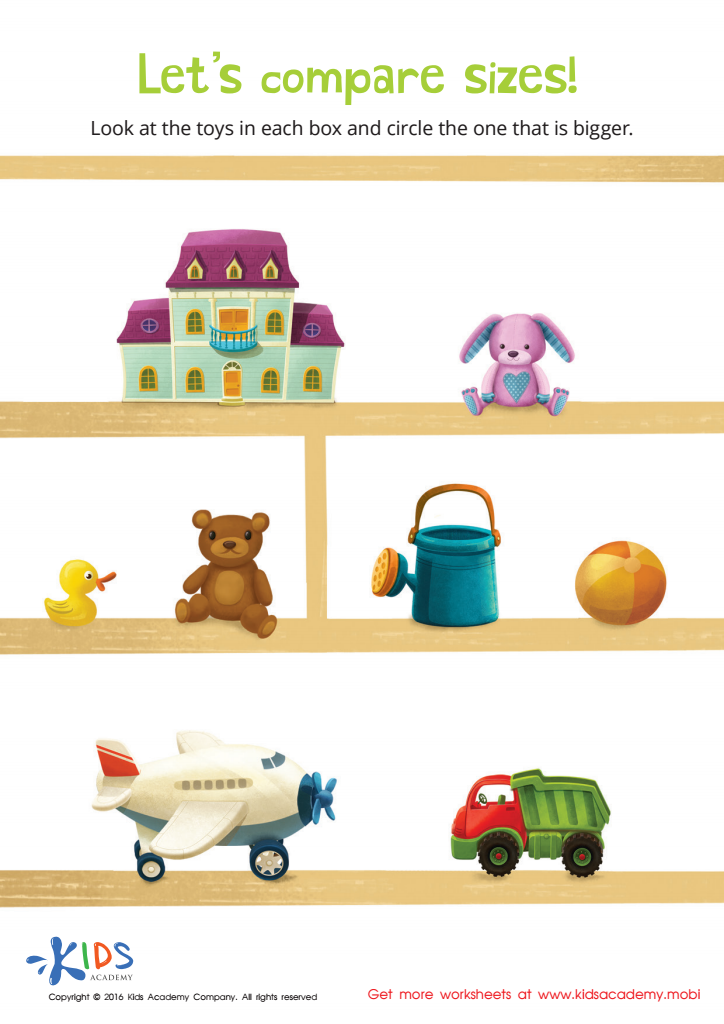
Classifying by Size Sorting Worksheet




.jpg)


Comparing objects in math is essential for children aged 5-6 as it lays the groundwork for their understanding of quantitative relationships. At this age, children are naturally curious, and comparing sizes, quantities, and dimensions enhances their observational skills. It nurtures critical thinking and analytical skills as they learn to identify attributes such as more vs. less, taller vs. shorter, and more vs. fewer.
When parents or teachers engage children in comparing objects, they help develop foundational math concepts such as sorting, classifying, and measuring. This is crucial, as early math skills are strongly correlated with later academic success. Furthermore, comparative tasks promote language development by encouraging children to describe what they see and articulate their reasoning.
Additionally, incorporating comparison activities into play and daily routines makes learning fun and relatable. It fosters a sense of discovery and engagement. By highlighting tangible differences, children learn to respect and appreciate diversity, both in shapes and sizes and in other contexts. Ultimately, cultivating a strong foundation in comparing objects allows young learners to approach more complex math concepts with confidence, making it a vital focus for parents and educators alike.








