Money recognition Math Worksheets for Ages 5-6
6 filtered results
-
From - To
Discover our engaging Money Recognition Math Worksheets for ages 5-6, designed to make learning about currency exciting and fun! These printable worksheets from Kids Academy help young children understand the value of different coins and bills through hands-on activities that promote early math skills. Perfect for preschoolers and kindergarteners, our worksheets encourage kids to identify and count money, fostering financial literacy from an early age. Ideal for both classroom and at-home learning, these worksheets support the development of critical thinking and problem-solving abilities. Download today and watch your child become a money recognition whiz!
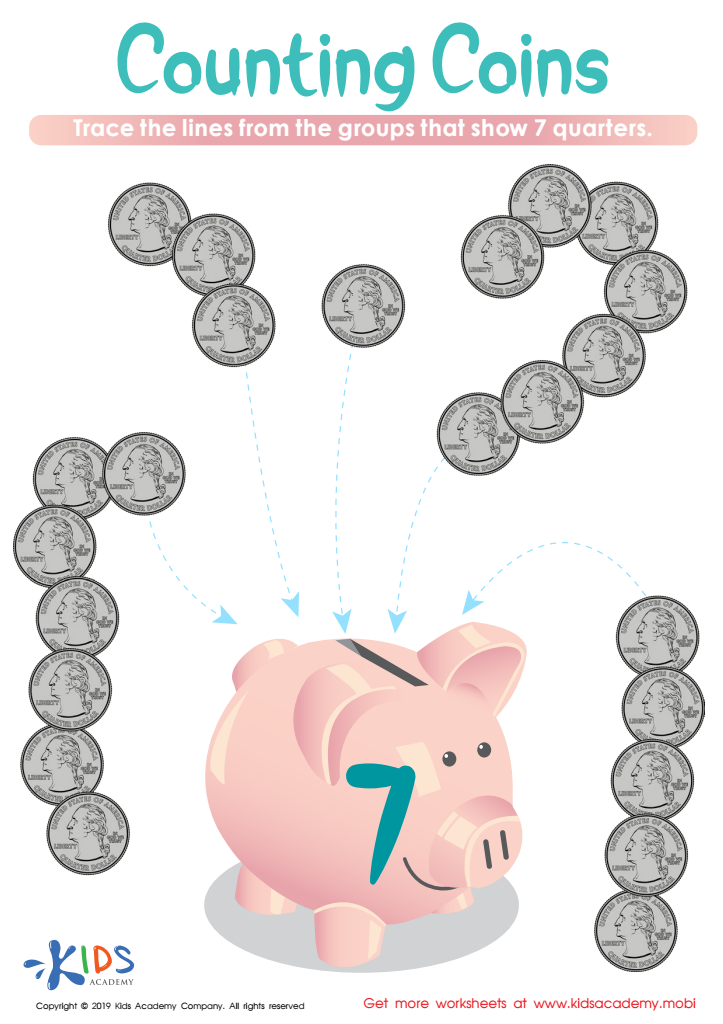
Counting Coins Worksheet
 Assign to My Students
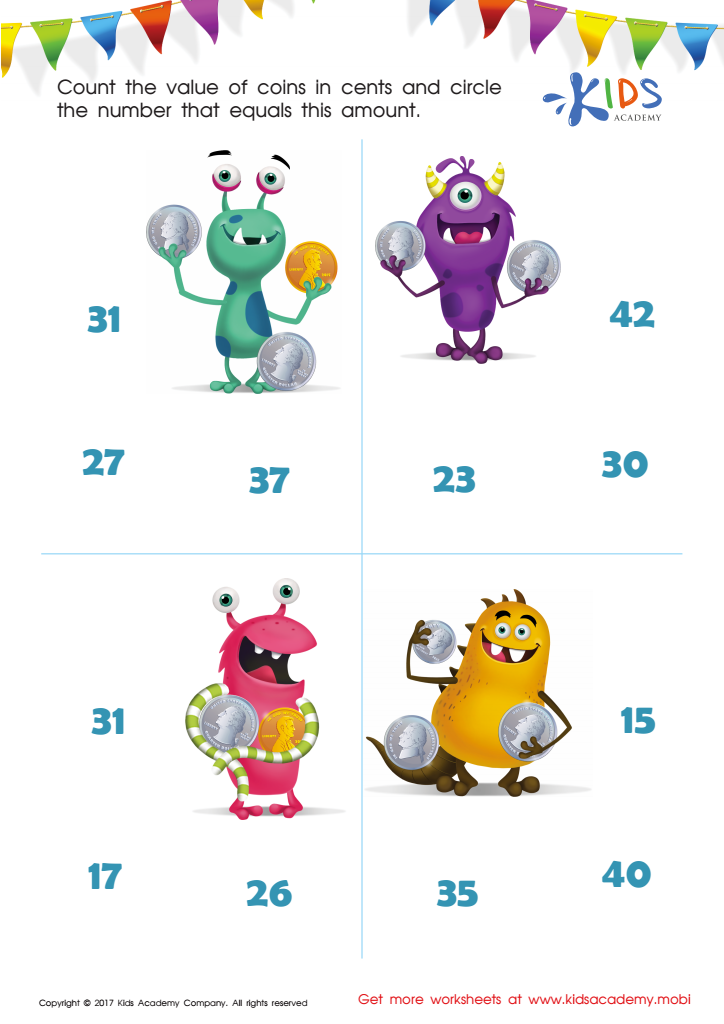
How Many Coins Money Worksheet
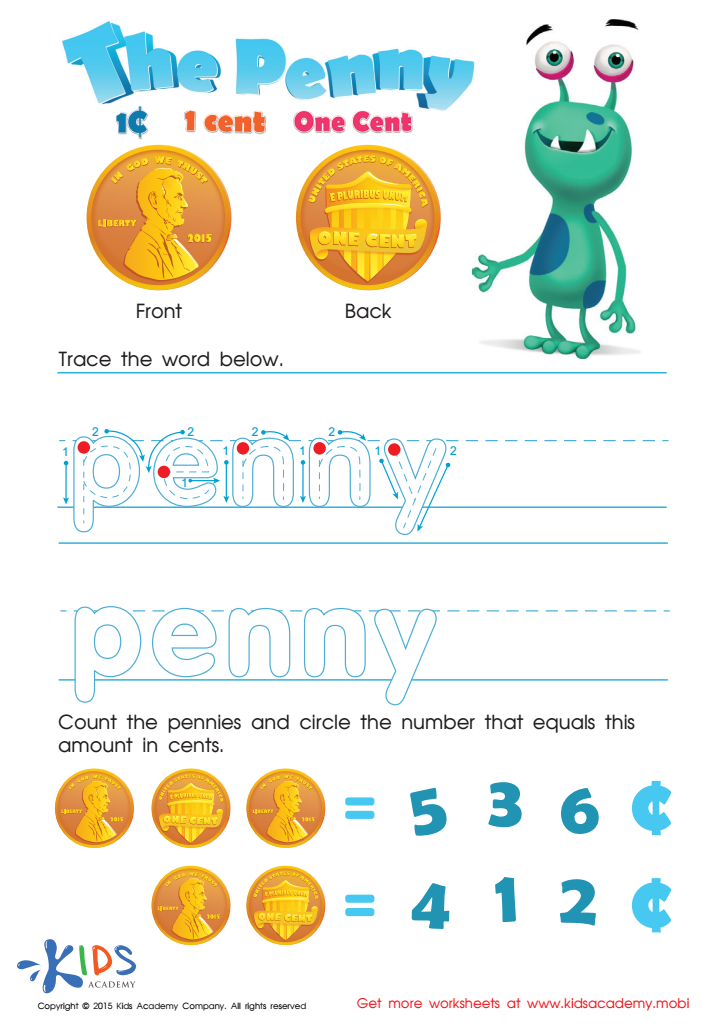
One Cent or the Penny Money Worksheet
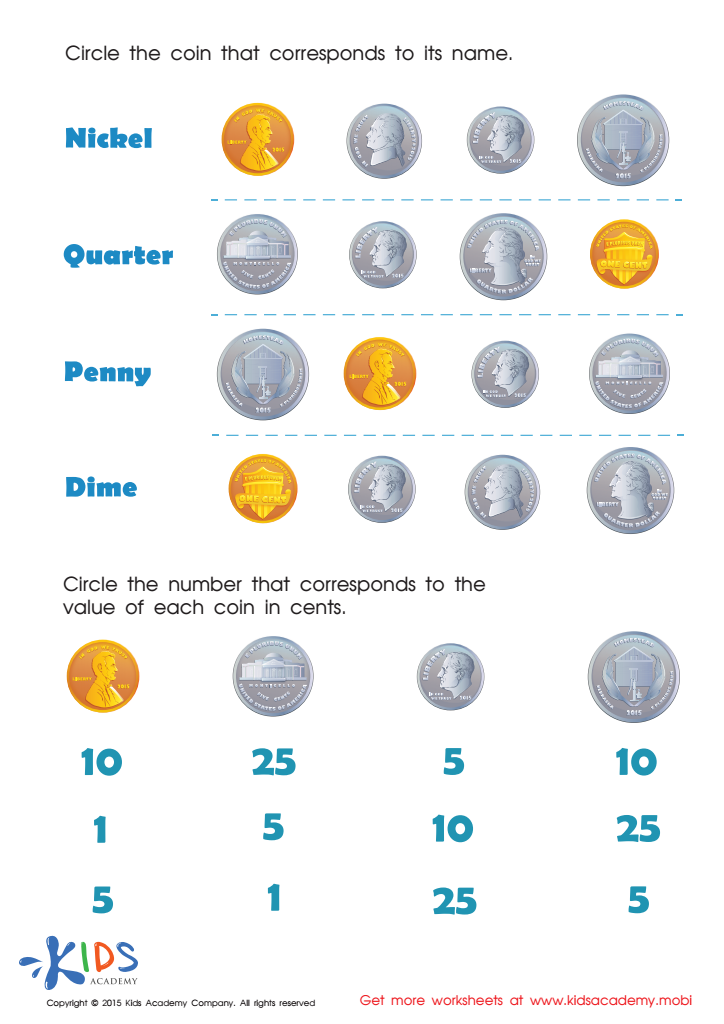
Coin Names and Values Money Worksheet
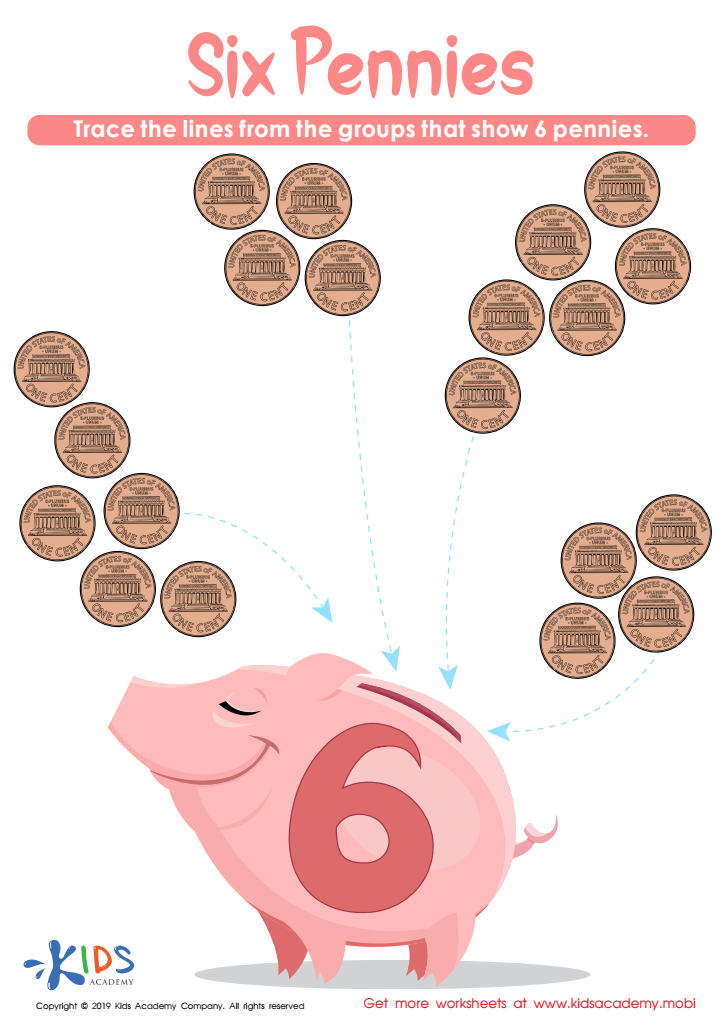
Six Pennies Worksheet
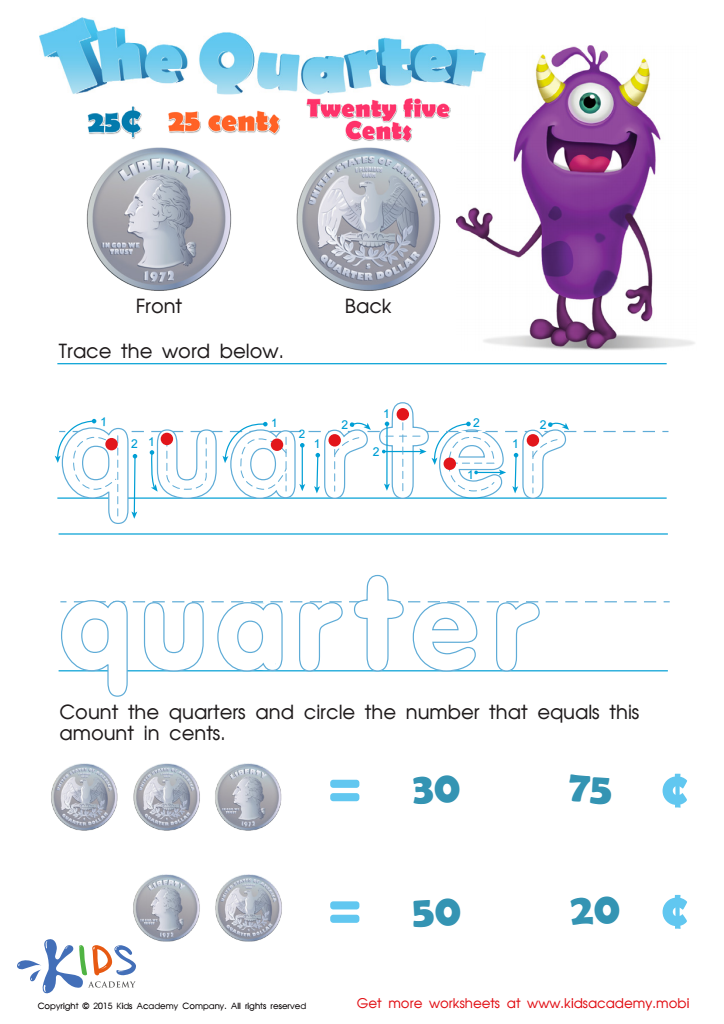
Twenty Five Cents or the Quarter Money Worksheet








Introducing money recognition math to children ages 5-6 is fundamental for several reasons that both parents and teachers should care about:
-
Building Numeracy Skills: Understanding money involves recognizing numbers, performing basic arithmetic, and grasping concepts of value, all of which reinforce early numeracy skills crucial for further mathematical development.
-
Real-World Application: Teaching kids about money provides them with practical life skills. It lays the groundwork for financial literacy, making children comfortable with handling small amounts of cash and understanding its use in everyday transactions.
-
Developing Independence: Money recognition math helps children gain a sense of independence and self-confidence. By learning how to use money, they can make small financial decisions, understand the concept of saving, and recognize the need to make choices based on available resources.
-
Encouraging Cognitive Development: Handling money requires recognizing coins and bills, understanding their value, and making calculations, all of which stimulate cognitive processes such as counting, addition, and subtraction.
-
Promoting Responsibility: By managing small amounts of money, children learn responsibility. This fosters early lessons in financial stewardship and the value of resources, preparing them for future responsibilities.
Overall, early exposure to money recognition math equips children with essential skills for their academic journey and everyday life, making them more prepared and capable in handling real-world situations.








