Pattern identification Math Worksheets for Ages 5-6
6 filtered results
-
From - To
Enhance your child's math skills with our engaging Pattern Identification Math Worksheets for ages 5-6. These printable worksheets are designed to help young learners recognize and complete patterns using shapes, colors, and numbers. By guiding kids through fun exercises, our worksheets aid in developing critical thinking, problem-solving abilities, and early math proficiency. Perfect for preschoolers and kindergarteners, these resources make learning fun and effective. Download and print today from Kids Academy and watch your child confidently master the basics of pattern identification, building a strong foundation for future math success. Dive into a world of discovery and learning fun!
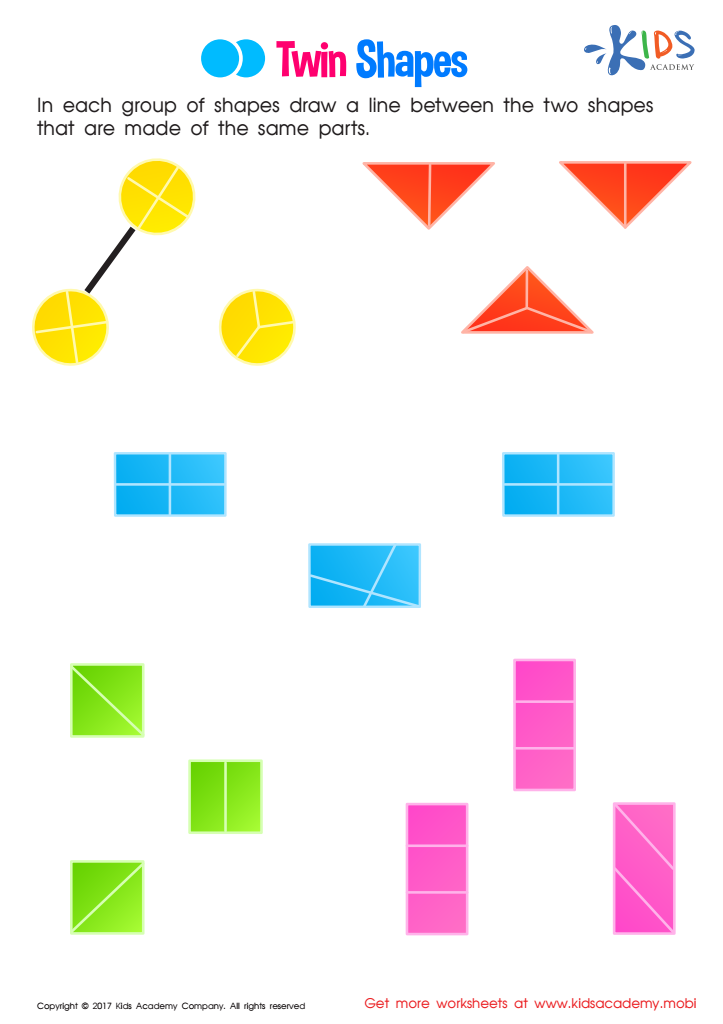
Twin Shapes Worksheet
 Assign to My Students
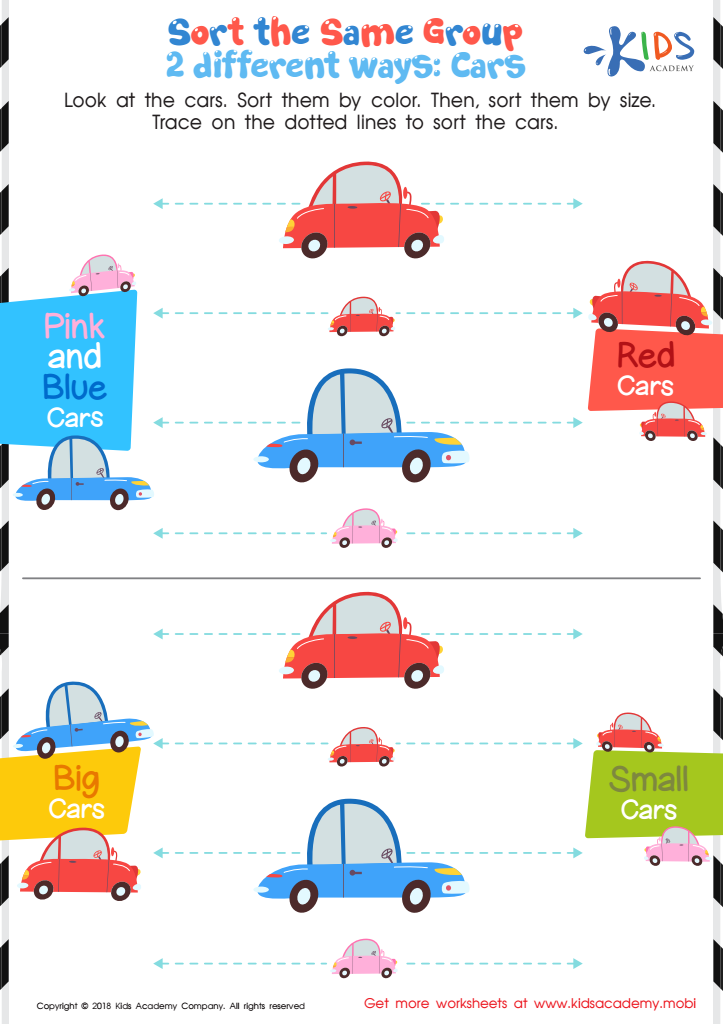
Sort the Same Group 2 Different Ways: Cars Worksheet
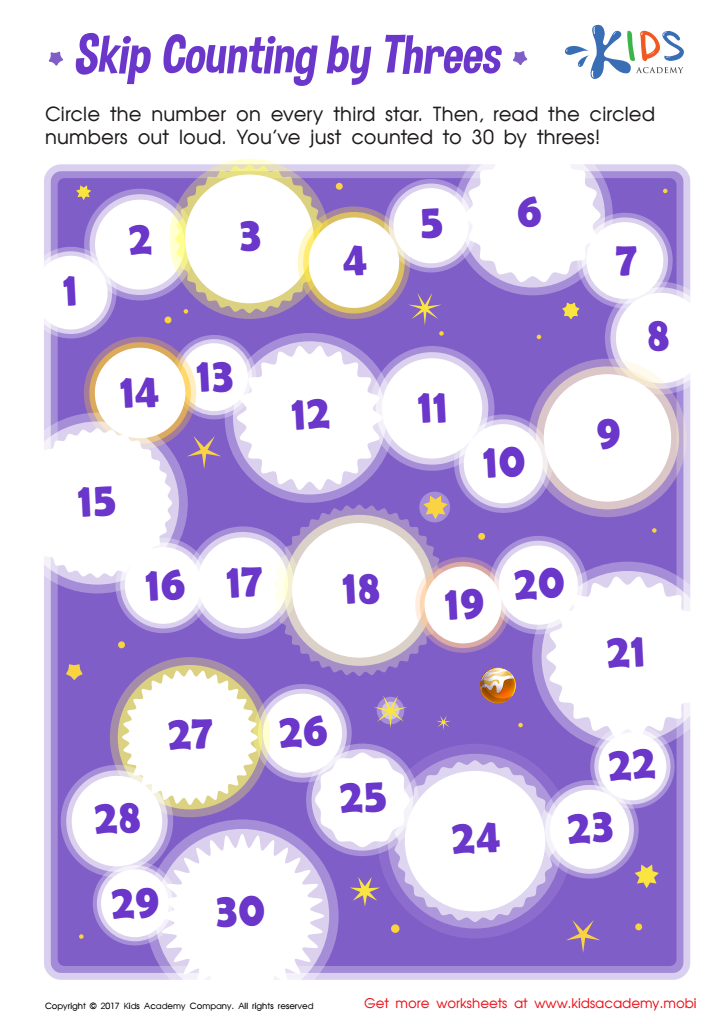
Skip Counting By Three Printable
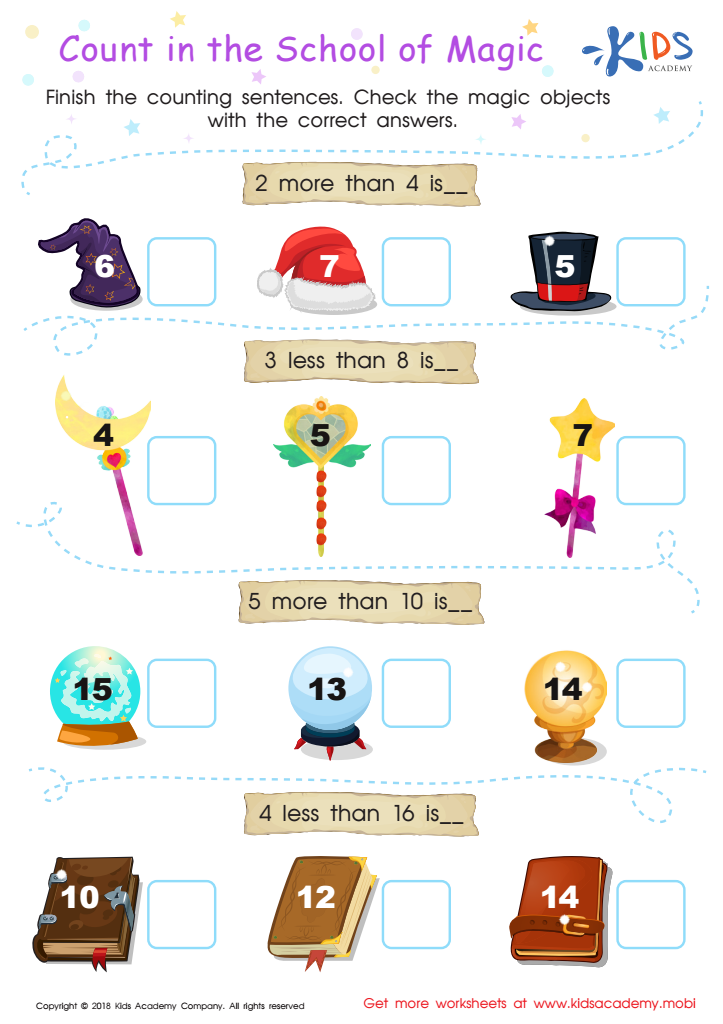
Count in the School of Magic Worksheet
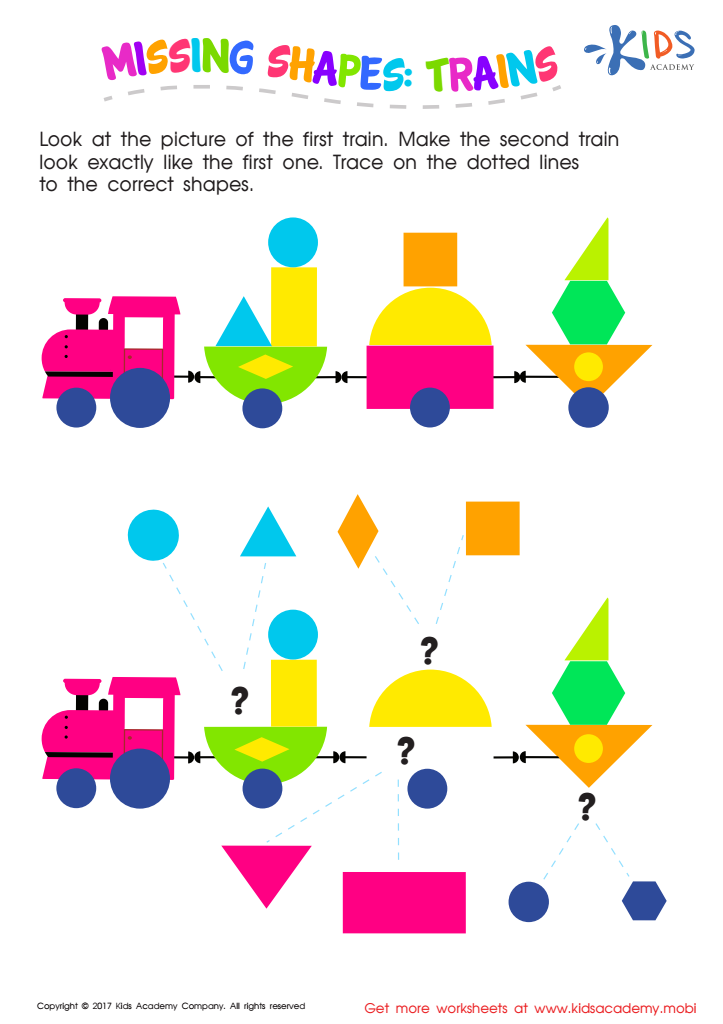
Missing Shapes: Trains Worksheet
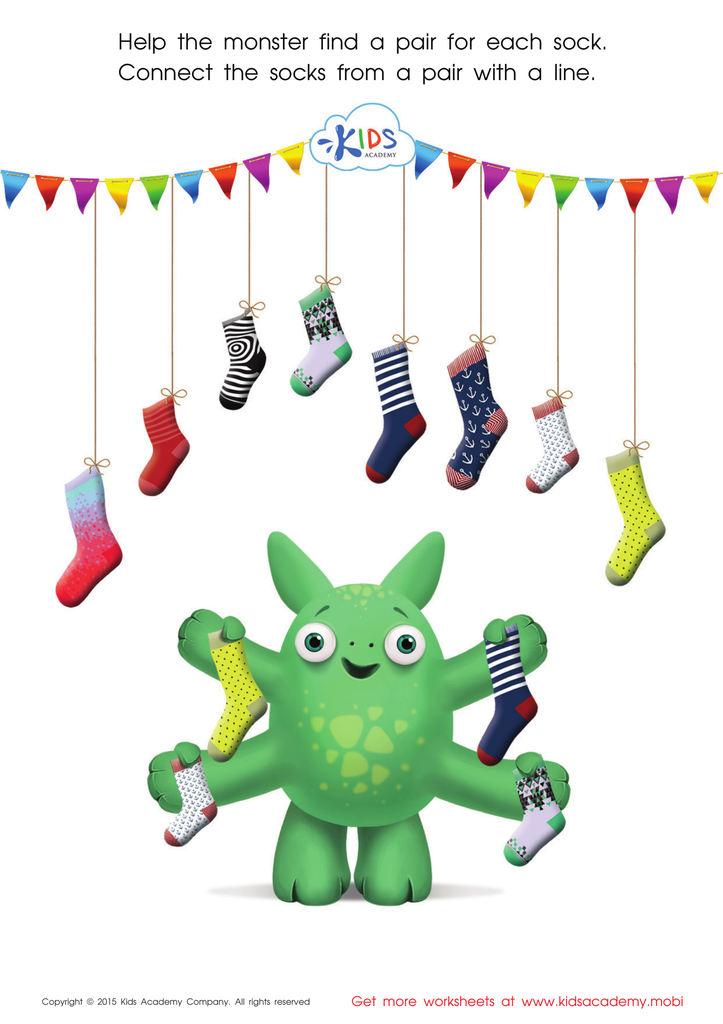
Math Matching Pairs Game: Monsterв's Socks Worksheet








Pattern identification in math is crucial for children ages 5-6 as it lays the foundation for future mathematical learning and critical thinking. At this age, children's brains are highly receptive, and recognizing patterns boosts cognitive development. Patterns help young learners understand sequences, predict outcomes, and develop problem-solving skills.
Patterns are present in daily life, from the rhythm of songs to the design on clothing, making the skill highly applicable. Identifying patterns fosters early algebraic thinking, where students learn to identify regularities and make connections. This skill is a precursor to understanding more complex mathematical concepts like multiplication, fractions, and mathematical operations.
Moreover, recognizing patterns enhances children's ability to think logically and organize information. It encourages curiosity and engagement as children take pleasure in discovering and creating patterns. Activities like repeating color sequences, identifying shapes, or sorting objects by size can make learning fun and provide a strong mathematical foundation.
By prioritizing pattern identification, parents and teachers help strengthen neural pathways associated with mathematical and abstract thinking. This early support sets children on a path toward academic success and instills confidence in their abilities to tackle more complex problems as they grow. Consequently, pattern identification isn't just about learning math; it's about nurturing a holistic developmental process.








