Sea creatures identification Math Worksheets for Ages 5-6
3 filtered results
-
From - To
Welcome to our engaging collection of "Sea Creatures Identification Math Worksheets" tailored for children ages 5 to 6! These interactive worksheets combine math learning with the exciting world of sea life. Young learners will explore and identify various sea creatures while practicing essential math skills such as counting, addition, and comparison. By merging fun with education, we encourage curiosity and creativity, helping children develop a love for both mathematics and marine biology. Perfect for early childhood classrooms or at-home learning, these worksheets are designed to foster critical thinking and enhance understanding while ensuring an enjoyable learning experience. Dive in today!
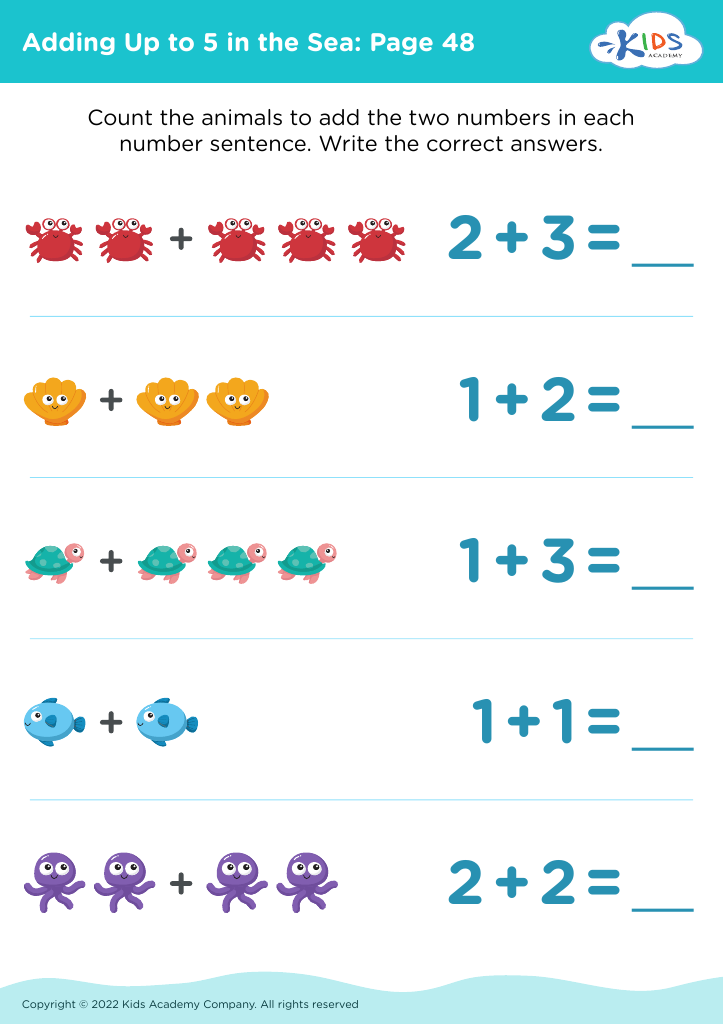
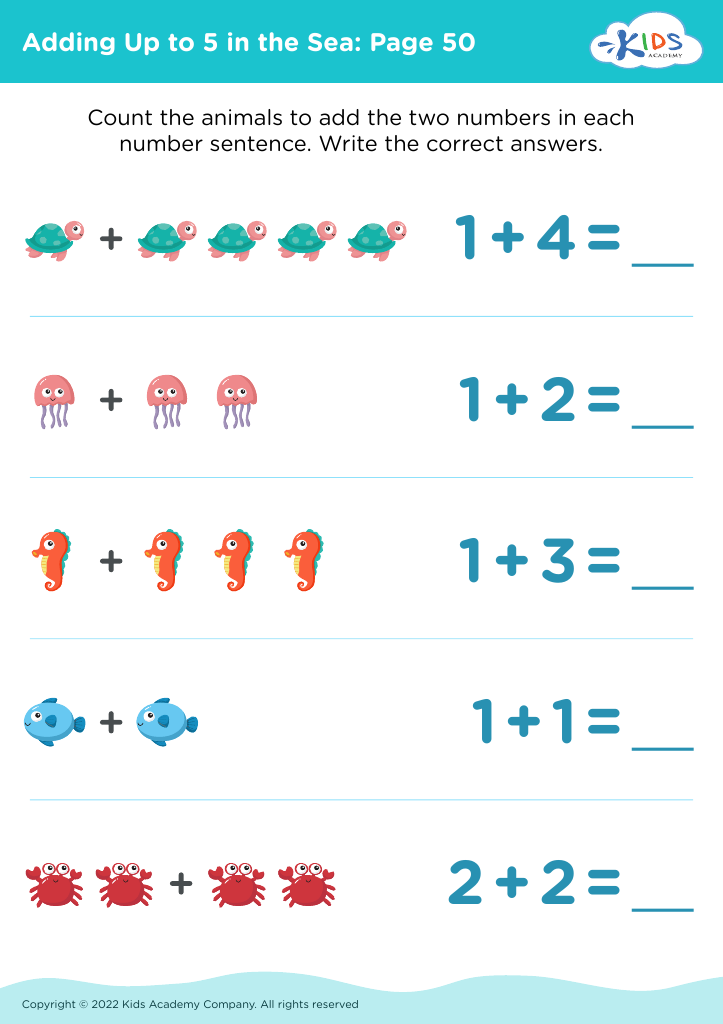
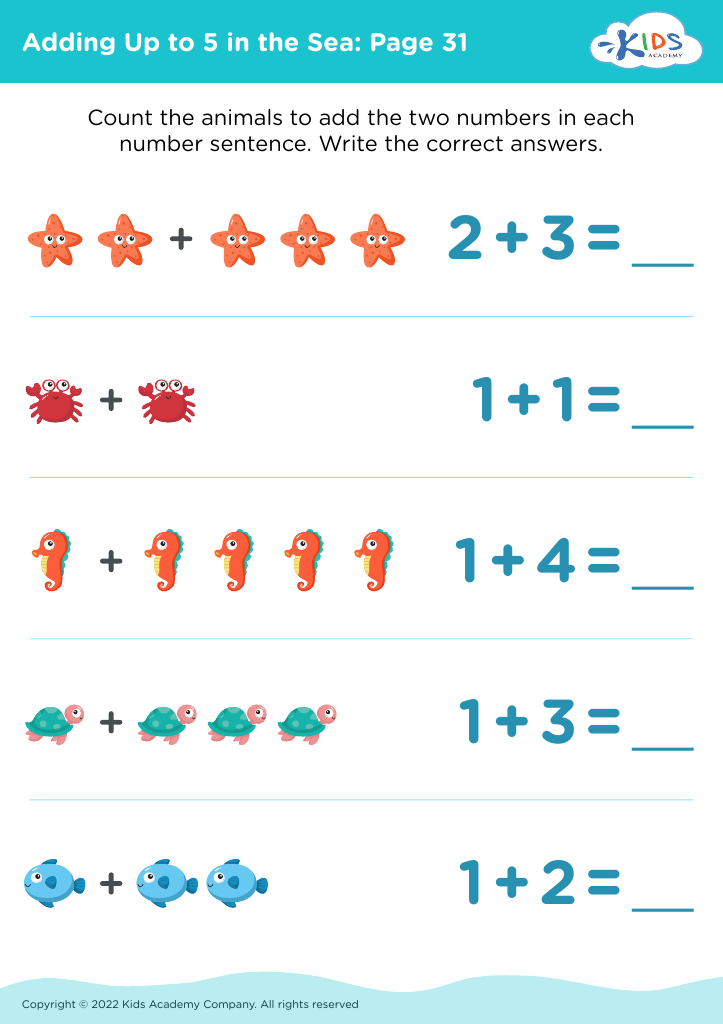






Understanding sea creature identification at an early age can significantly enhance young children's cognitive and academic development. For parents and teachers of ages 5-6, integrating math with marine biology offers a unique opportunity to engage children in a fun, hands-on learning experience. Identifying sea creatures, whether it’s counting fish, classifying different types of shells, or measuring the lengths of various sea animals, introduces young learners to foundational math concepts like number recognition, addition, patterns, and measurements.
This interdisciplinary approach fosters critical thinking and problem-solving skills. When kids associate math with real-world concepts like sea creatures, it makes the subject more relatable and enjoyable, helping to cultivate a lifelong love of learning. Additionally, exploring sea creatures promotes awareness of marine ecosystems and encourages children to appreciate and respect our ocean environment, instilling values of conservation and responsibility.
Moreover, hands-on activities, such as sorting seashells or creating ocean-themed math games, can strengthen fine motor skills, foster teamwork, and inspire creativity. In essence, incorporating sea creature identification into math lessons is an innovative strategy for deepening comprehension, engagement, and a sense of wonder about the natural world. Ultimately, it lays a strong foundation for both their mathematical skills and environmental consciousness.








