Cognitive Development Matching Worksheets for Ages 5-6
7 filtered results
-
From - To
Enhance your child's cognitive development with our engaging Matching Worksheets designed for ages 5-6! These worksheets provide age-appropriate activities that promote critical thinking, problem-solving, and memory skills. By encouraging youngsters to match images, words, and concepts, children develop essential cognitive abilities while having fun. Our user-friendly design makes it easy for parents and educators to incorporate these activities into learning routines. Ideal for home or classroom use, these worksheets stimulate creativity and improve focus, laying a solid foundation for future learning. Explore our varied collections to support your child's growth and boost their cognitive skills today!

Matching: Shapes and Colors Worksheet
 Assign to My Students
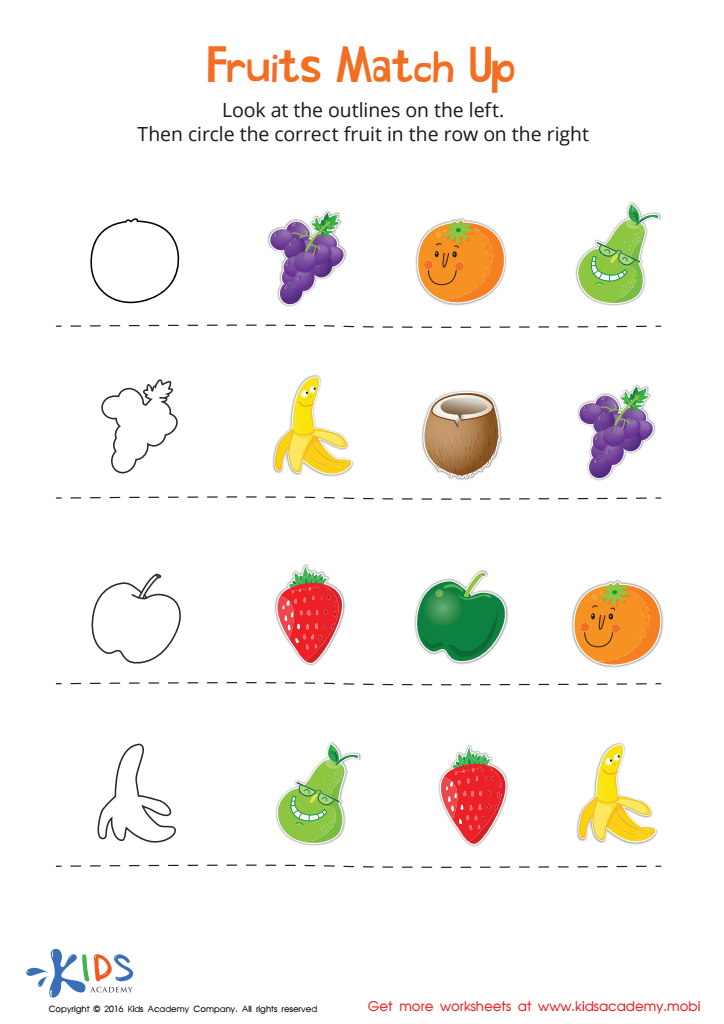
Fruits Match Up Worksheet
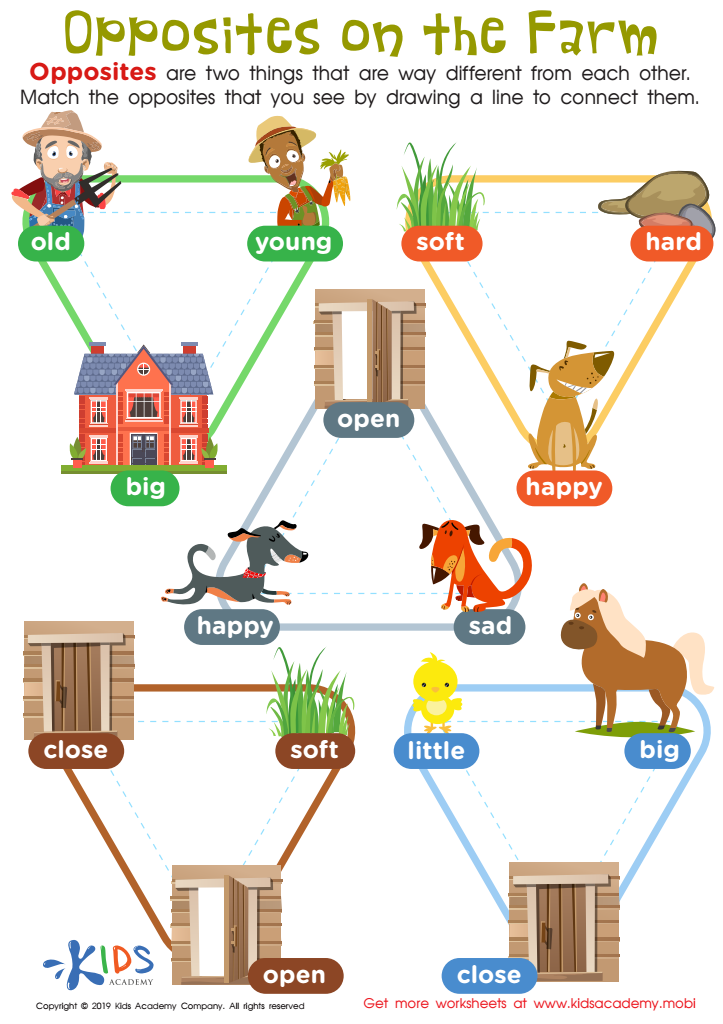
Opposites on the Farm Worksheet
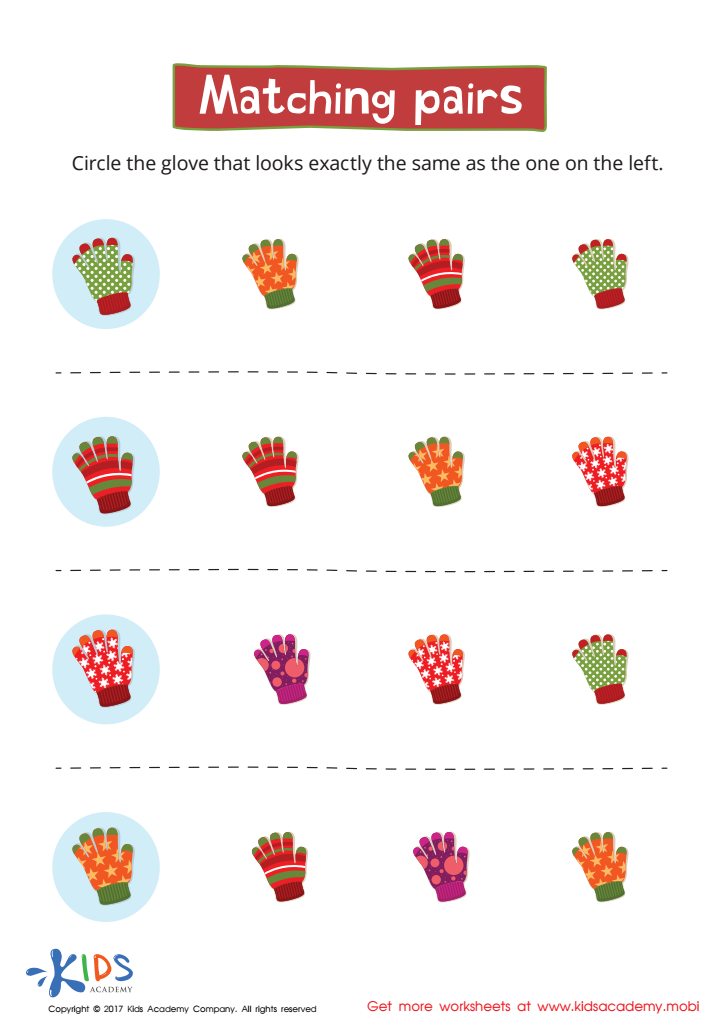
Matching: Matching Pairs Worksheet
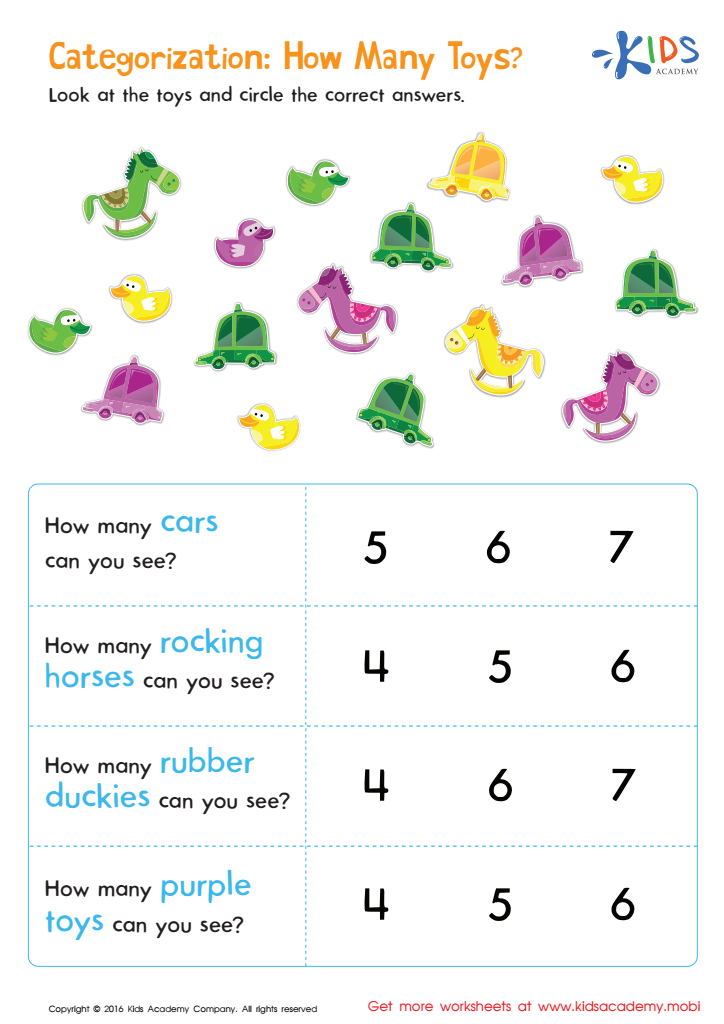
Classifying Toys by Type and Color Sorting Worksheet
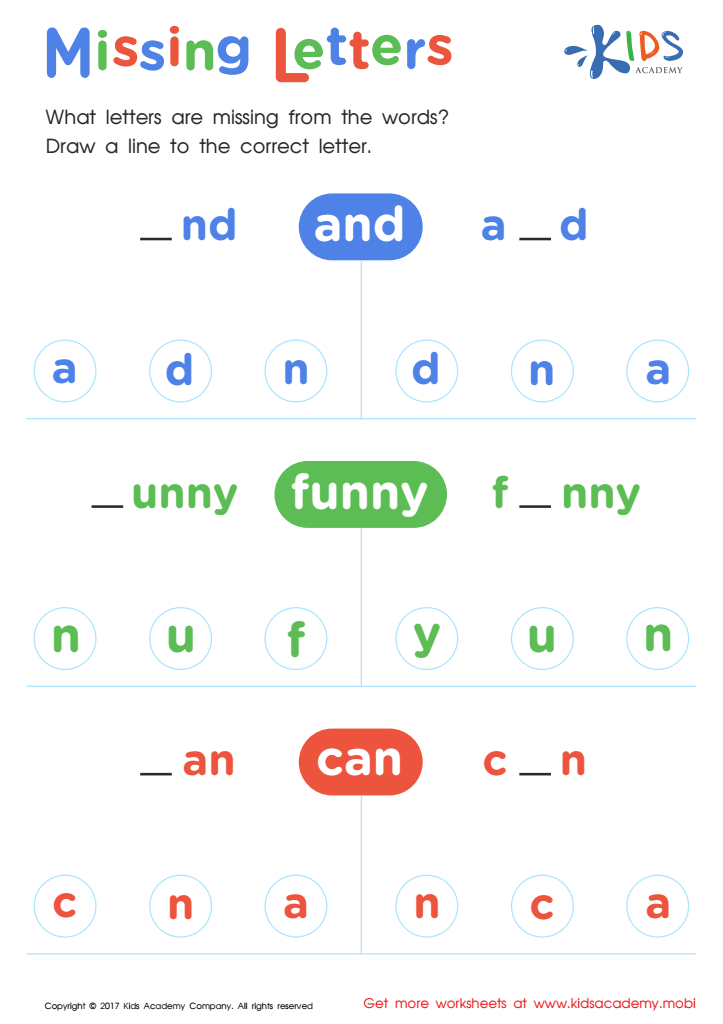
Missing Letters Worksheet
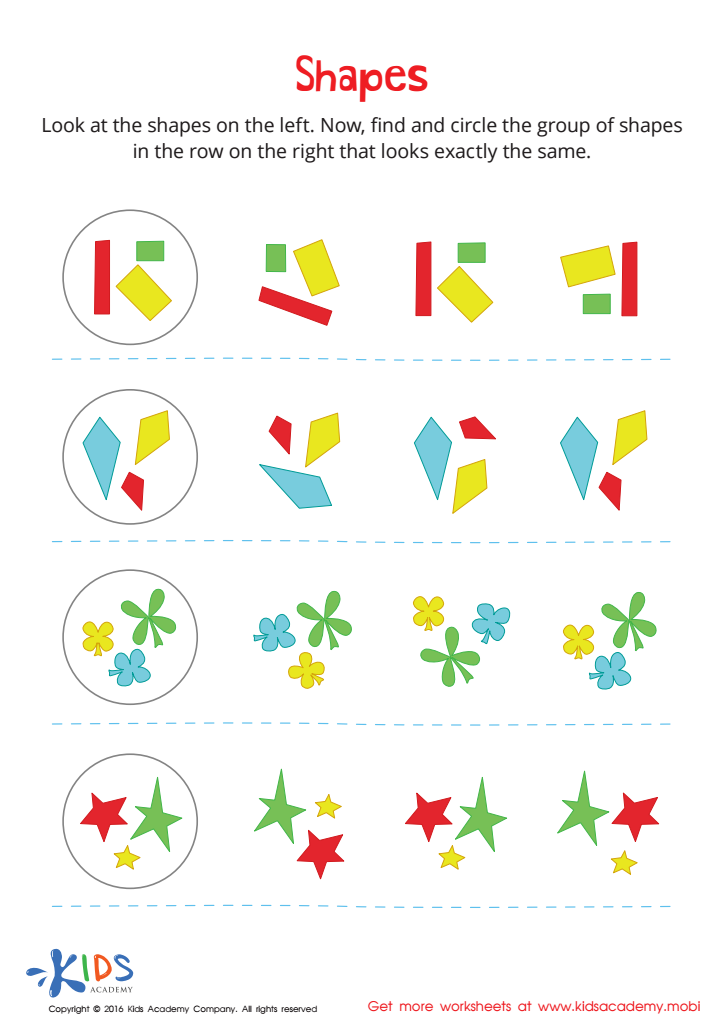
Shapes Worksheet








Cognitive development in early childhood is crucial as it lays the foundation for future learning and overall development. For children aged 5-6, cognitive abilities are rapidly evolving, with skills such as problem-solving, memory, attention, and critical thinking becoming more prominent. Educators and parents play a vital role in facilitating this development through Cognitive Development Matching, which aligns specific activities and learning experiences with a child's cognitive stage.
Understanding the cognitive milestones for this age group helps educators and parents provide appropriate challenges and support. For instance, engaging children in activities that require reasoning, classification, and categorization fosters their logical thinking and allows them to construct knowledge actively. Tailored interactions help prevent frustration from tasks that may be too difficult or boredom from those that lack challenge.
Moreover, awareness of cognitive development ensures that children acquire key skills necessary for school readiness, such as literacy and numeracy. By fostering a stimulating environment and providing targeted interventions, parents and teachers can significantly enhance a child's cognitive growth, instilling a love for learning and preparing them for future academic success. Such nurturing during these formative years not only benefits individual children but also contributes to overall societal advancement.








