Comparing object weights Measurement Worksheets for Ages 5-6
3 filtered results
-
From - To
Discover our engaging "Comparing Object Weights Measurement Worksheets" designed for children aged 5-6! These worksheets are perfect for fostering early math skills through hands-on learning. Kids will gain a foundational understanding of weight concepts by comparing various objects, encouraging both critical thinking and sensory exploration. Our worksheets feature colorful visuals and interactive activities that make learning fun and approachable. Help your child grasp essential measurement techniques while developing their ability to analyze and distinguish varying weights. Ideal for classrooms or home practice, these worksheets support early learners in mastering crucial math skills in a playful and imaginative way. Start their journey today!
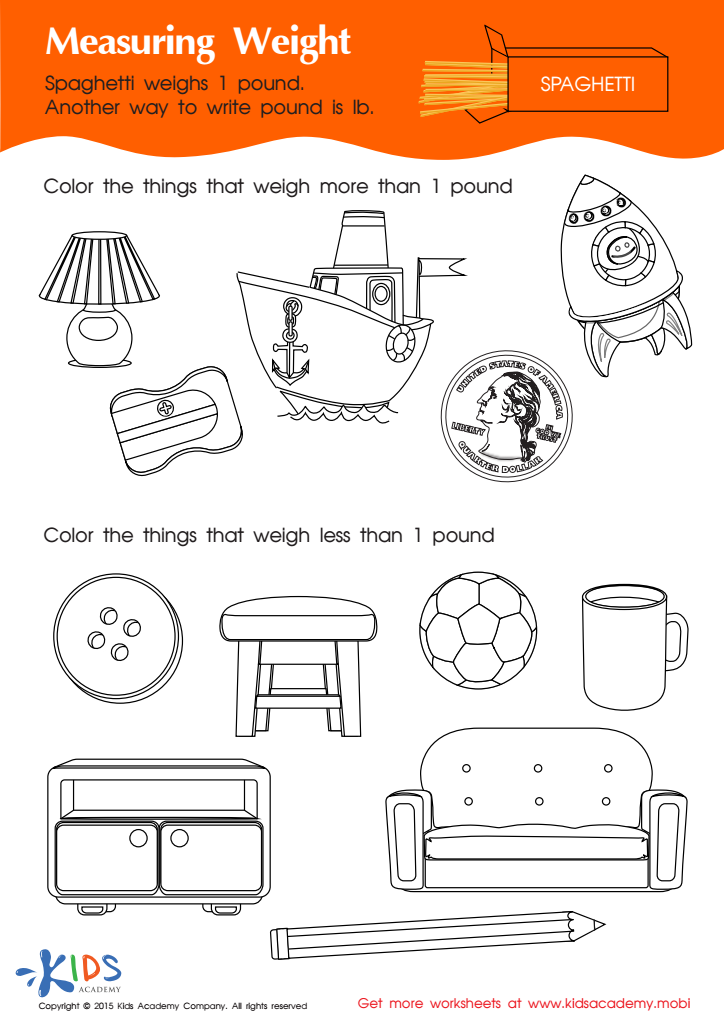
 Assign to My Students
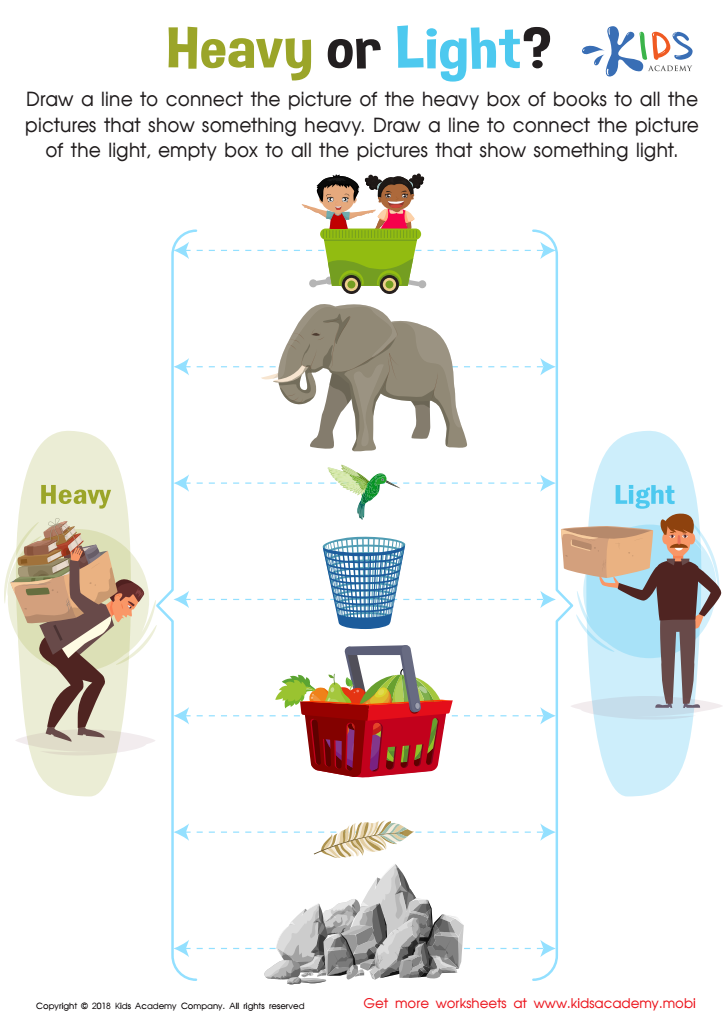
Heavy or Light? Worksheet
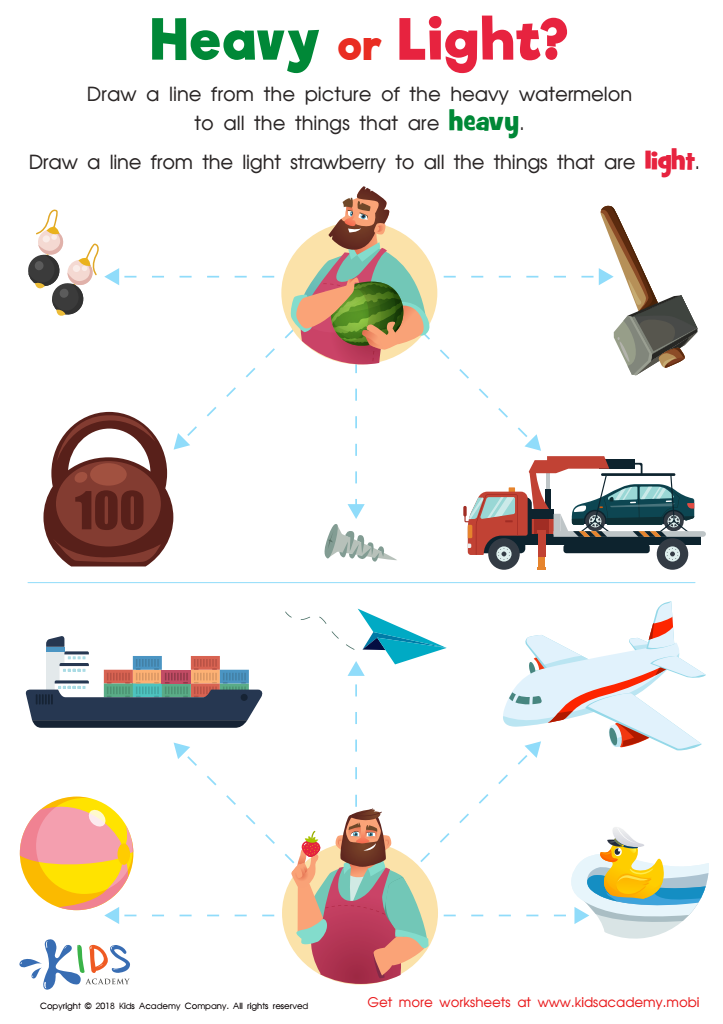
Heavy or Light? Worksheet








Comparing object weights is an essential concept for young learners, as it introduces foundational skills in measurement and math. For children aged 5-6, understanding weight fosters critical thinking and problem-solving abilities. By engaging in activities that involve comparing objects, children develop a better grasp of the world around them, enhancing their observational skills and encouraging curiosity.
Furthermore, these early lessons in measurement build vocabulary crucial for math literacy. Children learn terms like "heavier," "lighter," and "balance," enabling them to articulate their thoughts and reasoning. Through hands-on experiences, such as weighing fruits or toys, learners develop fine motor skills and learn the importance of comparison in everyday life.
Additionally, comparing weights helps to strengthen interpersonal skills. Collaborative tasks provide opportunities for children to communicate, negotiate, and respect differing opinions, all while working toward a common goal.
In an educational context, grasping measurement concepts lays the groundwork for more complex mathematical concepts in later grades. By prioritizing activities like object weight comparison, parents and teachers play a crucial role in instilling a love for learning and fostering a strong mathematical base. Overall, skills acquired during these playful activities have lasting implications for children's educational journeys.








