Hand-eye Coordination Numbers up to 100 Worksheets for Ages 5-6
3 filtered results
-
From - To
Boost your child’s hand-eye coordination and number recognition with our engaging "Hand-eye Coordination Numbers up to 100 Worksheets" for ages 5-6. These activities are designed to improve fine motor skills while reinforcing number familiarity up to 100. Each worksheet offers fun tracing and drawing exercises, making learning interactive and enjoyable. Tailored for young learners, these printable sheets encourage precision and confident counting. Ideal for both classroom and home use, they provide a solid foundation in early math skills, setting the stage for future success. Discover the perfect blend of learning and play with Kids Academy’s expertly crafted resources!
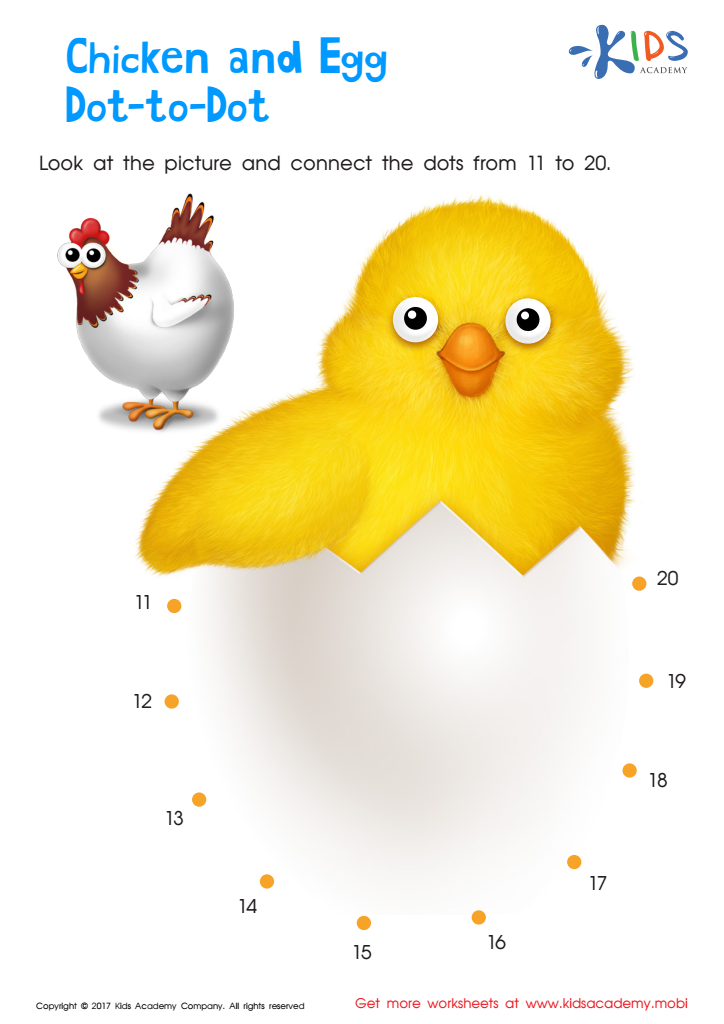
Ordering 11–20: Chicken & Egg Dot–to–dot Worksheet
 Assign to My Students
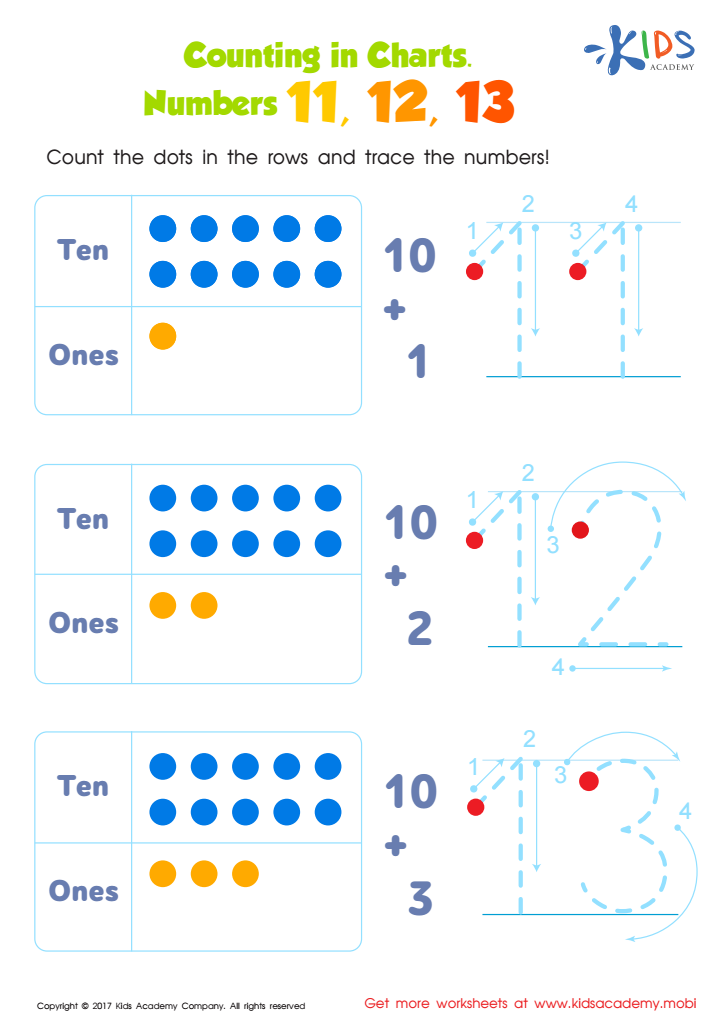
Number Tracing Worksheet For Kindergarten
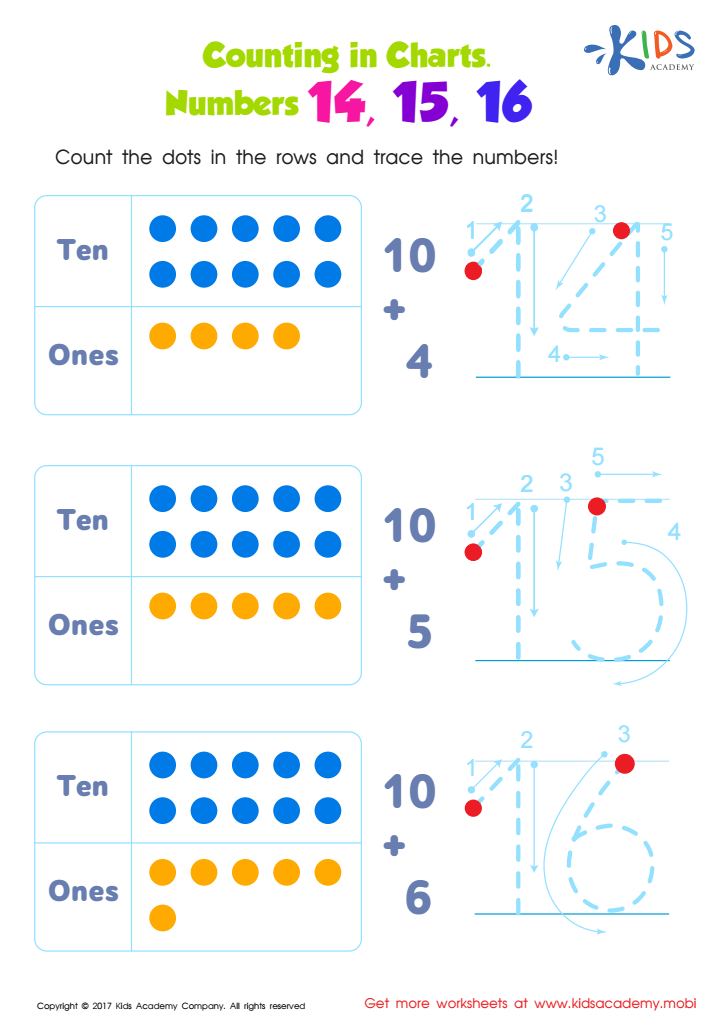
Number Tracing Worksheet








Hand-eye coordination is vital for young children's development, and teaching coordination with numbers up to 100 is particularly beneficial for several reasons. At ages 5-6, children are honing their fine motor skills, which are essential for daily tasks such as writing, cutting with scissors, and buttoning clothes. Engaging activities that strengthen hand-eye coordination can ease children's transition to more complex motor tasks. Integrating numbers up to 100 enhances this by adding a cognitive layer—children must recognize and understand numbers while also physically interacting with objects, thus simultaneously training their brains and bodies.
Moreover, mastering numbers up to 100 at a young age lays a foundational math skill that is crucial for future academic success. Counting, recognizing number patterns, and simple arithmetic become significantly more intuitive if a child regularly interacts with these numbers early on. Combining this with hand-eye coordination exercises ensures the child’s learning is engaging and dynamic, helping maintain their interest and motivation.
Incorporating these exercises into playtime—like using building blocks, dot-to-dot drawings, or number tracing—allows children to practice these skills in a stress-free environment. Parents and teachers should care because fostering both the cognitive and motor aspects of development prepares children for a smoother academic journey and daily life tasks, contributing positively to their overall growth.








