Counting skills Place Value Worksheets for Ages 5-6
7 filtered results
-
From - To
Our "Counting Skills Place Value Worksheets for Ages 5-6" offer engaging and colorful activities tailored to young learners. Designed by educational experts, these resources help children grasp fundamental concepts of place value and counting. Perfect for classroom use or at-home practice, each worksheet uses fun visuals and easy-to-follow instructions to make learning enjoyable. From counting beads to arranging numbers, kids build strong mathematical foundations during their formative years. Ensure your child or student is both entertained and educated with our thoughtfully crafted worksheets, setting the stage for confidence in more advanced math concepts in the future.
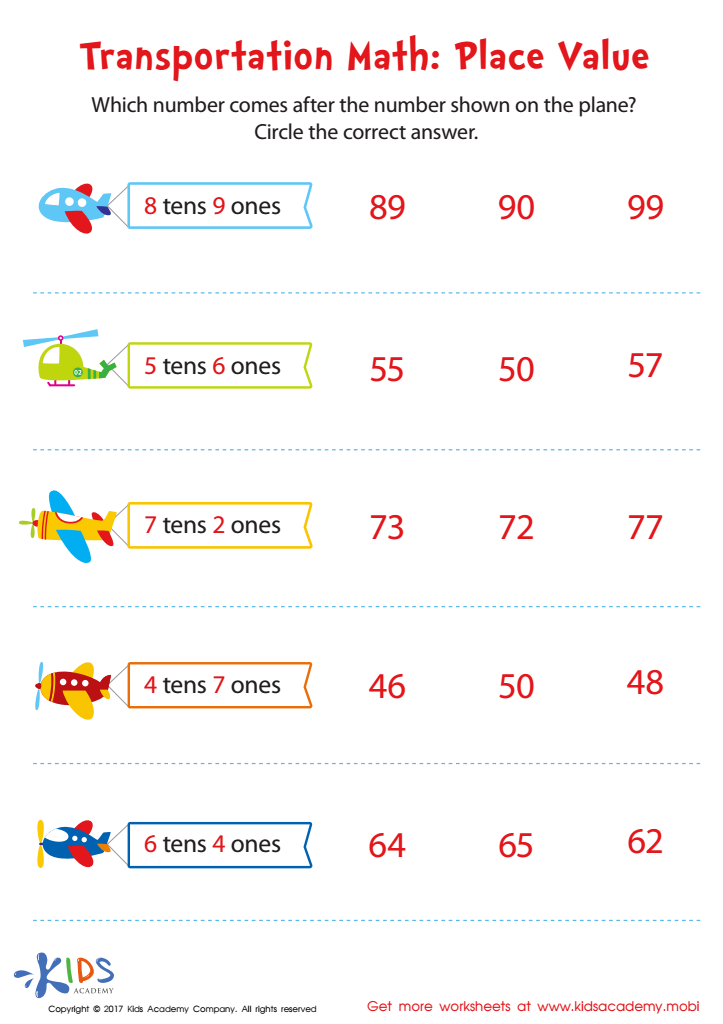
Transportation Math Printable
 Assign to My Students
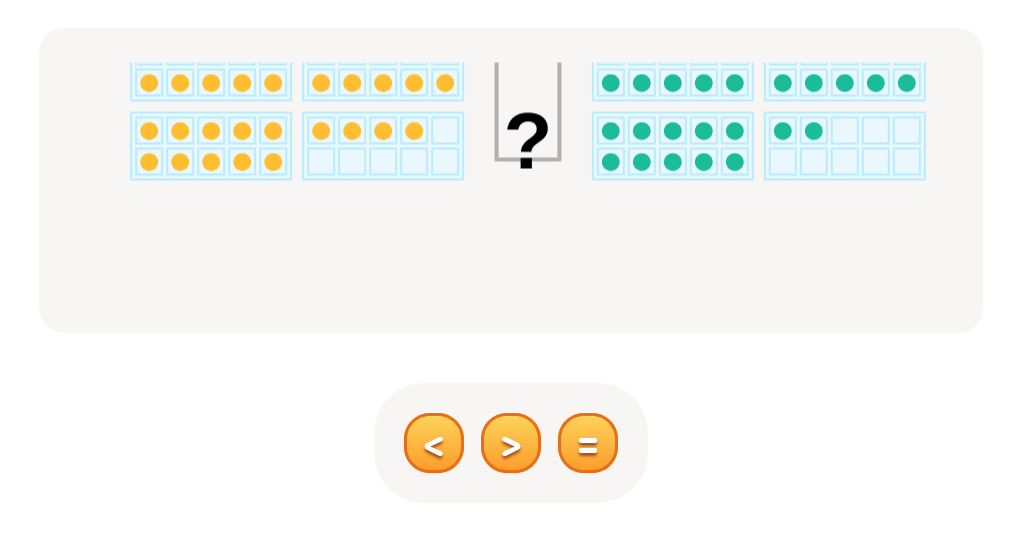

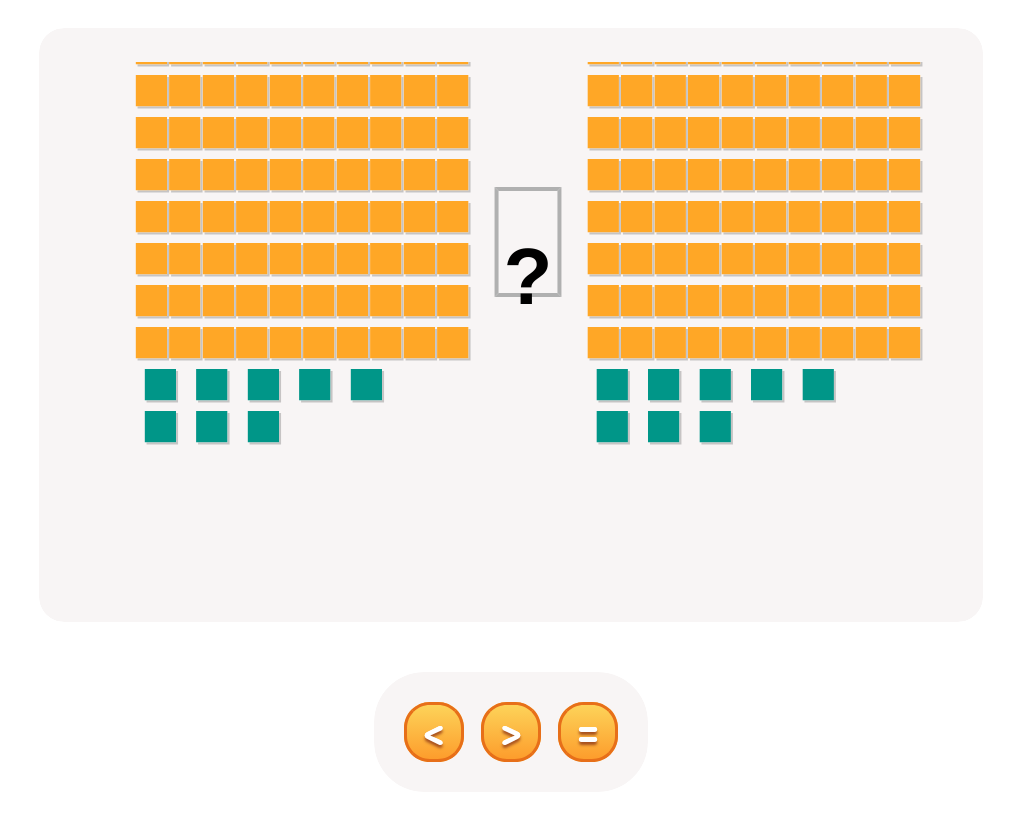
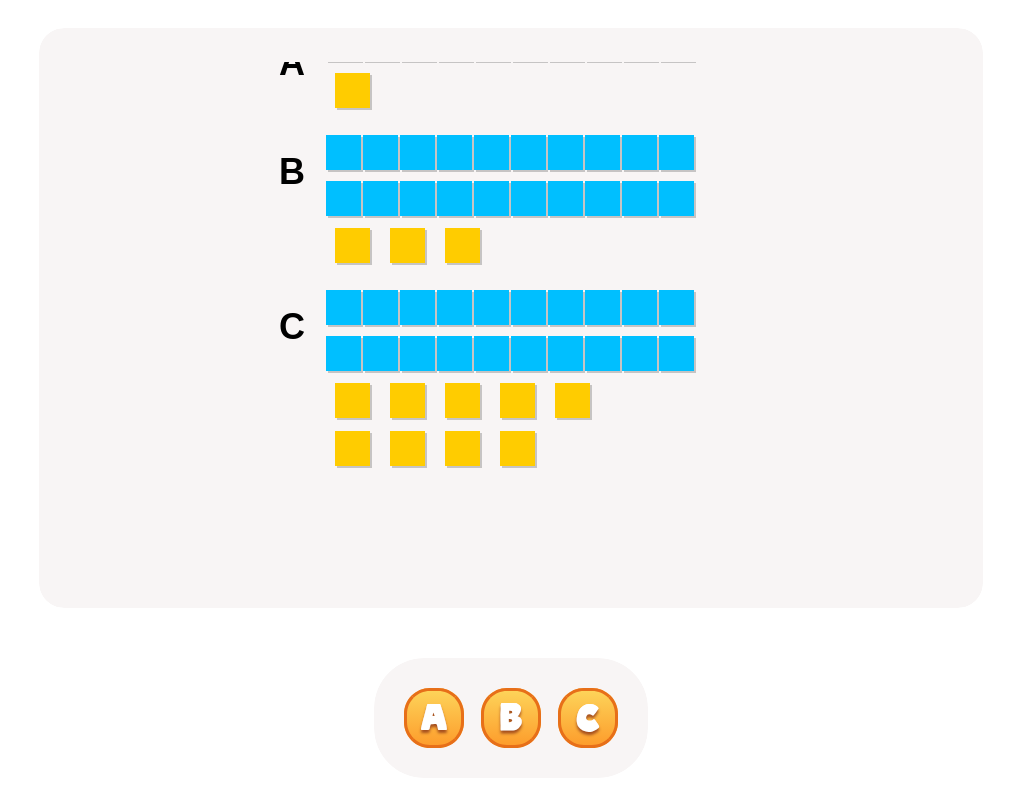
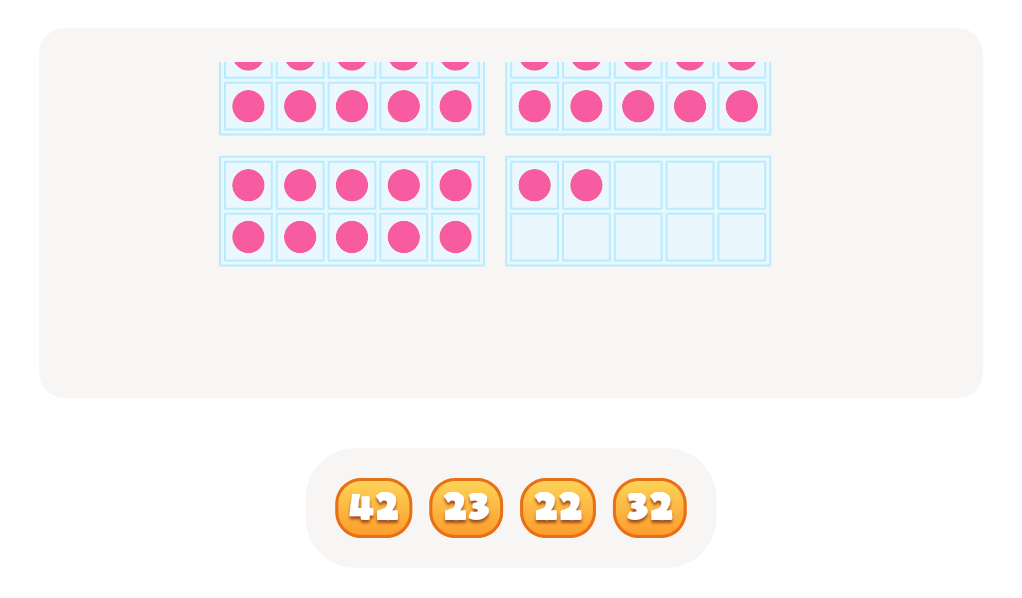
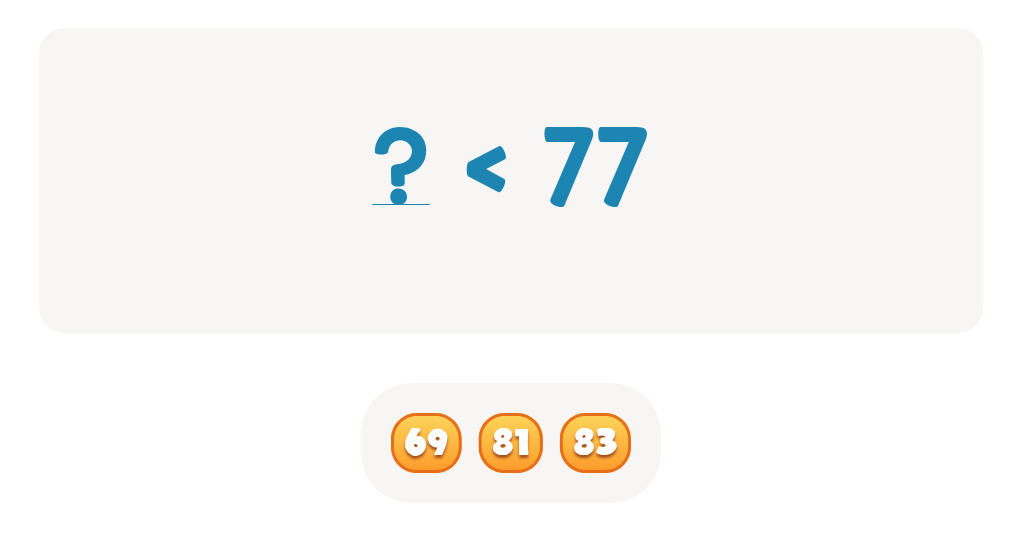
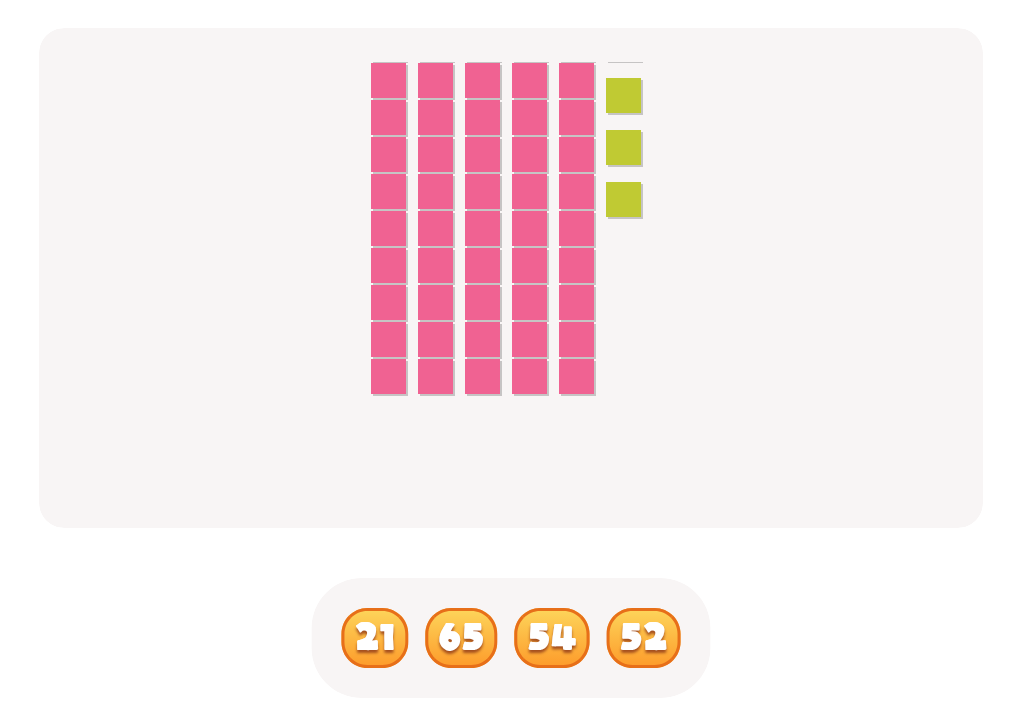
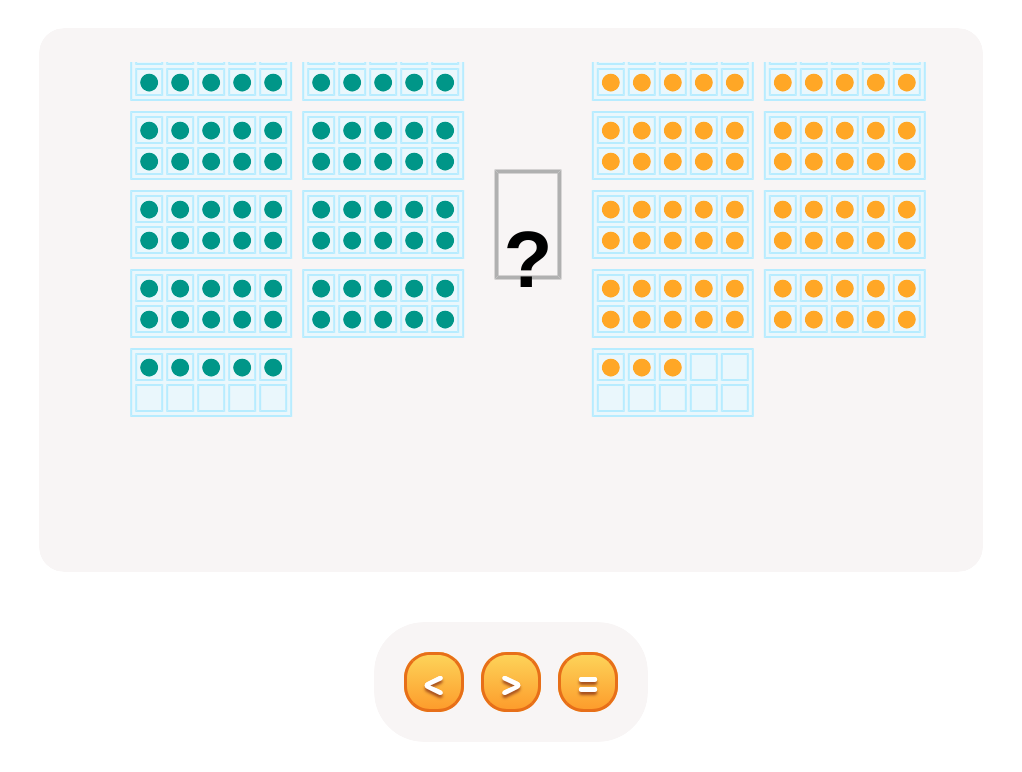
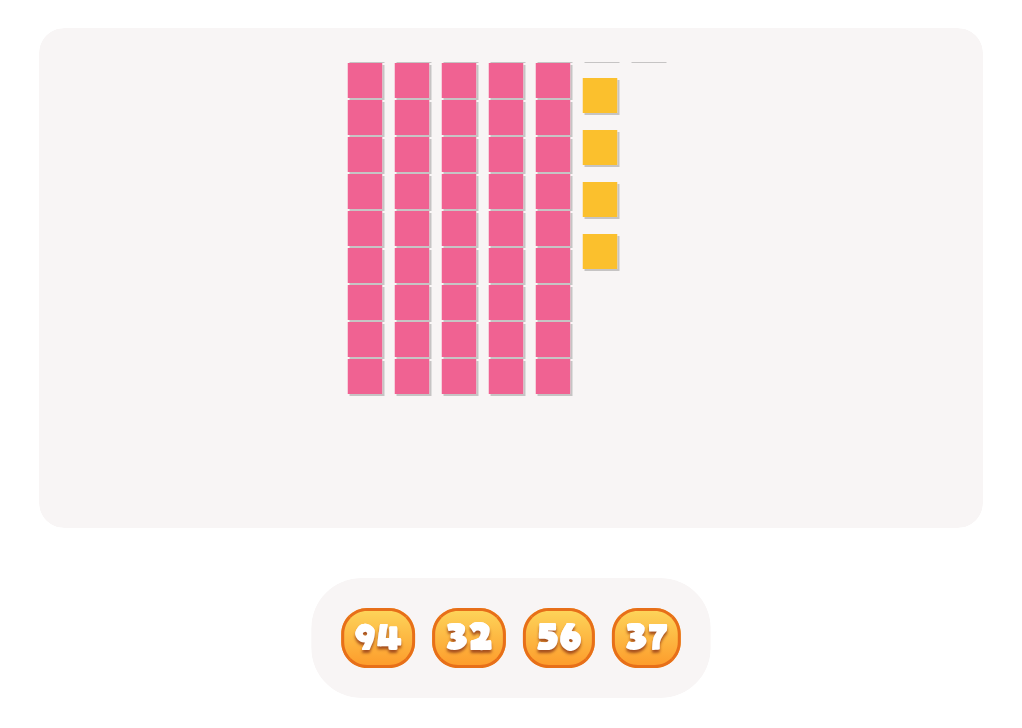
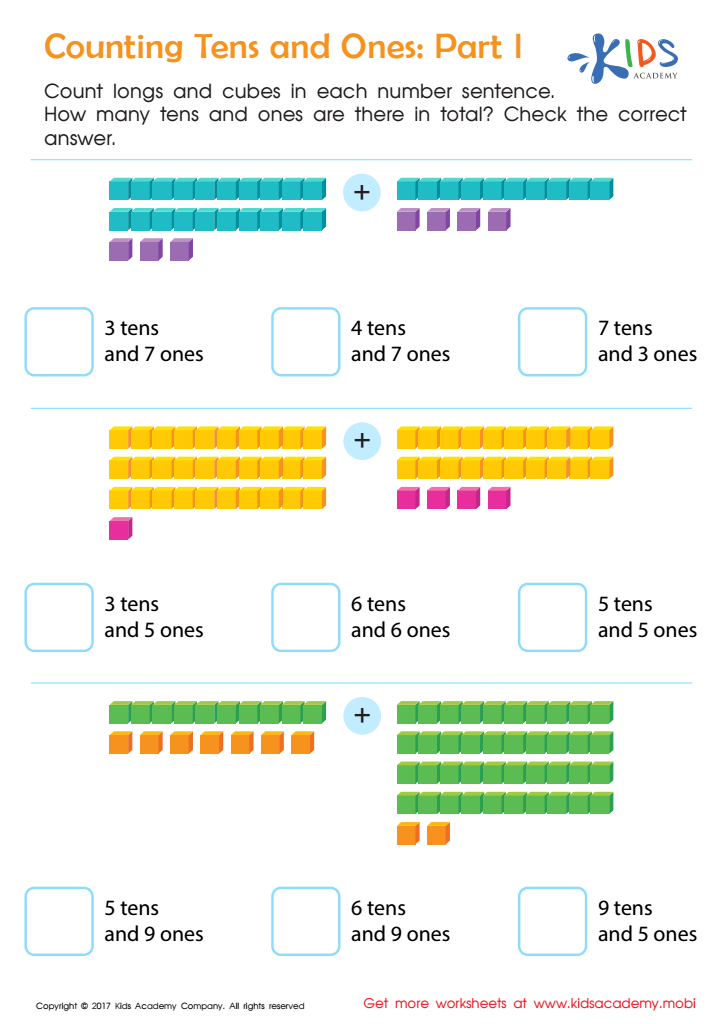
Counting Tens and Ones: Part 1 Worksheet
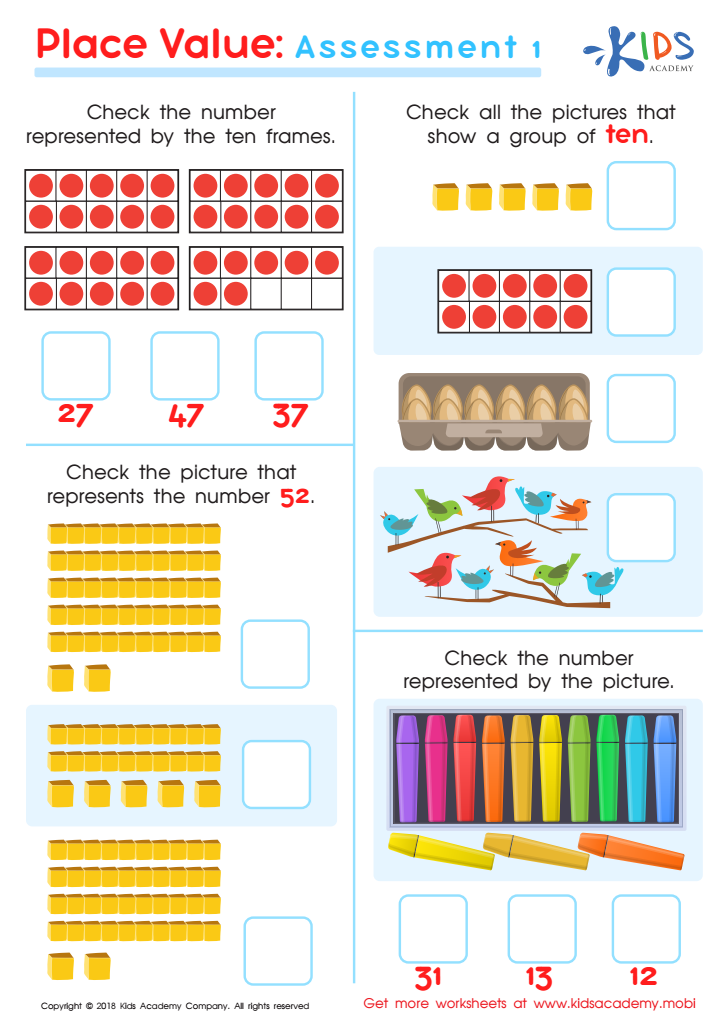
Place Value: Assessment 1 Worksheet
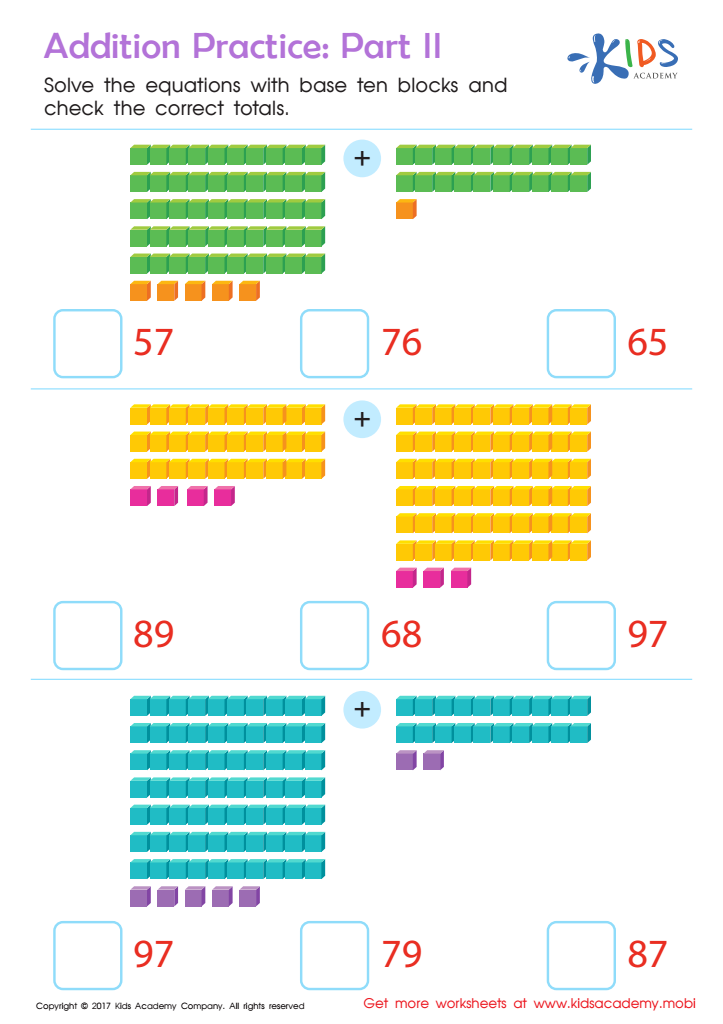
Addition Practice Sheet: Part 2
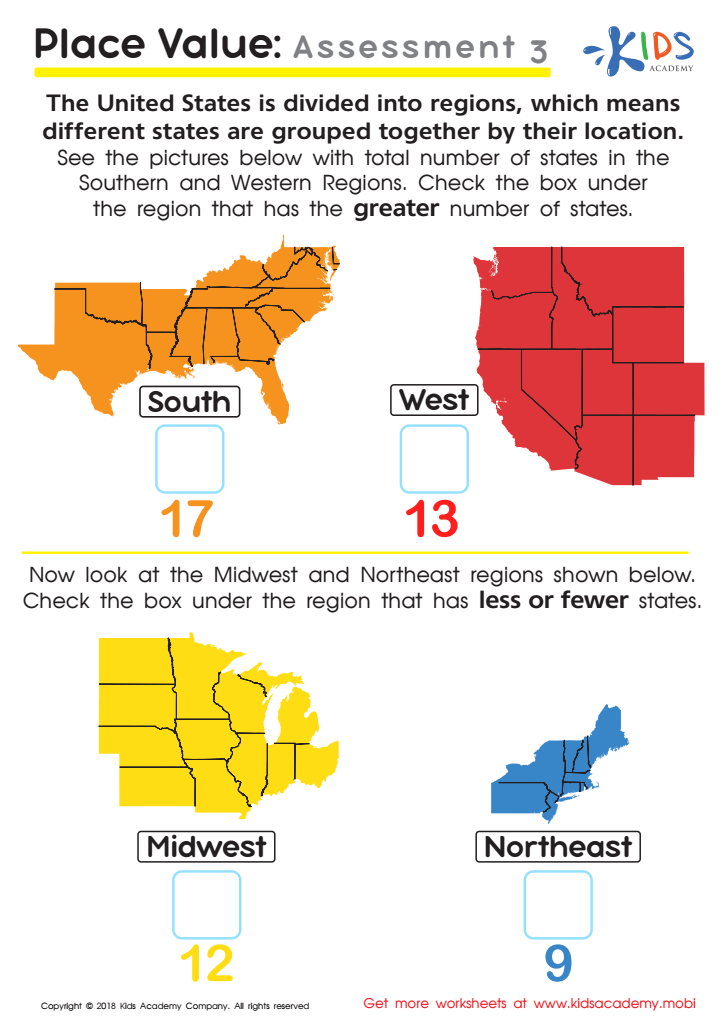
Place Value: Assessment 3 Worksheet
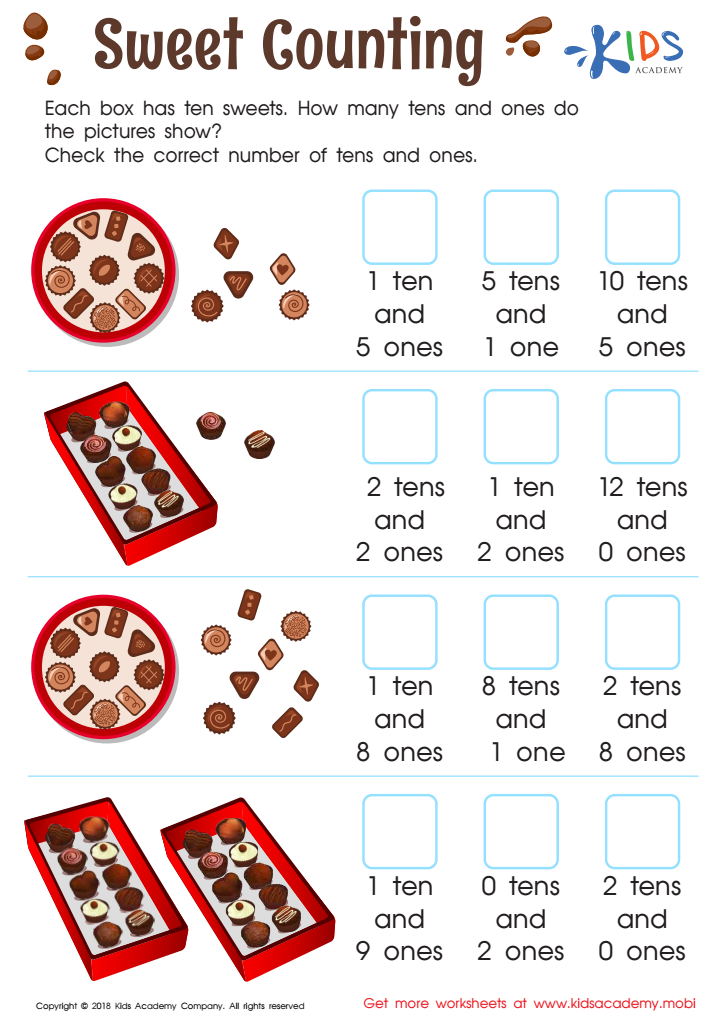
Sweet Counting - Part 2 Worksheet
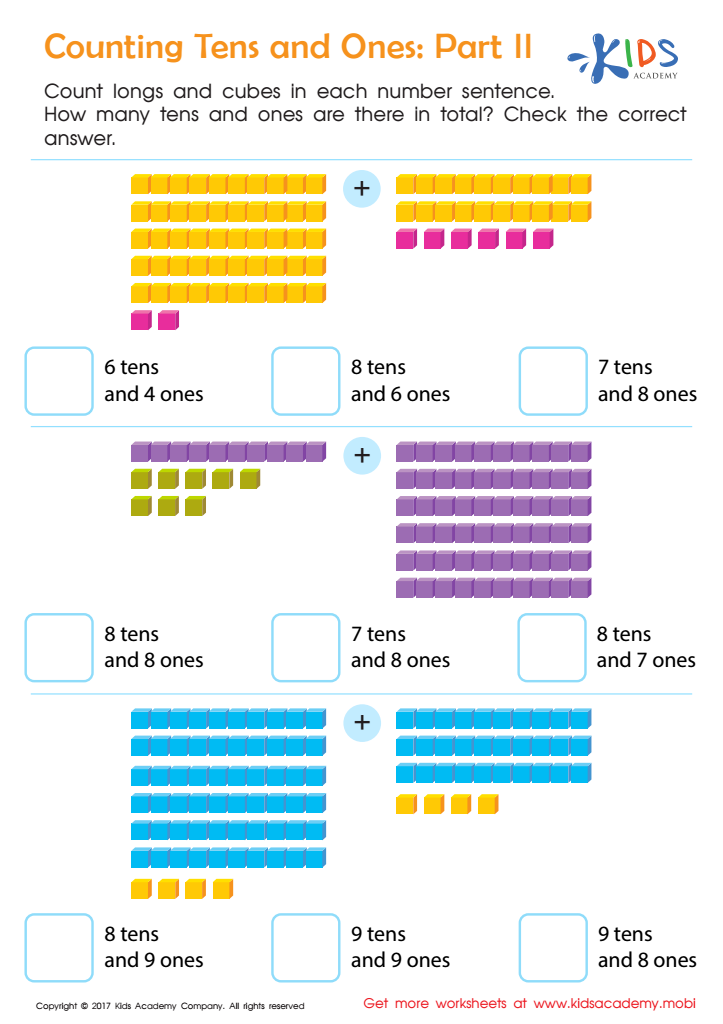
Counting Tens and Ones: Part 2 Worksheet








Counting skills and place value form the bedrock of a child's mathematical understanding, and it's crucial for both parents and teachers to prioritize these concepts, especially for children aged 5-6. At this developmental stage, children are like sponges, absorbing new information rapidly. By emphasizing counting skills, we provide them with a fundamental ability to quantify objects and understand basic numeric relationships. This simple yet powerful skill paves the way for more complex mathematical concepts such as addition, subtraction, and problem-solving.
Place value, on the other hand, introduces children to the significance of a digit's position in a number. Understanding place value helps children grasp that in the number 52, the '5' represents fifty and the '2' represents two, not just single entities but parts of a whole system. This early comprehension of place value is crucial for later mathematical operations like carrying in addition or borrowing in subtraction.
For both parents and teachers, nurturing these skills through interactive play, counting games, and practical examples can make learning enjoyable and effective. Establishing a strong numerical foundation during these formative years prepares children for future academic success, boosts their confidence in math, and fosters a positive attitude towards learning challenges. Prioritizing counting skills and place value at this age ensures students build a solid, intuitive understanding of numbers that will benefit them throughout their educational journey.