Understanding place value Place Value Worksheets for Ages 5-6
6 filtered results
-
From - To
Explore the essential concept of place value with our specially designed worksheets for ages 5-6. These engaging activities simplify the basics of units, tens, and hundreds, allowing young learners to grasp numerical structure effectively. Boost your child's confidence in math with fun, colorful exercises that highlight the importance of each digit's position in a number. Our printable worksheets offer hands-on practice, fostering a deeper understanding of math foundations. Perfect for home or classroom, these resources aim to build strong numerical skills, ensuring a solid footing for future math success. Make learning place value enjoyable with our comprehensive worksheets today!
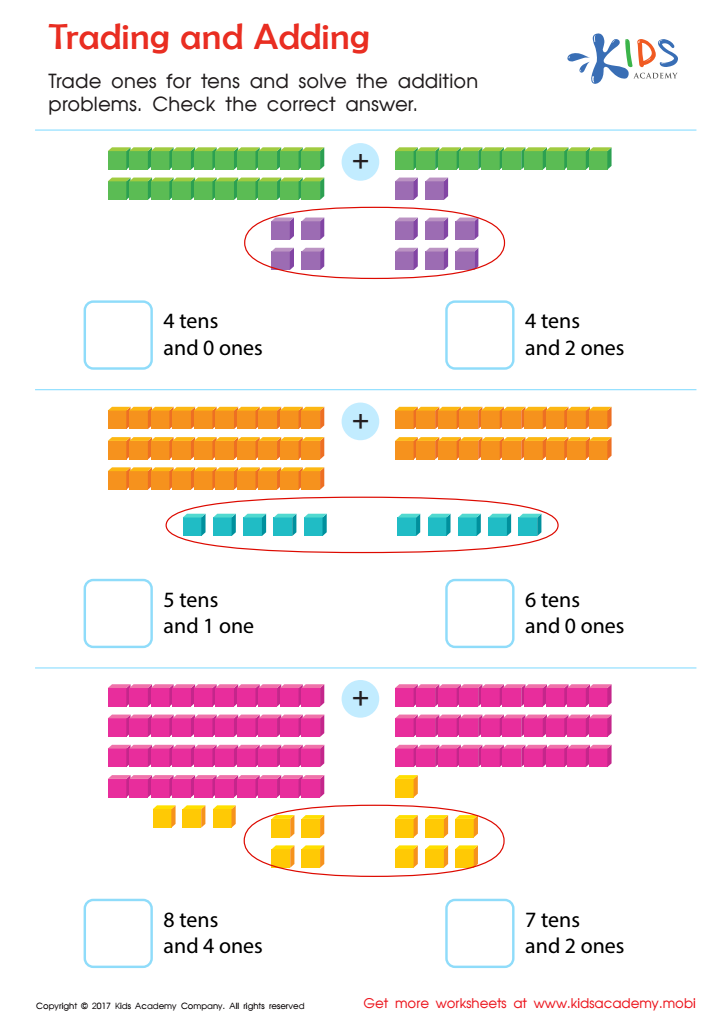
Trading and Adding Worksheet
 Assign to My Students
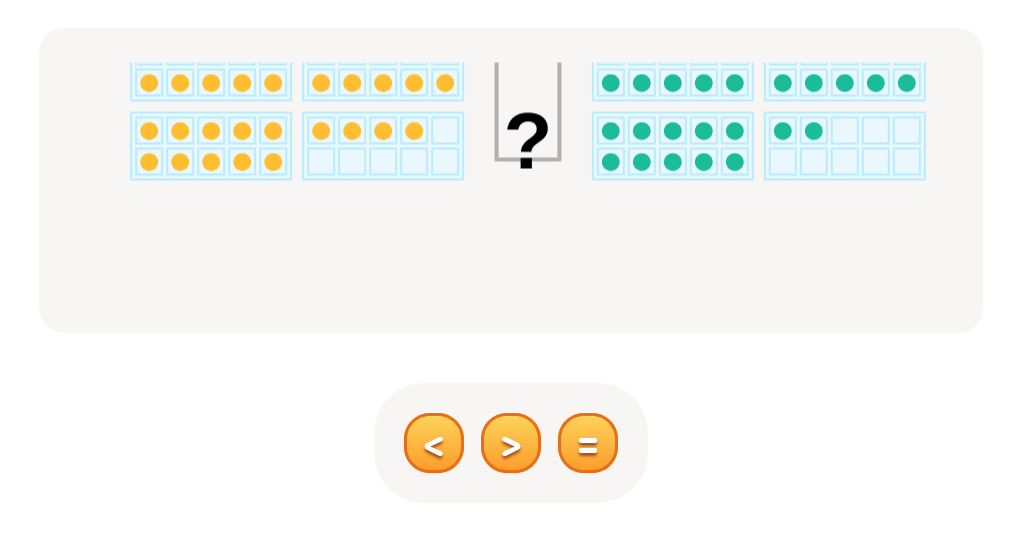

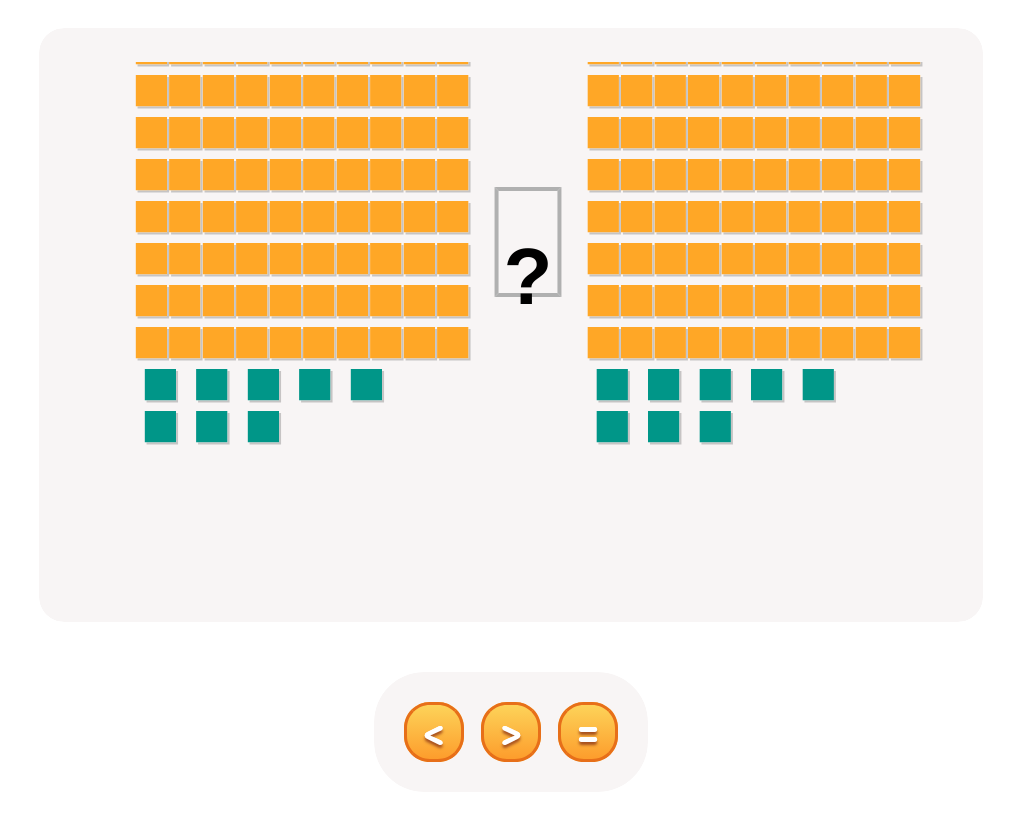
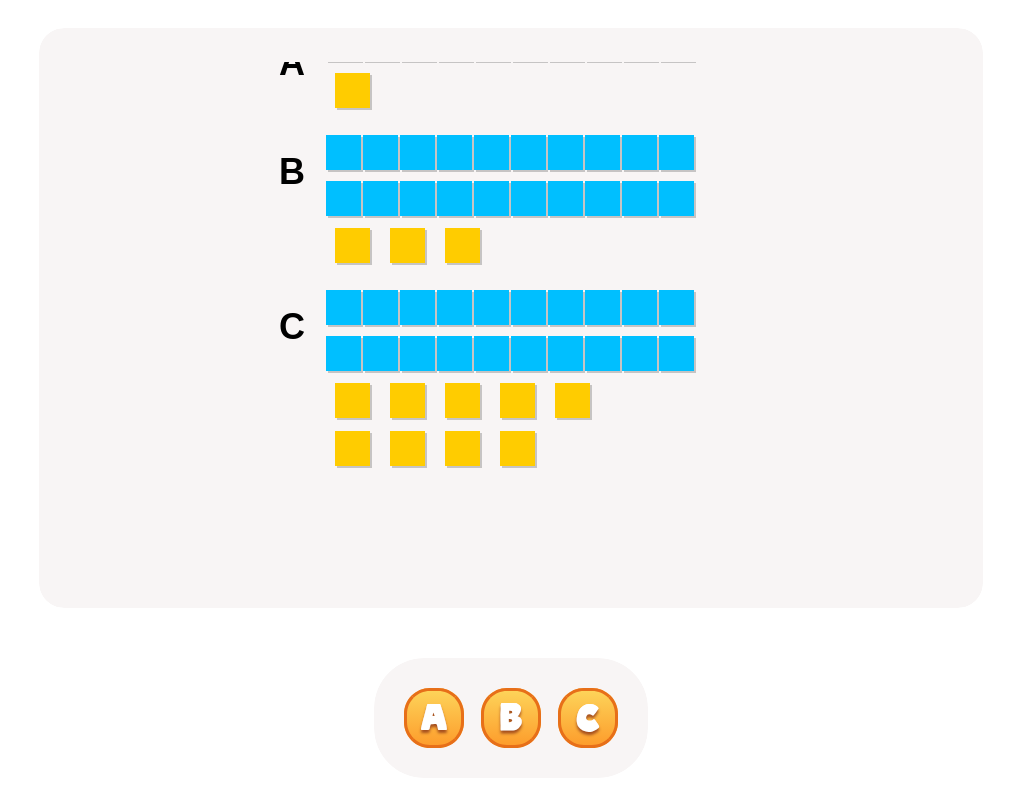
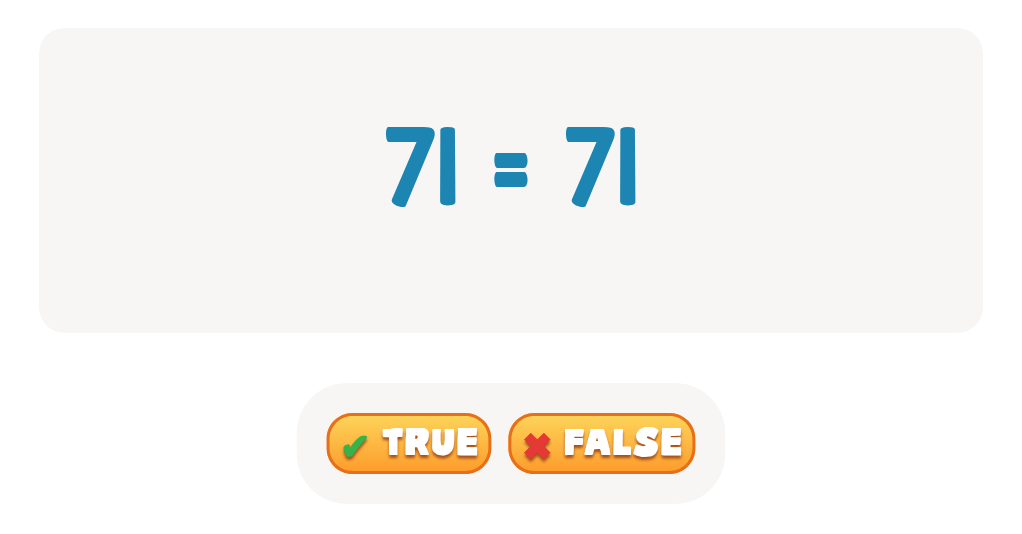
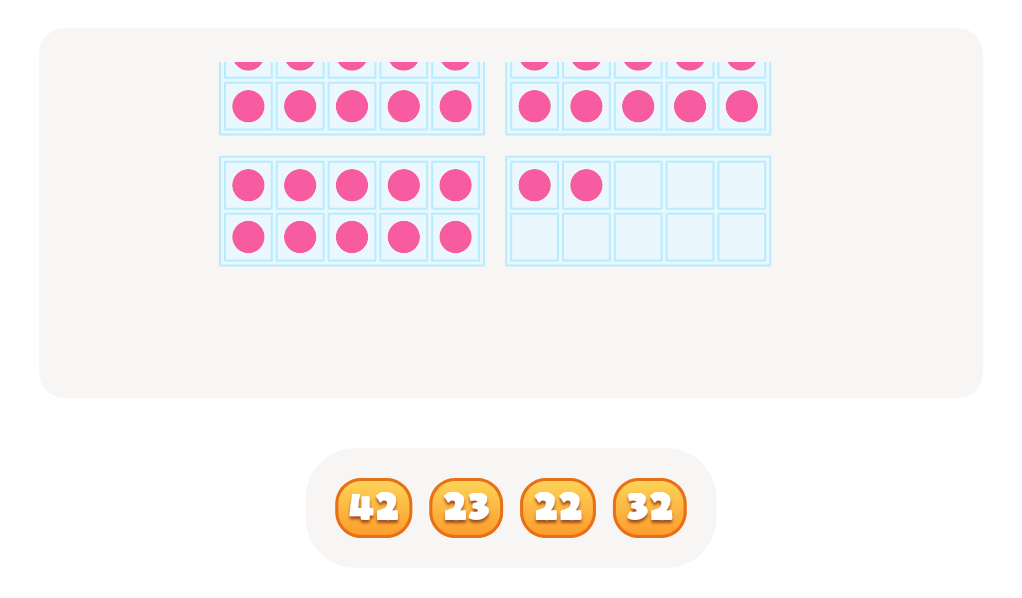
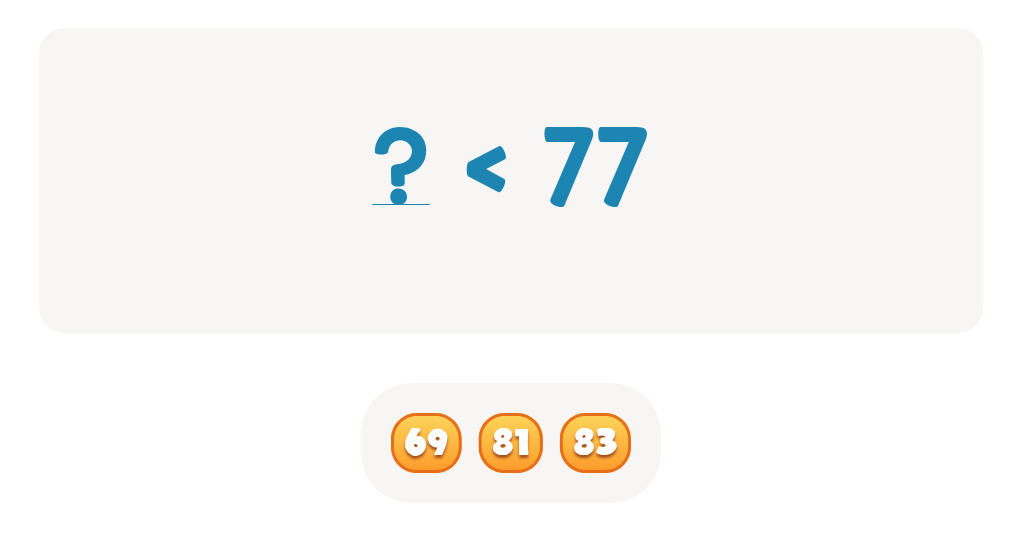
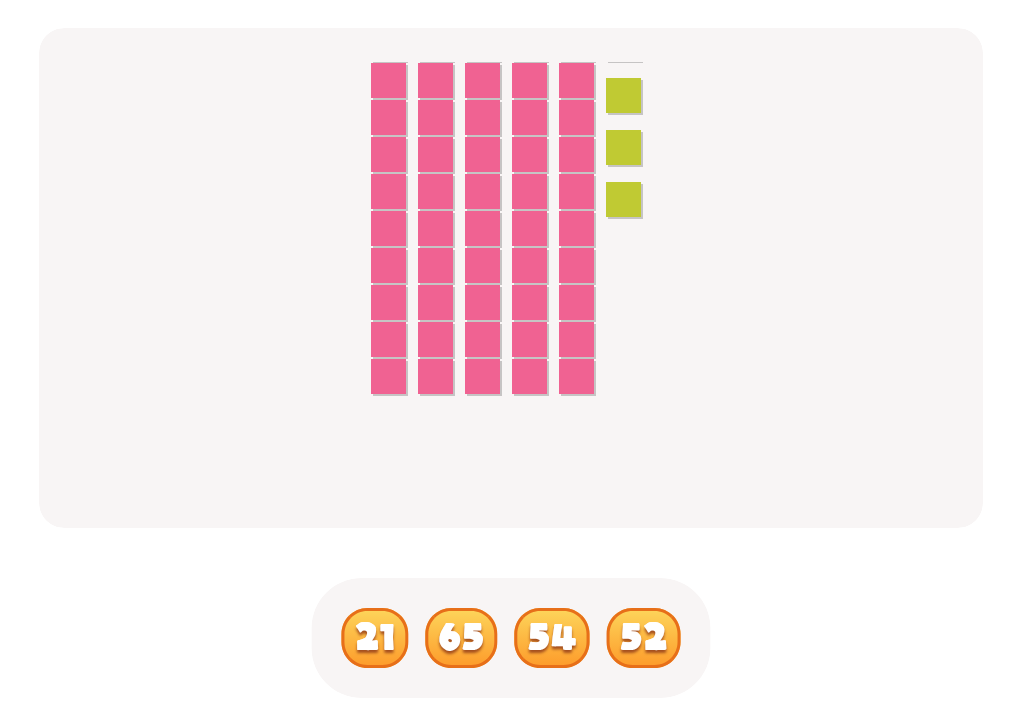
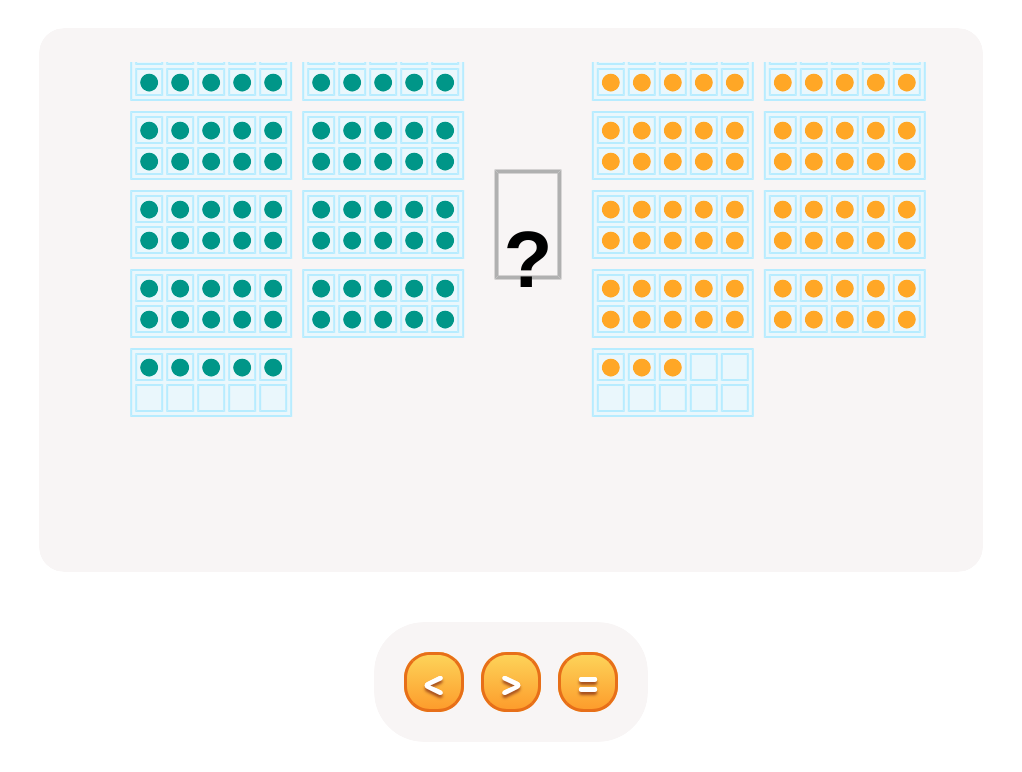
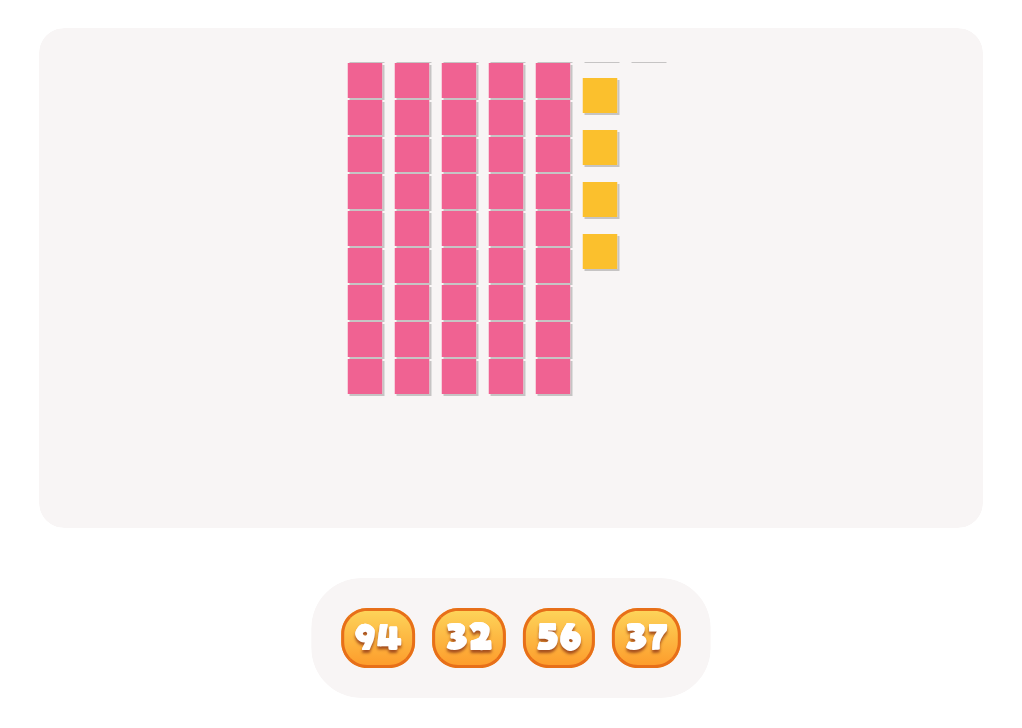
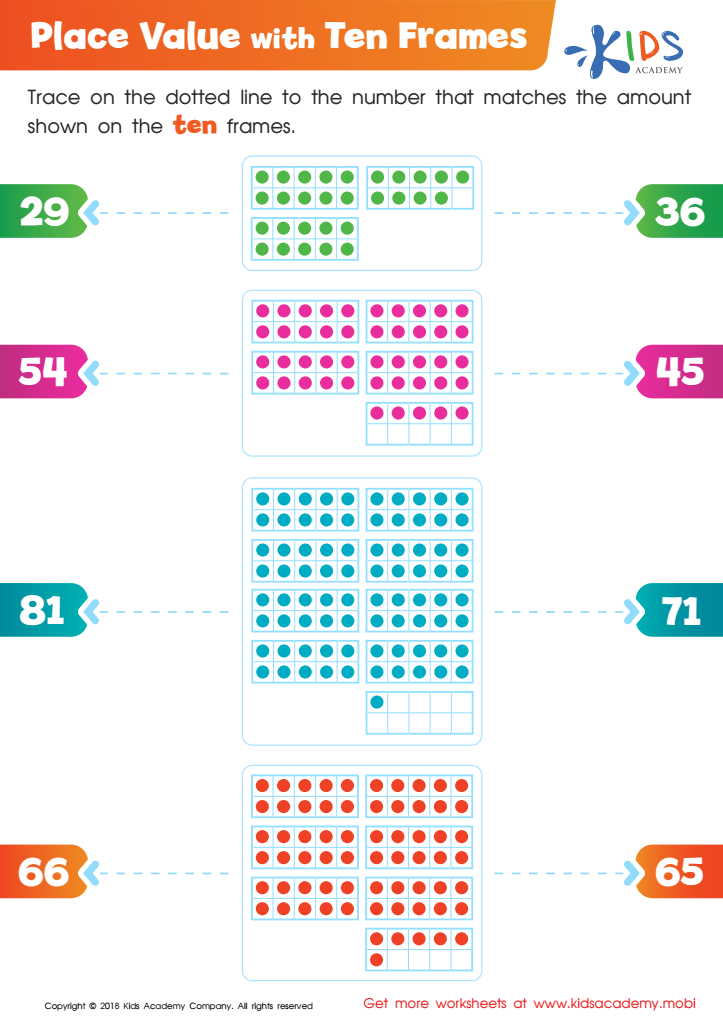
Place Values with Ten Frames Worksheet
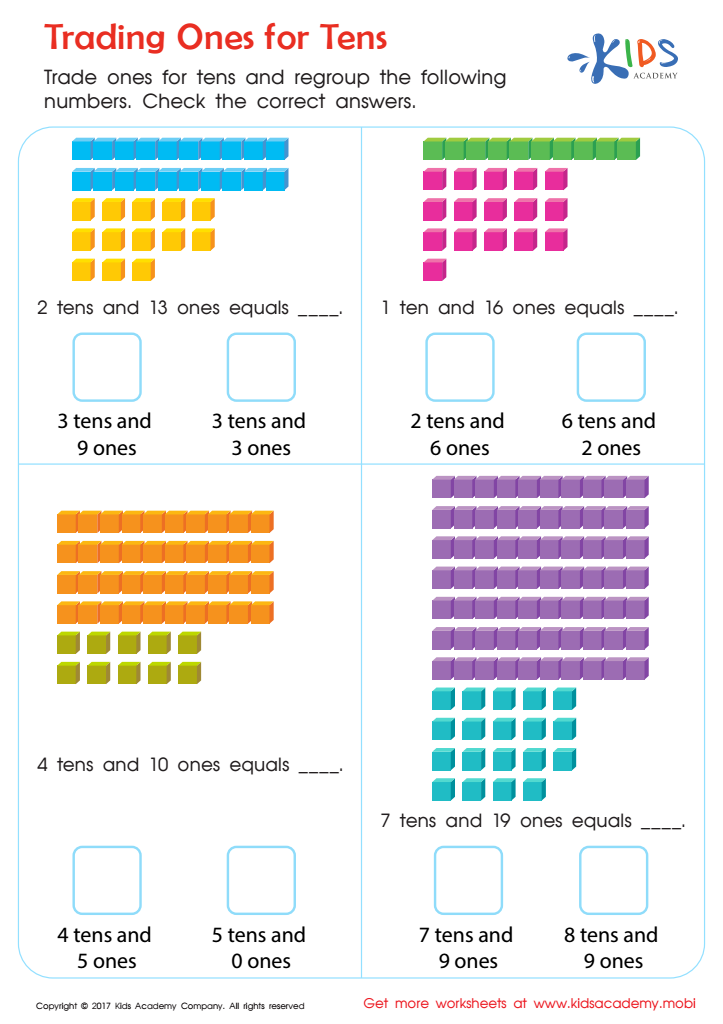
Trading Ones for Tens Worksheet
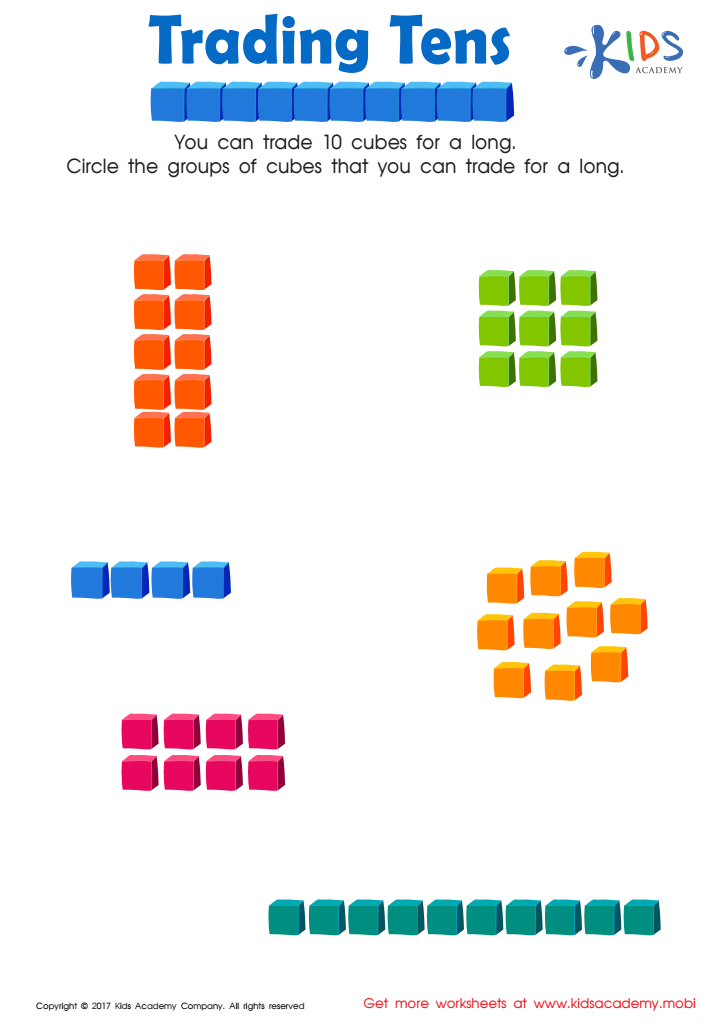
Trading Tens Worksheet
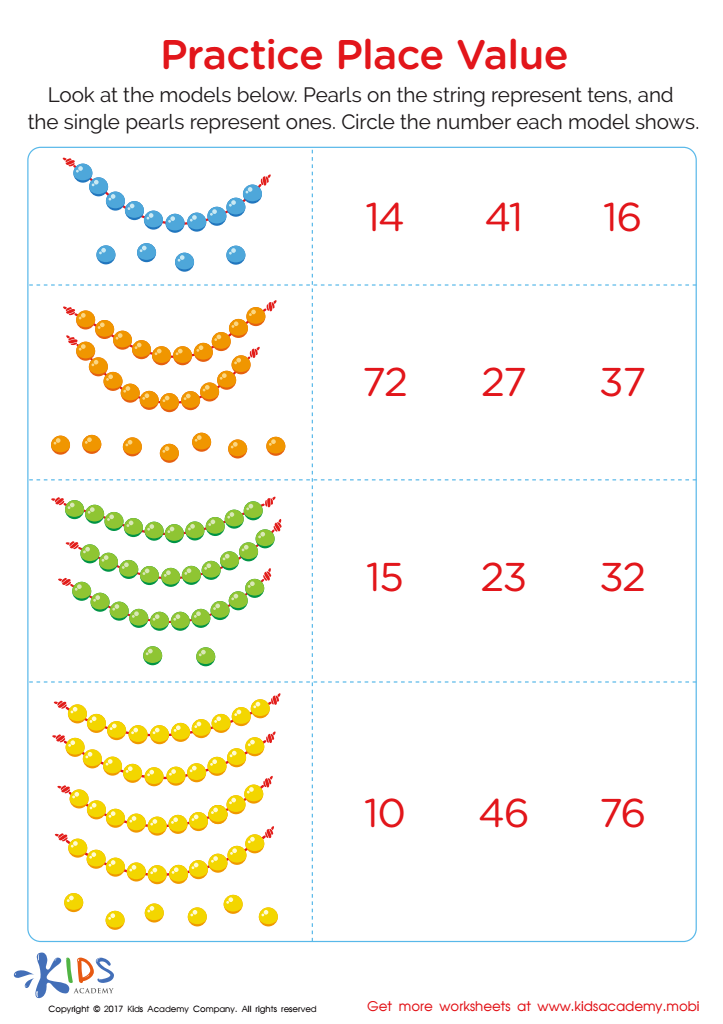
Practice Place Value Printable
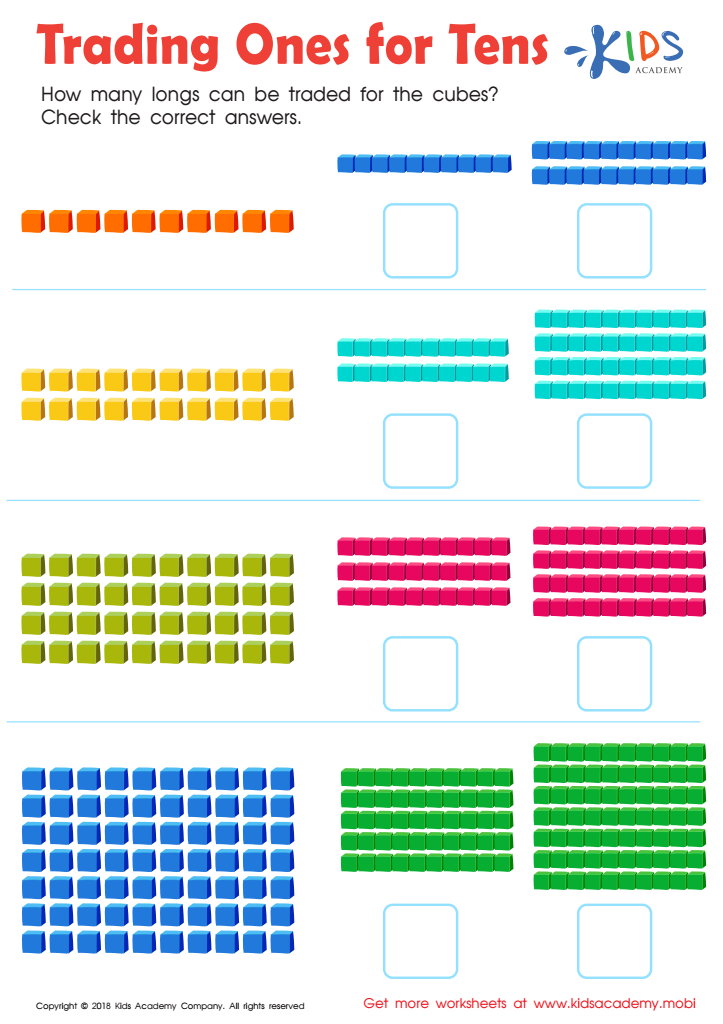
Trading Ones for Tens Worksheet: Part 2


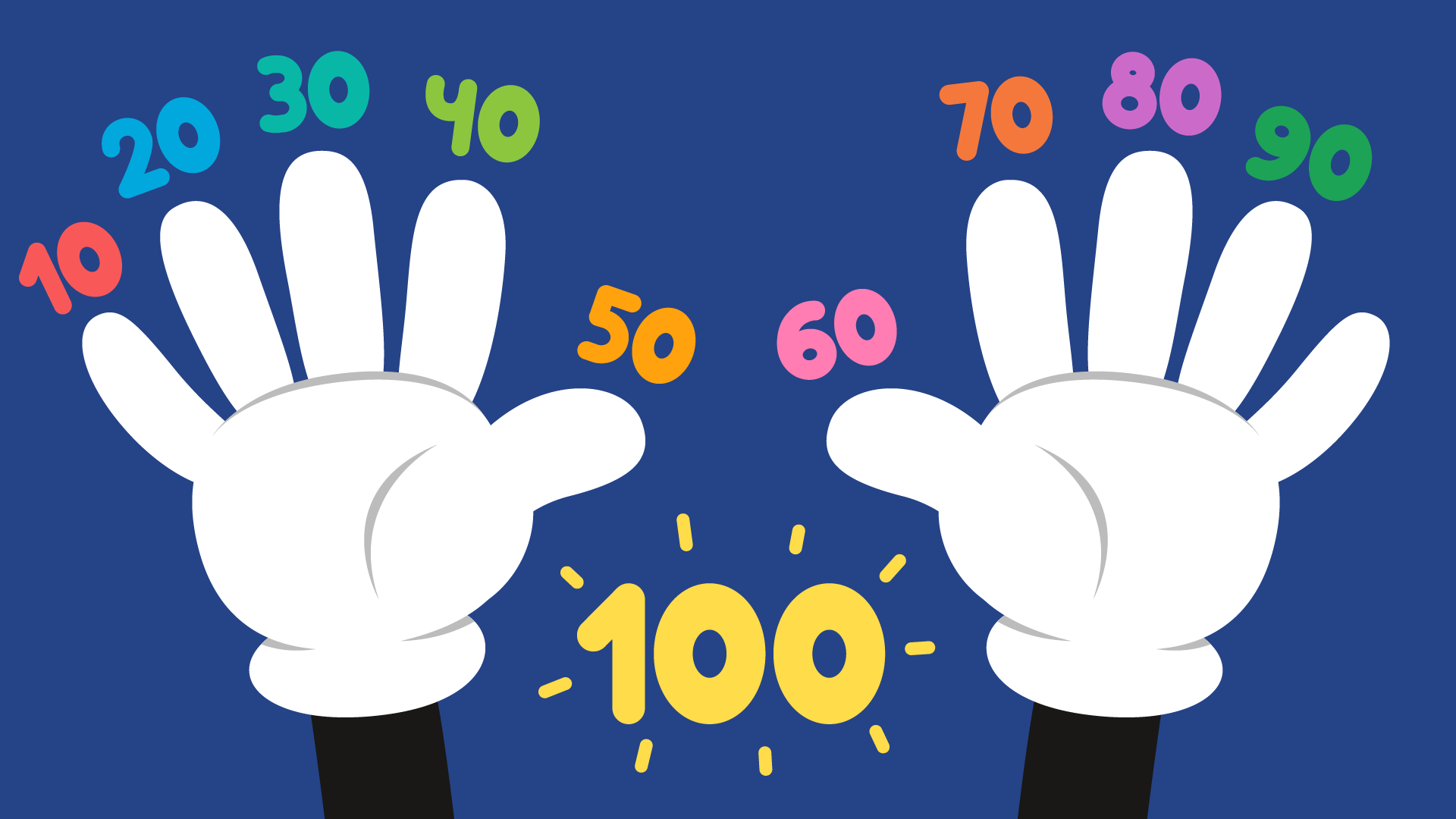





Understanding place value is a cornerstone of early mathematical learning and is crucial for children aged 5-6. Place value helps children comprehend that the value of a digit is not fixed but depends on its position within a number. This understanding lays the groundwork for all arithmetic operations, like addition, subtraction, multiplication, and division.
Teaching place value at a young age provides a solid foundation for grasping more complex mathematical concepts. For instance, it helps children understand the concept of "carrying over" in addition or "borrowing" in subtraction by visualizing the regrouping of tens and units. This early familiarity can build their confidence and competency in math, setting them up for long-term success.
Moreover, understanding place value enhances problem-solving skills. It encourages logical thinking and helps children approach problems systematically, rather than relying on rote memorization. This deep conceptual understanding enables students to tackle a variety of math problems with greater ease and flexibility.
For parents and teachers, focusing on place value ensures that young children develop numeracy skills in a meaningful way. It transforms abstract numbers into something tangible and understandable, making math more accessible and enjoyable. By fostering this critical understanding early on, we help children develop a lifelong appreciation and competency for mathematics.