Sorting skills Sorting Worksheets for Ages 5-6
5 filtered results
-
From - To
Enhance your child's sorting skills with our engaging sorting worksheets designed for ages 5-6! Our printable resources help young learners recognize similarities and differences while sorting objects by various categories such as color, shape, and size. Each worksheet offers fun, age-appropriate activities that promote critical thinking and cognitive development, making learning enjoyable. Designed with colorful graphics and interactive elements, these sorting exercises will captivate your child's attention and encourage independent learning. Equip your little one with essential organizational skills that lay the foundation for future math concepts. Explore our collection today and watch your child's confidence soar!
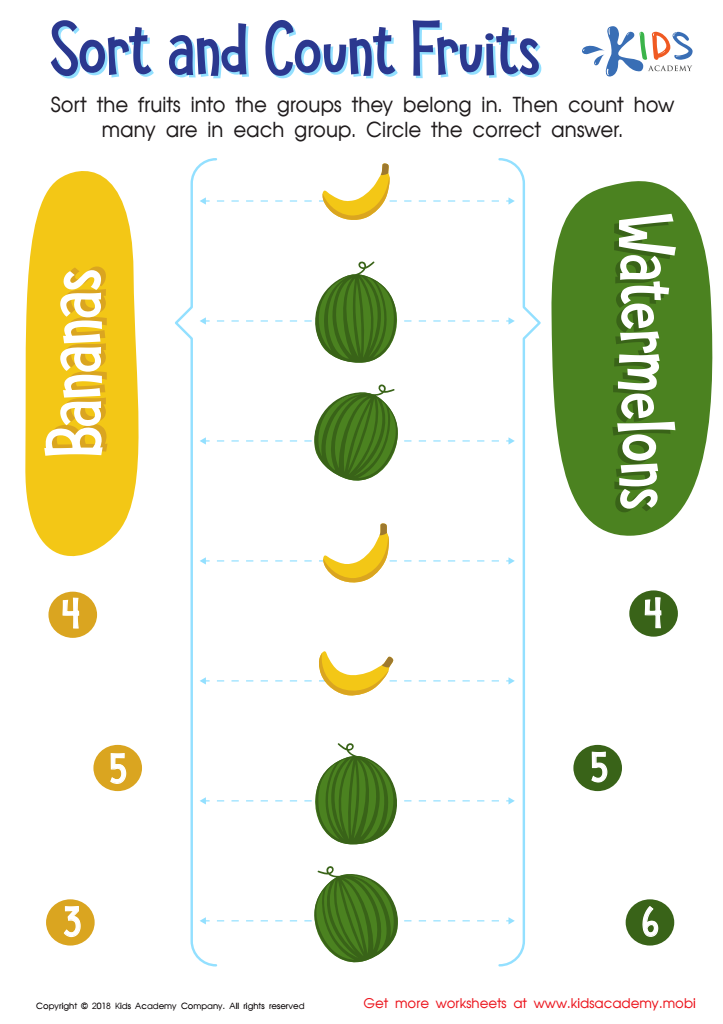
Sort and Count Fruits Worksheet
 Assign to My Students
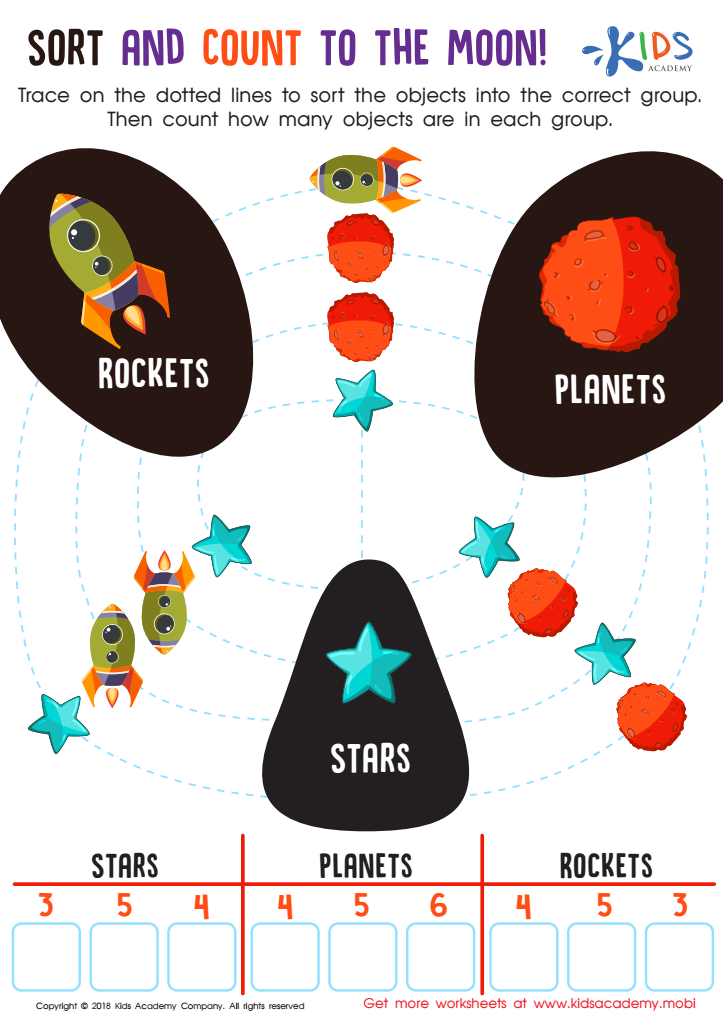
Sort and Count to the Moon Worksheet
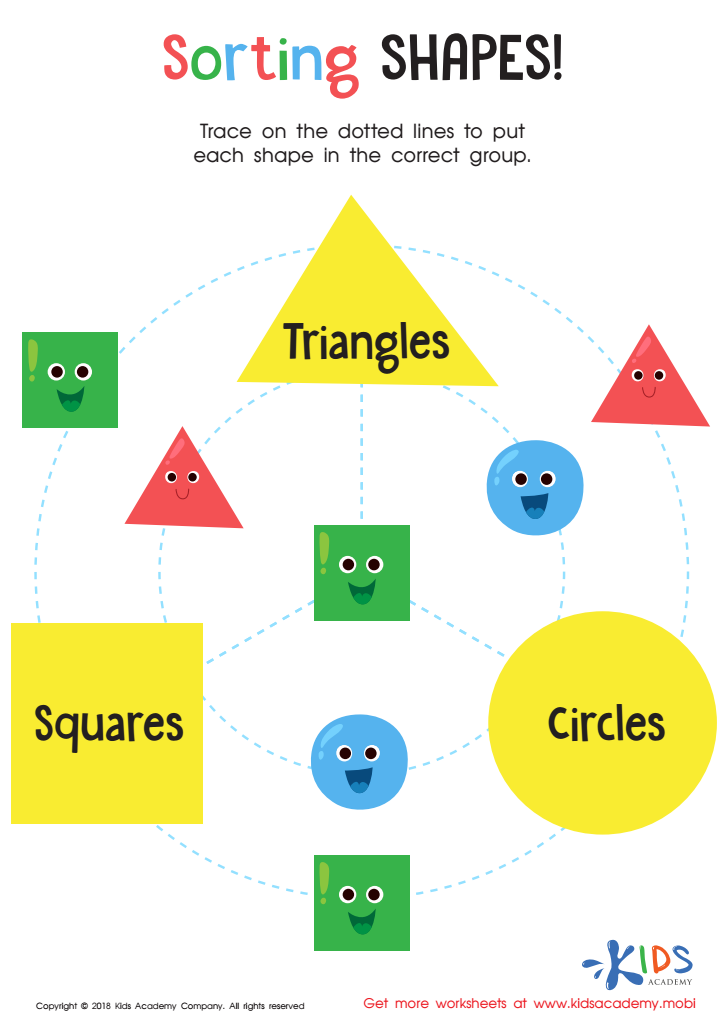
Sorting Shapes - Part 3 Worksheet
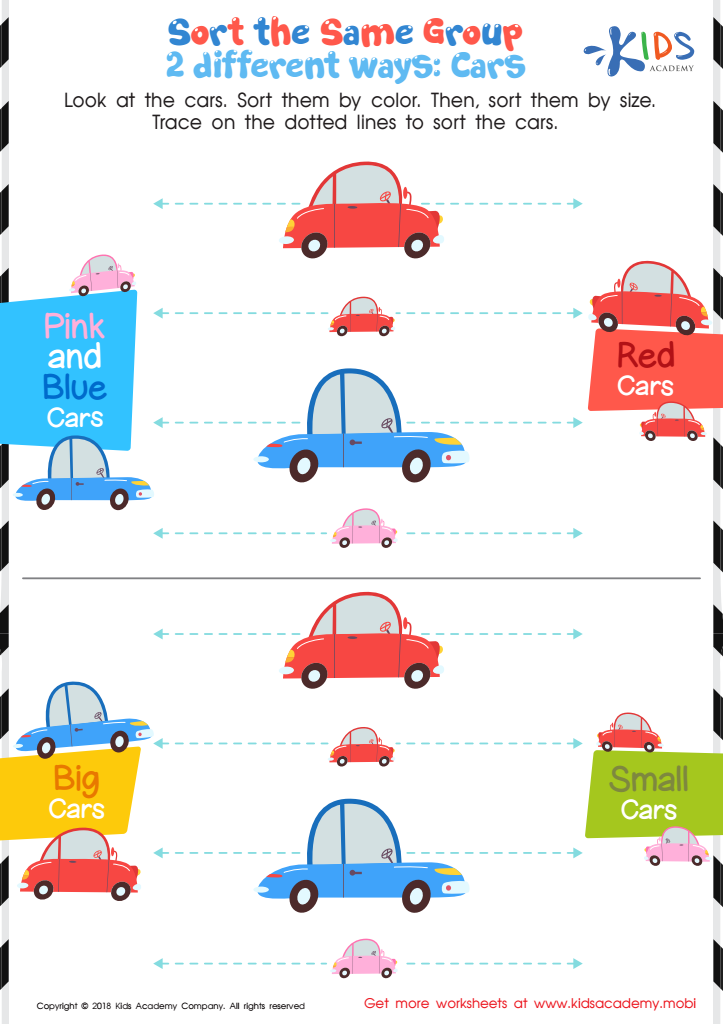
Sort the Same Group 2 Different Ways: Cars Worksheet
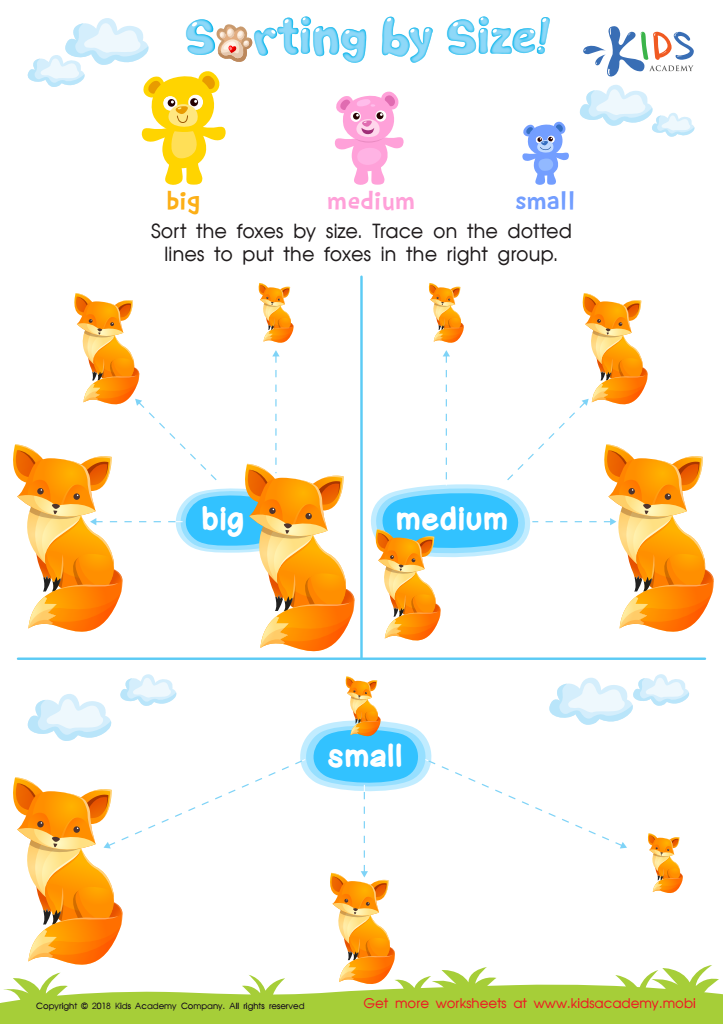
Sorting by Size Worksheet








Sorting skills are essential for children ages 5-6 as they form a foundational aspect of cognitive development. These skills not only help children organize their environment, but they also enhance critical thinking and problem-solving abilities. When children engage in sorting activities, such as grouping objects by color, shape, size, or type, they learn to categorize information, which is a vital precursor to more complex concepts like classification and data analysis.
Parents and teachers should care about cultivating sorting skills because such activities promote cognitive flexibility and attention to detail. Children learn to recognize patterns and differences, aiding in their observation skills and comprehension of the world around them. Moreover, sorting fosters language development; as children describe their sorting criteria, they expand their vocabulary and communication abilities.
Additionally, sorting activities can be incredibly engaging and interactive. They can be integrated into play, making learning enjoyable. By emphasizing sorting skills, parents and teachers not only prepare children for future educational challenges, such as mathematics and science, but also instill confidence and independence. Overall, nurturing sorting skills creates a robust foundation for future learning and development, making it a crucial focus for early childhood educators and families alike.








