Cognitive Development Subtraction Worksheets for Ages 5-6
4 filtered results
-
From - To
Discover our "Cognitive Development Subtraction Worksheets" designed for children ages 5-6 at Kids Academy. These engaging and visually appealing worksheets provide young learners with the essential tools to master subtraction while enhancing cognitive development. Each activity encourages critical thinking, problem-solving, and mathematical reasoning. Through interactive exercises, children build a strong foundation in math, boosting their confidence and academic performance. Perfect for classroom use or at-home practice, our worksheets make learning subtraction both fun and effective. Unlock your child's potential with these thoughtfully crafted resources to support early educational success.
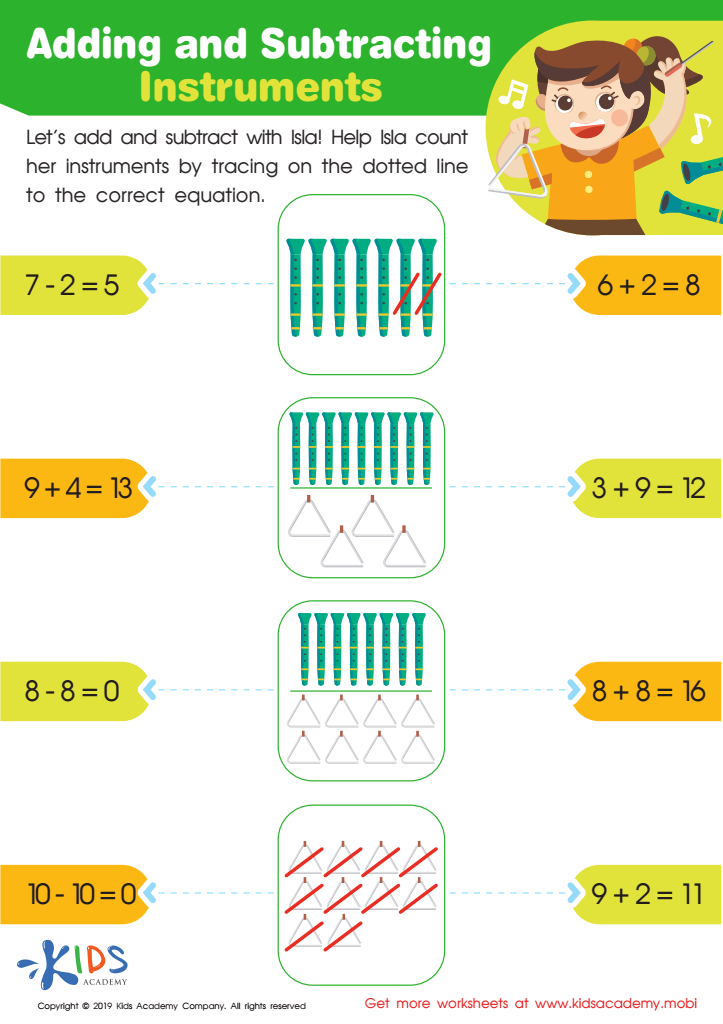
Adding and Subtracting: Instruments Worksheet
 Assign to My Students
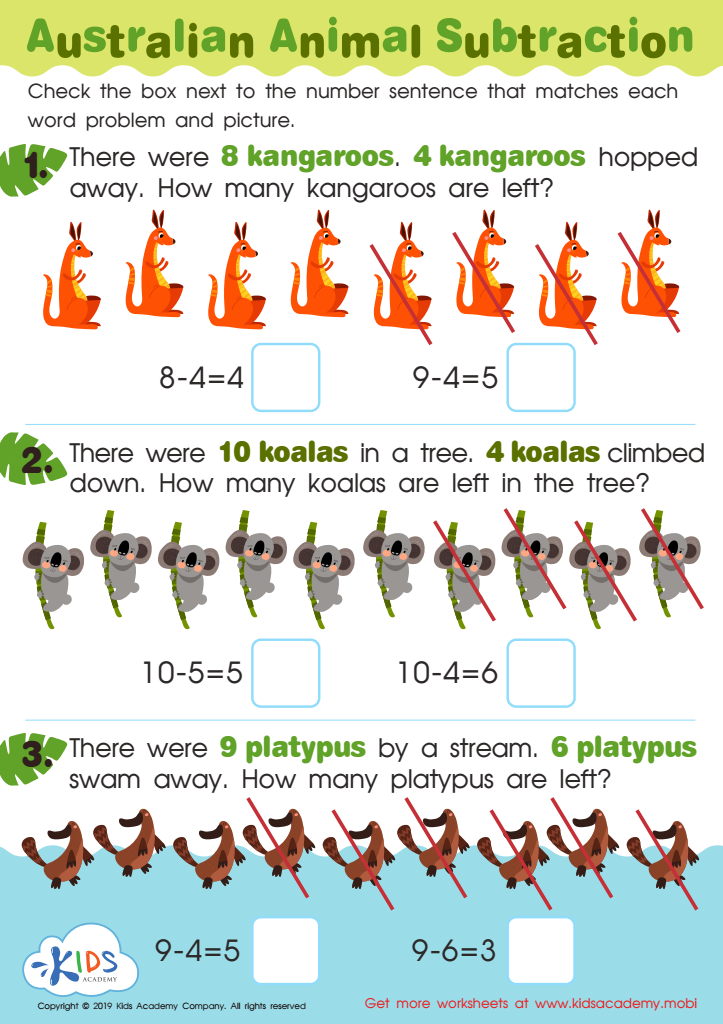
Australian Animal Subtraction Worksheet
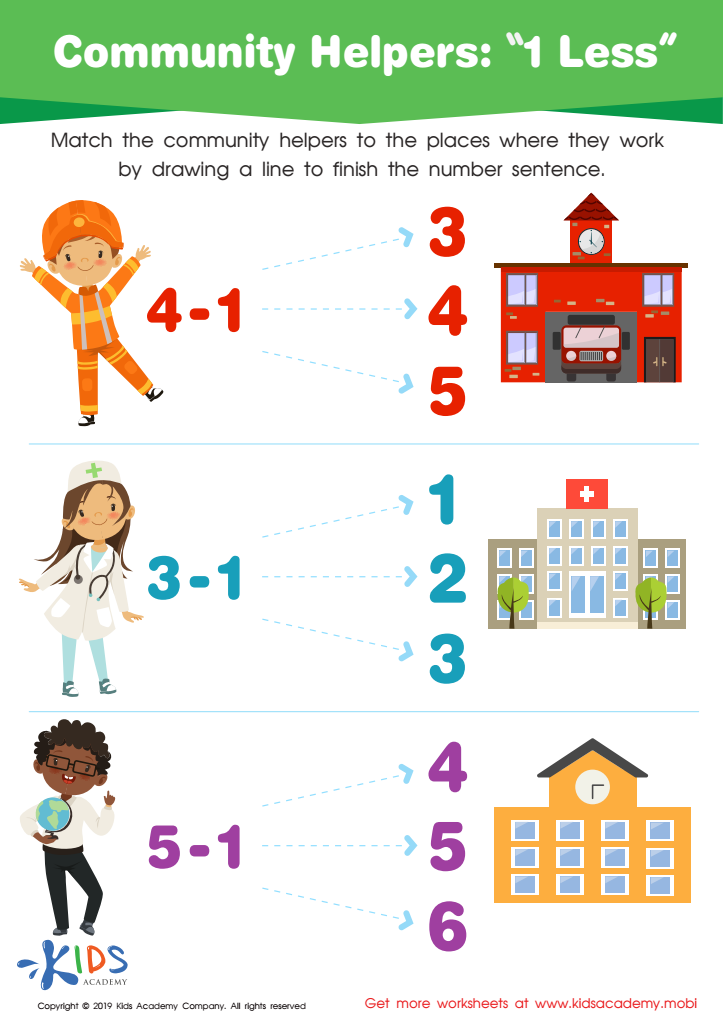
Community Helpers: 1 less Worksheet
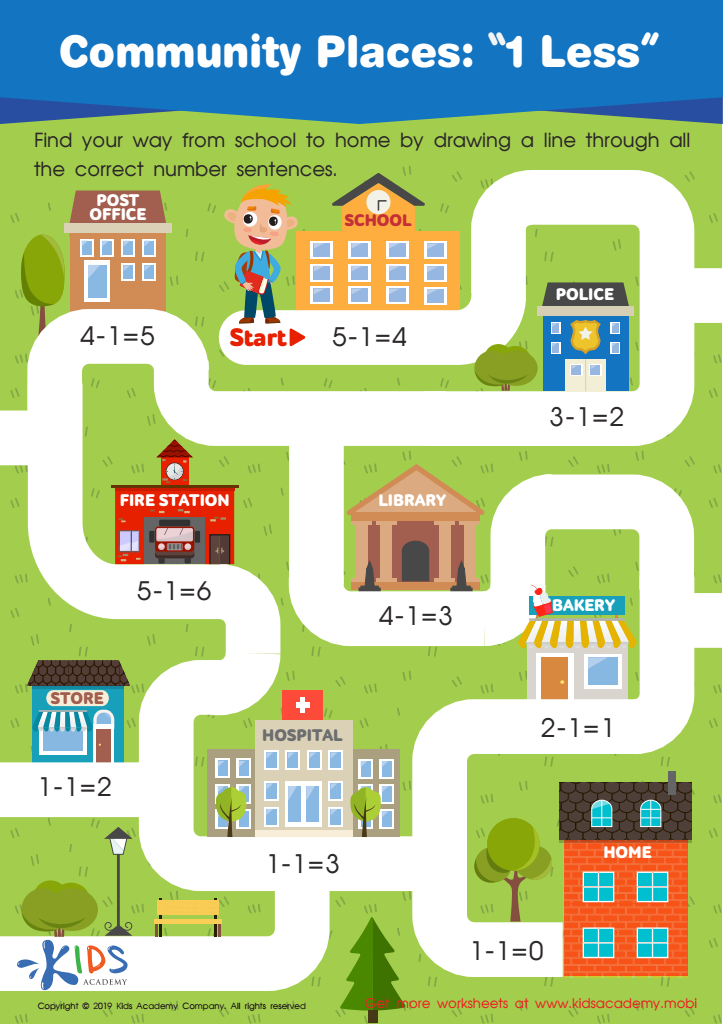
Community Places: 1 Less Worksheet





.jpg)


Cognitive development plays a pivotal role in shaping a child's ability to understand and perform fundamental operations such as subtraction, particularly for children aged 5-6. At this age, kids are developing their numeracy skills, which form the foundation for a lifetime of mathematical understanding and problem-solving capabilities. Focusing on subtraction helps strengthen their cognitive abilities, promoting logical thinking, focusing skills, and memory retention.
Teachers and parents have a responsibility to foster environments that support these cognitive advancements. By introducing subtractive reasoning, they engender a critical step in mathematical cognition linked with quantity perception, understanding numerical relationships, and developing counting skills both forwards and backwards. These early skills extend beyond math; they assist in improving overall cognitive function, such as pattern recognition and sequential thought.
Additionally, at ages 5-6, children are typically transitioning from concrete to more abstract ways of thinking. Engaging with subtraction helps solidify their grasp on abstract concepts through hands-on, visual, and practical methods, reinforcing learning through experiential and tactile means. Active parental and teacher involvement in teaching subtraction not only aids academic performance but also enhances self-confidence as children successfully navigate challenging concepts, establishing a strong academic foundation for future educational success.








