Filters

8 filtered results

Clear all filters
Favorites
With answer key
Interactive

8 filtered results

Difficulty Level

Grade


Enhance your child's literacy and critical thinking skills with our "Logical Reasoning Building Vocabulary Worksheets" designed for ages 5-6! These engaging worksheets promote vocabulary development through fun exercises that encourage logical thinking. Each activity is tailored to help young learners make connections, recognize patterns, and draw conclusions, all while expanding their word knowledge. Ideal for home or classroom use, these worksheets lay a solid foundation for reading and comprehension skills. Empower your child’s learning journey with resources that spark curiosity and boost confidence in their language abilities. Explore the world of words through logical reasoning today!

Check out this FREE Trial Lesson on Building Vocabulary for age 5-6!

Understand and Use Interrogative (Question) Words

Favorites
With answer key
Interactive
  • 5-6
  • Logical Reasoning
  • Building Vocabulary
What Is It? Worksheet

What Is It? Worksheet

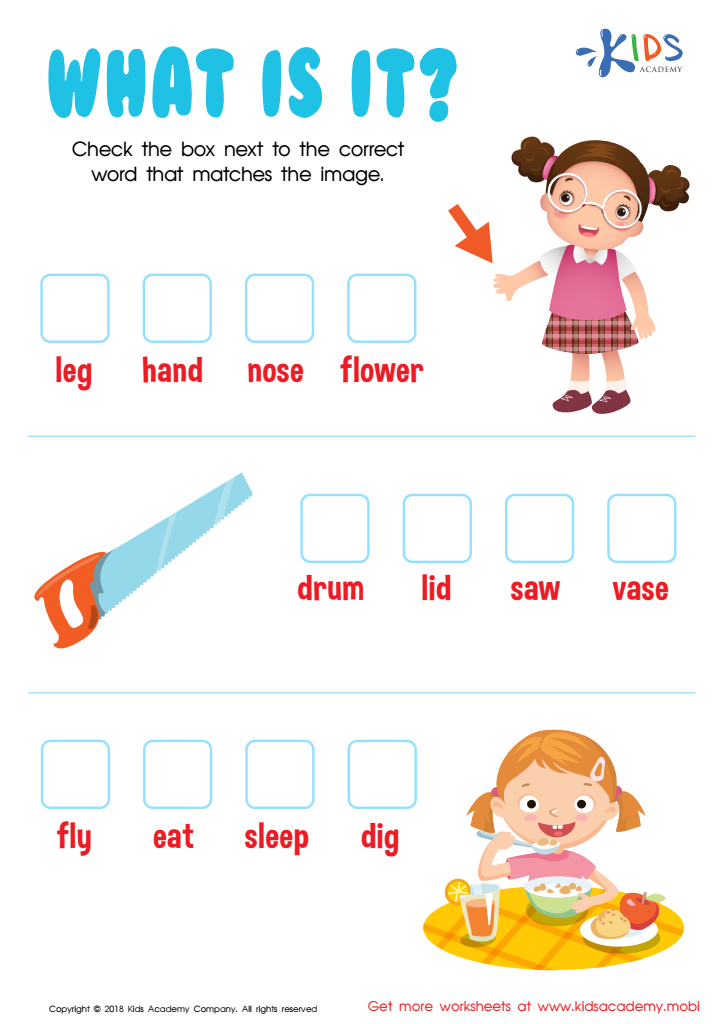
Test your kids' object recognition skills with this worksheet. Have them identify each picture, then check the box next to the correct word. Point to the image and ask your child what it is; then help them select the correct answer. It's a great way to see how well they can recognize objects from pictures.
What Is It? Worksheet
Worksheet
Which Doesn't Belong? Worksheet

Which Doesn't Belong? Worksheet

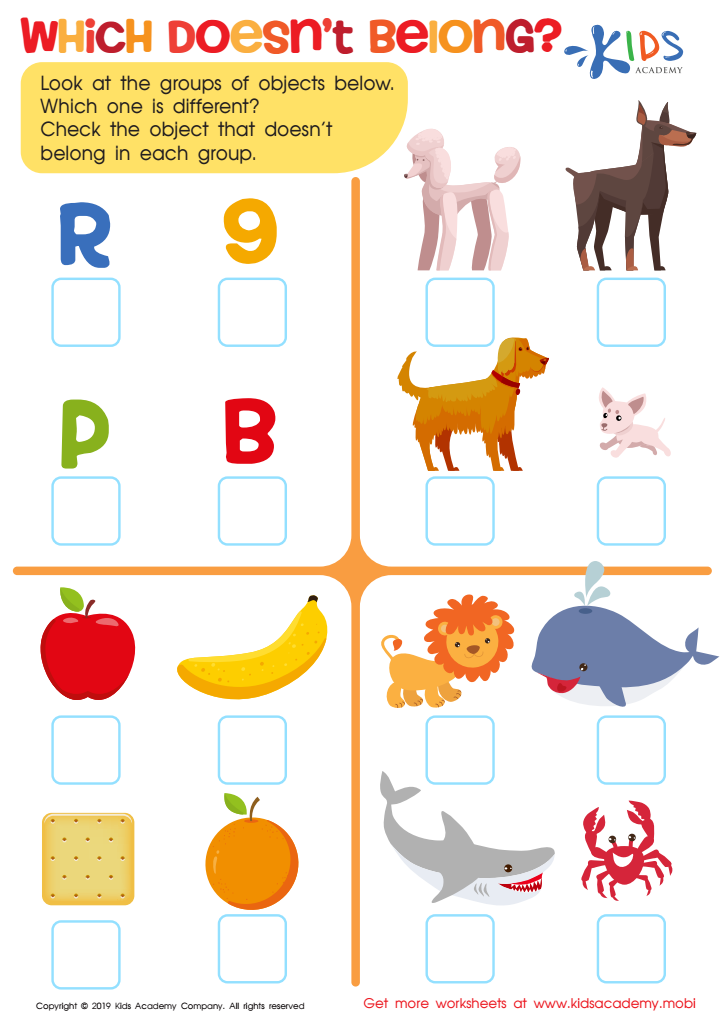
This engaging worksheet helps preschoolers recognize similar and different attributes of common words, using brightly-colored pictures. They analyze the items in each category and check off what is different. For extra practice, have them explain their reasoning verbally! Sorting and classifying are important skills to learn.
Which Doesn't Belong? Worksheet
Worksheet
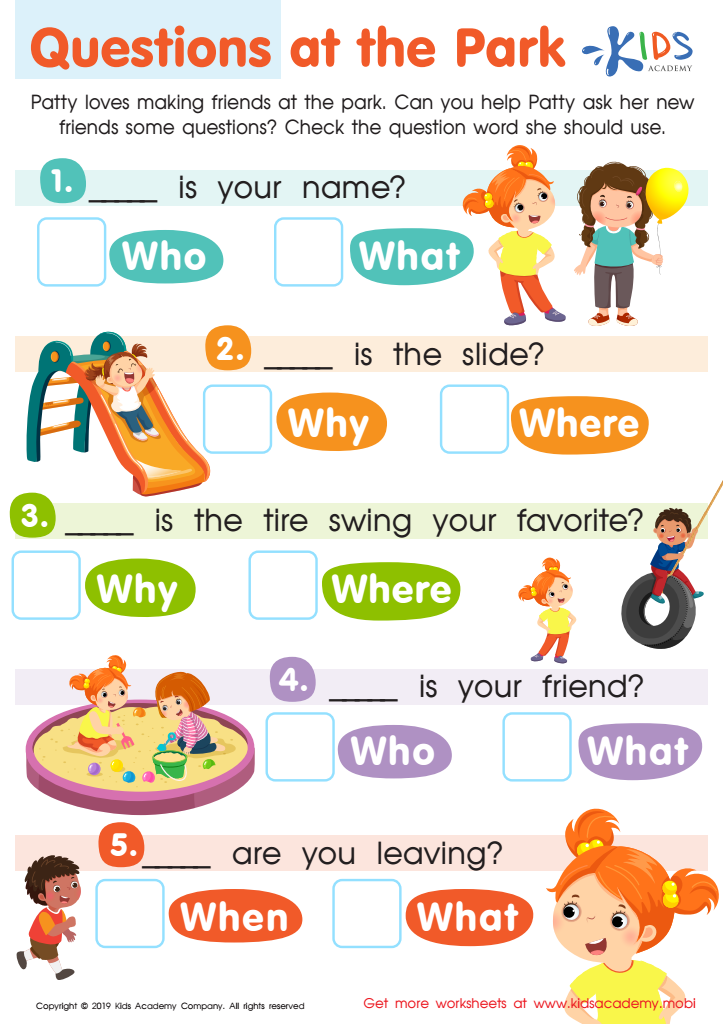
Questions at the Park Worksheet

Questions at the Park Worksheet

Parks are great for fun! Kids can play, run and be as loud as they want! Ask them what their favorite activities are. If they love making friends, like Patty in this worksheet, help them practice their question words to get to know their new pals better.
Questions at the Park Worksheet
Worksheet
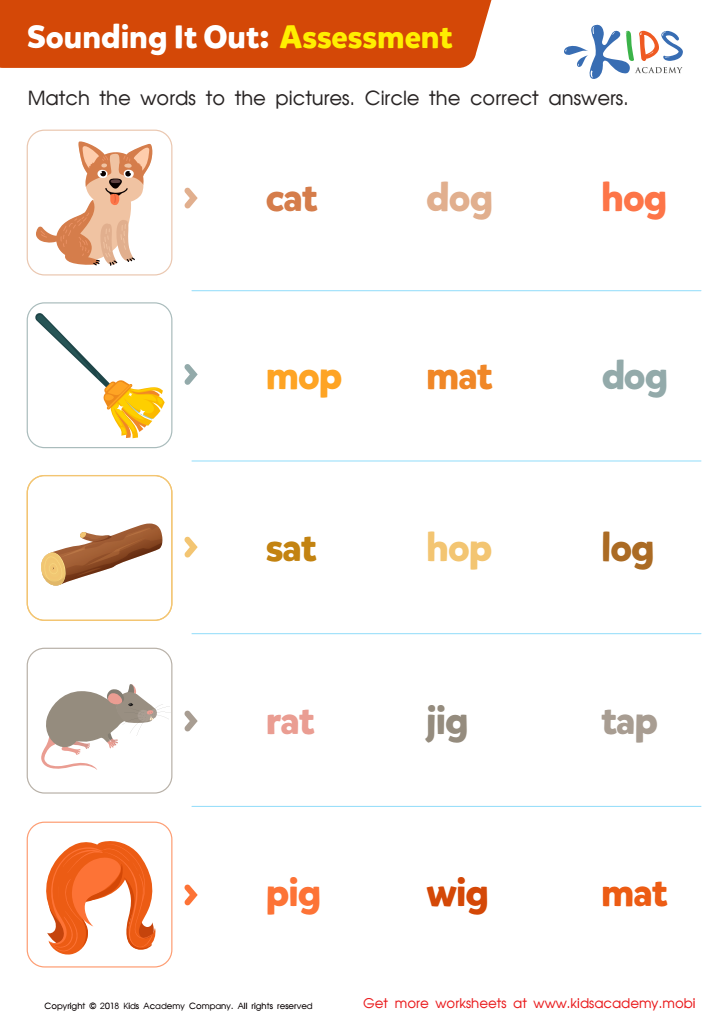
Sounding it Out: Assessment Worksheet

Sounding it Out: Assessment Worksheet

Give your little learner a fun challenge with this downloadable worksheet! With pictures to guide them, have them name the images and then sound out the words in the same row. Be careful though, as they all contain the same amount of similarly sounding letters. Once the correct word has been found, have them circle it!
Sounding it Out: Assessment Worksheet
Worksheet
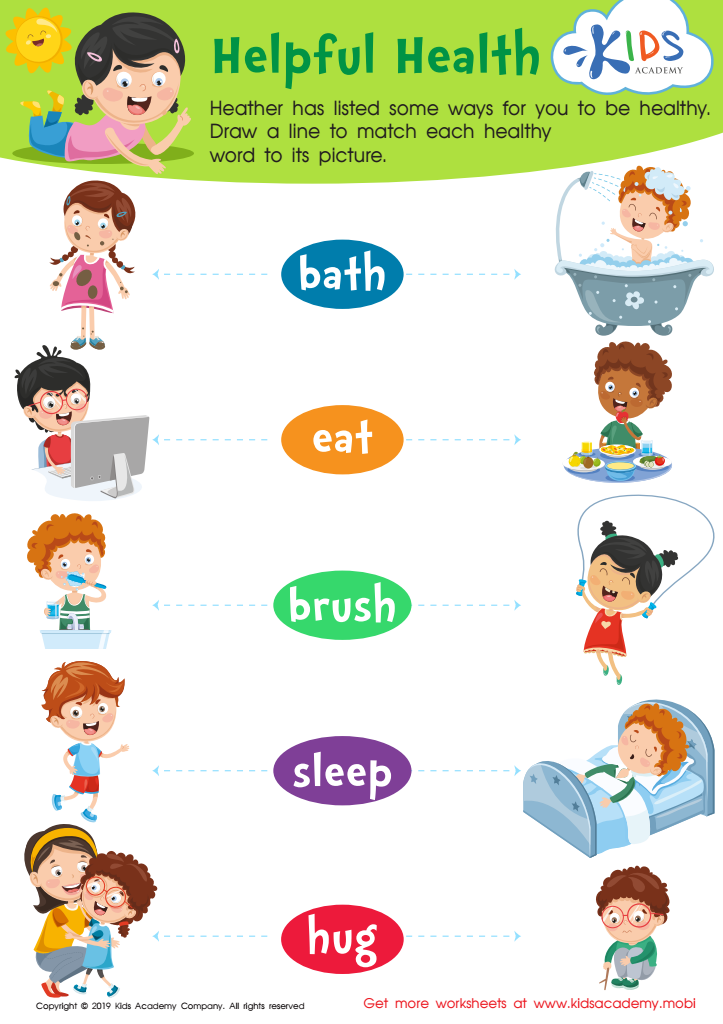
Helpful Health Worksheet

Helpful Health Worksheet

Kids can learn healthy habits with this free worksheet! With their pal Heather, they'll trace lines to connect health words with pictures like brushing teeth, hugging, and getting enough sleep. It's a great way to help young ones understand healthy activities.
Helpful Health Worksheet
Worksheet
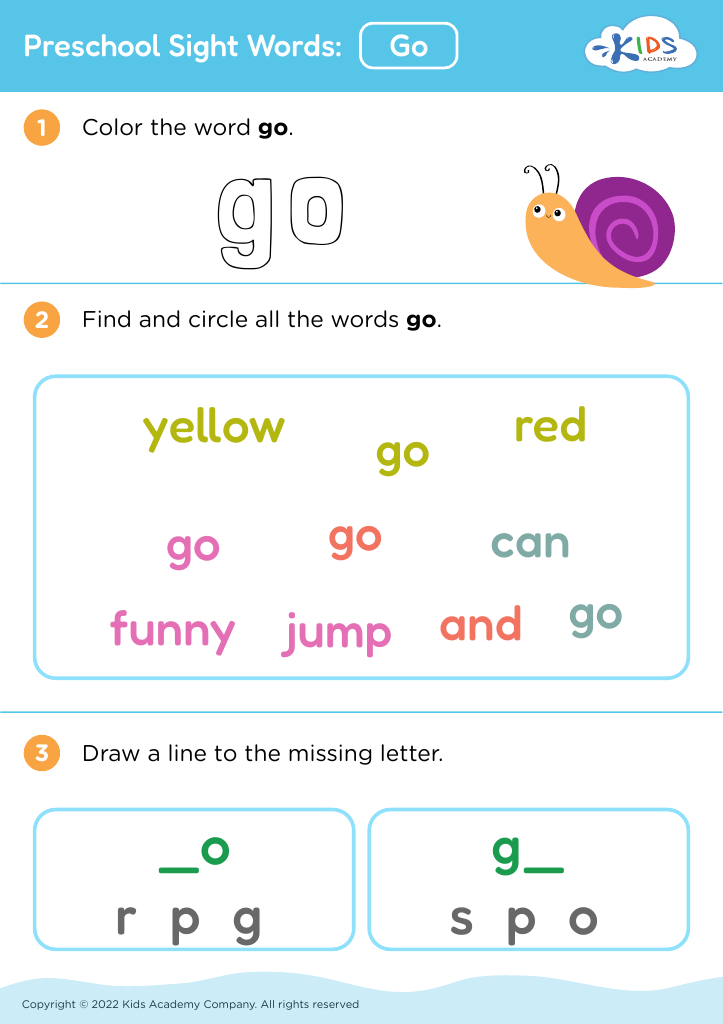
Preschool Sight Words: Go

Preschool Sight Words: Go

Preschool Sight Words: Go
Worksheet
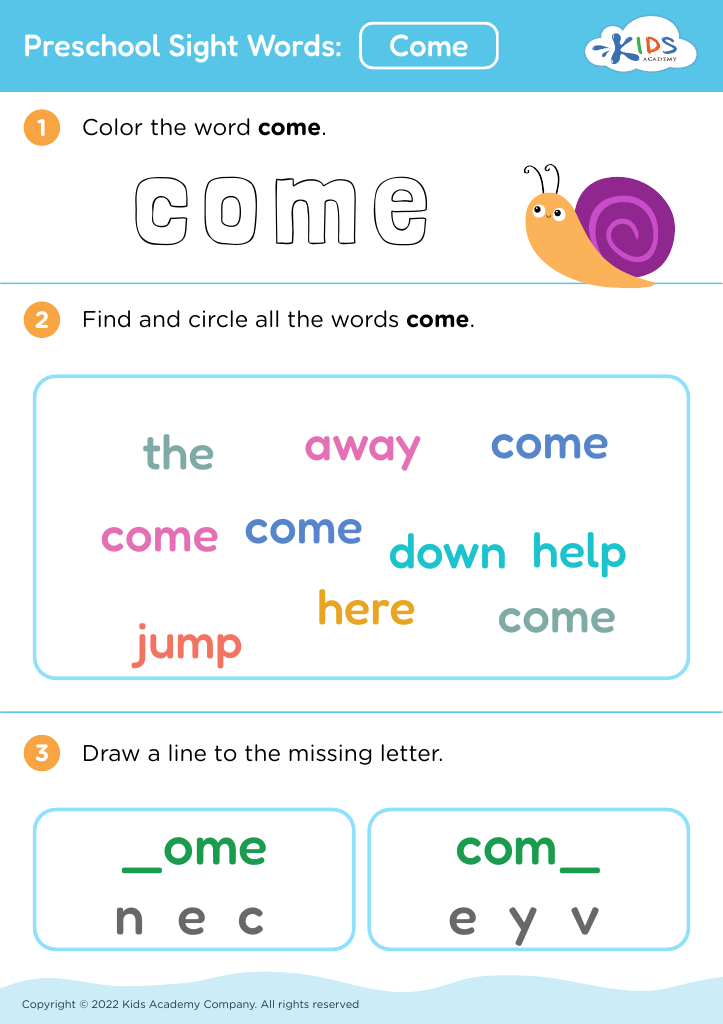
Preschool Sight Words: Come

Preschool Sight Words: Come

Preschool Sight Words: Come
Worksheet
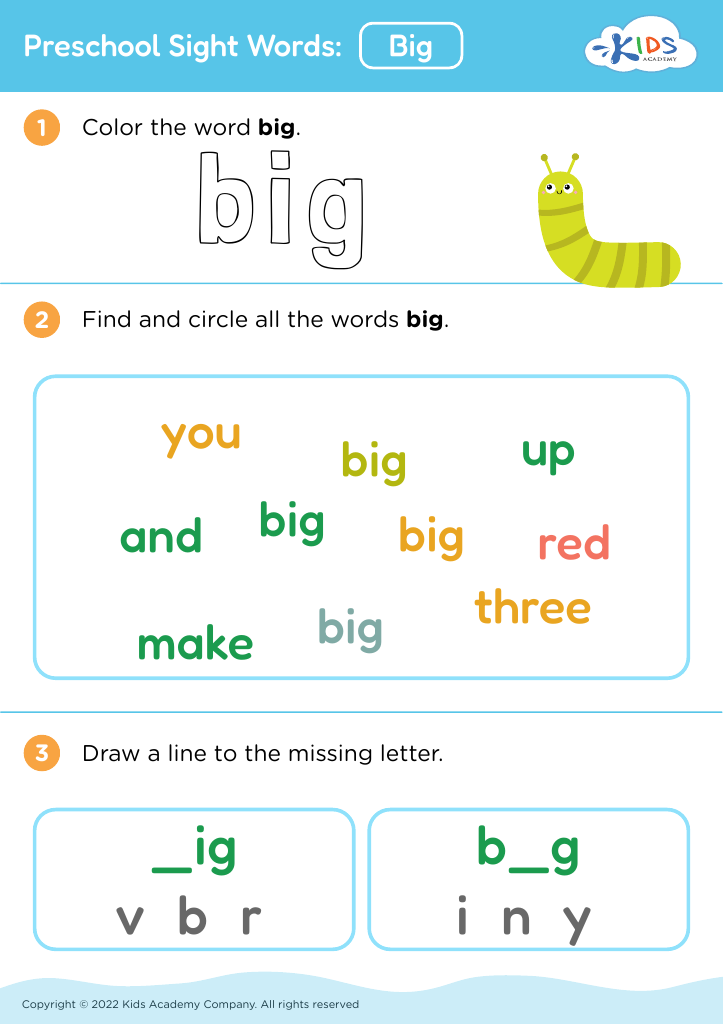
Preschool Sight Words: Big

Preschool Sight Words: Big

Preschool Sight Words: Big
Worksheet


Parents and teachers should prioritize building vocabulary and logical reasoning skills for children aged 5-6 because these foundational abilities are crucial for overall cognitive development. At this age, children are like sponges, eager to absorb new information and experiences. Enhancing vocabulary helps them articulate thoughts and express emotions, thereby aiding social interactions and comprehension of the world around them.

Logical reasoning, on the other hand, cultivates critical thinking skills, enabling children to analyze situations, solve problems, and make connections between concepts. Such skills are integral to learning across all subjects and can facilitate better understanding of mathematics, science, and reading.

Additionally, strong vocabulary and reasoning skills contribute to a sense of self-confidence in children. When they are equipped to communicate effectively and think critically, they are more likely to engage actively in learning experiences, partake in discussions, and explore new ideas. This holistic growth ultimately lays the groundwork for academic success in later years and fosters a lifelong love of learning.

Investing time in activities that bolster vocabulary and logical reasoning, such as storytelling, games, and interactive conversations, empowers children to thrive cognitively, socially, and emotionally.