Identification skills Reading Worksheets for Ages 5-6
3 filtered results
-
From - To
Enhance your child's learning experience with our Identification Skills Reading Worksheets, designed specifically for ages 5-6. These engaging worksheets help young learners sharpen their ability to recognize and identify letters, words, and essential phrases. With bright visuals and interactive activities, children will improve their reading skills while having fun. Our thoughtfully crafted materials promote critical thinking and boost confidence, making reading enjoyable from an early age. Parents and teachers will find these resources invaluable for reinforcing foundational literacy skills at home or in the classroom. Explore our collection today to inspire a love for reading in your child!
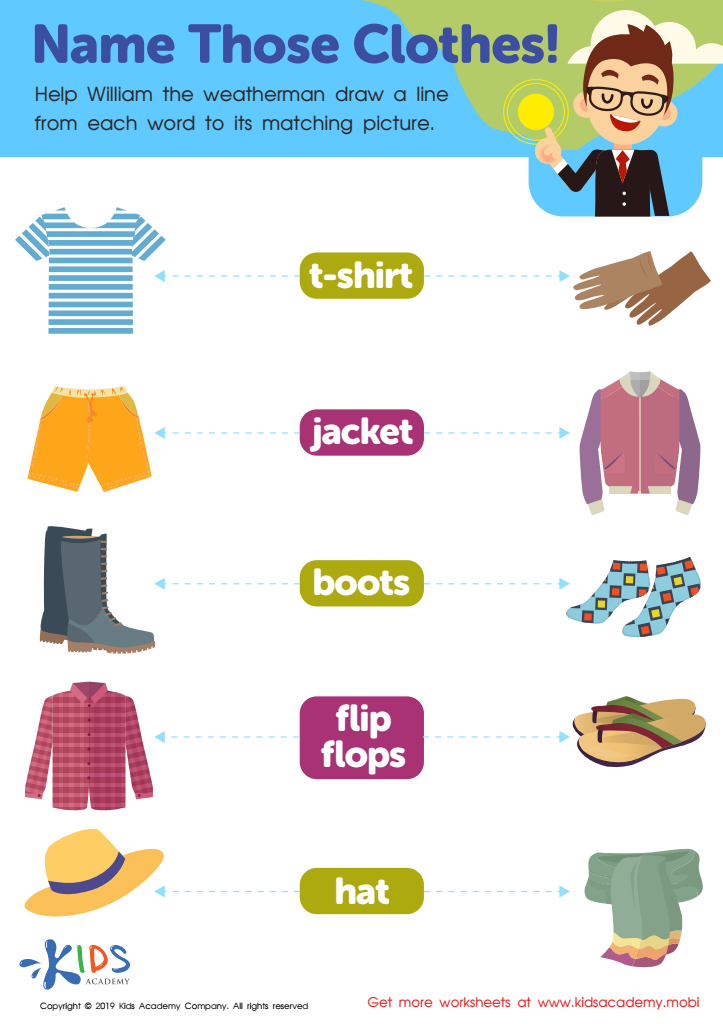
Name Those Clothes Worksheet
 Assign to My Students
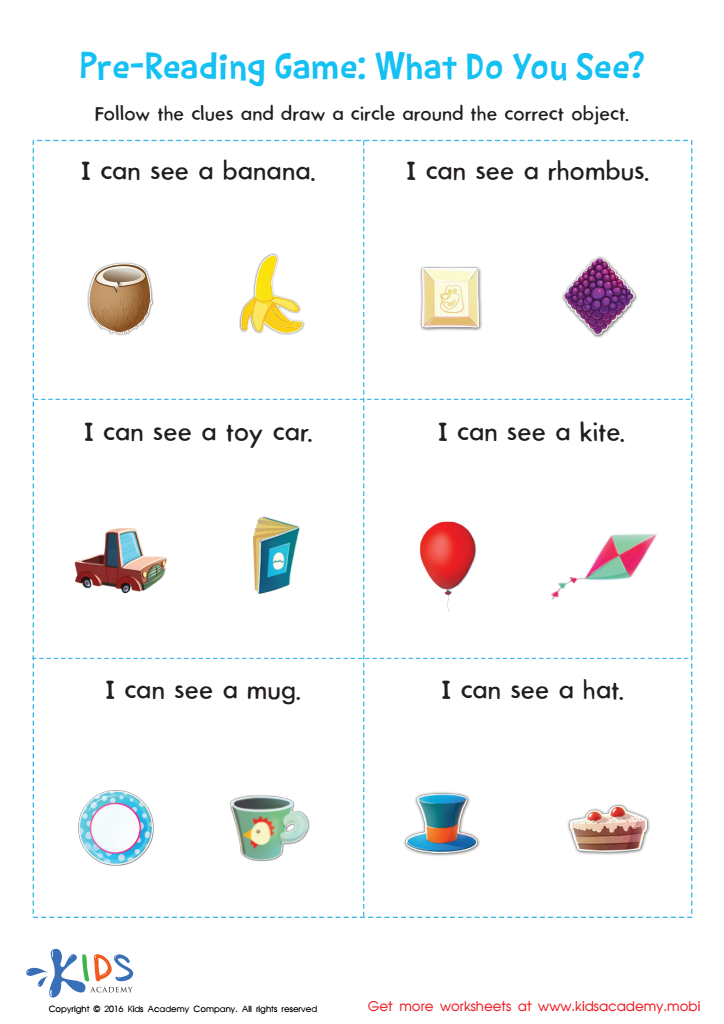
Pre–reading Worksheet: What Do You See?
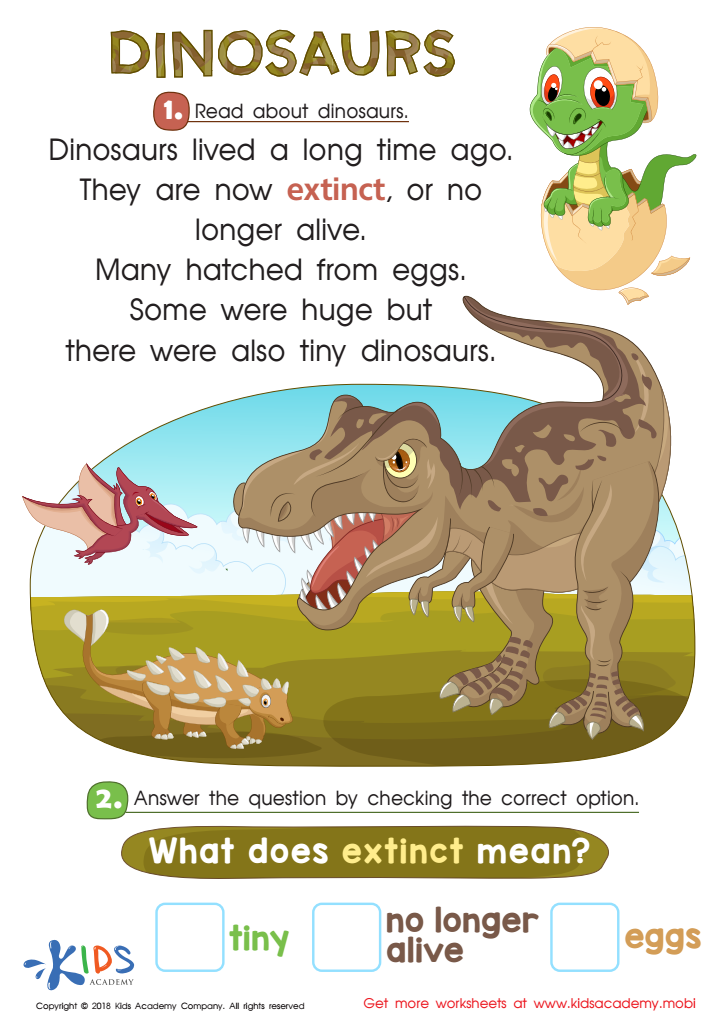
Dinosaurs Worksheet







Identification skills in reading are crucial for children aged 5-6 as they lay the foundation for future literacy and academic success. At this age, children are beginning to navigate the world of written language, making it essential for parents and teachers to foster their ability to recognize letters, words, and sounds. This skill is the gateway to reading comprehension and fluency, which are vital for learning across all subjects.
When children can identify letters and words independently, their confidence soars, encouraging a love for reading and learning. Early development in identification skills supports vocabulary expansion and the ability to understand context, promoting critical thinking and communication abilities.
Moreover, proficient identification skills enhance social interaction, as children begin to share books and stories with peers and family, strengthening emotional bonds. When parents and teachers prioritize these skills through fun, engaging activities—like reading aloud, playing word games, or letter recognition games—they not only enhance literacy but also create a positive learning environment.
In summary, nurturing identification skills in young readers is crucial for their overall development, paving the way for lifelong literacy, academic achievement, and a joy of reading that persists throughout their lives.








