Phonics recognition Reading Worksheets for Ages 5-6
3 filtered results
-
From - To
Enhance your child's reading skills with our Phonics Recognition Reading Worksheets designed specifically for ages 5-6. These interactive and engaging worksheets make learning phonics fun, helping young learners recognize letters and sounds in a playful way. Suitable for home or classroom use, each worksheet focuses on essential phonics skills, promoting word recognition and reading fluency. From matching sounds to identifying letter patterns, our resources support early literacy development while fostering a love for reading. Perfect for parents and educators alike, our phonics worksheets provide a solid foundation for your child’s journey into the world of reading. Start their adventure today!
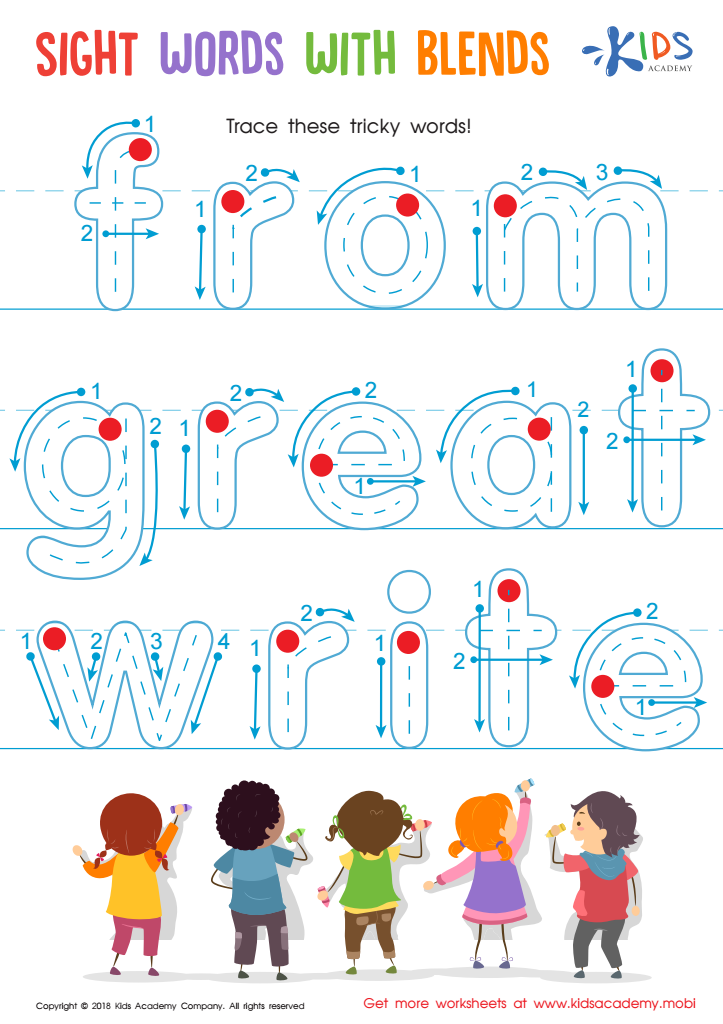
Sight Words with Blends Worksheet
 Assign to My Students
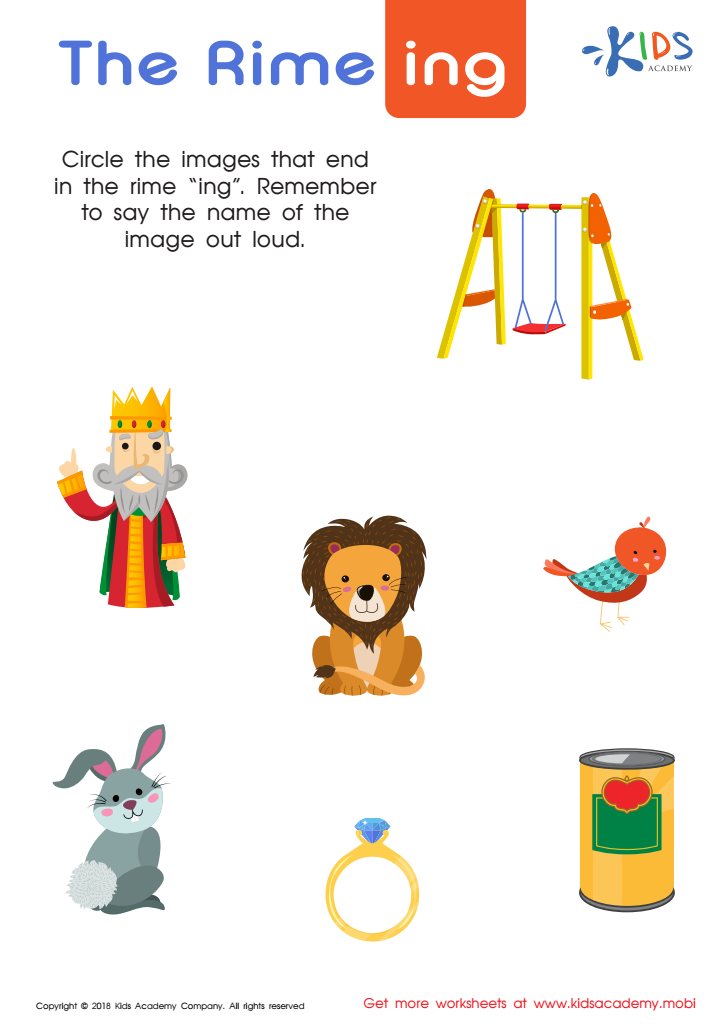
The Rime "ing" Worksheet
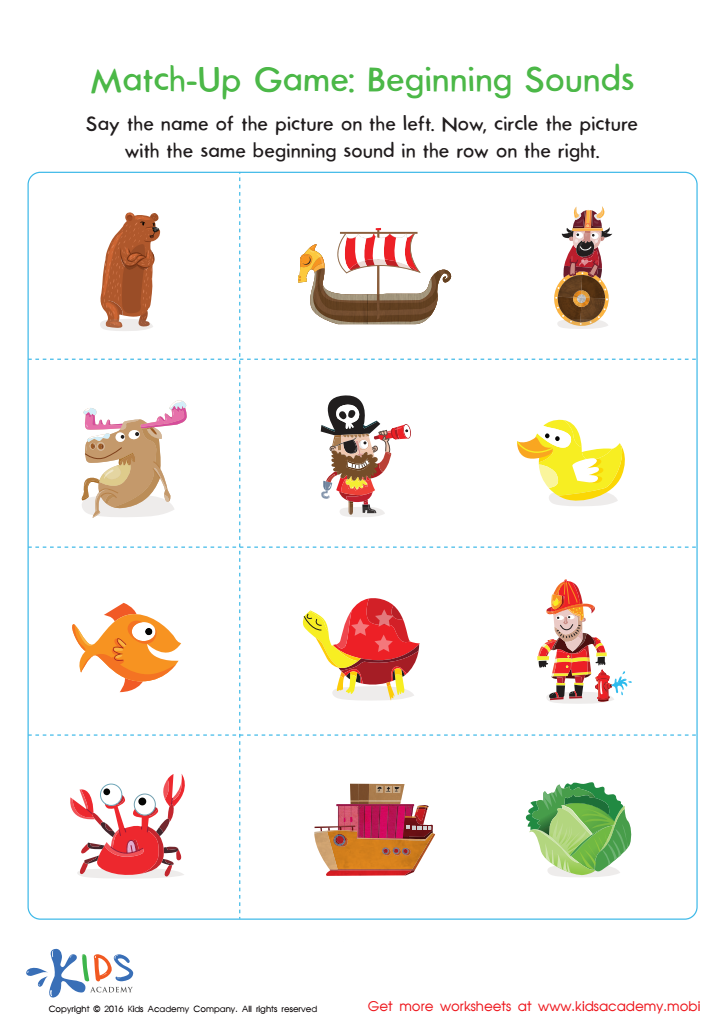
Match–Up Game: Beginning Sounds Worksheet








Phonics recognition is crucial for children ages 5-6 as it lays the foundation for their reading skills. At this age, children are transitioning from listening and verbal communication to decoding written language. Phonics involves connecting sounds (phonemes) to letters (graphemes), enabling children to read and pronounce words accurately.
By focusing on phonics, parents and teachers can help children develop strong reading capabilities early on, which are essential for future academic success. Proficient reading skills enhance comprehension, vocabulary, and overall communication abilities, fostering a love for reading that can extend into later years.
Moreover, early phonics education supports cognitive development by encouraging critical thinking and problem-solving as children learn to manipulate sounds and break down words. It also aids in building self-confidence, as children who can read independently often feel greater empowerment in the classroom.
Additionally, understanding phonics can help identify and address reading difficulties early, preventing potential learning challenges down the road. By engaging in phonics activities and encouragement at home and in school, parents and teachers can play a pivotal role in nurturing a child's literacy journey, ultimately contributing to their lifelong learning and emotional growth.








