
Understanding habitats Reading Worksheets for Ages 5-6
3 filtered results
Difficulty Level
Grade
Age
-
From - To
Subject
Activity
Standards
Explore the wonders of nature with our "Understanding Habitats" reading worksheets for ages 5-6! These engaging printables introduce young learners to diverse environments, from forests to oceans. Filled with vibrant illustrations and simple texts, these worksheets make learning fun while boosting essential reading skills. Children will discover different animal homes, plant life, and the unique features of each habitat. Perfect for classroom or home use, these sheets foster curiosity and a love for nature, helping kids understand the world around them. Support your child's educational journey with our captivating and informative habitat worksheets today!
Favorites
With answer key
Interactive
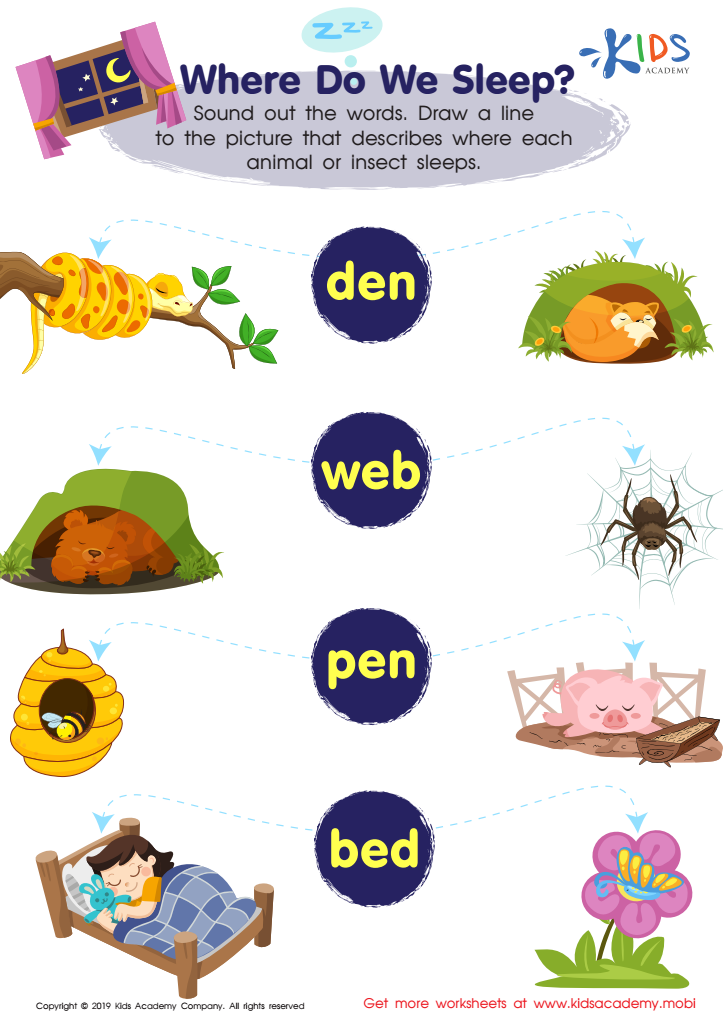
Where Do We Sleep Worksheet
Help your kids understand the importance of a safe space with this activity: Ask them to draw a line connecting the different animals and insects to the words that describe where they sleep. Remind them that everyone needs a sanctuary to rest – like the animals and insects in this printout.
 Assign to My Students
Where Do We Sleep Worksheet
Worksheet
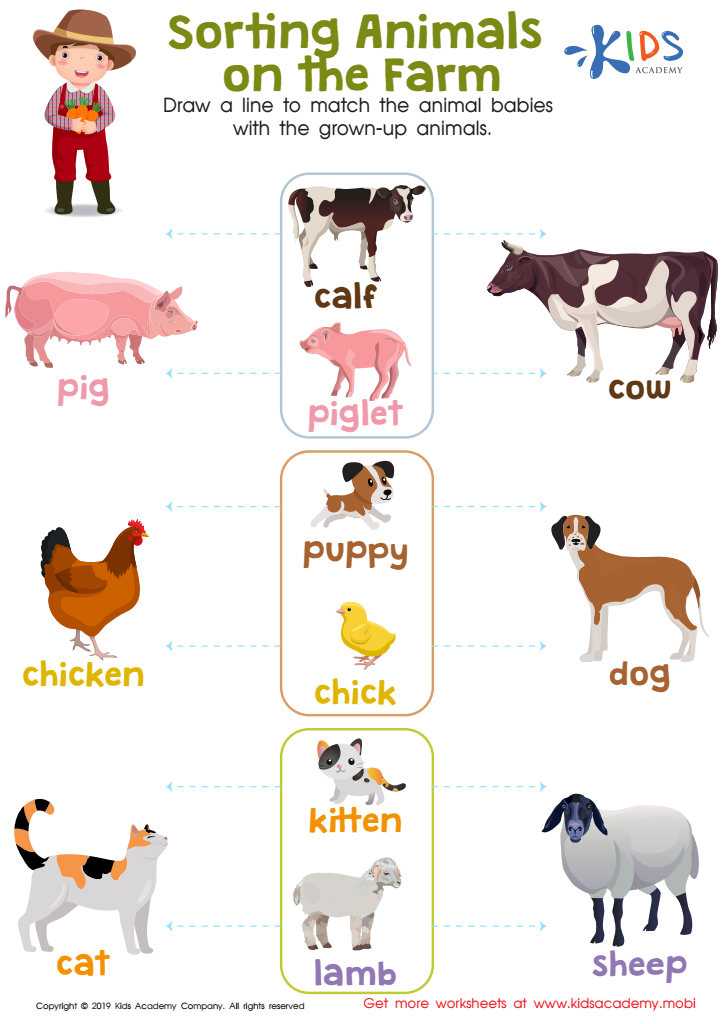
Sorting Animals on the Farm Worksheet
This PDF worksheet engages preschoolers in a fun activity to match Mama farm animals with their babies, strengthening their sorting and patterning skills. They'll learn to recognize rules and relationships, while gaining familiarity with animal-related words.
Sorting Animals on the Farm Worksheet
Worksheet
Join Kids Academy for Free
Who is primarily going to use this learning content?






Understanding habitats is essential for children aged 5-6 because it helps lay the foundation for their ecological literacy and appreciation of the natural world. At this formative age, children are curious and open to exploring new concepts, making it an ideal time to introduce them to the diversity of life and its environments.
Firstly, learning about habitats encourages curiosity and exploration. Young children are naturally inclined to ask questions and discover new things. Providing them with knowledge about different habitats—such as forests, oceans, and deserts—fuels their imaginations and eagerness to learn.
Secondly, this understanding fosters empathy and respect for living creatures and their environments. When children learn that animals and plants depend on their habitats to survive, they begin to appreciate the importance of conservation and the need to protect these spaces. This nurtures a generation that prioritizes environmental stewardship.
Additionally, reading about habitats supports early literacy skills and cognitive development. Books and activities related to habitats introduce new vocabulary, concepts, and the ability to categorize and compare different characteristics of habitats, bolstering comprehension skills.
In summary, understanding habitats enriches children's knowledge of the world, fosters environmental care, and enhances literacy, making it a crucial topic for early education.








