Understanding prepositions Reading Worksheets for Ages 5-6
6 filtered results
-
From - To
Unlock your child's potential with our "Understanding Prepositions Reading Worksheets" designed for ages 5-6. These engaging resources help young learners grasp the concept of prepositions seamlessly through fun and interactive activities. Each worksheet is tailored to develop reading comprehension and enhance their ability to identify and use prepositions in sentences. Integral for early grades, our worksheets not only focus on building foundational English skills but also ensure learning is enjoyable and effective. Perfect for classroom and at-home learning, these worksheets support educators and parents in nurturing confident, proficient readers. Discover the difference with our expertly crafted printable lessons.
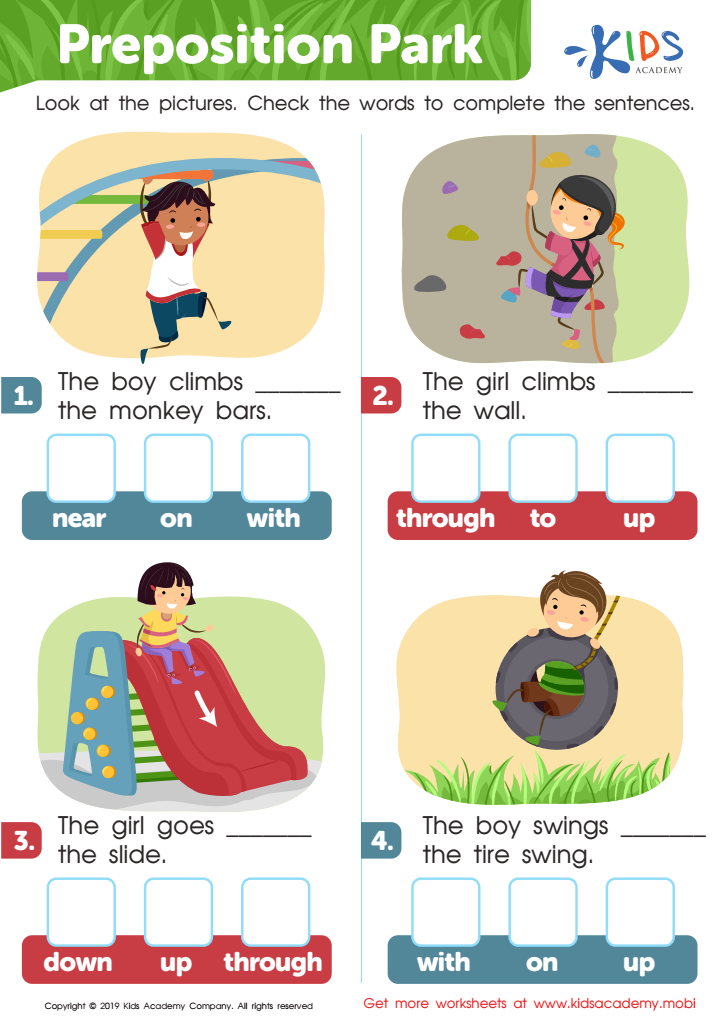
Preposition Park Worksheet
 Assign to My Students
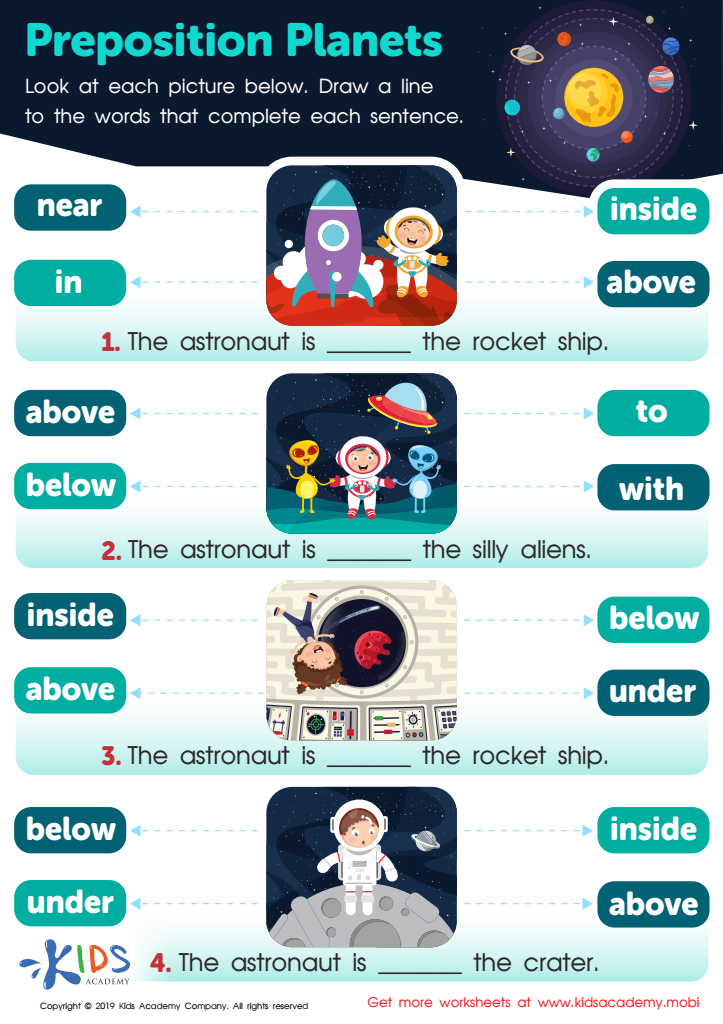
Preposition Planets Worksheet
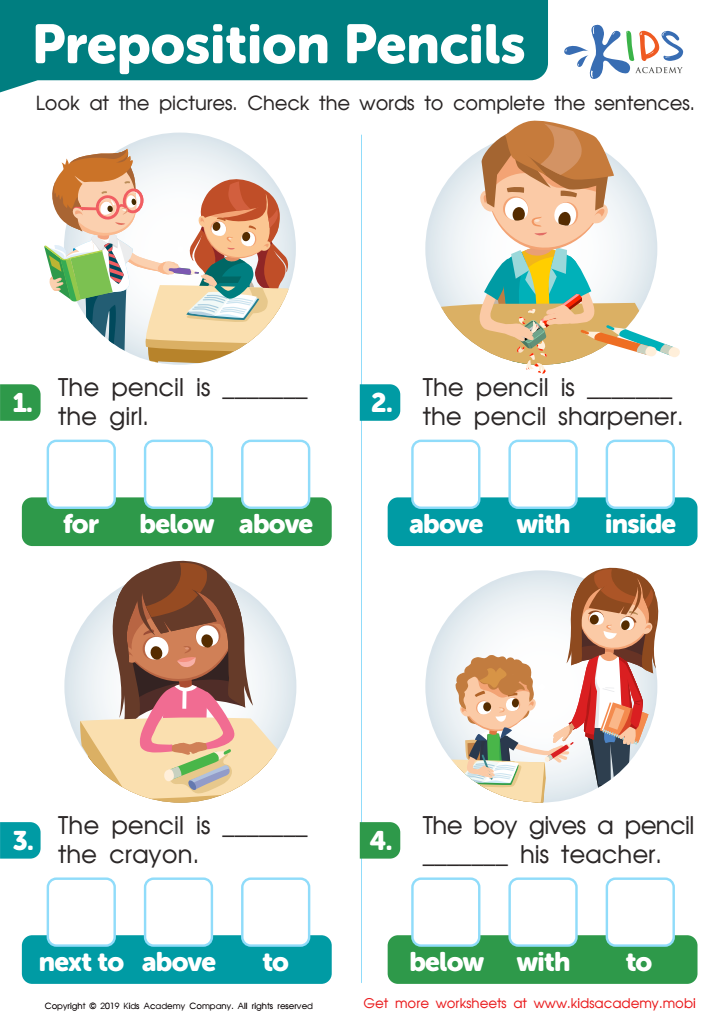
Preposition Pencils Worksheet
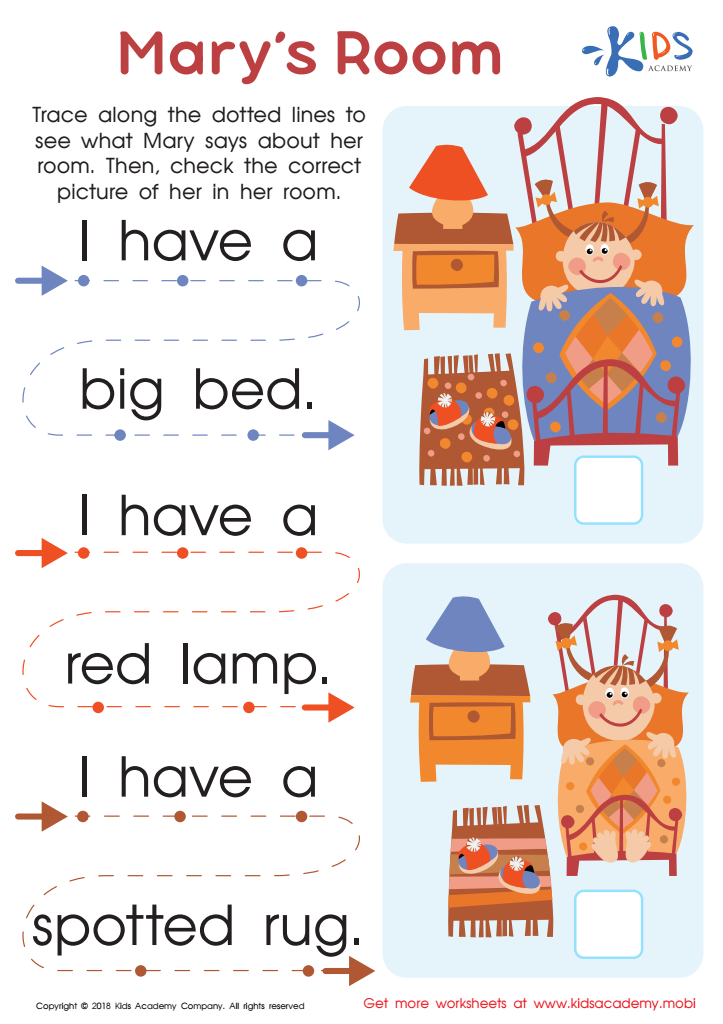
Mary's Room Worksheet







Understanding prepositions is crucial for children aged 5-6 because it forms the foundation for effective communication and literacy skills. Prepositions are small but mighty words that show relationships between other words, helping children describe and understand spatial, temporal, and logical connections. For instance, the ability to grasp prepositions like "above," "below," "before," and "after" enables children to follow and give clear instructions, enhancing classroom activities and daily interactions.
Moreover, proficiency with prepositions aids in the development of reading comprehension. Children who understand prepositions can better decode the structure and meaning of sentences, which is essential for understanding stories, following along in textbooks, and even solving problems in subjects like math and science.
Additionally, learning prepositions enhances writing skills. As children begin to craft their own sentences and stories, knowledge of prepositions enables them to express ideas more accurately and creatively. This early mastery also builds confidence, encouraging a more positive attitude toward learning and communication.
Parents and teachers should prioritize teaching prepositions through engaging activities, storybooks, and practical examples. This attention not only supports linguistic development but also reinforces cognitive skills like attention to detail, logical thinking, and problem-solving, providing a comprehensive developmental boost for young learners.








