Pattern recognition Reading Comprehension Worksheets for Ages 5-6
3 filtered results
-
From - To
Enhance your child's reading comprehension with our engaging Pattern Recognition Reading Comprehension Worksheets, designed specifically for ages 5-6. These worksheets focus on helping young learners identify and understand patterns within texts, fostering critical thinking and analytical skills. Each worksheet encourages children to explore visual and textual patterns while reading, making the process fun and interactive. By regularly practicing with our expertly crafted activities, children will improve their ability to predict and infer meaning, setting a strong foundation for future reading success. Discover the joy of learning today and equip your child with essential literacy skills through our enriching resources!
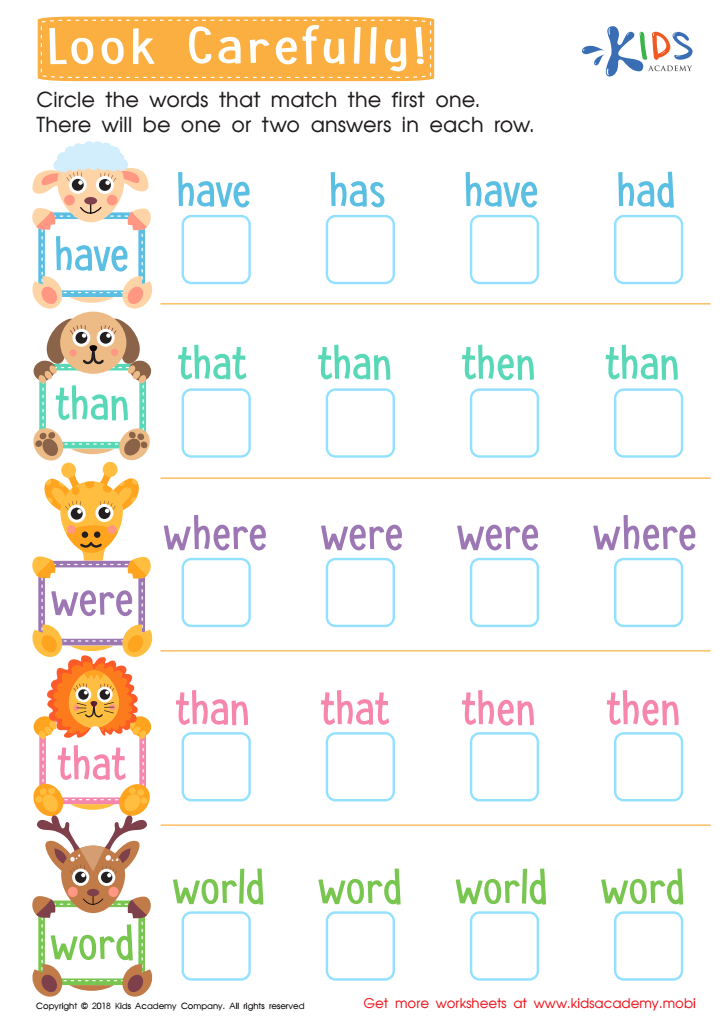
Look Carefully Worksheet
 Assign to My Students
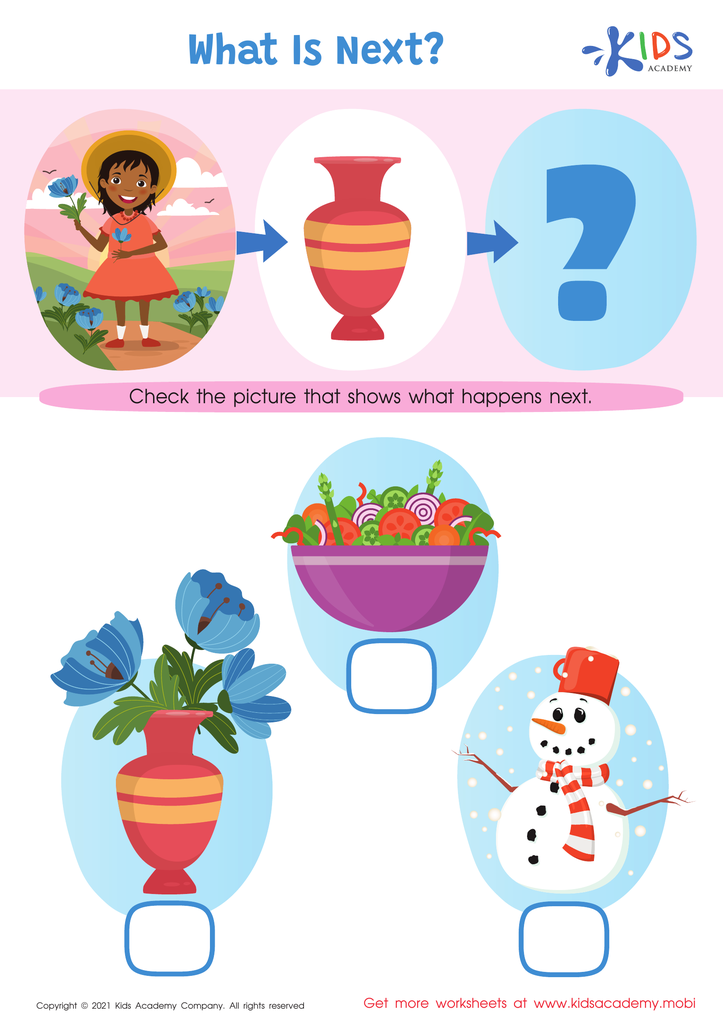
What is Next? Worksheet
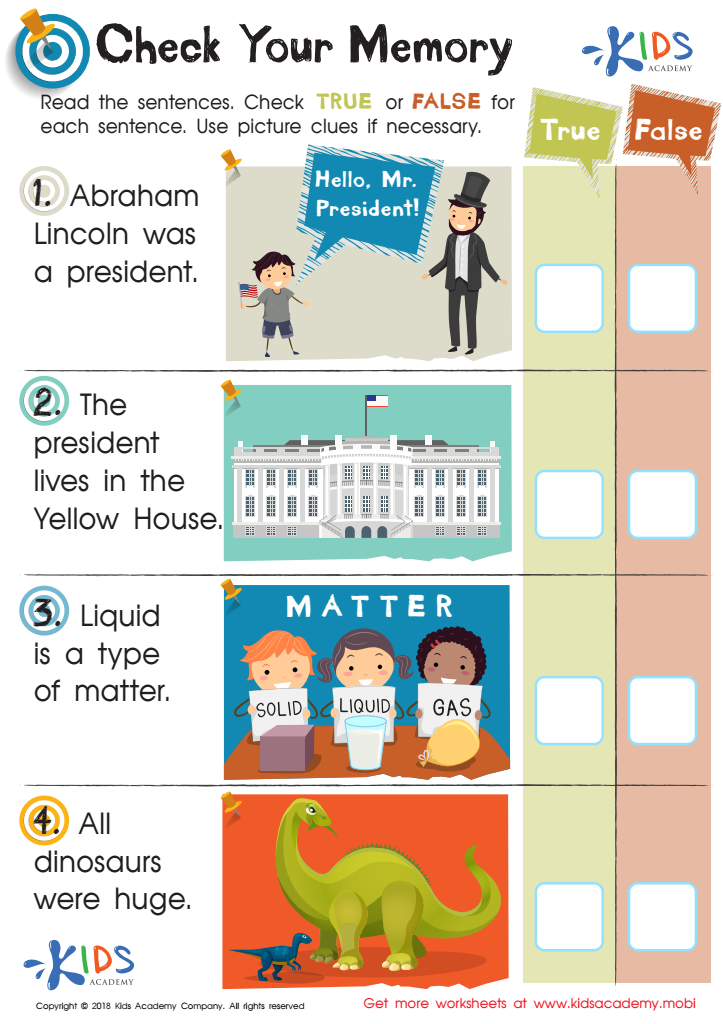
Check Memory Worksheet








Pattern recognition is a vital cognitive skill that can significantly enhance reading comprehension for children aged 5-6. At this formative stage, children are beginning to decode letters and words, making it essential for parents and teachers to focus on helping them identify patterns in text. Recognizing familiar sequences—such as repeated phrases, sentence structures, or word patterns—enables young readers to build fluency and confidence.
Developing pattern recognition skills allows children to make predictions about text content, which can deepen their understanding. When children spot patterns, they can decode unfamiliar words by anchoring them in familiar contexts. Additionally, these skills foster critical thinking, encouraging children to make connections between ideas and themes within the text.
Engaging in activities that promote pattern recognition, such as rhyming games or repetitive story readings, cultivates an interactive reading experience that further solidifies comprehension skills. By nurturing these abilities early, parents and teachers lay the groundwork for more sophisticated reading strategies later on. Consequently, fostering pattern recognition not only aids immediate comprehension but also nurtures a lifelong love for reading and learning, essential tools for academic success—making it crucial for both guardians and educators to prioritize this development.








