Answering questions Reading Fiction Worksheets for Ages 5-6
3 filtered results
-
From - To
Enhance your child's reading comprehension with our "Answering Questions Reading Fiction Worksheets" designed specifically for ages 5-6. These engaging worksheets encourage children to explore fictional stories while developing critical thinking skills. Each activity focuses on helping young learners to interpret texts, make predictions, and express their understanding through answers. With colorful illustrations and age-appropriate content, your child will enjoy learning about characters, settings, and plots. Our worksheets not only support literacy development but also foster a love for reading. Ideal for parents and educators, these resources make learning fun and effective, providing a solid foundation for future reading success!
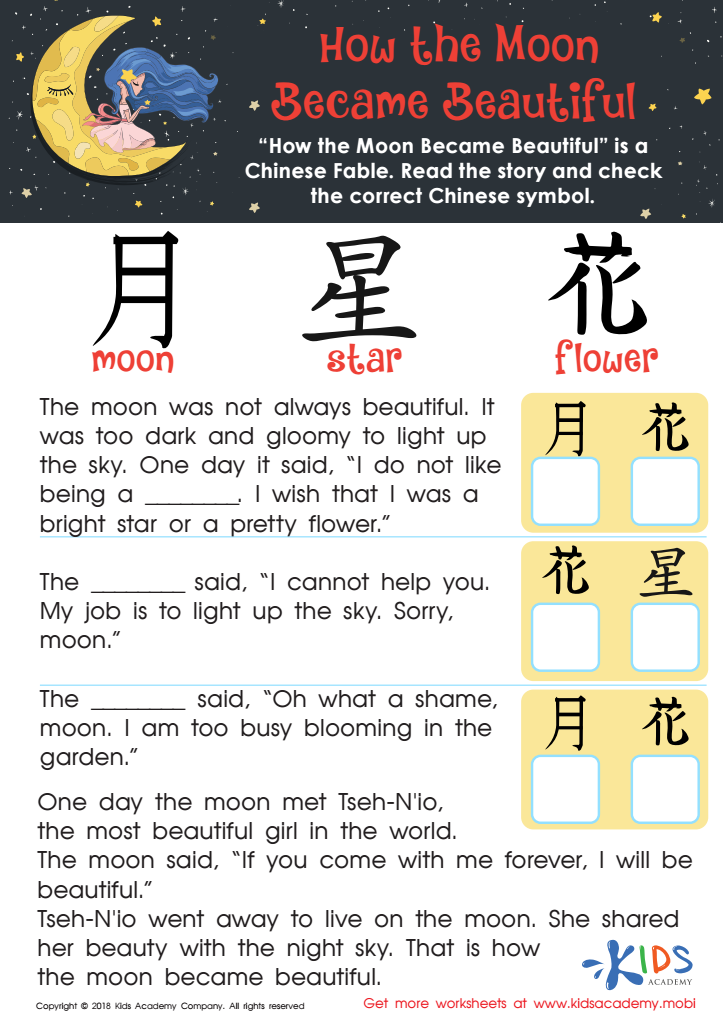
How the Moon Became Beautiful Worksheet
 Assign to My Students
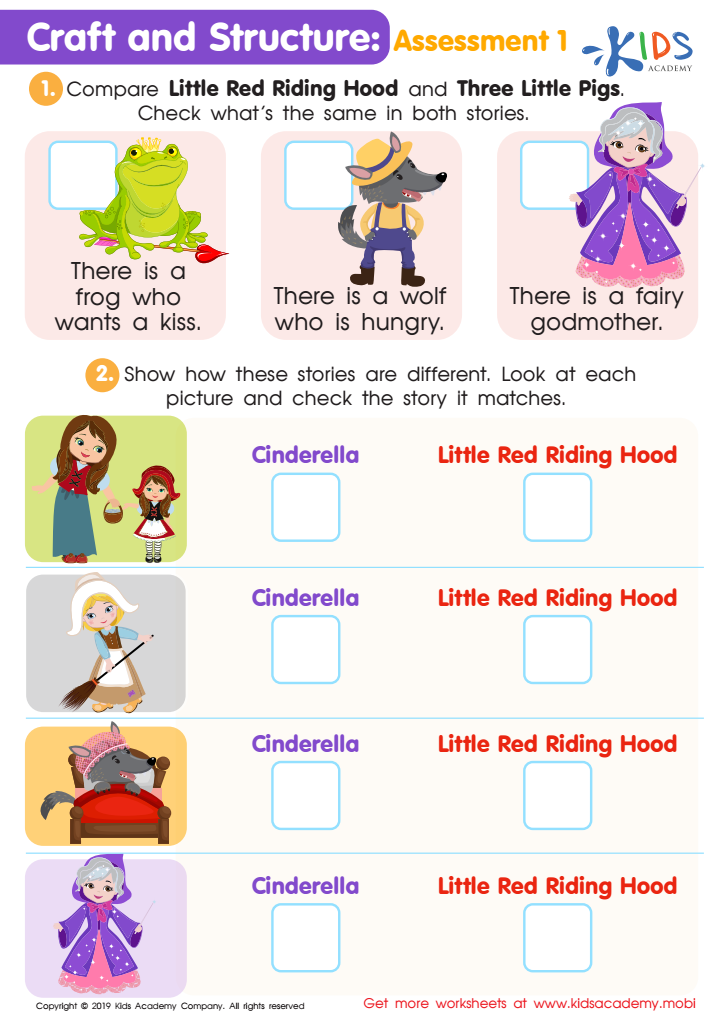
Craft and Structure: Assessment 1 Worksheet
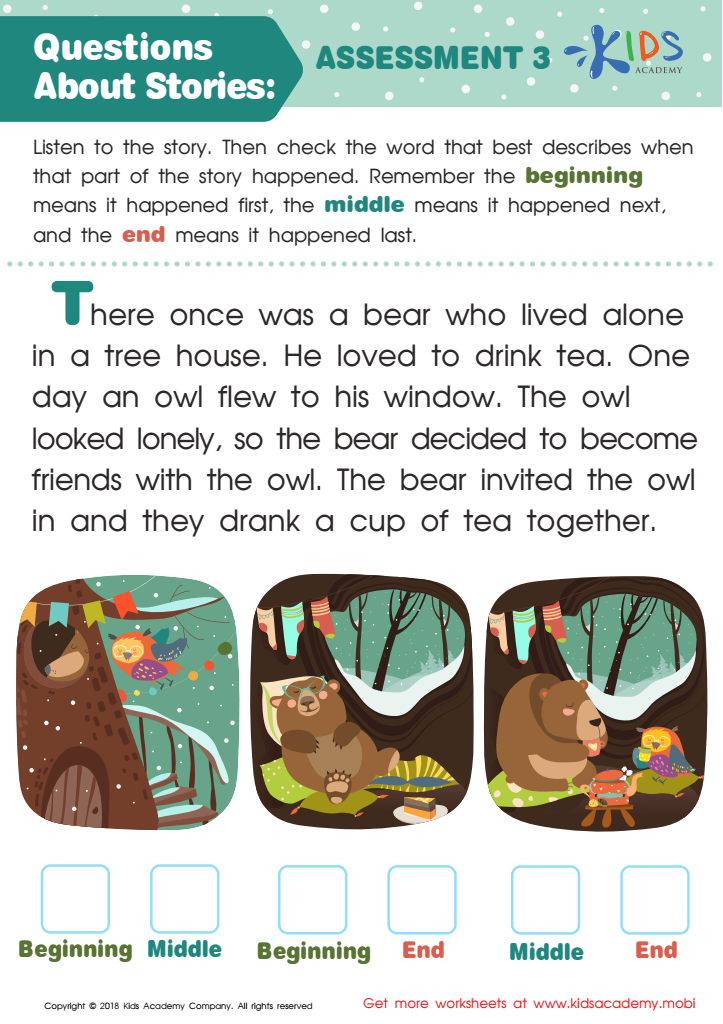
Questions About Stories: Assessment 3 Worksheet








Parents and teachers should prioritize answering questions during reading fiction for children aged 5-6 for several reasons. Firstly, this age group is characterized by an innate curiosity and a developing ability to think critically. When children ask questions about stories, it signals engagement and a desire to understand various themes, characters, and plots. By addressing these inquiries, caregivers can nurture a love for reading while encouraging deeper comprehension and analytical skills.
Furthermore, interactive reading fosters language skills. When parents or teachers respond to questions, they are modeling effective communication, expanding vocabulary, and reinforcing language development. As children articulate their thoughts and feelings, they enhance their expressive abilities and emotional intelligence.
Additionally, answering questions promotes bonding. It creates an inviting environment where children feel valued and heard, supporting their social-emotional growth. Finally, exploring fiction together provides opportunities for moral discussions and instilling values, helping children to relate stories to their own lives.
In essence, addressing questions during fictional reading not only fosters academic growth, but also nurtures emotional and social skills, making it a vital practice for parents and teachers. This engagement lays the groundwork for lifelong learning and a profound appreciation for literature.








