Cognitive Development Reading Fiction Worksheets for Ages 5-6
3 filtered results
-
From - To
Boost your child's cognitive development with our engaging Reading Fiction Worksheets designed specifically for ages 5-6. These interactive worksheets encourage young learners to explore imaginative stories while enhancing critical thinking and comprehension skills. By working through fun exercises, children will identify characters, plot elements, and themes, fostering a love for reading and storytelling. Our thoughtfully crafted activities not only stimulate cognitive growth but also promote creativity and imagination. Perfect for home or classroom use, these worksheets offer an exciting way for kids to develop essential literacy skills while having fun. Unlock the wonders of fiction and help your child thrive in their reading journey!
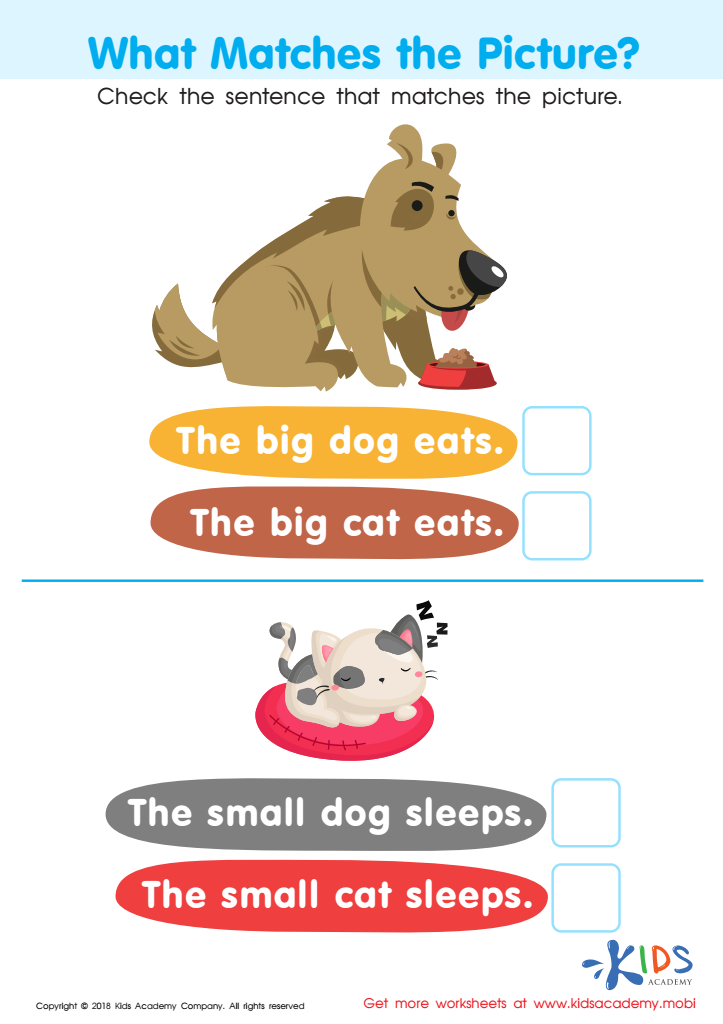
What Matches the Picture? Worksheet
 Assign to My Students
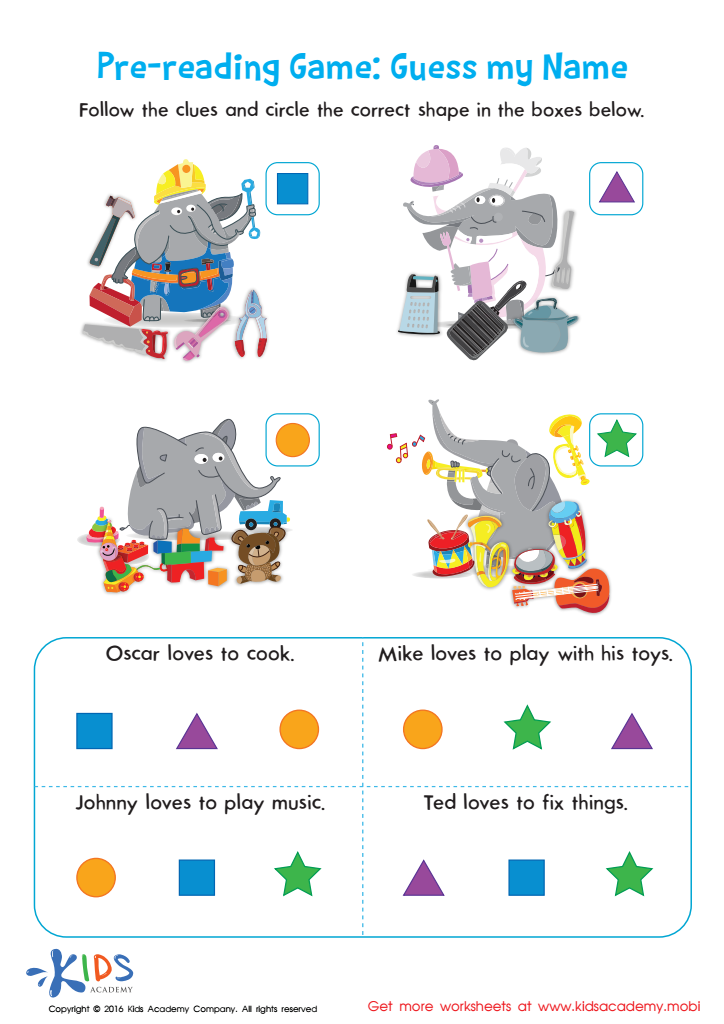
Pre Reading Worksheet Guess My Name
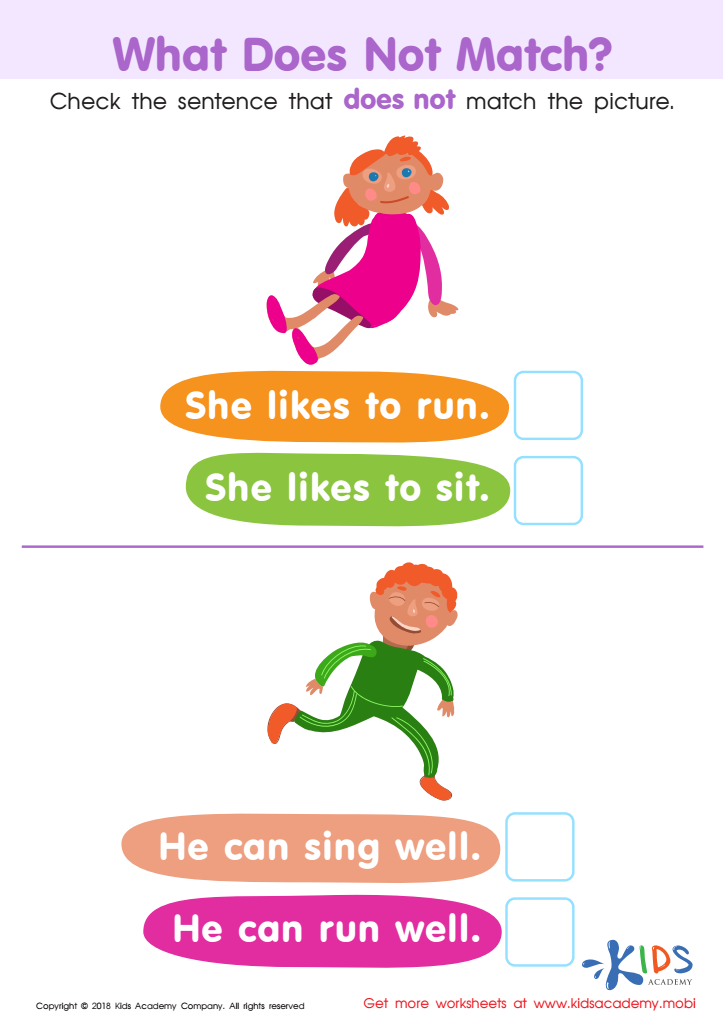
What Does Not Match? Worksheet






.jpg)

Cognitive development is crucial for children aged 5-6, and reading fiction plays a significant role in this process. At this age, children are rapidly expanding their vocabulary and understanding of the world. Engaging with fiction not only introduces them to new words but also fosters imagination, creativity, and critical thinking skills.
Reading stories helps children to develop empathy and emotional intelligence as they explore different characters’ perspectives and experiences. They learn to navigate complex scenarios, which enhances their problem-solving abilities and grasp of social dynamics. Moreover, fiction often presents moral dilemmas, encouraging young readers to contemplate right and wrong, further strengthening their judgment skills.
Additionally, discussions about the stories—like predicting outcomes or analyzing characters’ motives—enhance their comprehension and analytical abilities. This interactive engagement cultivates crucial narrative and communication skills as they express and defend their thoughts.
For parents and teachers, prioritizing fiction reading is an investment in a child’s cognitive and emotional growth, setting a robust foundation for lifelong learning. By facilitating exposure to diverse themes and experiences through fiction, adults can support children in becoming well-rounded individuals with the skills and understanding necessary to thrive in an increasingly complex world.








