Rhyming skills development Rhyming Words Worksheets for Ages 5-6
3 filtered results
-
From - To
Enhance your child's linguistic abilities with our Rhyming Words Worksheets designed for ages 5-6! These engaging activities help young learners identify and create rhymes, building essential phonemic awareness, vocabulary, and reading skills. Through fun exercises and colorful illustrations, children will enjoy practicing rhyming words, recognizing patterns, and improving their overall verbal fluency. Perfect for both classroom use and at-home learning, our worksheets provide a captivating way to develop critical literacy skills. Fuel your child's creativity and confidence with these tailored resources, ensuring they grasp the fundamentals of rhyming while having fun! Start their learning adventure today!
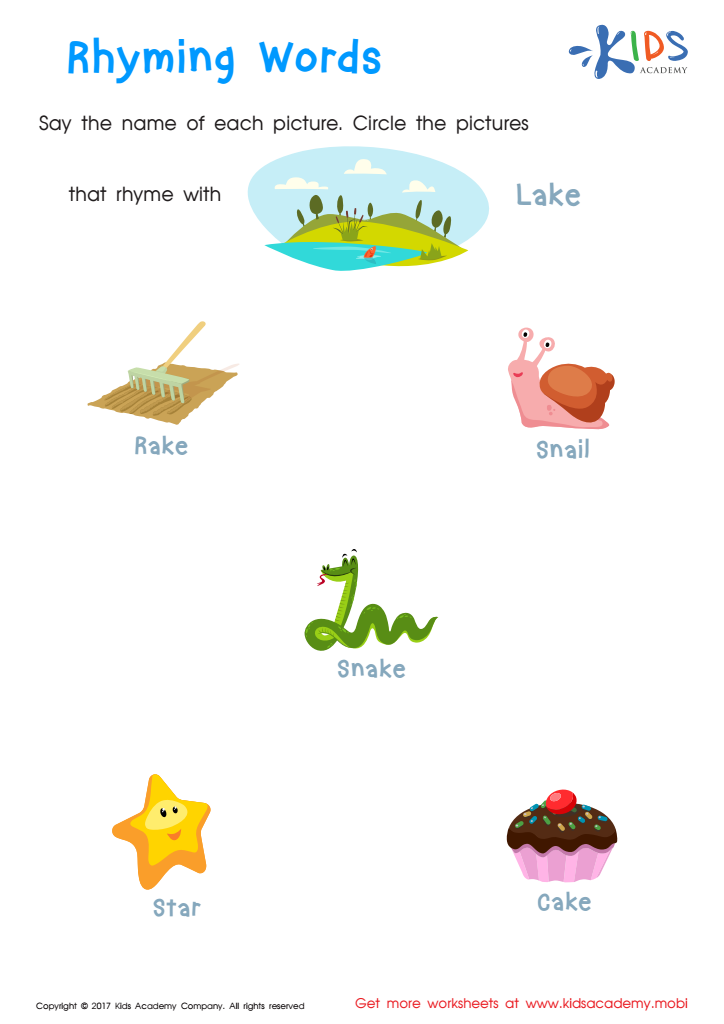
Rhyming Words Rhyming Worksheet
 Assign to My Students
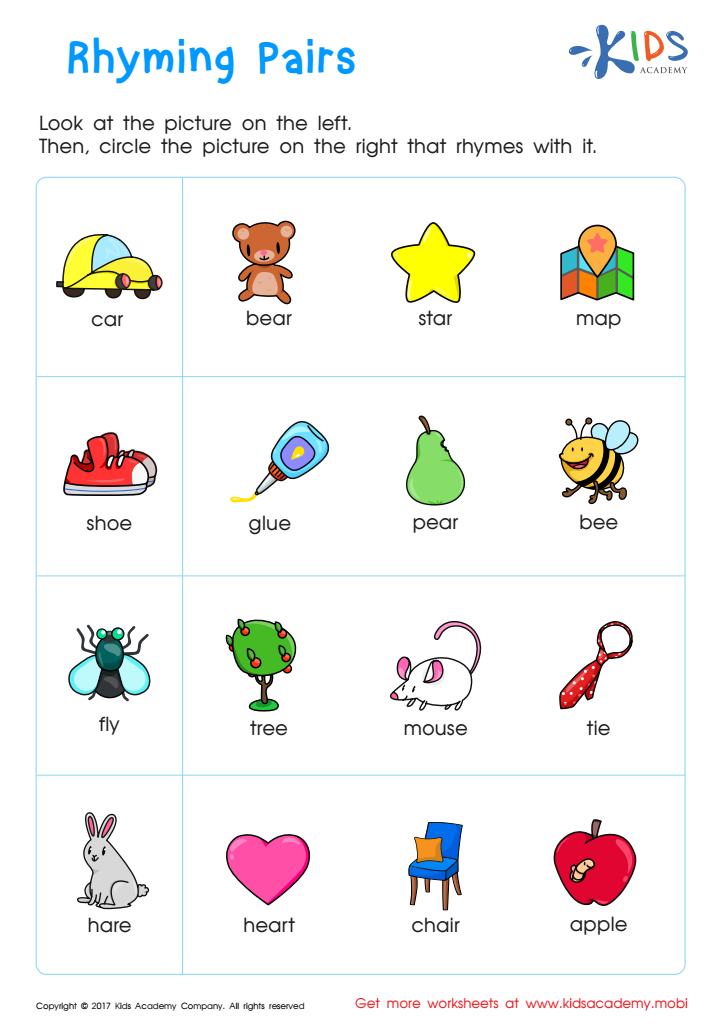
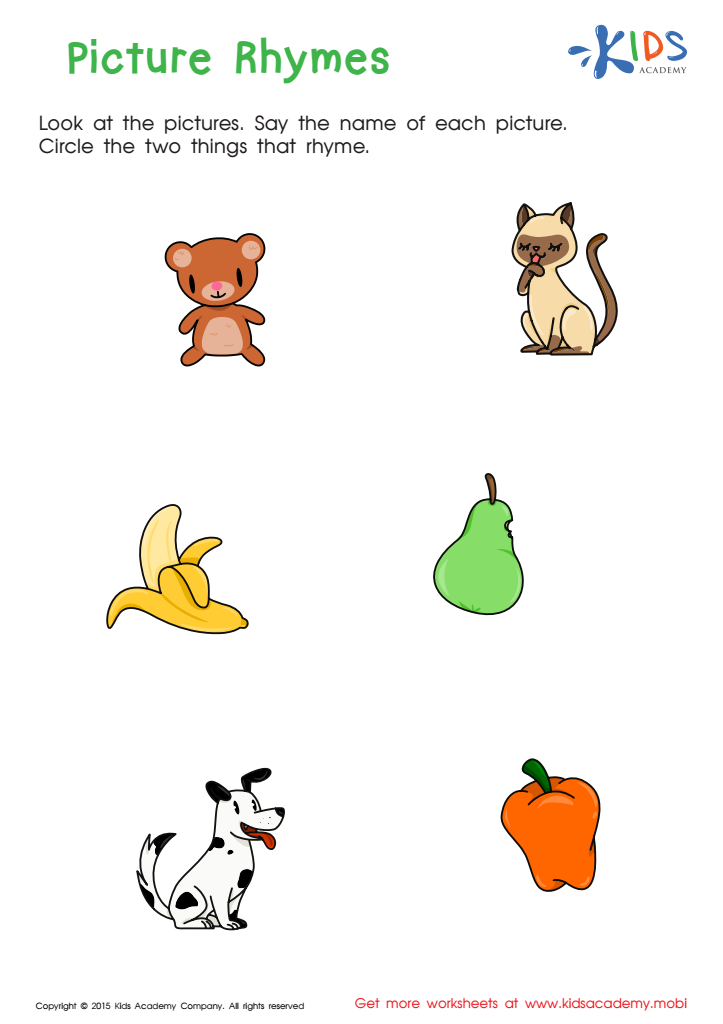
First Words: Picture Rhymes Worksheet







Rhyming skills are essential for young children, particularly those aged 5-6, as they form the foundation for effective reading and writing abilities. Engaging with rhyming words enhances phonological awareness, which is the ability to recognize and manipulate sounds in language. This skill is crucial for decoding letters and sounds when learning to read. By identifying and producing rhyming words, children strengthen their auditory discrimination—essentially helping them to hear differences and similarities in sounds.
Moreover, rhyming often makes learning more enjoyable and engaging for young learners, allowing them to connect with language playfully. Familiarity with rhymes can also boost vocabulary development and enhance spelling skills by drawing attention to word patterns.
Additionally, rhyming provides a strong basis for literacy, critical thinking, and creativity. As children explore rhythms and sounds through songs, stories, and poetry, they develop a deeper love for language and storytelling. Teachers and parents should emphasize rhyming activities like singing, reading nonsensical rhymes, or playing phonemic games, thus nurturing children's confidence and competence in both language and literacy skills. Ultimately, fostering rhyming skills at this stage is a critical step toward successful literacy development.








