Improve reading skills Sight Words Worksheets for Ages 5-6
7 filtered results
-
From - To
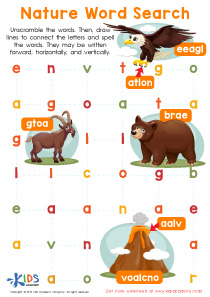
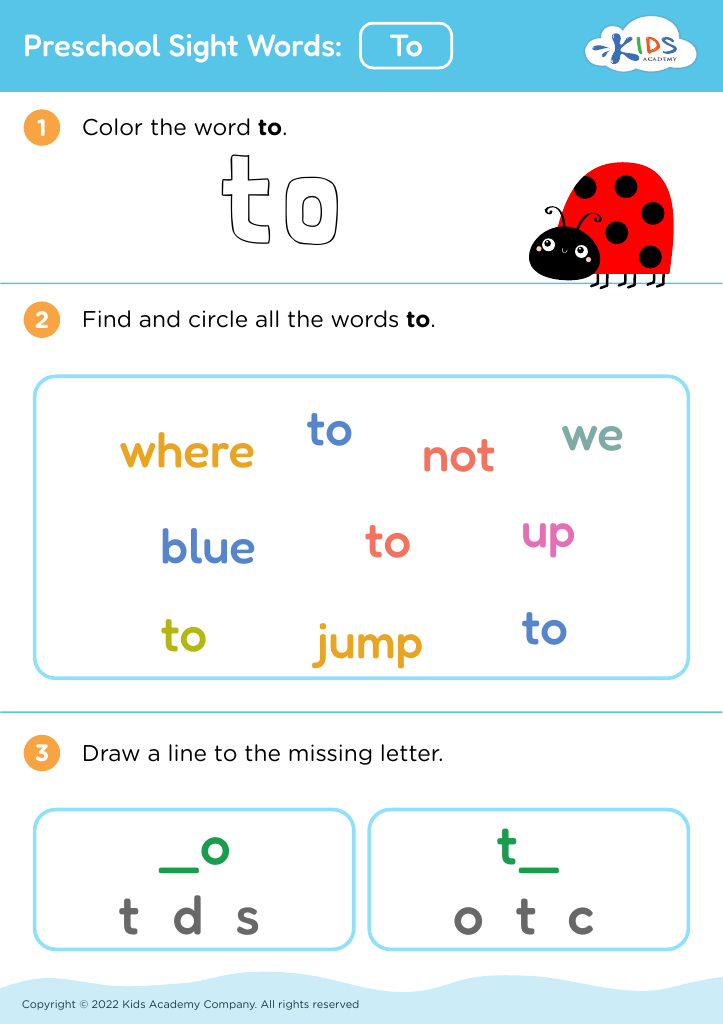
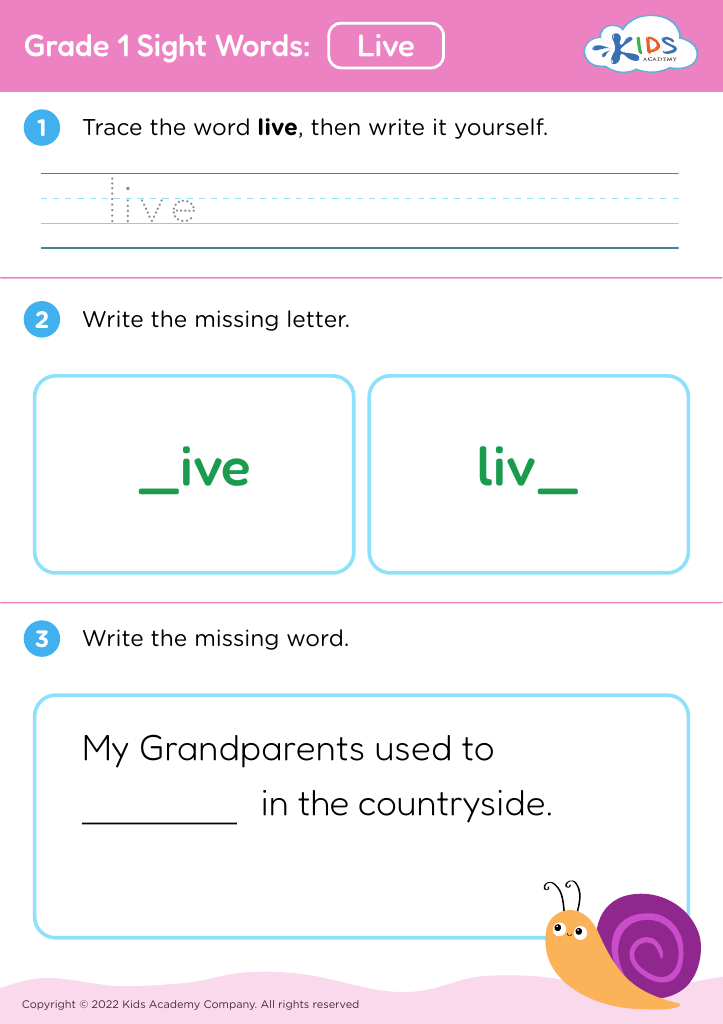
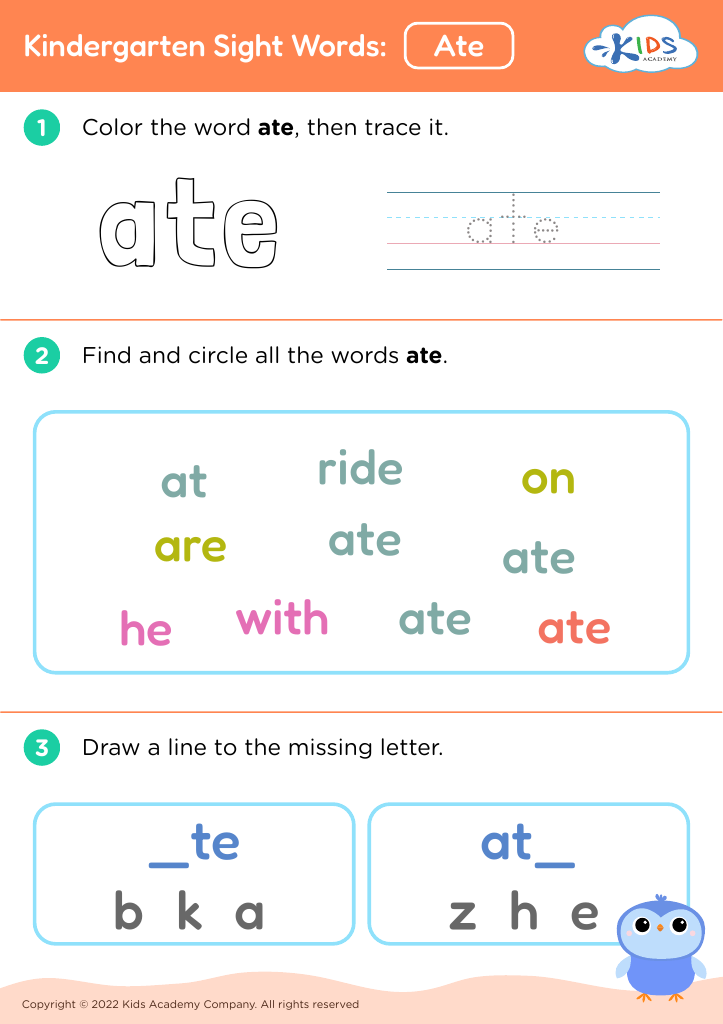
Enhance your child's reading journey with our engaging Sight Words Worksheets designed specifically for ages 5-6. These worksheets provide a fun and interactive way to build foundational reading skills by focusing on essential high-frequency words. By incorporating these sight words into practice, children will gain confidence and fluency in their reading abilities. Our colorful and relatable exercises are crafted to captivate young learners, making reading an enjoyable experience. With consistent usage, your child will improve their vocabulary, comprehension, and overall literacy skills. Explore our collection today and watch your little one excel in reading! Perfect for home or classroom use!




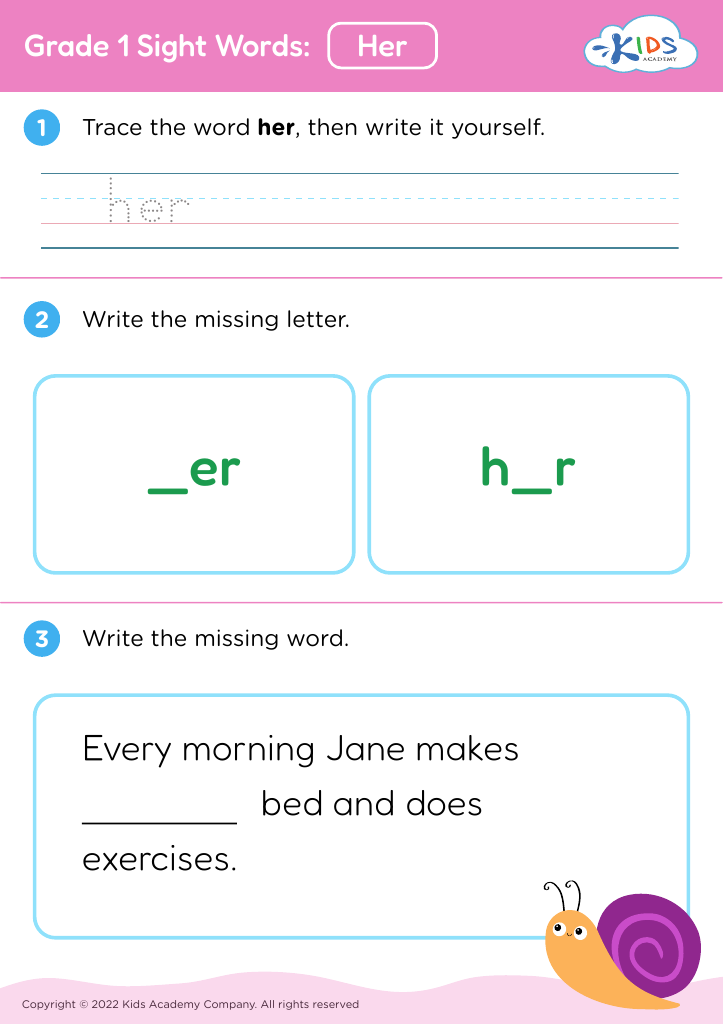
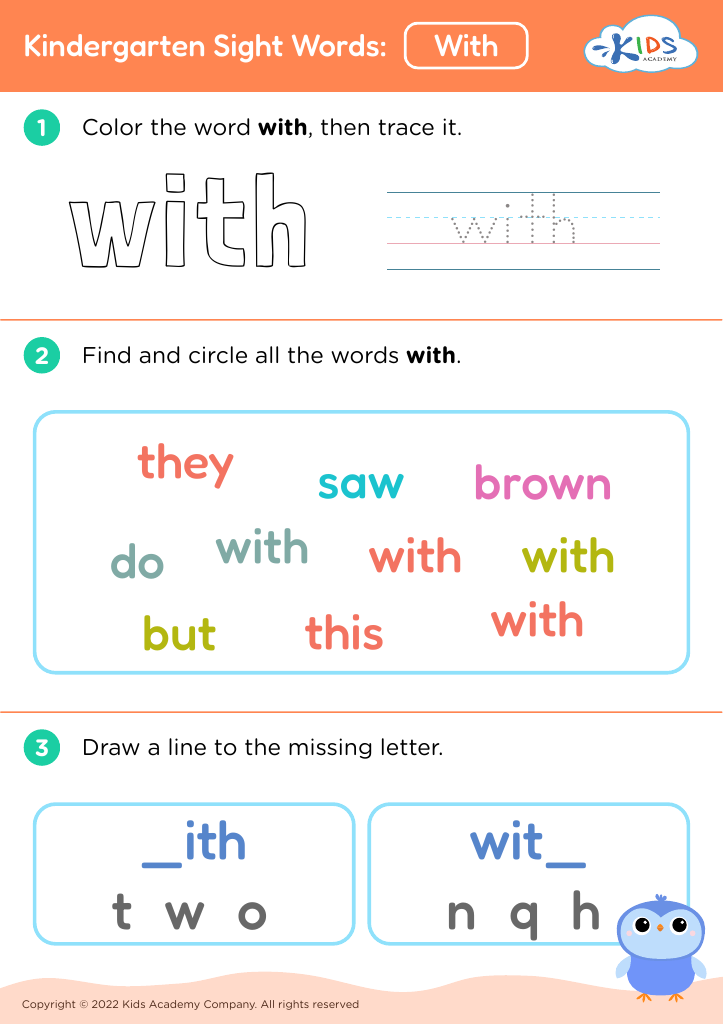
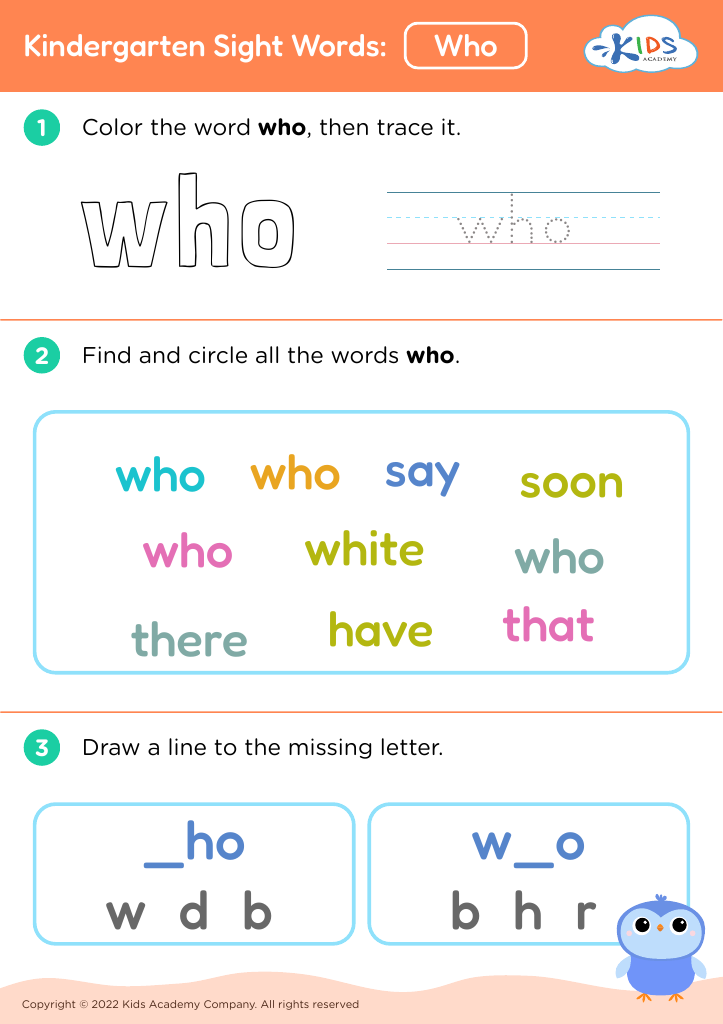
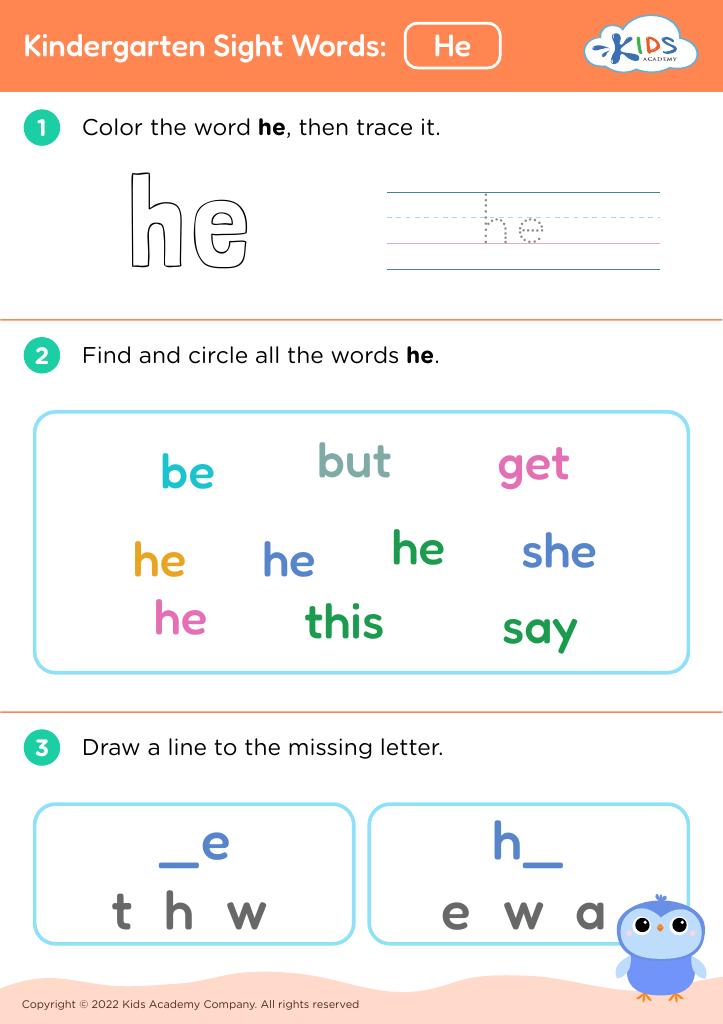





.jpg)

Parents and teachers should prioritize improving sight word skills for children ages 5-6 because these foundational competencies are crucial for their overall literacy development. Sight words are common words that children need to recognize instantly without needing to sound them out. Mastering these words enhances reading fluency, allowing young learners to focus on comprehension rather than decoding text.
When children can quickly recognize sight words, they experience increased confidence in their reading abilities, making them more enthusiastic about engaging with books and learning. This confidence can lead to a lifelong love for reading, fostering a habit that supports academic success across all subject areas.
Additionally, building a strong sight word vocabulary can mitigate frustration during reading activities. Children who struggle to read fluently may become disengaged, potentially hindering their interest in learning altogether. By focusing on sight words, educators and parents can create a positive reading environment that supports growth, encouraging active participation in learning.
Ultimately, emphasizing sight word acquisition in early education lays a critical foundation for future reading and writing skills, ensuring children are well-equipped to communicate and understand the world around them.