
Spatial awareness Science Worksheets for Ages 5-6
6 filtered results
Difficulty Level
Grade
Age
-
From - To
Subject
Activity
Standards
Discover the world of spatial awareness with our engaging science worksheets designed for children aged 5-6. These printable resources by Kids Academy are specially crafted to help young learners develop essential spatial skills through fun and interactive activities. Perfect for kindergartners, our worksheets focus on understanding shapes, positions, and patterns—key foundations for success in science, math, and daily problem-solving. Boost your child's cognitive abilities and nurture their curiosity with our expertly designed spatial awareness science worksheets, ideal for fostering a love for learning in early childhood.
Favorites
With answer key
Interactive
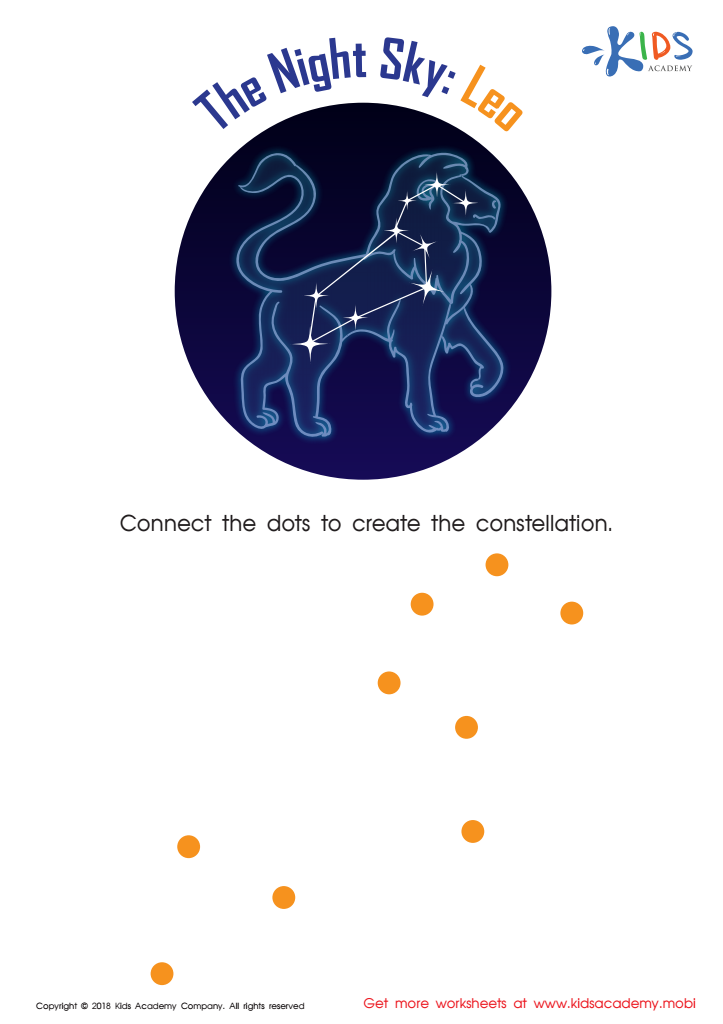
The Night Sky: Leo Worksheet
Let your kids explore the wonders of the stars with this fun worksheet! They'll connect the dots to create the constellation Leo. Night gazing instruments, a telescope or this printout can help your kids learn about constellations and horoscopes. Download the worksheet and let the star watching begin!
 Assign to My Students
The Night Sky: Leo Worksheet
Worksheet
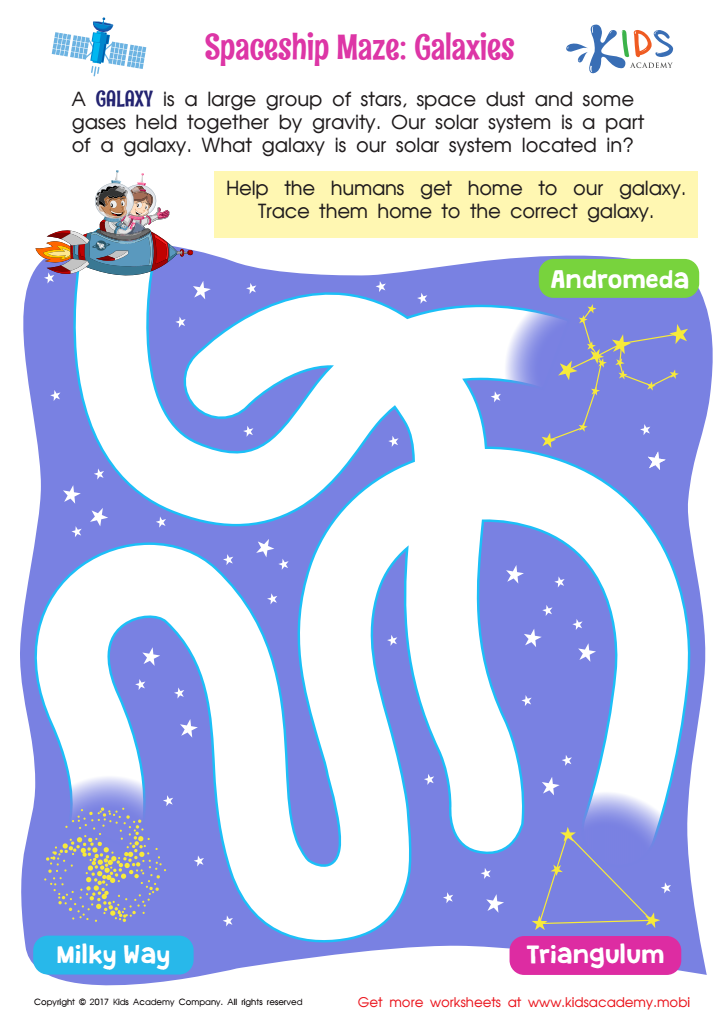
Spaceship Maze: Galaxies Worksheet
Guide lost humans home with this fun space maze: Galaxies! Once the journey is complete, kids can discover the name of our galaxy: the Milky Way! An exciting way to teach kids about space and help humans find their way back home.
Spaceship Maze: Galaxies Worksheet
Worksheet
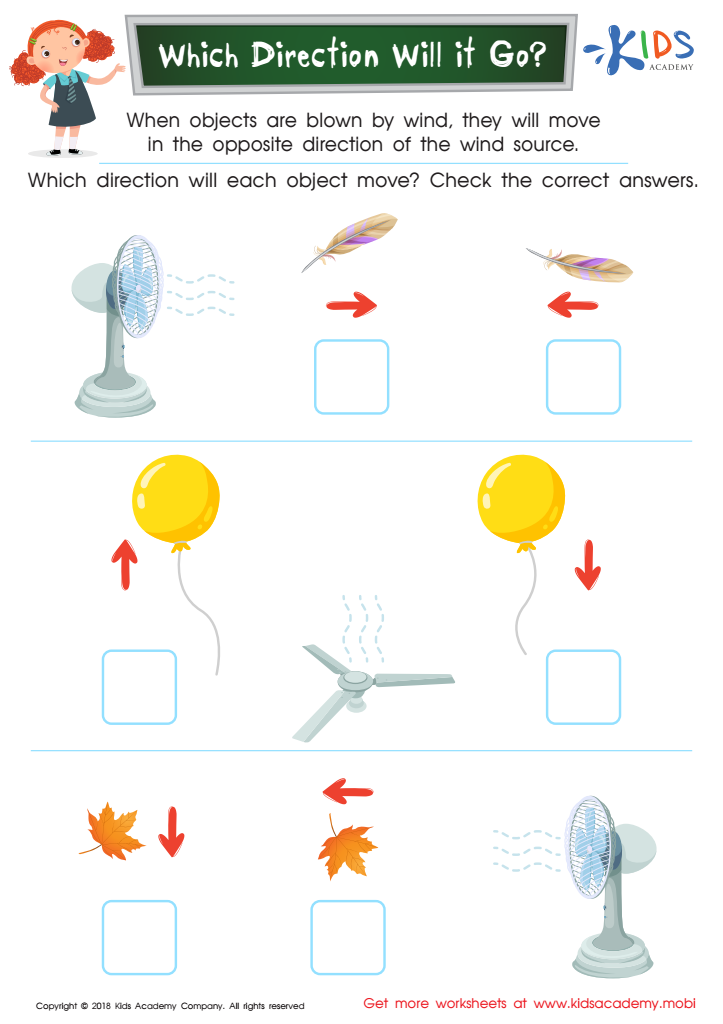
Which Direction Will it Go? Worksheet
Explain to your students: when objects are blown by wind, they will move in the opposite direction. In the worksheet, there are pictures of wind sources and objects being blown by the wind. Ask your child to identify and check the direction each object will move.
Which Direction Will it Go? Worksheet
Worksheet
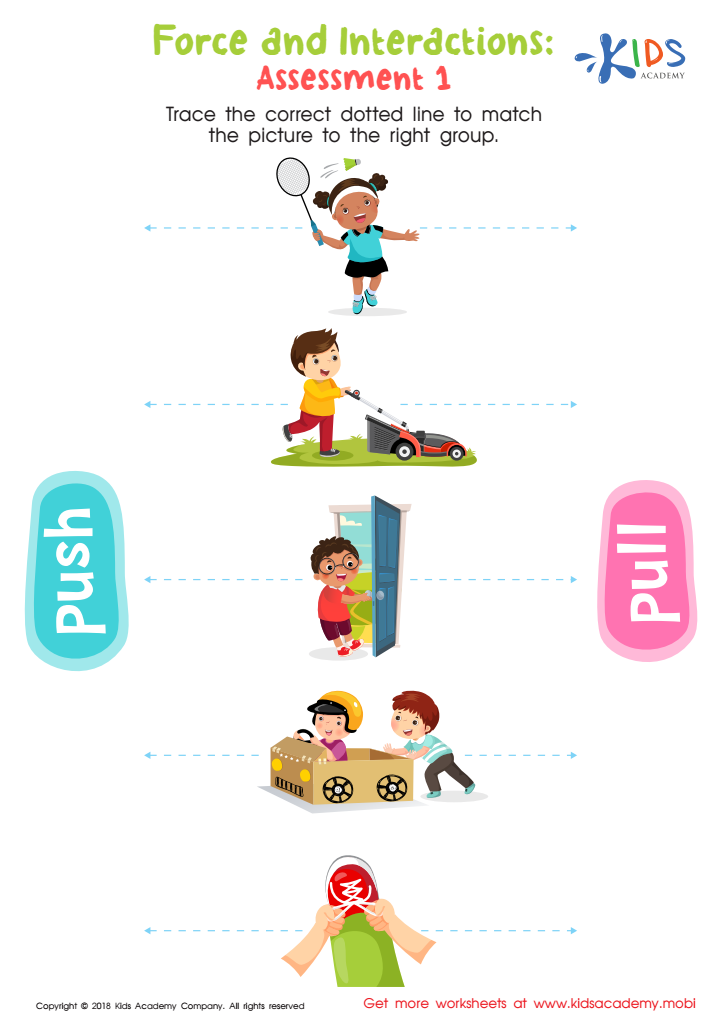
Force and Interactions: Assessment 2 Worksheet
Help your child see the difference between push and pull with this fun worksheet. Ask them to match each picture to the right group. The "push" is on the left and the "pull" is on the right. Assist them in tracing the activities and explain what it is the people are doing.
Force and Interactions: Assessment 2 Worksheet
Worksheet
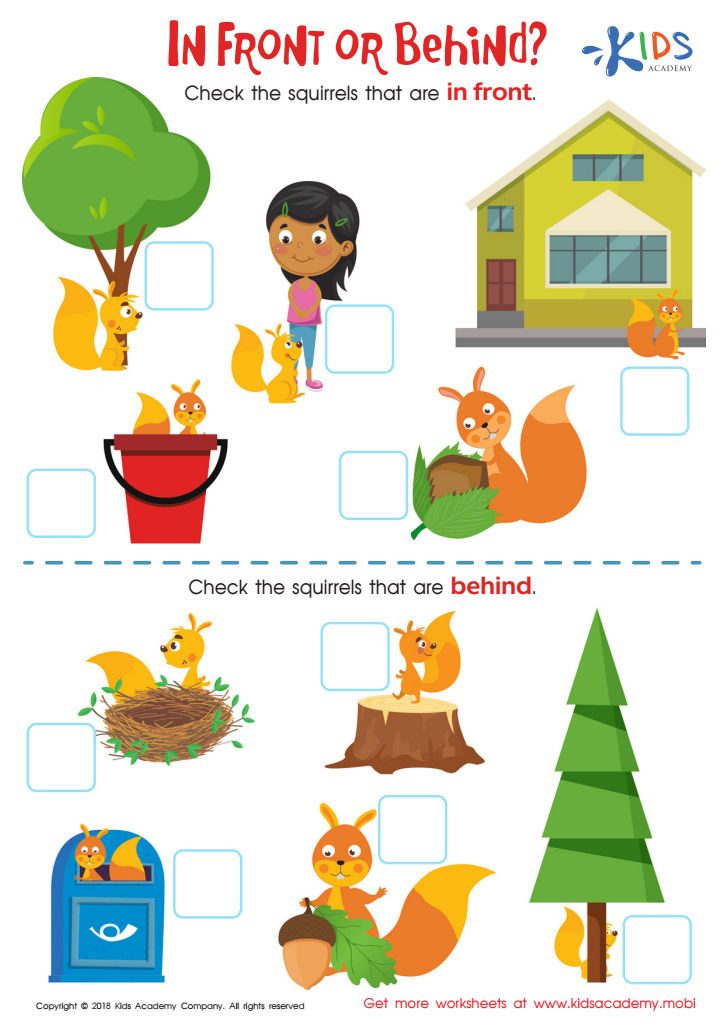
In Front or Behind: Part 2 Worksheet
Teach positional words "front" and "behind" with this fun worksheet! Students identify where the squirrel is in relation to the object - in front or behind. It's a great exercise to practice early geometry skills and understanding object movement.
In Front or Behind: Part 2 Worksheet
Worksheet
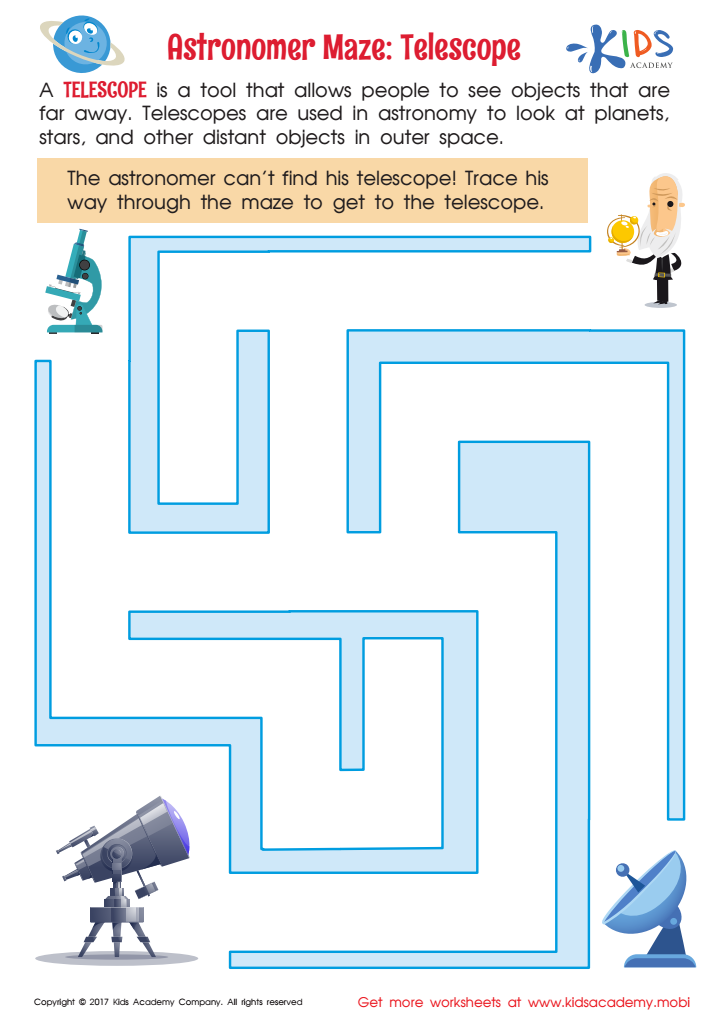
Astronomer Maze: Telescope Worksheet
Let your mini astronomer explore the galaxy with this fun and puzzling space maze worksheet – Telescope! Your child will have a great time navigating the maze, while learning how telescopes help scientists study the stars.
Astronomer Maze: Telescope Worksheet
Worksheet
Join Kids Academy for Free
Who is primarily going to use this learning content?







Parents and teachers should prioritize spatial awareness science for children aged 5-6 because it forms a critical foundation for learning and overall cognitive development. Spatial awareness—the understanding of one’s own position in space and the ability to physically orient objects and relationships among them—underpins essential skills in both academic and real-world contexts.
Firstly, spatial awareness is closely connected to mathematical thinking. It helps children grasp concepts related to geometry such as shapes, sizes, and their relative positions. As these young learners explore and understand spatial relationships, they develop an intrinsic sense for math, which is essential for more complex problem-solving later in life.
Moreover, strong spatial skills contribute to better reading and writing abilities. Understanding letter and word placement on a page, recognizing left-to-right sequencing, and differentiating between similarly shaped letters (like 'b' and 'd') are all spatial tasks. This can significantly improve early literacy skills and academic performance.
Additionally, enhancing spatial awareness has practical benefits such as improving hand-eye coordination and fine motor skills, which are necessary for everyday tasks like tying shoelaces, drawing, or playing sports.
In summary, integrating spatial awareness science in early education equips children with foundational skills that enhance both intellectual growth and functional abilities, setting the stage for future academic success and life proficiency.







