Shape Recognition Physical Science Worksheets for Ages 5-6
3 filtered results
-
From - To
Explore our Shape Recognition Physical Science Worksheets designed for children ages 5-6! These engaging resources help young learners identify, categorize, and understand various shapes through colorful activities and interactive exercises. Teaching the basics of geometry and spatial awareness, our worksheets encourage critical thinking and hands-on learning. Perfect for classroom use or at-home practice, these worksheets foster essential skills in a fun and captivating way. Parents and educators can easily download and print them for convenience. Help your child build a solid foundation in early science concepts while enhancing their shape recognition skills with our expertly crafted worksheets!
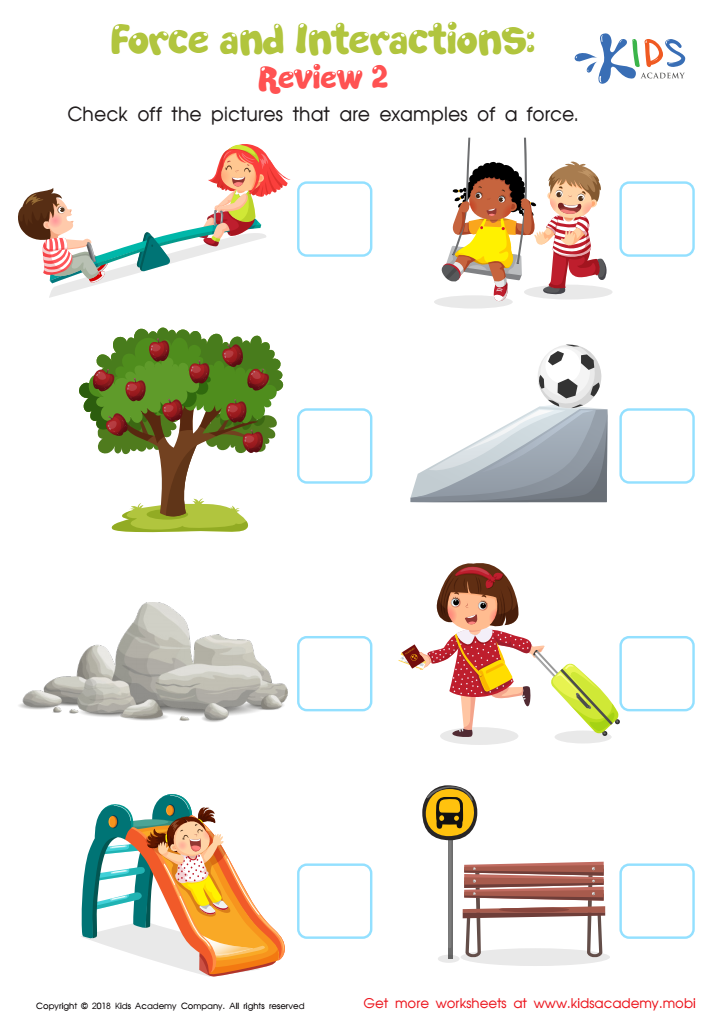
Force and Interactions: Review 2 Worksheet
 Assign to My Students
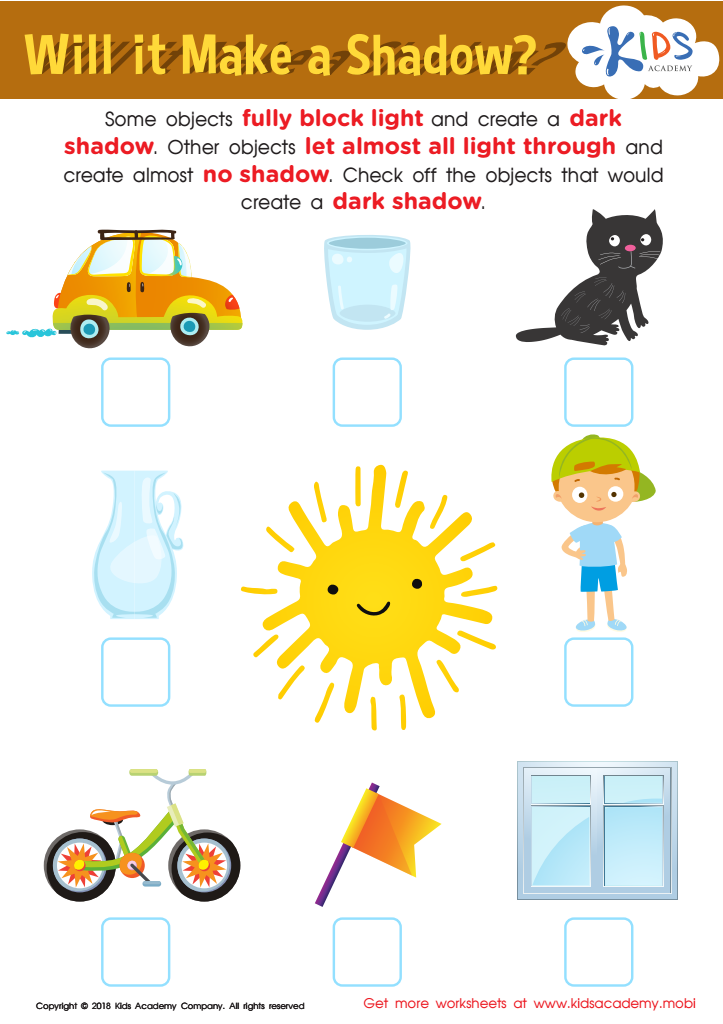
Will It Make a Shadow? Worksheet
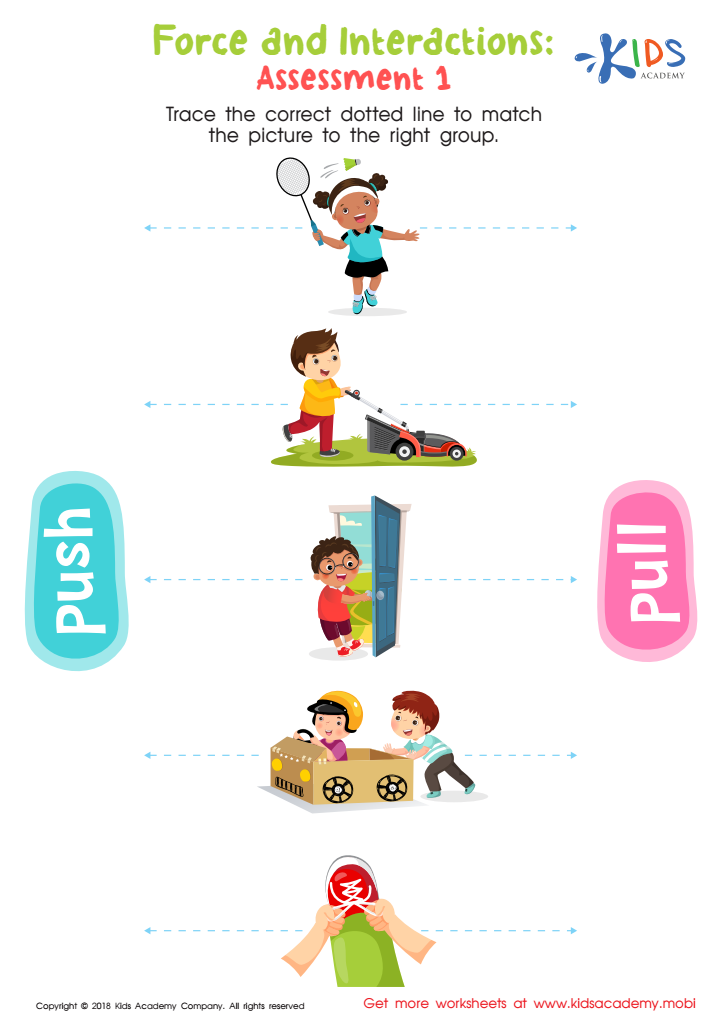
Force and Interactions: Assessment 2 Worksheet








Shape recognition is a fundamental aspect of early childhood education, particularly in physical science. For children ages 5-6, engaging with shapes forms the basis for critical cognitive development and a deeper understanding of the world around them. Recognizing shapes helps children make sense of their environment and builds essential skills in spatial awareness, which are crucial for later learning in mathematics and science.
Teaching shape recognition enhances fine motor development through activities like tracing and building with blocks, which refine hand-eye coordination. Additionally, as children identify and categorize shapes, they cultivate analytical thinking and problem-solving skills. These foundational competencies will serve them well in more complex subjects.
Parents and teachers should also recognize that shape recognition fosters creativity and imagination. Activities such as drawing, constructing, and even play-based learning allow children to explore and manipulate shapes, which can lead to innovative thinking. Moreover, incorporating shape recognition into daily routines and play fosters a more engaging and inclusive learning environment, reinforces concepts of geometric shapes in real-world applications, and promotes collaboration among peers.
Ultimately, shape recognition sets the stage for lifelong learning, as it underpins future academic success in STEM fields and enhances children's everyday interactions with their environment.







