
Spatial awareness Physical Science Worksheets for Ages 5-6
3 filtered results
Difficulty Level
Grade
Age
-
From - To
Subject
Activity
Standards
Enhance your child's spatial awareness with our engaging Physical Science worksheets designed for ages 5-6! These fun and interactive activities encourage young learners to explore crucial concepts such as location, direction, shapes, and movement. Each worksheet is carefully crafted to foster imagination and critical thinking while promoting foundational physical science skills. Ideal for early learning environments, these printable resources are perfect for parents and educators looking to enrich their teaching methods. Help your child develop essential spatial reasoning abilities that will support their understanding of the world around them. Dive into the exciting realm of physical science and watch your little one thrive!
Favorites
With answer key
Interactive
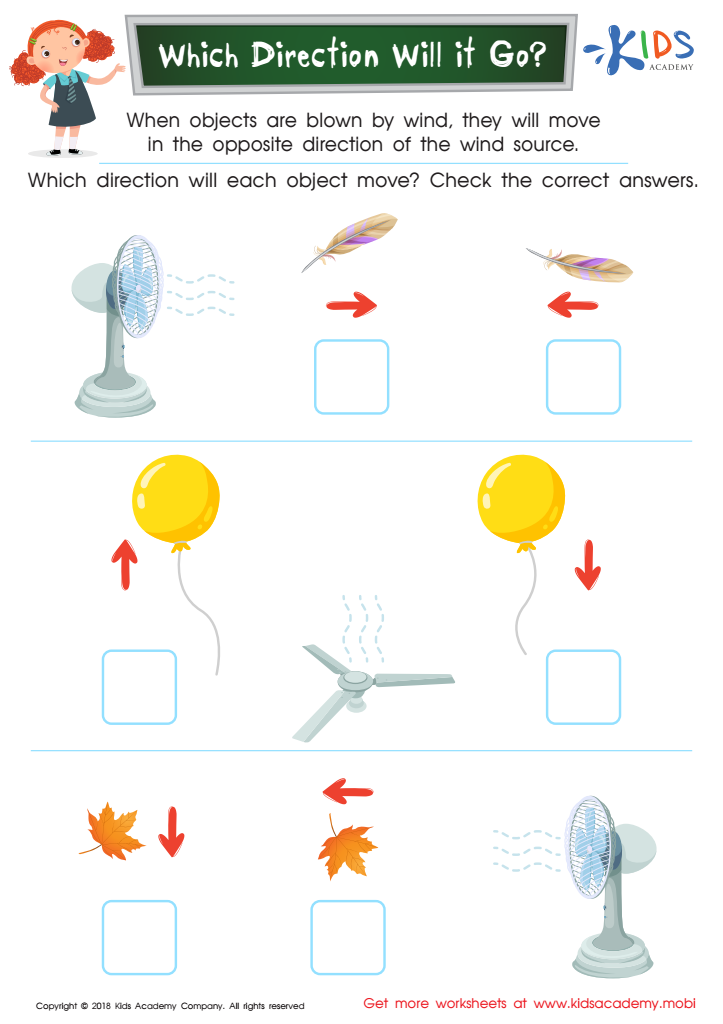
Which Direction Will it Go? Worksheet
Explain to your students: when objects are blown by wind, they will move in the opposite direction. In the worksheet, there are pictures of wind sources and objects being blown by the wind. Ask your child to identify and check the direction each object will move.
 Assign to My Students
Which Direction Will it Go? Worksheet
Worksheet
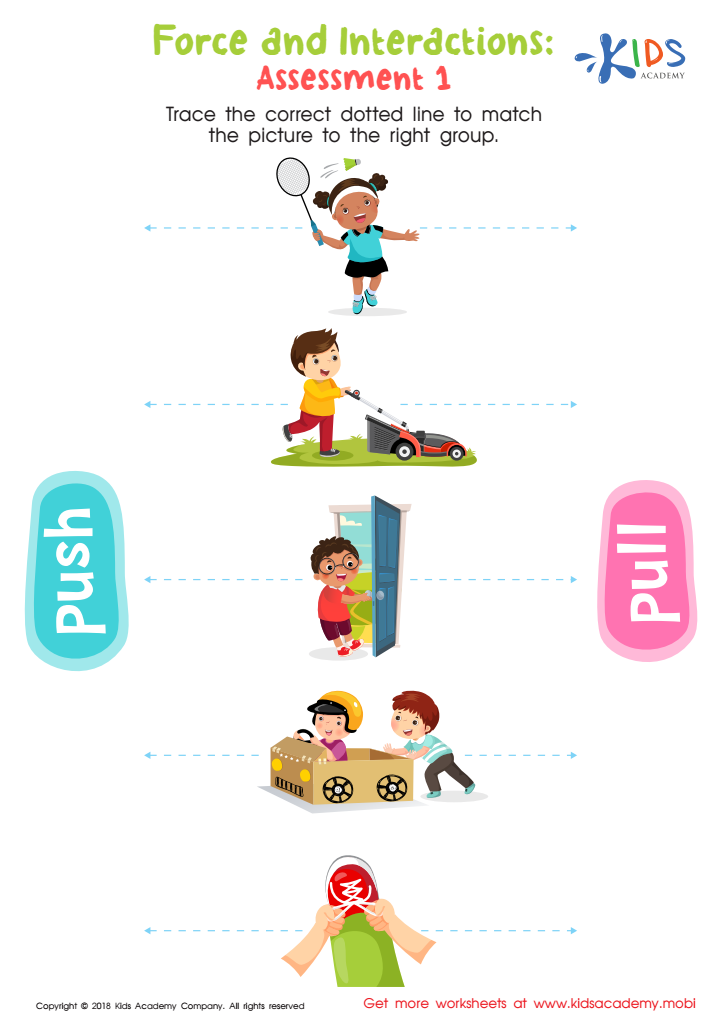
Force and Interactions: Assessment 2 Worksheet
Help your child see the difference between push and pull with this fun worksheet. Ask them to match each picture to the right group. The "push" is on the left and the "pull" is on the right. Assist them in tracing the activities and explain what it is the people are doing.
Force and Interactions: Assessment 2 Worksheet
Worksheet
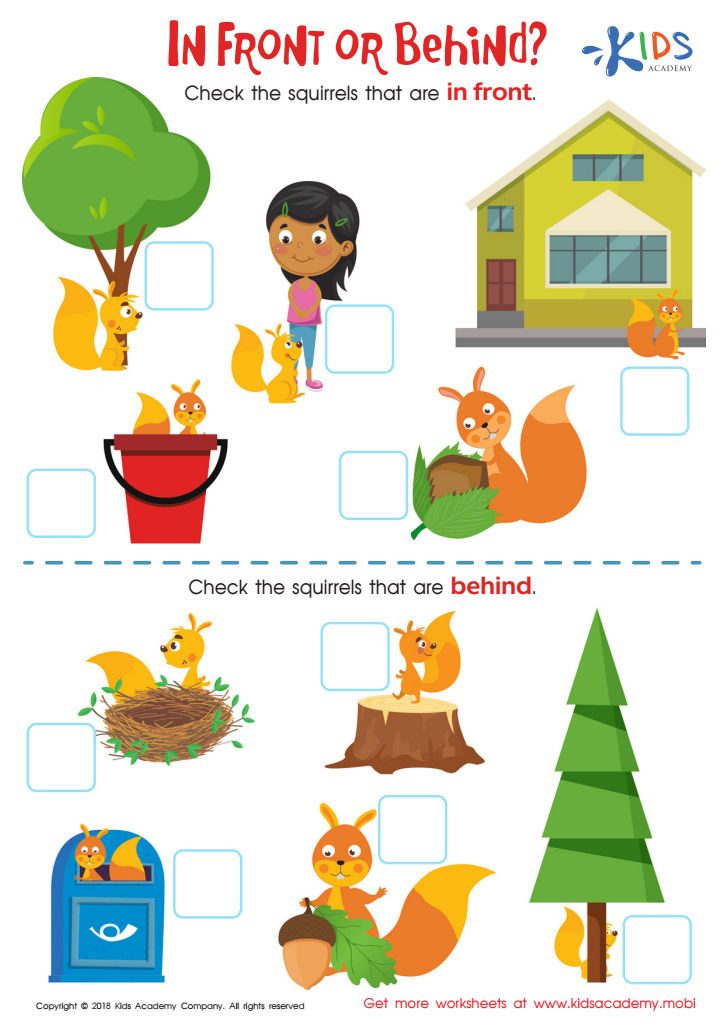
In Front or Behind: Part 2 Worksheet
Teach positional words "front" and "behind" with this fun worksheet! Students identify where the squirrel is in relation to the object - in front or behind. It's a great exercise to practice early geometry skills and understanding object movement.
In Front or Behind: Part 2 Worksheet
Worksheet
Join Kids Academy for Free
Who is primarily going to use this learning content?



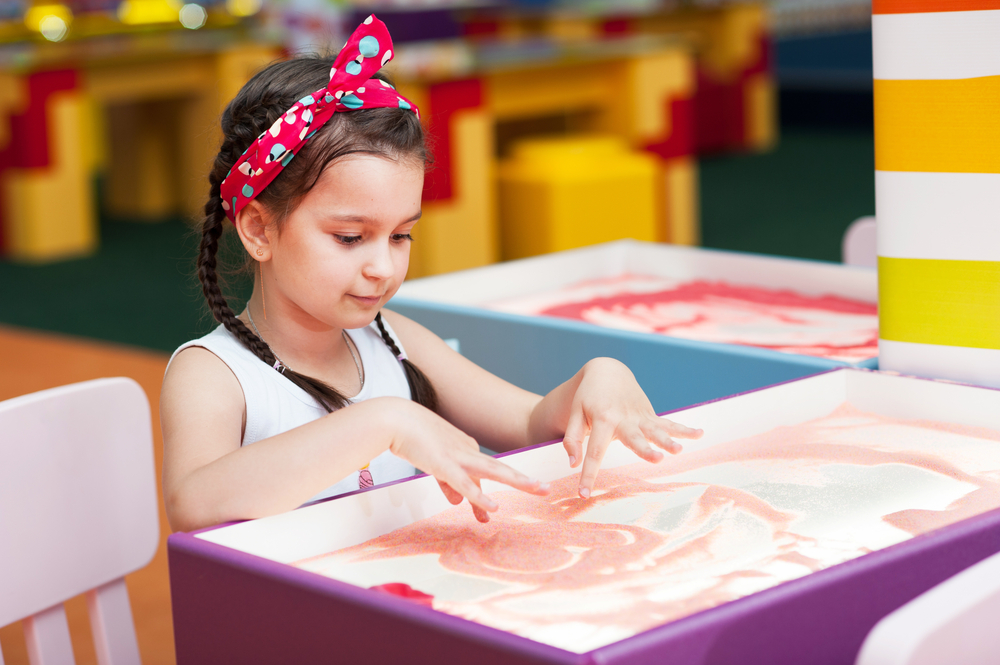




Spatial awareness is a crucial aspect of physical science that deserves attention from parents and teachers, especially for children ages 5-6. At this age, children are naturally curious and eager to explore their surroundings. Developing spatial awareness helps them understand where objects are located in relation to their own body and to each other, laying the foundation for key scientific concepts.
Enhancing spatial skills fosters problem-solving abilities and critical thinking. For instance, when a child learns to navigate around obstacles or put together puzzles, they engage with important cognitive processes that are fundamental to scientific inquiry. Children who grasp spatial relationships are more adept at understanding geometry, physics, and engineering concepts later on.
Moreover, spatial awareness is closely linked to success in STEM (science, technology, engineering, and mathematics) fields. Encouraging activities such as block building, drawing maps, or playing with spatial puzzles not only makes learning fun but also equips children with necessary skills for future academic success.
Engaged parents and teachers can facilitate exploration and learning in play-based environments, nurturing curiosity and a passion for science. By focusing on spatial awareness in early childhood, we empower our students to think critically about the world around them.







