Understanding seasons Seasons Worksheets for Ages 5-6
5 filtered results
-
From - To
Introduce your young learners to the captivating world of seasons with our "Understanding Seasons Worksheets" designed specifically for ages 5-6! These engaging worksheets encourage children to explore the four seasons—spring, summer, fall, and winter—through fun activities such as matching, coloring, and sorting. Each worksheet is crafted to enhance critical thinking skills while fostering a deeper appreciation for nature's changes. With vibrant illustrations and age-appropriate tasks, these resources make learning about weather patterns both educational and enjoyable. Perfect for home or classroom use, our worksheets ensure that learning about seasons is an exciting adventure for every child!
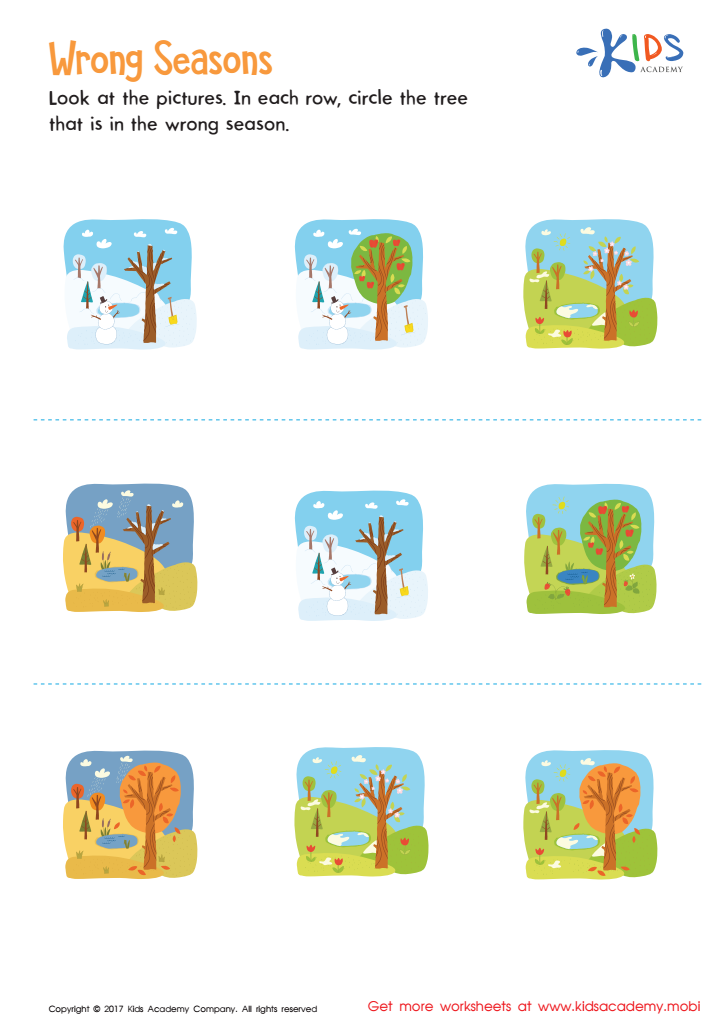
Wrong Seasons Worksheet
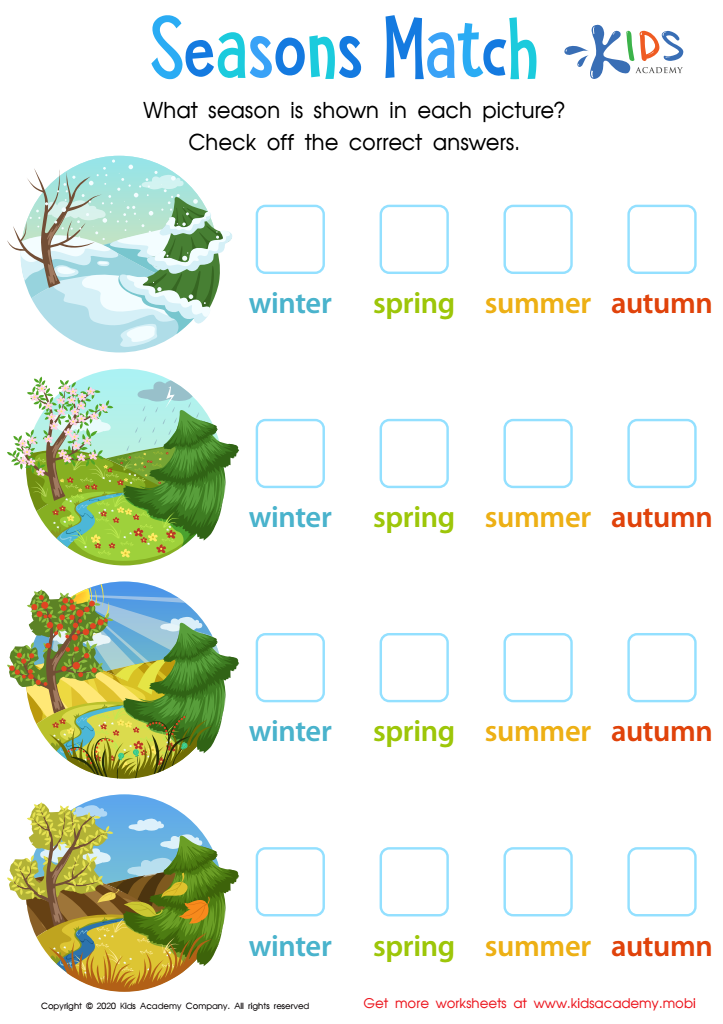
Seasons Match Worksheet
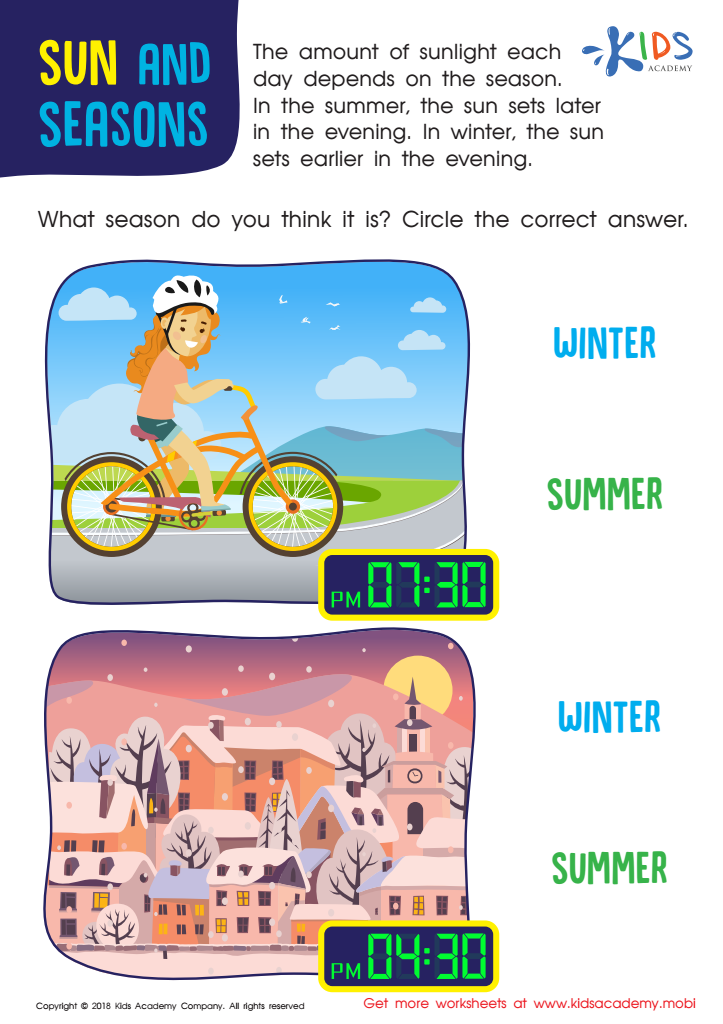
Sun and Seasons Worksheet
Spring and Fall Worksheet
 Assign to My Students
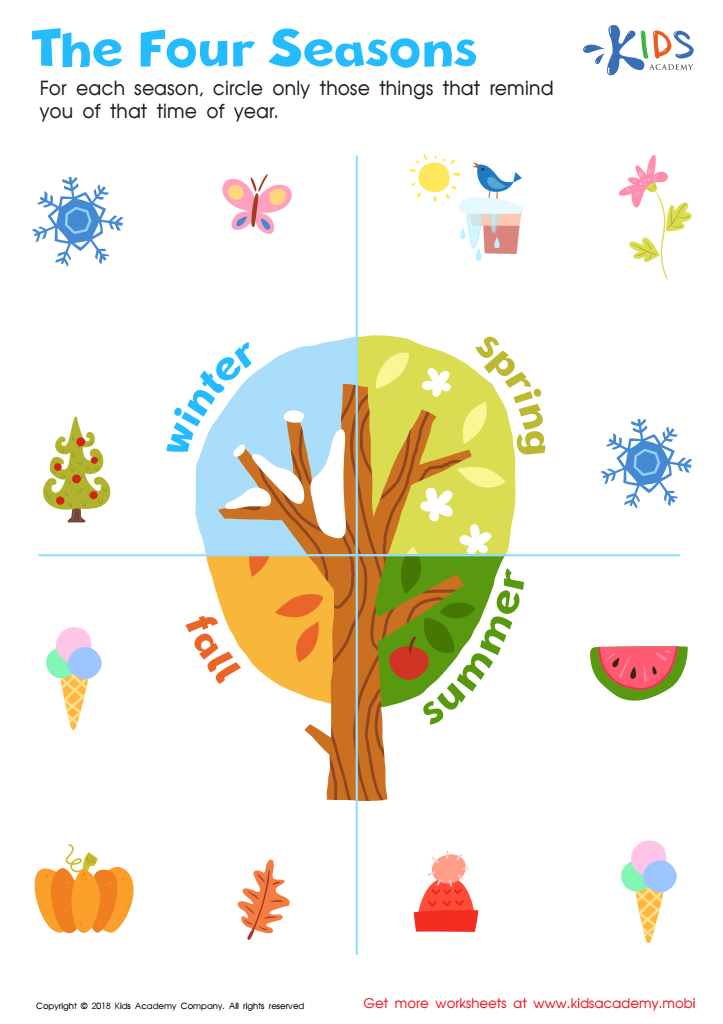
The Four Seasons Worksheet


%20(1).jpg)

Understanding seasons is essential for children aged 5-6 as it lays the foundation for their scientific literacy and enhances their connection to the world around them. At this developmental stage, children are naturally curious about their environment and eager to explore changes. Learning about seasons helps them make sense of these changes, such as shifts in weather, daylight, and nature.
Engaging with the concept of seasons fosters critical thinking skills. For instance, recognizing why trees lose leaves in autumn or why flowers bloom in spring encourages observation and inquiry. This understanding also supports language development as children learn new vocabulary linked to each season, such as "blossom," "snow," and "harvest."
Moreover, seasons offer opportunities for rich experiential learning. Parents and teachers can create outdoor activities and games that allow students to observe seasonal differences, collect leaves, or celebrate holidays, making learning interactive and enjoyable.
Finally, understanding seasons promotes cultural awareness by connecting kids with seasonal traditions and celebrations from around the world. This holistic approach not only nurtures cognitive skills but also builds empathy, curiosity, and appreciation for diversity, making it vital for parents and educators to prioritize this learning in early education.







