Decision making skills Community Worksheets for Ages 5-6
3 filtered results
-
From - To
Explore our engaging "Decision Making Skills Community Worksheets" designed specifically for children ages 5-6! These worksheets aim to nurture crucial decision-making abilities in young learners by using relatable community scenarios. Through colorful illustrations and interactive activities, kids will learn to identify choices, assess outcomes, and make informed decisions, all while having fun! Our carefully crafted resources promote critical thinking and enhance social skills crucial for their growth. Whether at home or in the classroom, these worksheets will empower your child to become confident decision-makers capable of navigating their environment. Start your journey to better decision-making with our valuable resources today!
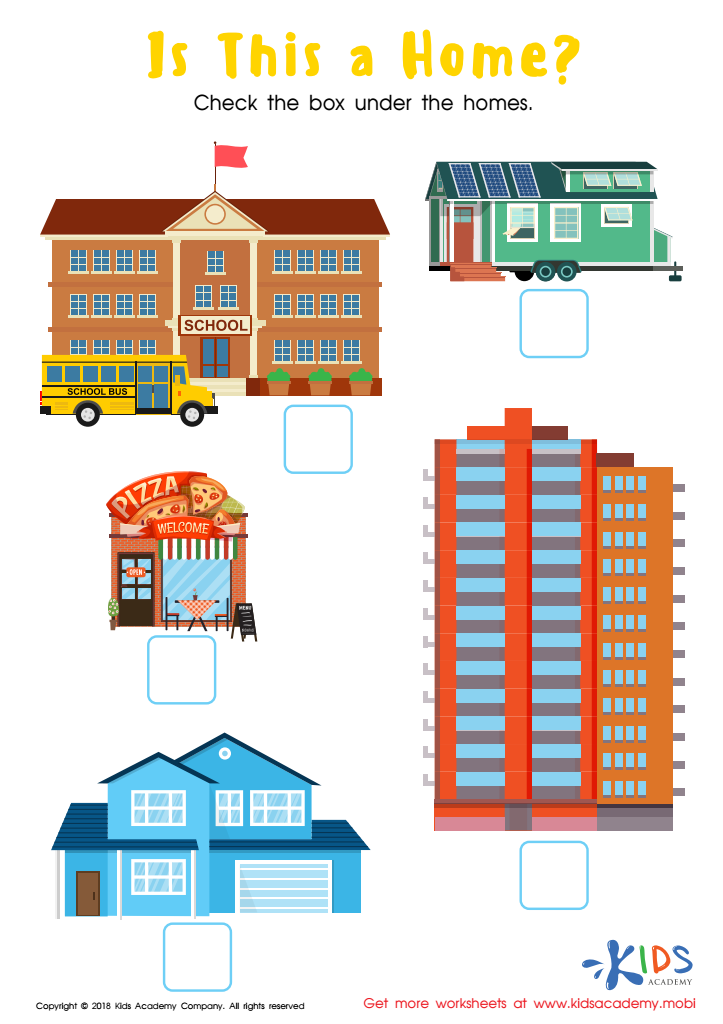
Is this a Home? Worksheet
 Assign to My Students
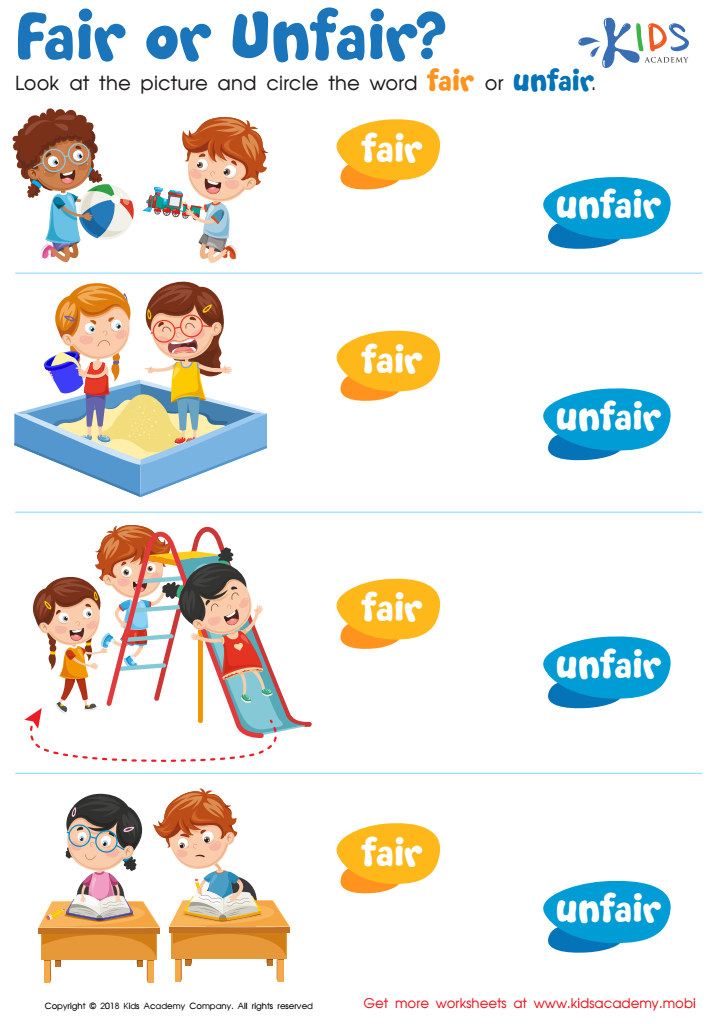
Fair or Unfair Worksheet

Towns Worksheet








Decision-making skills are crucial for children aged 5-6, as they form the foundation for critical thinking, problem-solving, and independence. At this age, children begin to navigate choices in their daily lives, from picking their clothes to deciding which game to play. Supporting their decision-making skills helps them develop autonomy and confidence, empowering them to make informed choices.
For parents and teachers, fostering these skills is essential in nurturing a positive co-learning environment. Engaging children in discussions about choices teaches them to weigh options, think about consequences, and express their preferences. This not only encourages cognitive development but also enhances emotional intelligence, as children learn to understand and respect the perspectives of others.
Moreover, in a community-focused setting, teaching decision-making skills fosters collaboration and social interaction. Children learn to work together, share ideas, and make collective decisions, all of which are fundamental components of community cohesion. As they practice these skills, they become better equipped to handle complex situations in the future, building a foundation for them to become responsible and thoughtful members of society. By prioritizing decision-making skills, parents and teachers can significantly impact children's personal growth and their ability to contribute to their communities.








