Sentence construction Grammar Worksheets for Ages 5-6
5 filtered results
-
From - To
Enhance your child's language development with our engaging Sentence Construction Grammar Worksheets designed for ages 5-6. These worksheets provide a fun and interactive way for young learners to understand basic sentence structure and improve their writing skills. Children will practice building simple sentences using supportive prompts and colorful illustrations that spark creativity. With various activities focused on subject-verb agreement and punctuation, these worksheets promote confidence in language use. Perfect for classroom settings or at-home practice, our resources ensure that your child builds a strong grammatical foundation while enjoying the learning process. Start cultivating your child's literacy skills today!
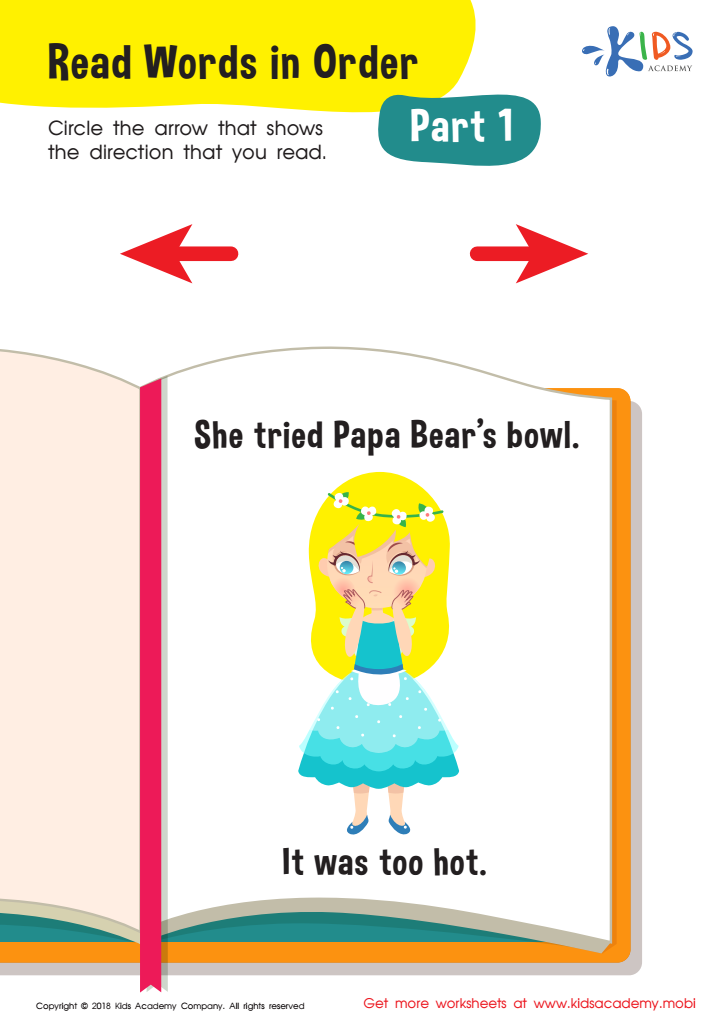
Read Words Order Part 1 Worksheet
 Assign to My Students
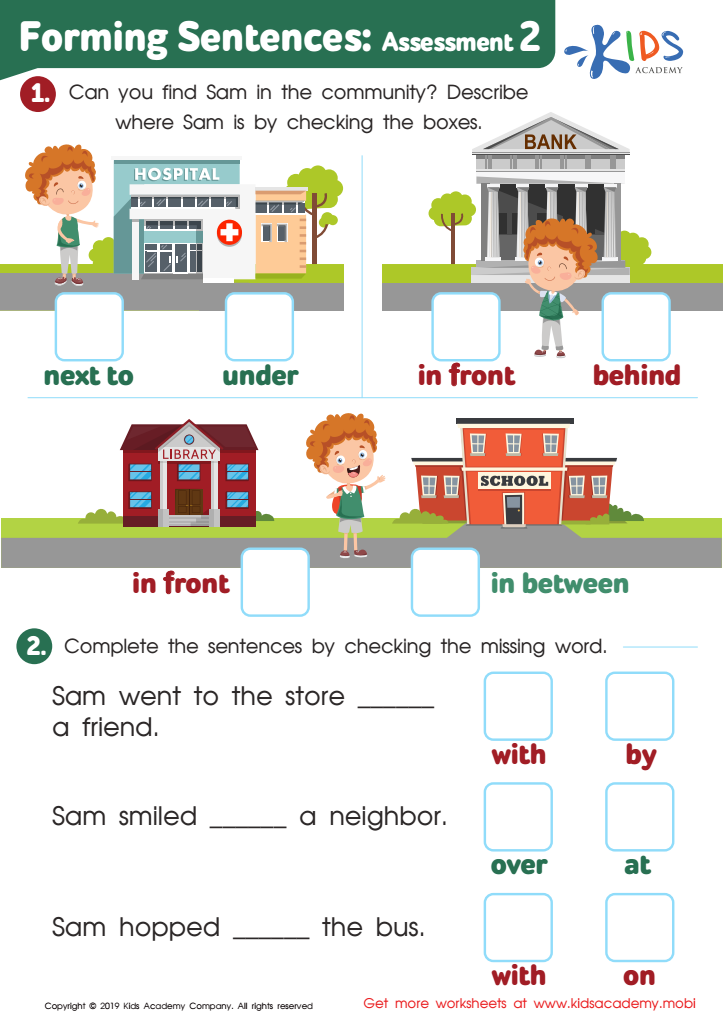
Forming Sentences: Assessment 2 Worksheet
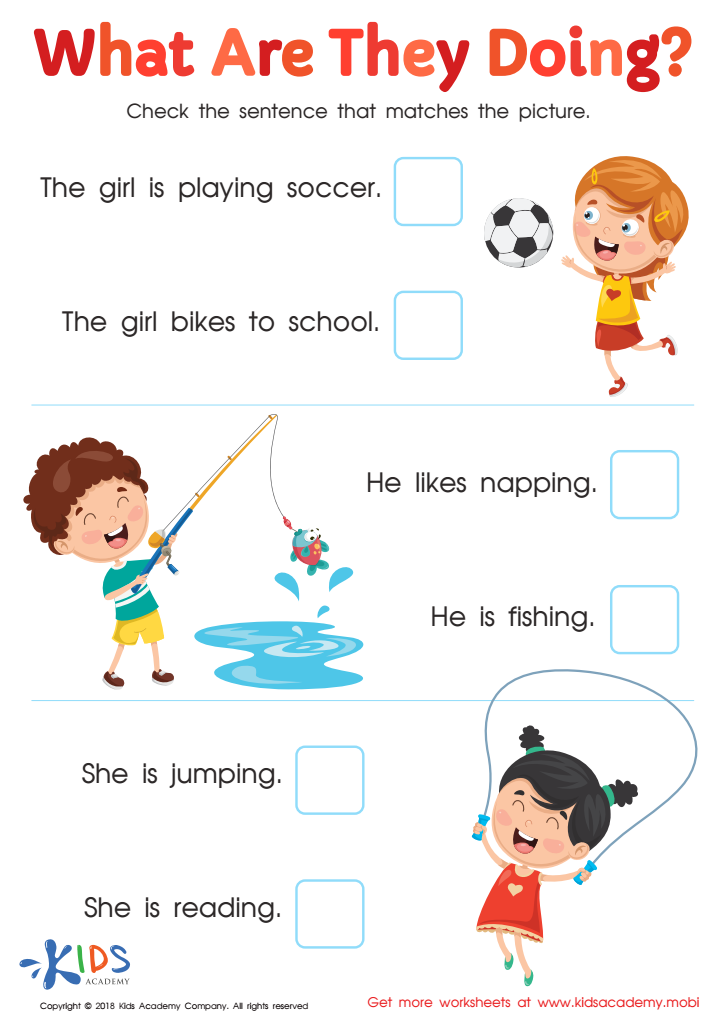
What Are They Doing? Worksheet
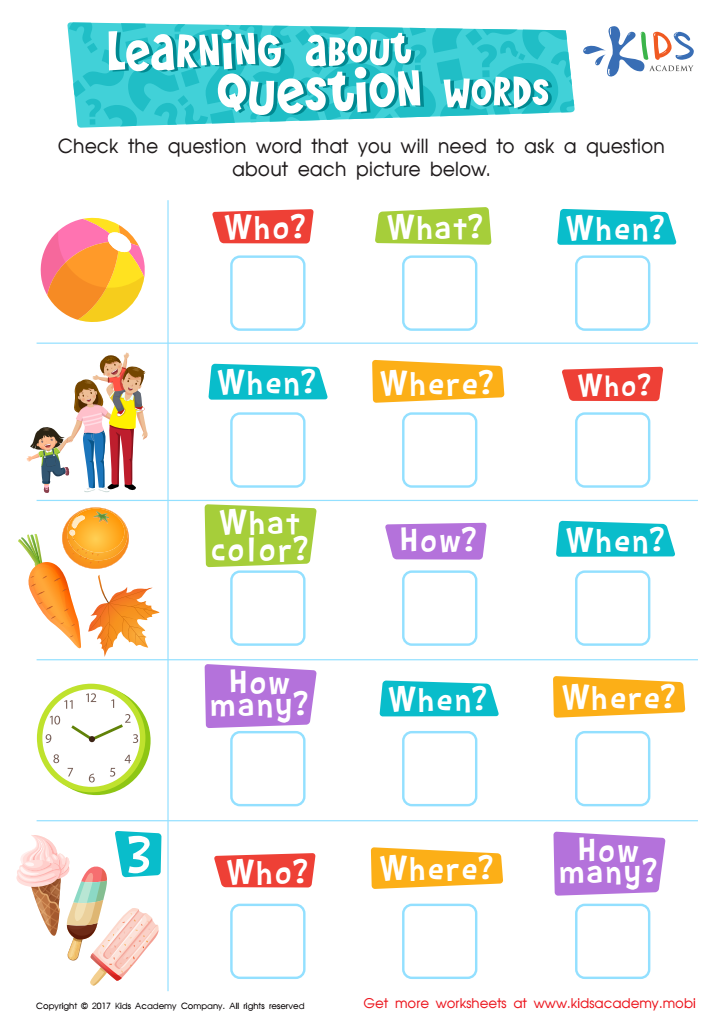
Learning about Question Words Worksheet
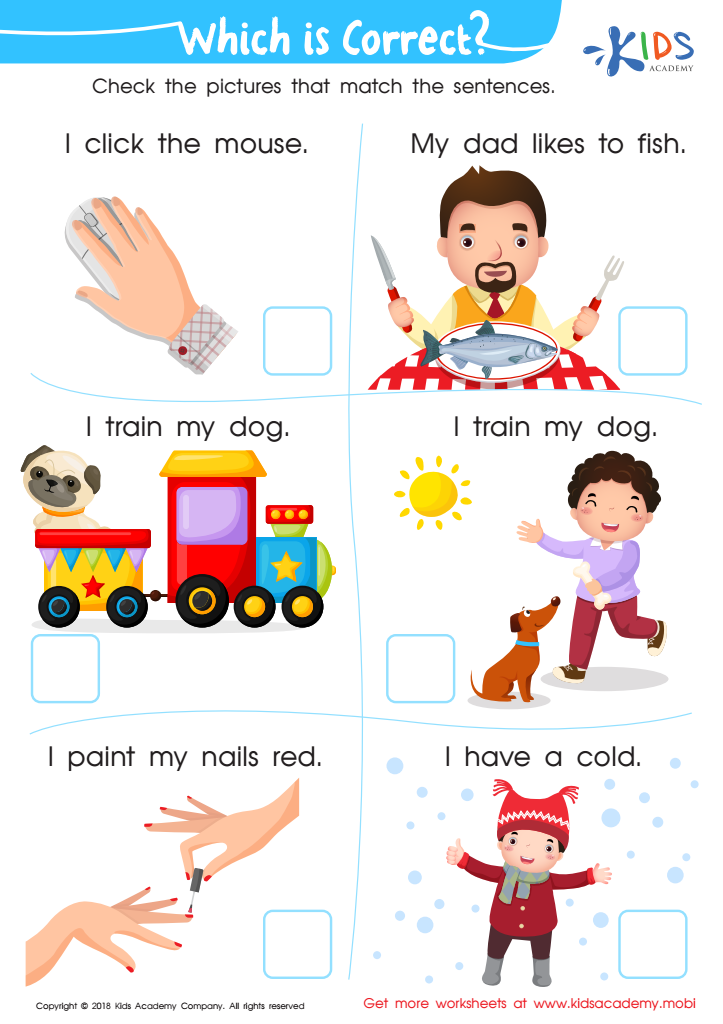
Which Is Correct? Worksheet








Understanding sentence construction is foundational for children aged 5-6 as it lays the groundwork for effective communication and literacy skills. At this stage, children are developing the ability to express themselves clearly and coherently, and proper grammar plays a crucial role in that process. When parents and teachers emphasize sentence construction, they help children learn how to form complete thoughts, develop vocabulary, and understand the basic structure of language, which includes subjects, verbs, and objects.
Moreover, strong grammar skills enhance reading comprehension, allowing children to make sense of written texts more easily. As they start to write, children with a solid grasp of sentence construction can create stories, reports, or even simple notes, fostering creativity and self-expression.
By focusing on grammar, educators and parents can teach children the rules and nuances of language in an engaging manner, promoting a love for learning. This early investment cultivates stronger communication abilities, setting the stage for academic success. When children feel confident in their language skills, their overall academic performance improves, as effective communication is essential in all subjects. Ultimately, nurturing sentence construction skills equips children for future challenges and relationships in both academic and personal settings.








