Verb identification Grammar Worksheets for Ages 5-6
3 filtered results
-
From - To
Discover our engaging and effective Verb Identification Grammar Worksheets tailored for children ages 5-6! These printable worksheets are designed to introduce young learners to verbs in a fun and interactive way, enhancing their understanding of essential grammar concepts. Perfect for kindergarten and first-grade students, each worksheet features colorful images and simple sentences that make learning to identify verbs enjoyable. Help your child build a solid foundation in grammar, improve their writing skills, and boost their confidence with our expertly crafted resources. Start your child’s journey to grammar mastery today with Kids Academy!
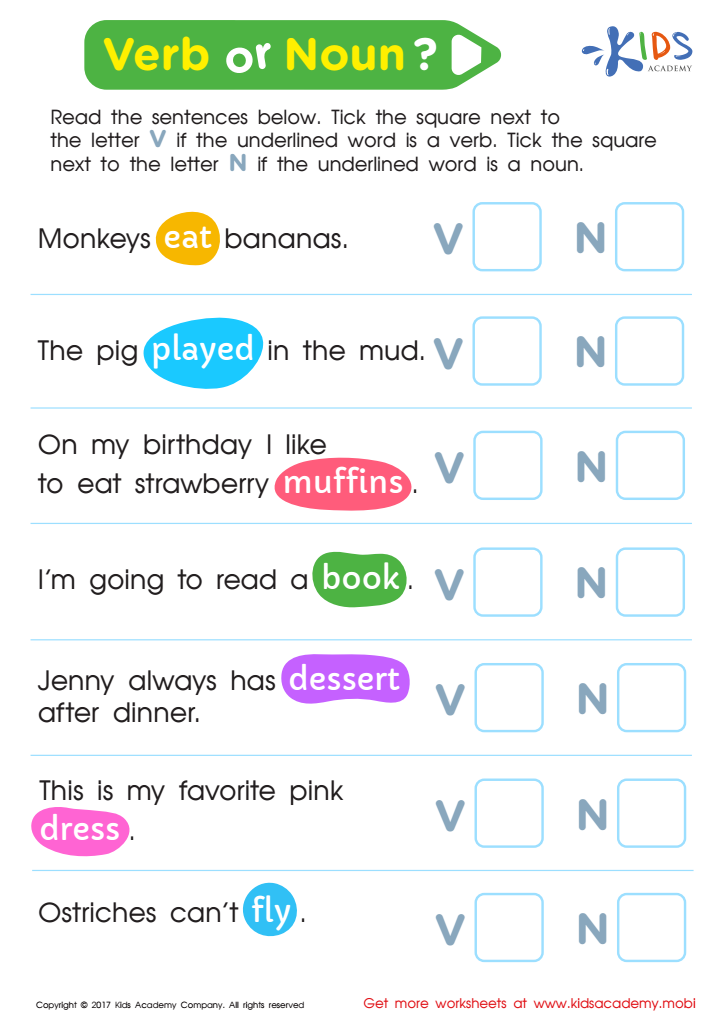
Verb or Noun Worksheet
 Assign to My Students
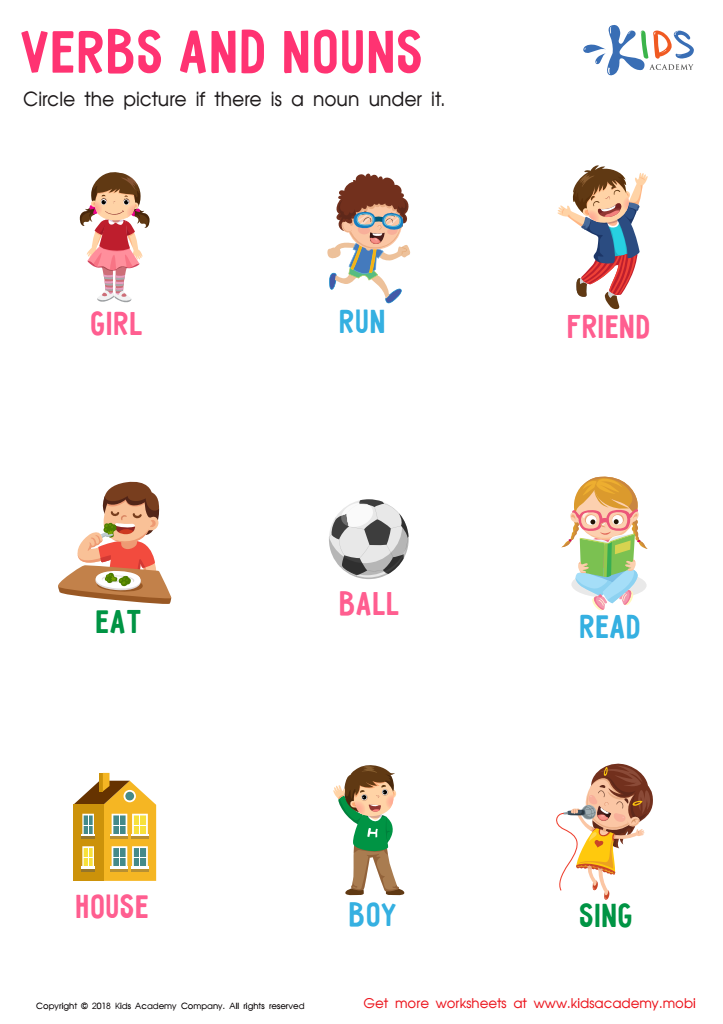
Verbs and Nouns Worksheet
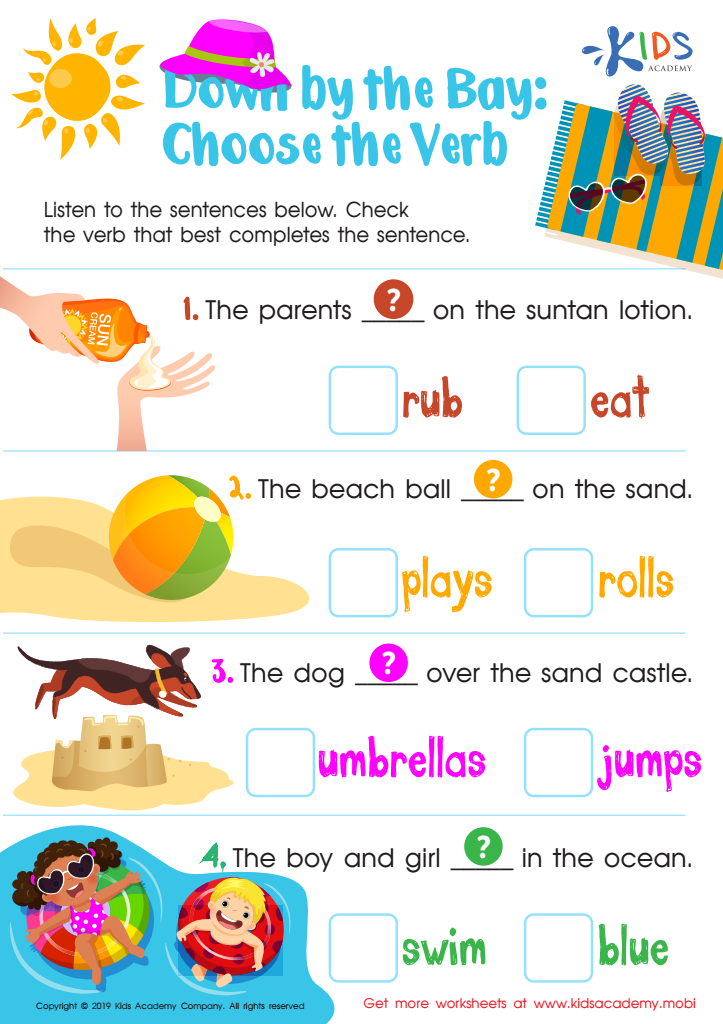
Down by the Bay: Choose the Verb Worksheet








Teaching young children, aged 5-6, to identify verbs in sentences is a fundamental aspect of early language development that has multiple benefits. Firstly, understanding verbs enhances a child's ability to construct meaningful sentences, essentially improving their communication skills. Verbs are action words; knowing how to recognize and use them correctly helps children express actions, feelings, and events more accurately, facilitating more coherent and specific interactions with others.
Moreover, verb identification contributes significantly to reading comprehension. As children learn to identify key elements of a sentence, such as the subject and the verb, they can better grasp the overall meaning of a sentence. This skill ultimately forms a foundation for more advanced grammar and reading activities encountered in later grades, serving as a building block for fluent reading abilities.
Early exposure to grammar education, like verb identification, also supports cognitive development. It enhances listening skills and linguistic awareness, making children more attuned to the structure and function of language. Additionally, the ability to correctly use verbs can improve children's writing proficiency, enabling them to express their ideas more effectively.
In summary, focusing on verb identification for children aged 5-6 fosters better communication, reading comprehension, and cognitive skills. By emphasizing this aspect of grammar, parents and teachers can provide children with valuable tools that support their overall literacy and educational success.








