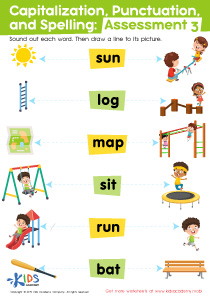
Reading proficiency Writing Worksheets for Ages 5-6
3 filtered results
-
From - To
Enhance early reading skills with our "Reading Proficiency Writing Worksheets for Ages 5-6" at Kids Academy. Perfect for young learners, these engaging, printable worksheets focus on foundational aspects such as letter recognition, phonics, and word formation. Each activity is designed to boost confidence and build essential skills in an enjoyable, interactive way. Tailored for children aged 5-6, these resources align with educational standards, ensuring your child grasps reading basics while cultivating a love for learning. Get started today and help your child achieve reading proficiency through fun, practical exercises. Download now and watch their reading skills soar!
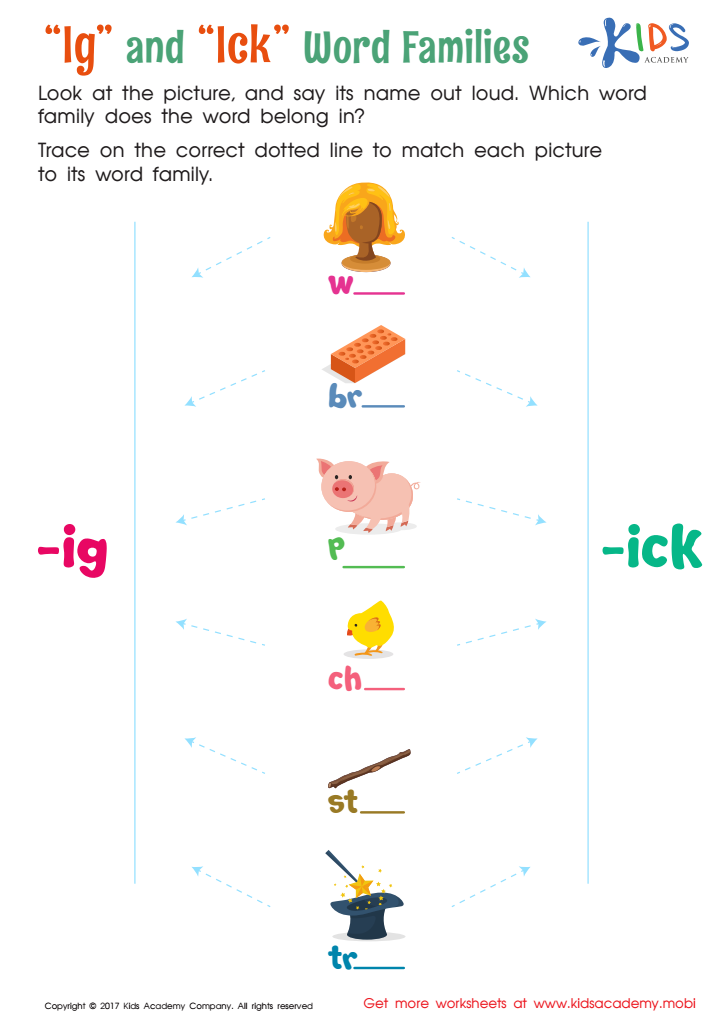
Words Families "ig" and "ick" Spelling Worksheet
 Assign to My Students
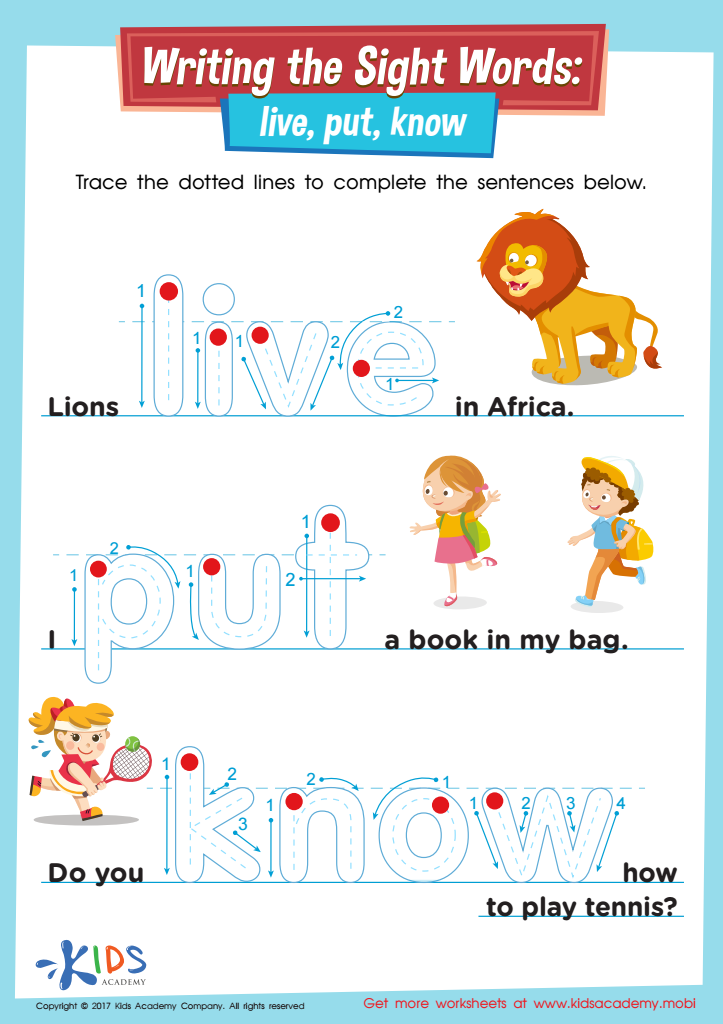
Live, Put, Know Printable Sight Words Worksheet





.jpg)

Parents and teachers should care deeply about reading proficiency and writing skills for children aged 5-6 because these foundational abilities are critical for cognitive and academic development. At this early stage, children are in a prime period of brain development, and mastering basic literacy skills lays the groundwork for future educational success.
Reading proficiency at this age helps children develop vocabulary, understand sentence structure, and improve their comprehension skills. It’s essential for progressing in all subjects because reading is a fundamental skill that supports learning in math, science, and social studies. Without these skills, children may struggle to keep up with their peers, leading to frustration and disengagement from school.
Writing, on the other hand, fosters fine motor skills and encourages creativity and self-expression. Through writing, children learn to communicate their ideas and thoughts, which is essential for social interaction and emotional development. Early writing practice also aids in acquiring spelling, grammar, and punctuation skills, which are important for clear communication.
By investing time and resources in developing these skills, parents and teachers help ensure children become confident and capable learners. This early intervention can prevent future academic difficulties and supports a child's overall intellectual and social development, paving the way for success throughout their schooling and beyond.