
Sentence completion Writing Worksheets for Ages 5-6
4 filtered results
Difficulty Level
Grade
Age
-
From - To
Subject
Activity
Standards
Our Sentence Completion Writing Worksheets for Ages 5-6 are designed to ignite your child's creativity and enhance their literacy skills. Through engaging prompts and fun activities, these worksheets encourage young learners to complete sentences, helping them understand sentence structure and develop vocabulary. Perfect for early grade students, these resources provide a solid foundation for writing proficiency. Each worksheet is crafted to foster confidence and promote a love for learning. Discover a world of imaginative sentence completion exercises that make learning both enjoyable and effective. Start your child's writing journey with our expertly designed learning tools!
Favorites
With answer key
Interactive
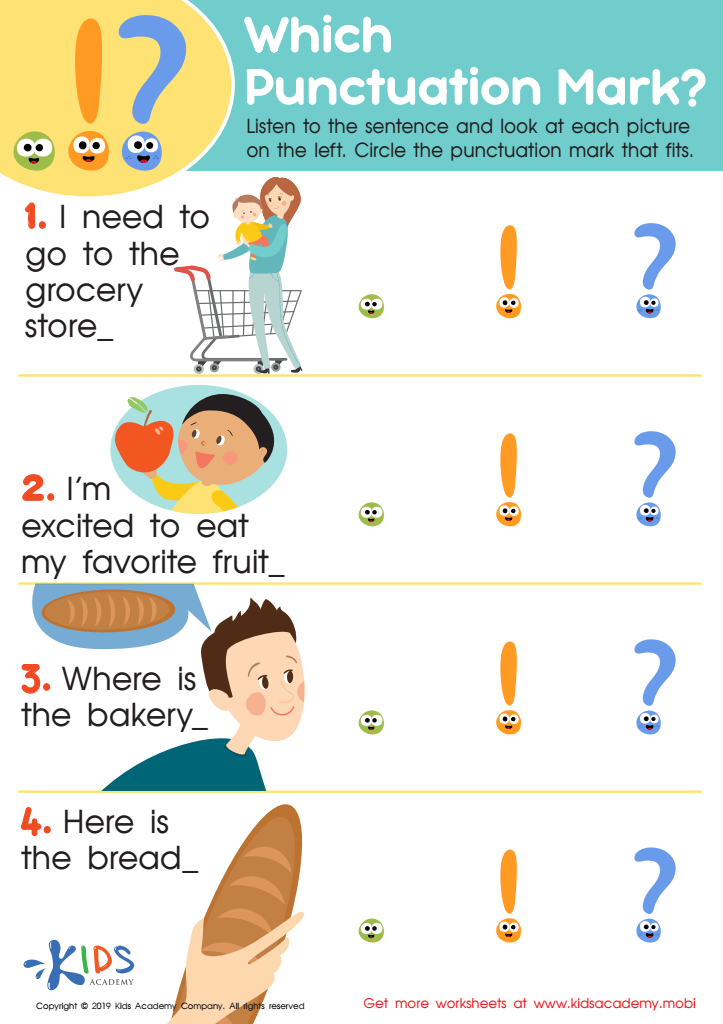
Which Punctuation Mark Worksheet
Punctuation marks are essential for expressing what we say. This worksheet asks your kindergarten student to circle the correct punctuation mark for each sentence. Read each sentence aloud and help them identify the expression needed. A picture accompanies each sentence. Enjoy! (79 words)
 Assign to My Students
Which Punctuation Mark Worksheet
Worksheet
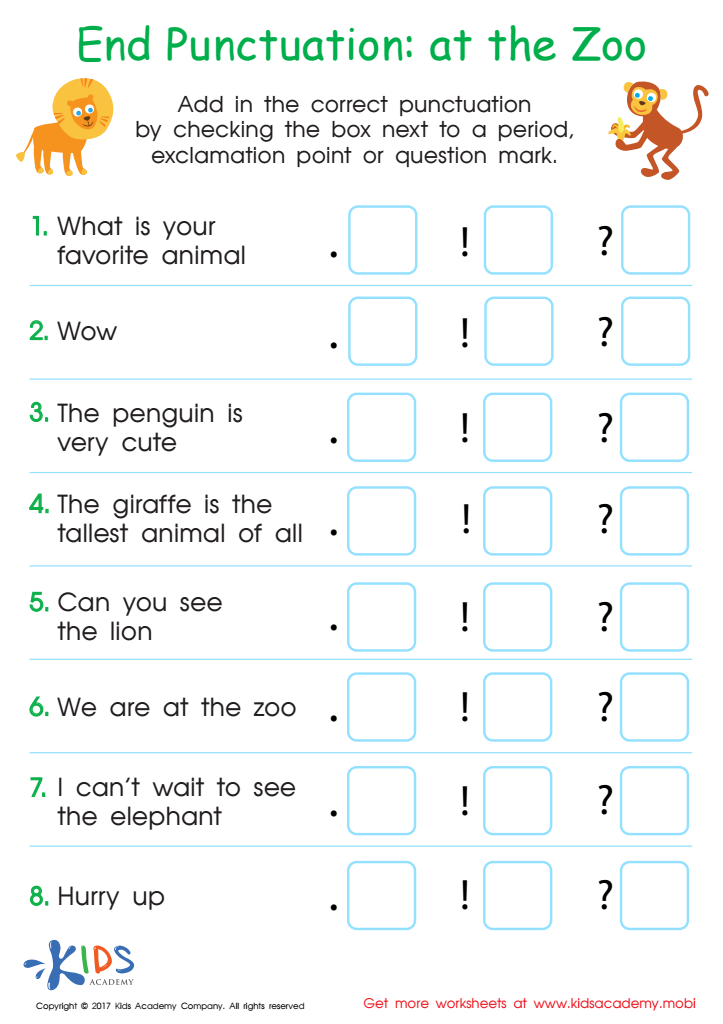
End Punctuation: At the Zoo Worksheet
Let your kid hone their sentence and punctuation skills with this cute At the Zoo worksheet. Read it out loud to provide guidance if needed, and help your child find the right punctuation mark for each sentence.
End Punctuation: At the Zoo Worksheet
Worksheet
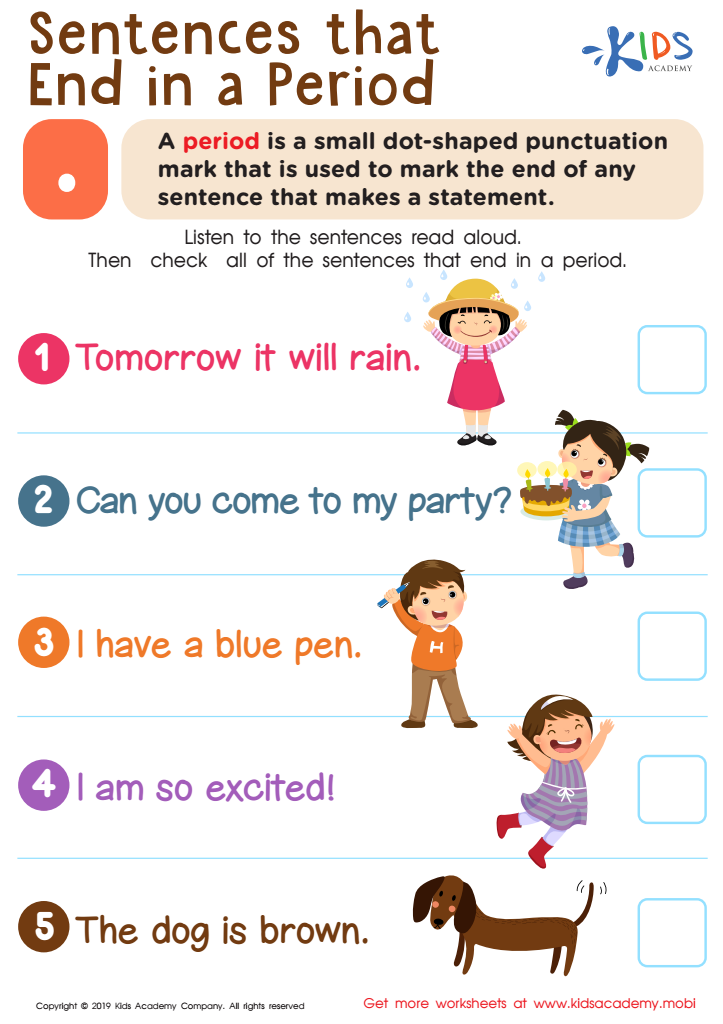
Sentences That End in a Period Worksheet
Before beginning, ask your kids if they know what punctuation marks are and can name a few. Common examples are the period (a small dot-shaped mark at the end of sentences), comma, question mark, and exclamation mark. Help practice their use with questions in the worksheet.
Sentences That End in a Period Worksheet
Worksheet
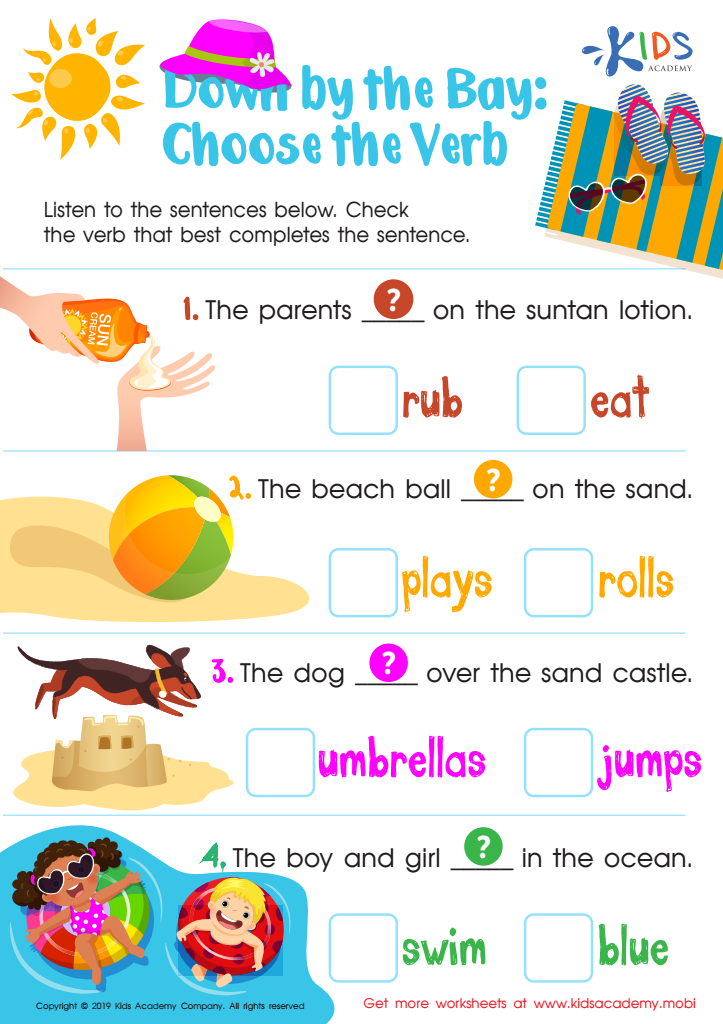
Down by the Bay: Choose the Verb Worksheet
Teach your kids about verbs: words that describe actions, like 'playing', 'eating', 'talking'. Ask your child to give their own verbs, then read the sentences in a worksheet and help them pick the best one for each question.
Down by the Bay: Choose the Verb Worksheet
Worksheet
Join Kids Academy for Free
Who is primarily going to use this learning content?




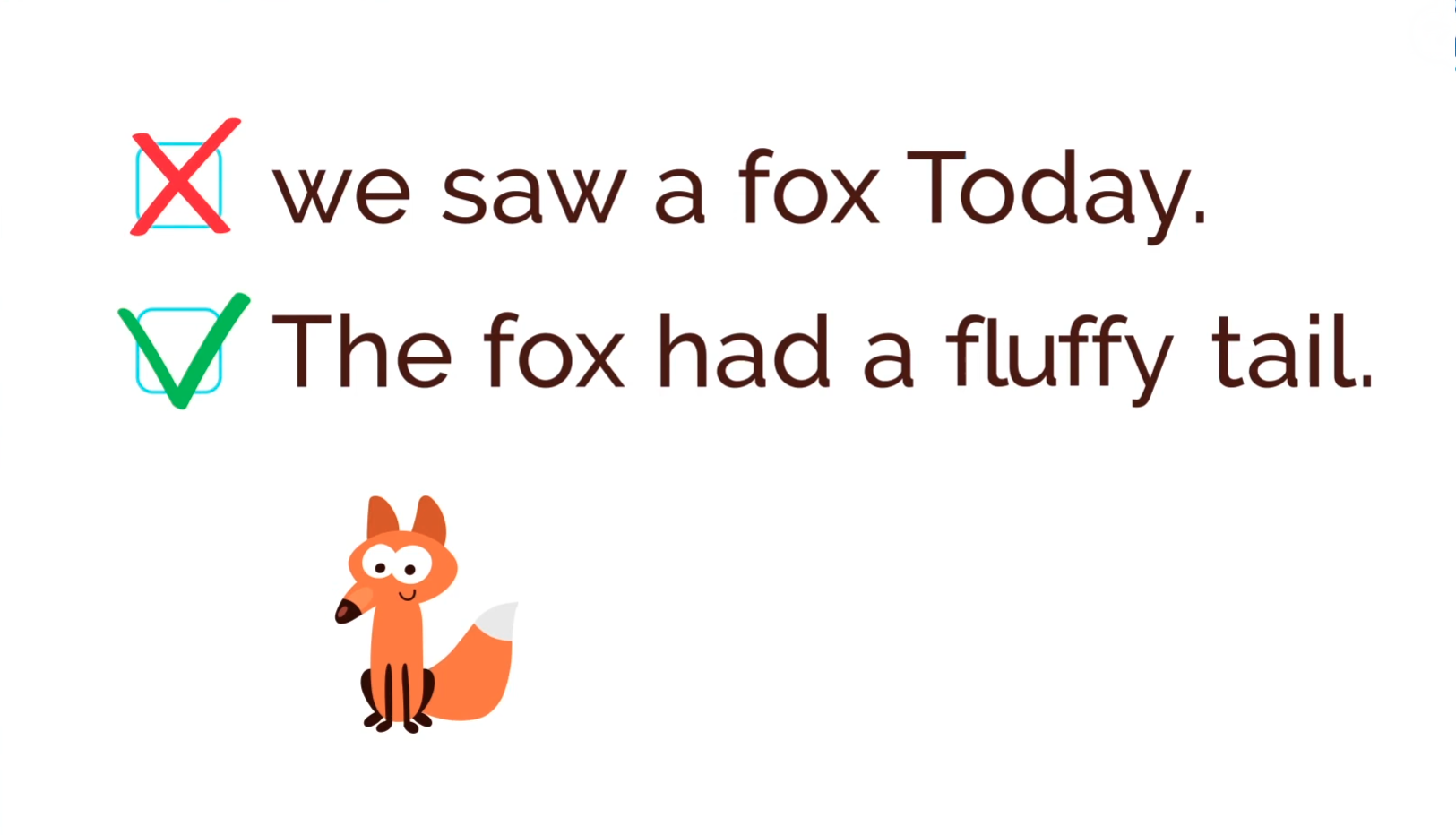


Sentence completion writing is a pivotal educational tool for children aged 5-6, the foundational years of literacy and cognitive development. Parents and teachers should prioritize this skill for several reasons.
Firstly, sentence completion exercises nurture early language skills. By filling in blanks within sentences, children learn essential grammar and vocabulary, which are the building blocks for fluent communication and reading comprehension. This practice helps children understand sentence structure and how different parts of speech work together.
Additionally, sentence completion boosts cognitive development by enhancing critical thinking and problem-solving skills. Young learners need to consider context and meaning to choose appropriate words, fostering deeper mental engagement and creativity.
Social-emotional development is also supported through this activity. It provides a platform for children to express ideas and emotions accurately and coherently, promoting self-confidence and effective communication.
Crucially, sentence completion writing aligns with curricula designed to meet developmental milestones. It encourages attention to detail, improves attention span, and instills a sense of achievement when children complete tasks correctly.
By integrating sentence completion writing into educational routines, parents and teachers lay a solid foundation for academic success, preparing children for more complex literacy tasks. It is a simple yet effective strategy that supports broad developmental goals, making it an invaluable part of early childhood education.








