Filters

7 filtered results

Clear all filters
Favorites
With answer key
Interactive

7 filtered results

Difficulty Level

Grade


Welcome to our "Phonics Recognition Letter Sounds Worksheets" designed specifically for children ages 5-7! Our engaging worksheets help young learners develop essential phonics skills with fun and interactive activities. These worksheets focus on letter recognition and sound associations, ensuring a solid foundation for reading readiness. Through colorful illustrations and age-appropriate exercises, children will discover the joy of learning sounds associated with each letter. Ideal for home or classroom use, our materials support early literacy development and cater to diverse learning styles. Download our phonics recognition worksheets today and watch your child embark on their exciting reading journey!

Check out this FREE Trial Lesson on Letter Sounds for age 5-7!

One-to-one Letter-sound Correspondence

Favorites
With answer key
Interactive
  • 5-7
  • Phonics recognition
  • Letter Sounds
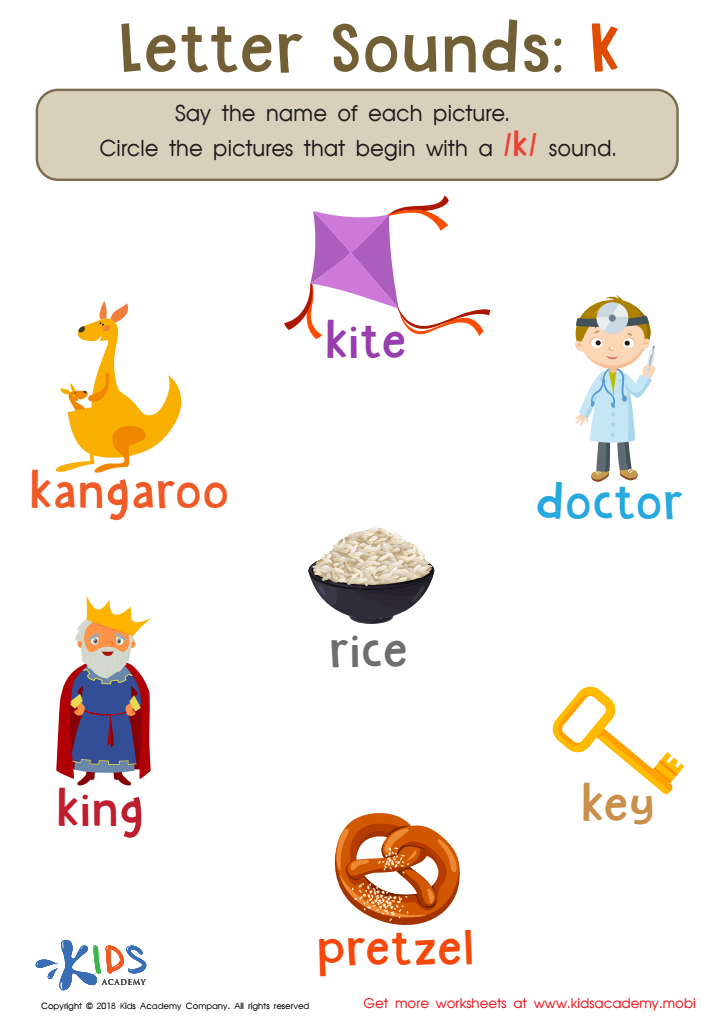
Letter K Sounds Worksheet

Letter K Sounds Worksheet

Help your child practice phonics with Kids Academy's illustrated worksheet! Have them look at the pictures, read the words and say them aloud. Only circle those that start with a hard 'K' sound. Perfect for preschoolers and kindergarteners! Plus, they'll learn the silent K used in a few words.
Letter K Sounds Worksheet
Worksheet
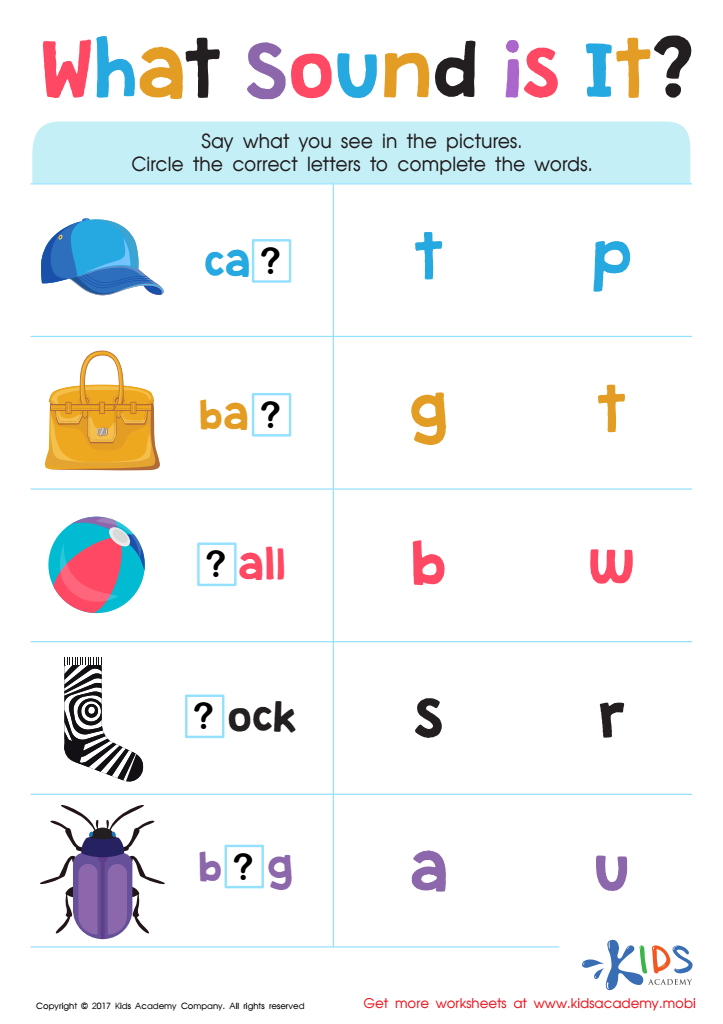
What Sound Is it? Worksheet

What Sound Is it? Worksheet

Have your child say the words for the pictures on this fun worksheet. As he or she sounds out the word, your child will use the provided letter choices to complete it, building reading and phonics skills. Visual cues make it easier to identify the correct beginning, middle, or end sound.
What Sound Is it? Worksheet
Worksheet
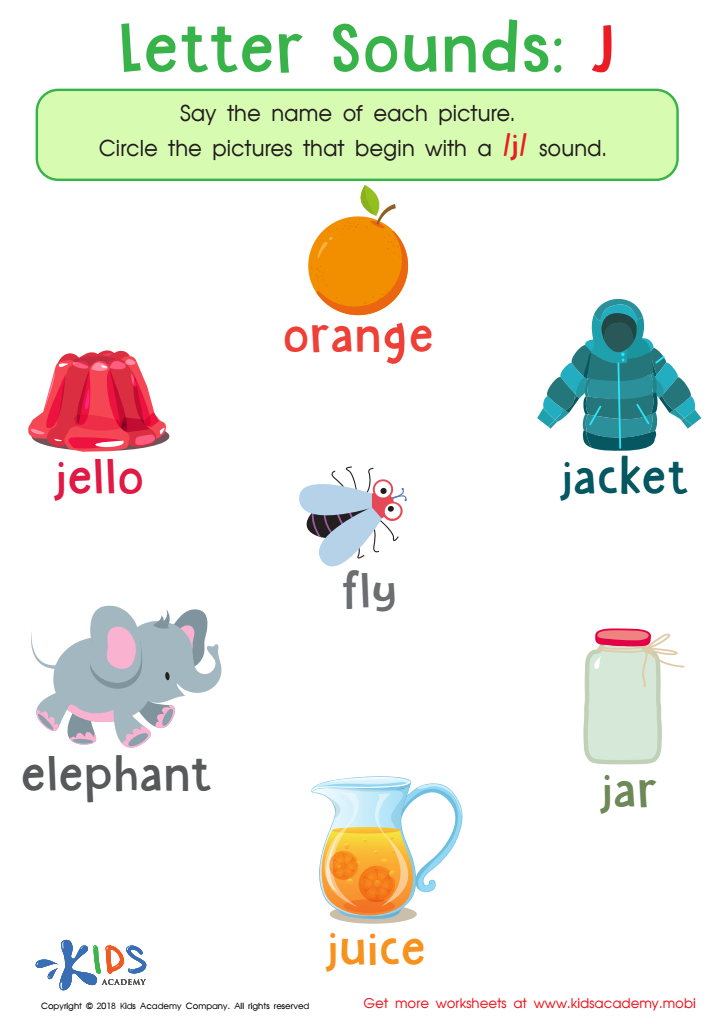
Letter Sounds: J Printable Worksheet

Letter Sounds: J Printable Worksheet

Preschoolers can learn to identify letter sounds by focusing on beginning sounds. This cute and colorful worksheet reviews the hard “j” sound. Kids can point it out by naming the words and circling only those starting with the “j” sound. Read the text out loud and listen closely!
Letter Sounds: J Printable Worksheet
Worksheet
Choose a Sound Worksheet

Choose a Sound Worksheet

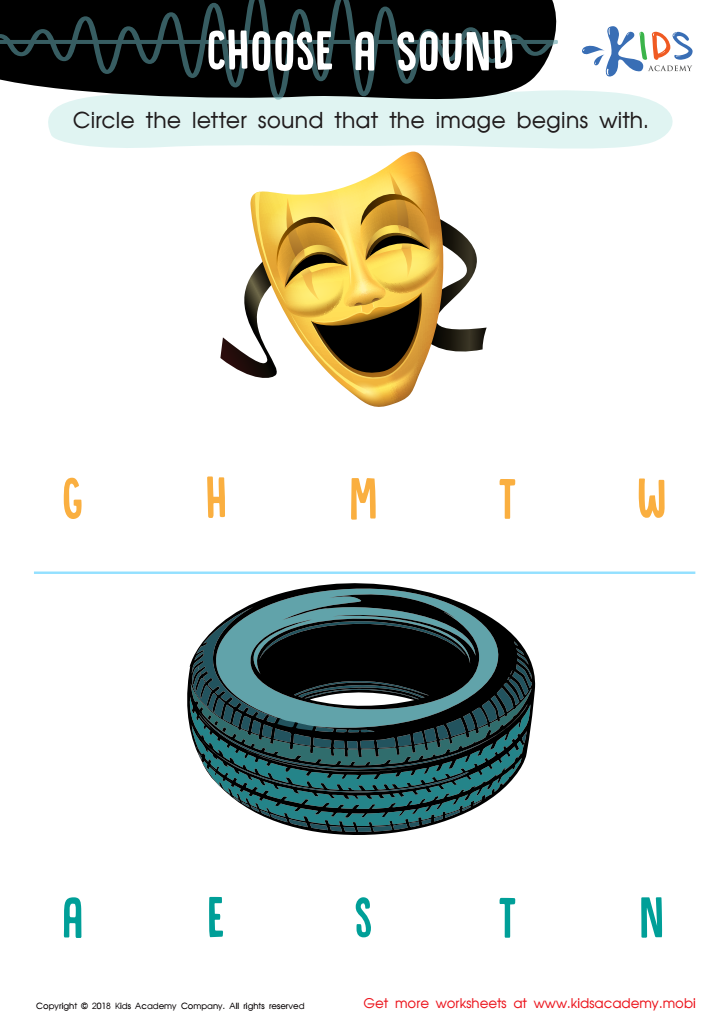
Help your child hone pre-reading skills with this colorful worksheet! They'll practice tracing letter sounds, develop phoneme awareness, and gain confidence. Plus, it's a fun way to work on their fine motor skills.
Choose a Sound Worksheet
Worksheet
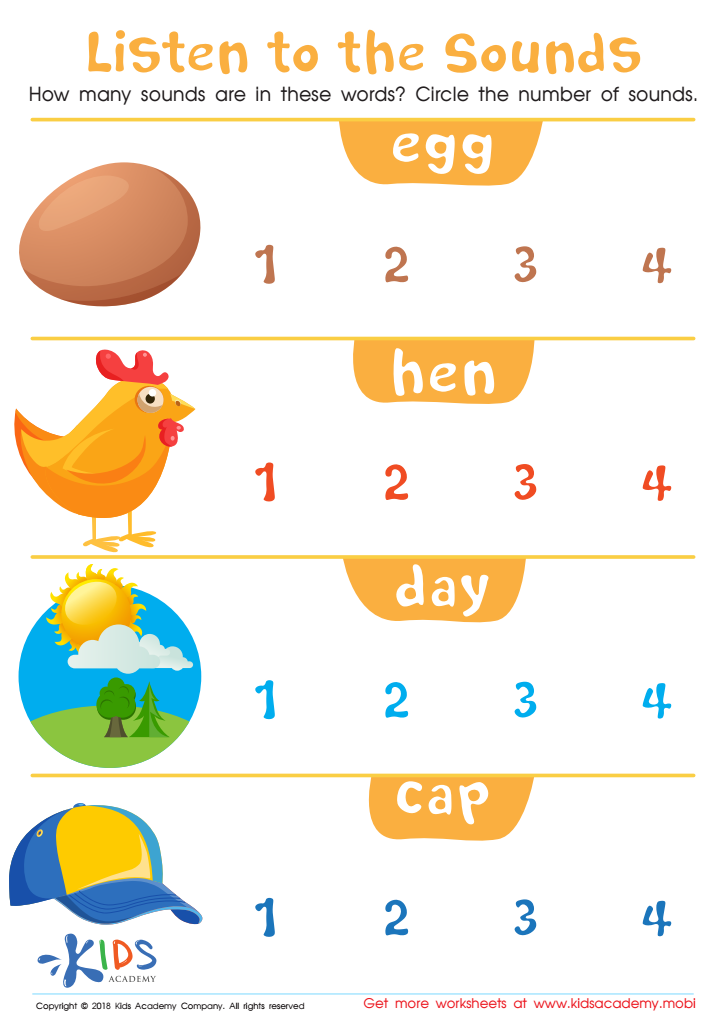
Listen to the Sounds Worksheet

Listen to the Sounds Worksheet

This worksheet builds emerging readers' skills in using sounds for reading and spelling. It helps strengthen auditory processing by having them count the sounds in each word, then trace the corresponding number. Fun and cheerful!
Listen to the Sounds Worksheet
Worksheet
Let's Count the Sounds Worksheet

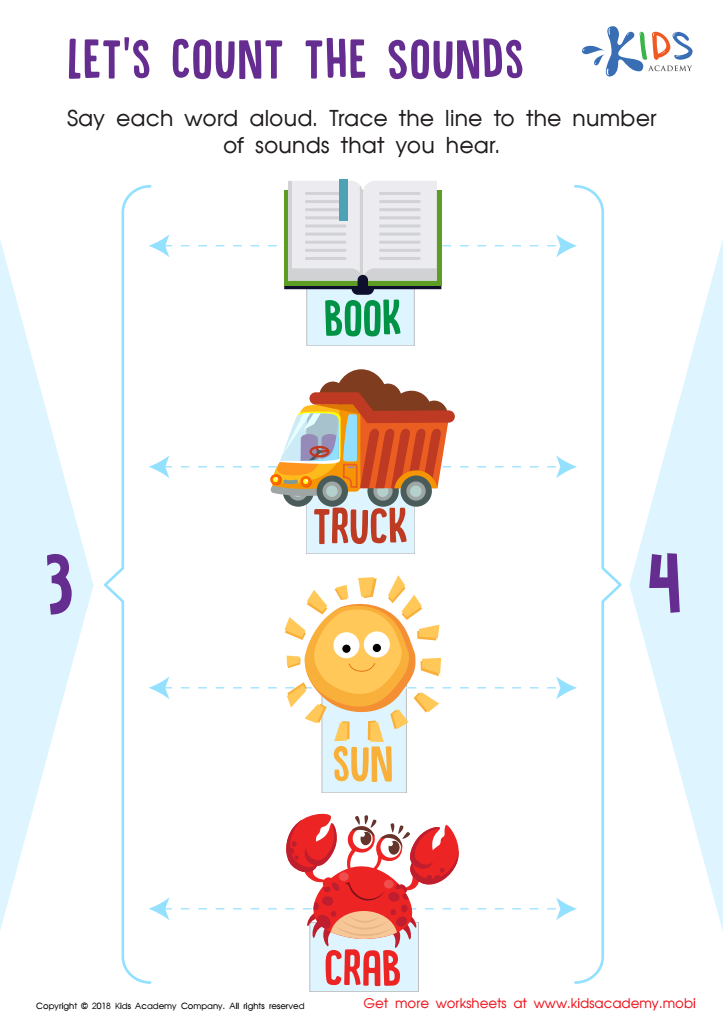
Let's Count the Sounds Worksheet

This bright and cheery traceable worksheet encourages children to practice auditory discrimination and phonological awareness. Using picture clues, they read each word and trace the line that represents the number of sounds heard. This builds decoding skills and helps them become successful readers.
Let's Count the Sounds Worksheet
Worksheet
Let's Check for «i» Sounds Worksheet


Let's Check for «i» Sounds Worksheet

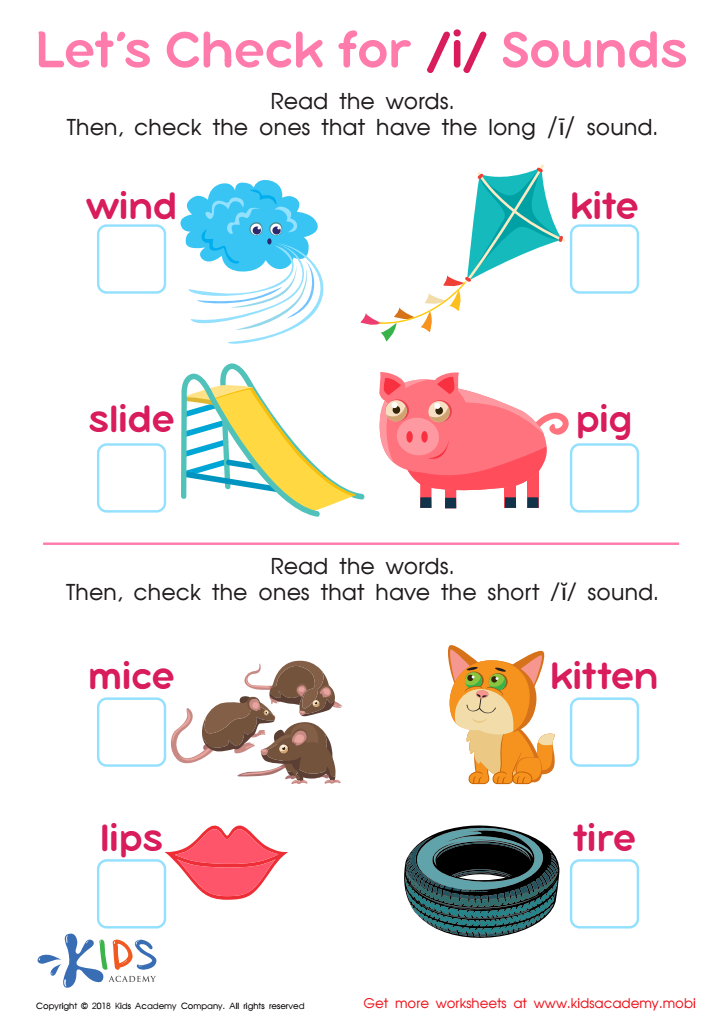
This fun worksheet with pictures boosts phonics skills - differentiating between long «ī» and short «i» sounds in 1- and 2-syllable words. Kids use picture clues to read words, then check off the correct ones. It's a great way for new readers to practice early reading skills and find success on their own.
Let's Check for «i» Sounds Worksheet

Worksheet


Phonics recognition and the mastery of letter sounds are essential skills for children aged 5-7 as they lay the foundation for reading and overall literacy development. During these formative years, children are exposed to the basics of written language, and phonics plays a critical role in how they decode words.

Understanding letter sounds allows children to connect sounds with letters, enabling them to transform written text into spoken language. This skill is vital not only for reading but also enhances spelling and writing abilities. When children can readily recognize sounds associated with different letters, they become confident readers who can tackle new words independently.

Teachers and parents should care about phonics because it directly impacts a child's self-esteem and motivation towards learning. Children who struggle with phonics may face challenges in reading, leading to frustration and disengagement from educational activities. Encouraging phonics through fun, engaging games and activities can promote a love for reading and foster critical thinking skills.

Moreover, a strong phonics foundation supports academic success across various subjects and contributes to lifelong learning and communication skills. Ensuring that children develop proficient phonics recognition enhances their preparedness for future educational challenges.