Letter recognition Letter X Worksheets for Ages 5-7
4 filtered results
Difficulty Level
Grade
Age
-
From - To
Subject
Activity
Standards
Discover engaging Letter X Worksheets designed for children aged 5-7 at Kids Academy! Our expertly crafted activities focus on enhancing letter recognition skills through stimulating exercises and eye-catching visuals. These worksheets aid in identifying, tracing, and writing the letter X, improving fine motor skills and reinforcing your child’s learning. Additionally, vibrant illustrations and fun-filled tasks ensure that kids stay motivated and enjoy each step of their educational journey. Perfect for young learners, our Letter X Worksheets seamlessly blend education and fun, helping children build a strong foundation in literacy. Explore our resources and make learning the alphabet an exciting adventure today!
Favorites
With answer key
Interactive
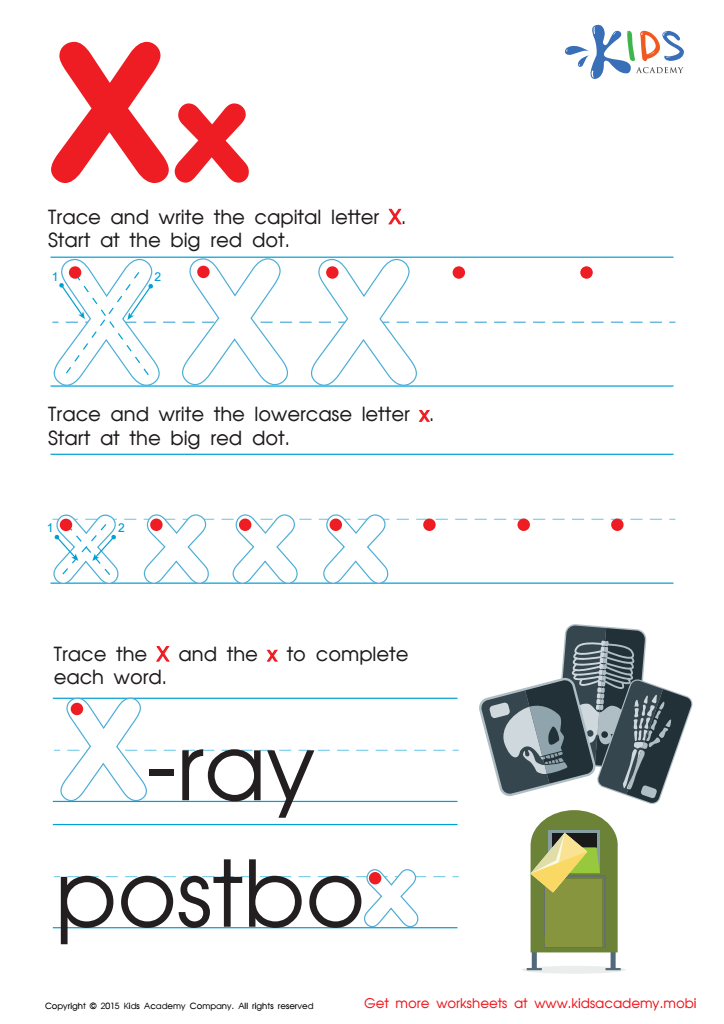
Letter X Tracing Page
Trace the uppercase letter "X" to learn, then write it yourself and practice. Then do the same with the lowercase "x" before completing the words "X-ray" and "postbox". Enjoy our alphabet printables!
Letter X Tracing Page
Worksheet
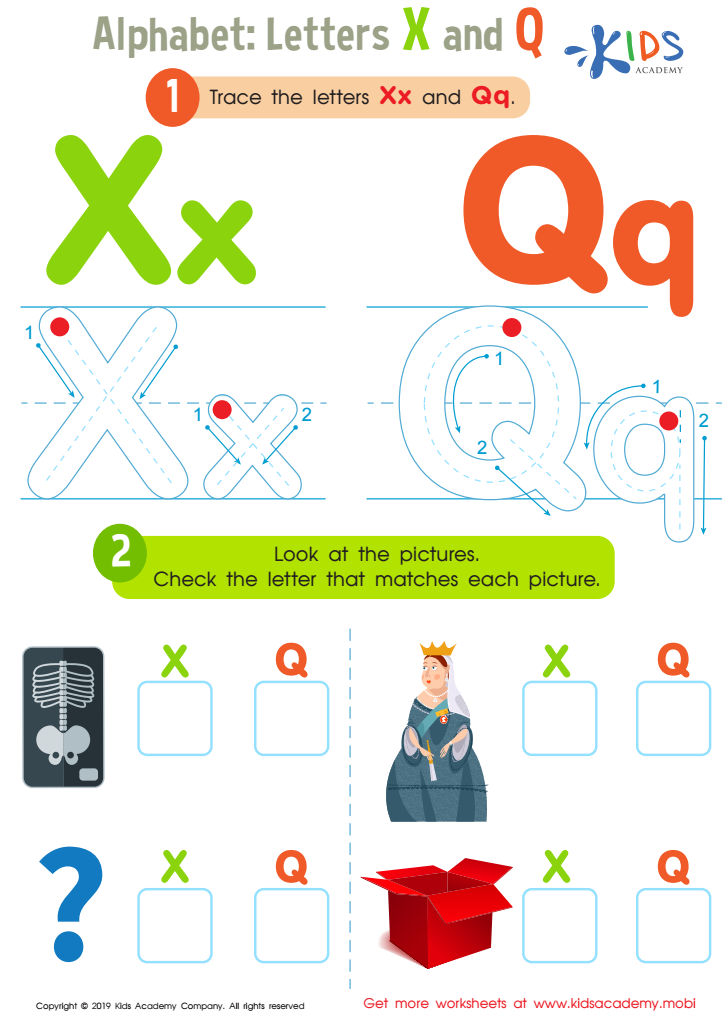
Letters X and Q Tracing Worksheet
Do you want your students to improve writing and letter recognition? This worksheet is a great place to start! Kids can trace the letters «X» and «Q» and identify pictures that match each letter. With a little encouragement, they'll do a great job!
Letters X and Q Tracing Worksheet
Worksheet
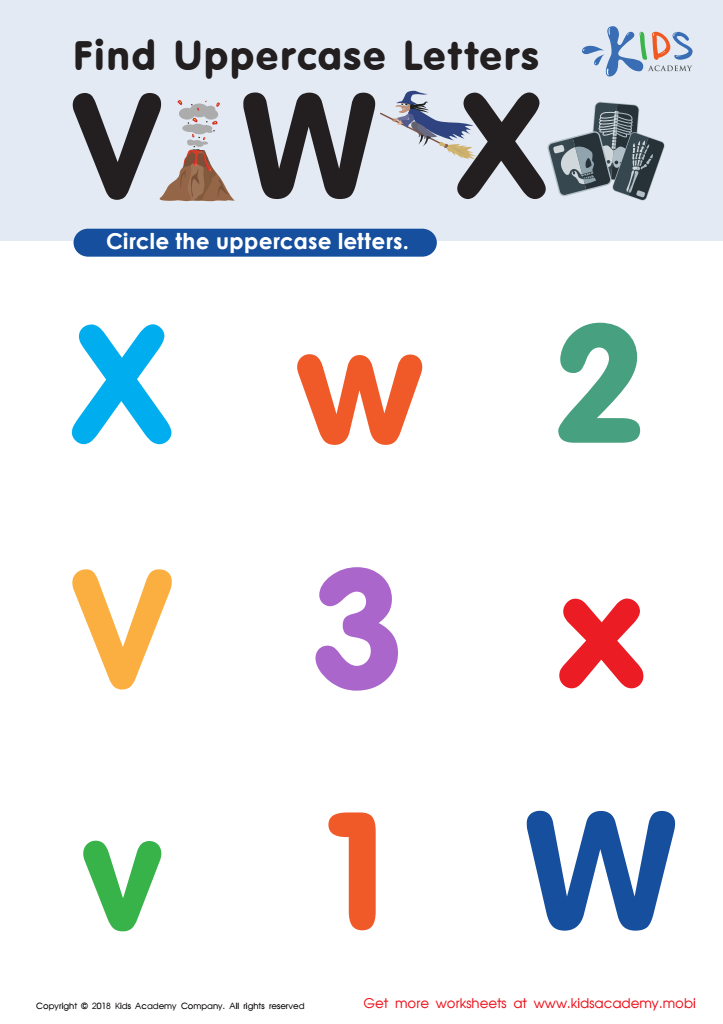
Find Uppercase Letters V, W, X Worksheet
Ask your kids if they can spot the uppercase letters V, W and X hidden in the lowercase letters and numbers, then have them circle them. After that, ask them to give you examples of words beginning with those letters. This worksheet will help them get started.
Find Uppercase Letters V, W, X Worksheet
Worksheet
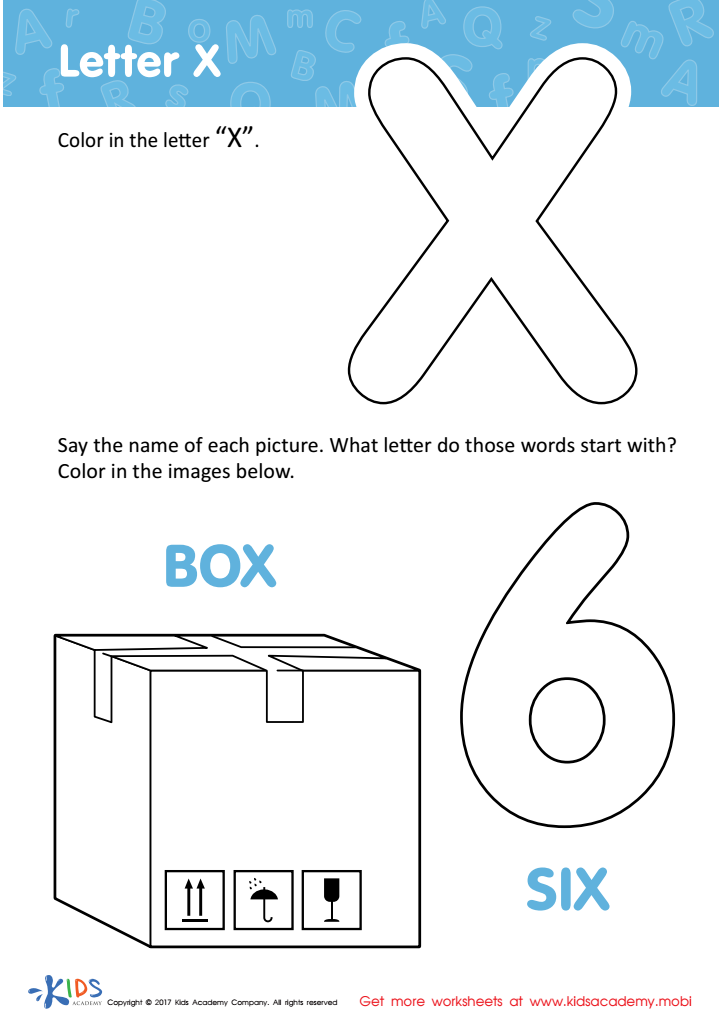
Letter X Coloring Sheet
Help your little learner find the letter "X" with this coloring page. Go over the sounds it makes and how to find it at the end of words. Unlock the mystery of this unique letter - it's one of the most challenging but rewarding letters to learn!
Download (PDF)
 Assign to My Students
Assign to My Students
Letter X Coloring Sheet
Worksheet
Join Kids Academy for Free
Who is primarily going to use this learning content?




Letter recognition, particularly for letters like the letter X, is a cornerstone of early literacy skills for children aged 5-7. Understanding individual letters is the first step in learning to read and write, which are crucial competencies for academic success and everyday communication. By focusing on letter X, parents and teachers help children build a solid foundation for decoding words, as recognizing these symbols is a pre-requisite for accurate and fluent reading.
At this developmental stage, recognizing less common letters like X is particularly significant because it often appears in more complex words, enriching a child’s vocabulary when encountered in words like "box," "fox," or "x-ray." This knowledge also bolsters their ability to spell accurately, enhancing written communication skills.
Moreover, kids derive confidence and motivation from mastering foundational pieces like letter recognition. Activities centering on the letter X can be engaging and fun, incorporating visual, kinesthetic, and auditory learning styles. Games, songs, and crafts can make this learning process enjoyable, ensuring children stay engaged and are more likely to retain the information.
Ultimately, emphasizing letter recognition, including the letter X, during these formative years prepares children for greater literacy challenges, promotes cognitive development, and fosters lifelong learning habits, making it a crucial point of focus for early education.