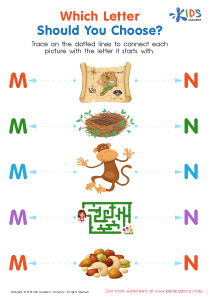
Lowercase letter writing Lowercase/Small Letters Worksheets for Ages 5-7
3 filtered results
-
From - To
Discover engaging and educational Lowercase/Small Letters Worksheets designed specifically for children aged 5-7. These expertly crafted activities help young learners master the art of lowercase letter writing, building foundational skills in handwriting, literacy, and fine motor coordination. Each worksheet provides joyful and interactive exercises, including tracing, connecting dots, and practicing freehand. Perfect for both classroom and at-home learning, our worksheets are tailored to nurture early writing proficiency in a fun and stress-free manner. Help your child embark on their literacy journey with confidence and enthusiasm. Visit our page to explore a variety of practice resources now!
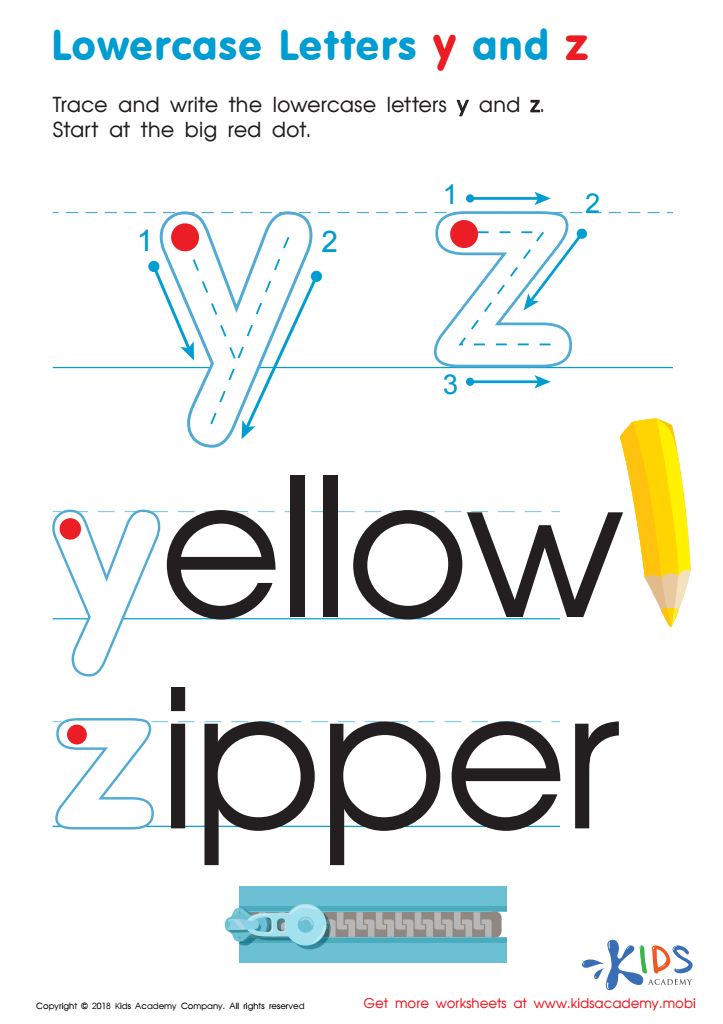
Lowercase Letters y z Worksheet
 Assign to My Students
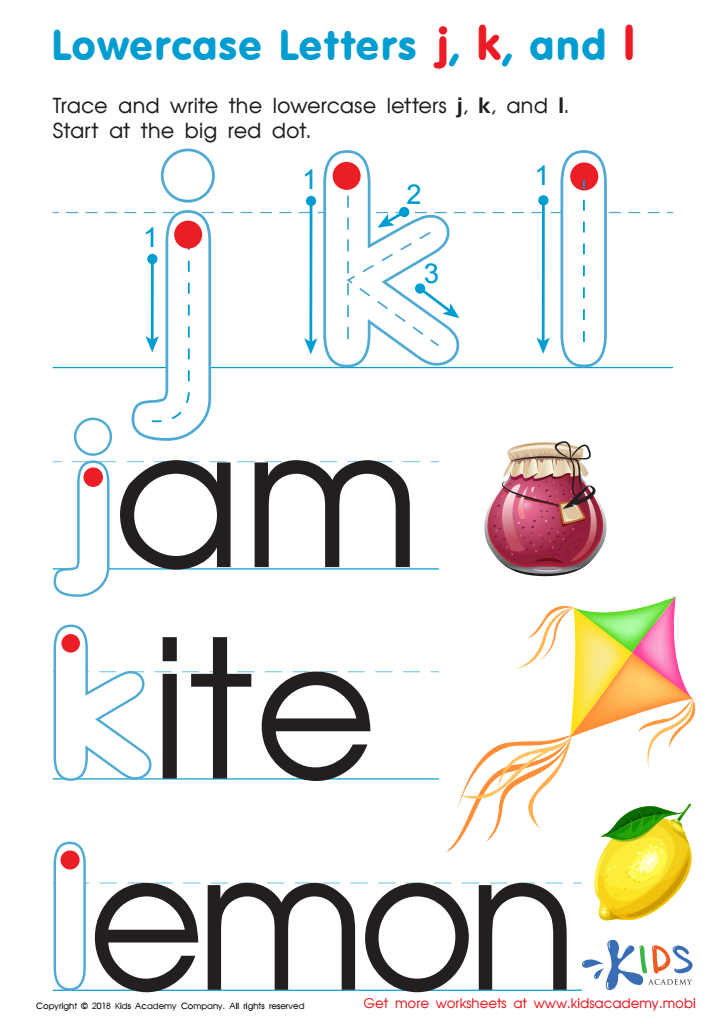
Lowercase Letters j k l Worksheet
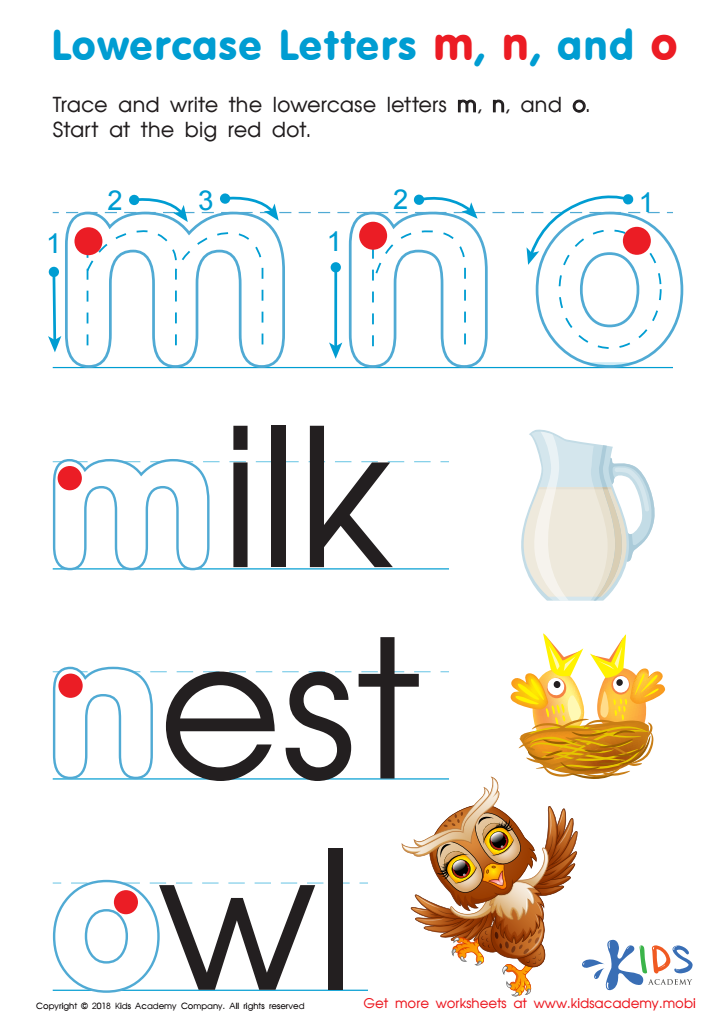
Lowercase Letters m n o Worksheet


First and foremost, teaching children aged 5-7 to write lowercase letters establishes a critical foundation for literacy and overall academic success. At this age, their motor skills and cognitive abilities are ripe for learning, making it an optimal period to introduce and reinforce proper letter formation. Lowercase letters make up the majority of text in books, signage, and written communication, so mastery of these forms is essential for reading fluency and comprehension.
By focusing on lowercase letters, parents and teachers help children develop consistent handwriting skills. Good handwriting habits formed early can prevent future issues with legibility and speed, which are crucial for effective written communication across subjects. Additionally, consistent practice with lowercase letters promotes fine motor skills and hand-eye coordination, both important for overall development.
Moreover, learning lowercase letters fosters a sense of achievement and confidence in young students. Each successfully written letter is a step toward unlocking the world of reading and writing, empowering children to express themselves more effectively. This empowerment, in turn, fosters a love for learning and literature, laying down a positive educational trajectory. In summary, the effort invested in teaching lowercase letter writing reaps long-term benefits that extend into multiple areas of a child's life and development.