
Rhyme recognition Rhyming Worksheets for Ages 5-7
3 filtered results
Difficulty Level
Grade
Age
-
From - To
Subject
Activity
Standards
Boost your child's reading and phonics skills with our Rhyme Recognition Rhyming Worksheets designed for ages 5-7. These engaging and educational activities help young learners identify and produce rhyming words, enhancing their verbal abilities and auditory discrimination. Each worksheet includes colorful illustrations and fun exercises that make mastering rhymes enjoyable and effective. By practicing with these worksheets, children will improve their pre-reading proficiency, paving the way for successful literacy development. Perfect for both classroom and home use, our rhyme recognition worksheets are a fantastic addition to any early learning curriculum. Download now and watch your child's skills bloom!
Favorites
With answer key
Interactive
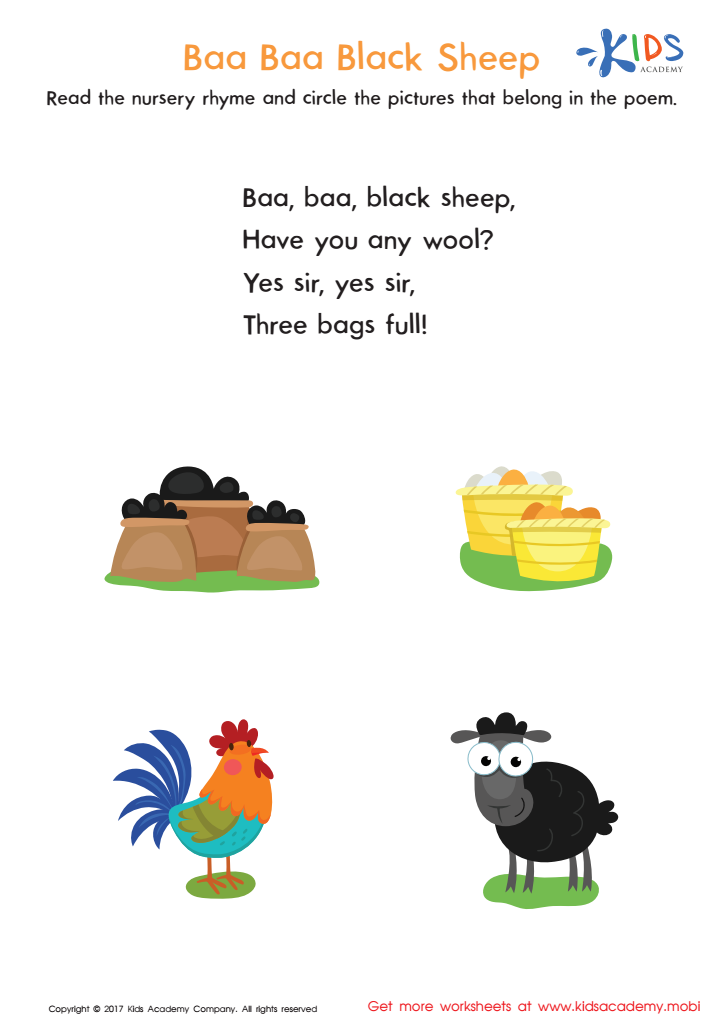
Baa Baa Black Sheep Printable
Jumpstart your child's reading skills with this printable Baa Baa Black Sheep worksheet! Recite the lines with them, then have them select the pictures associated with the poem to test comprehension. Fun and educational!
 Assign to My Students
Baa Baa Black Sheep Printable
Worksheet
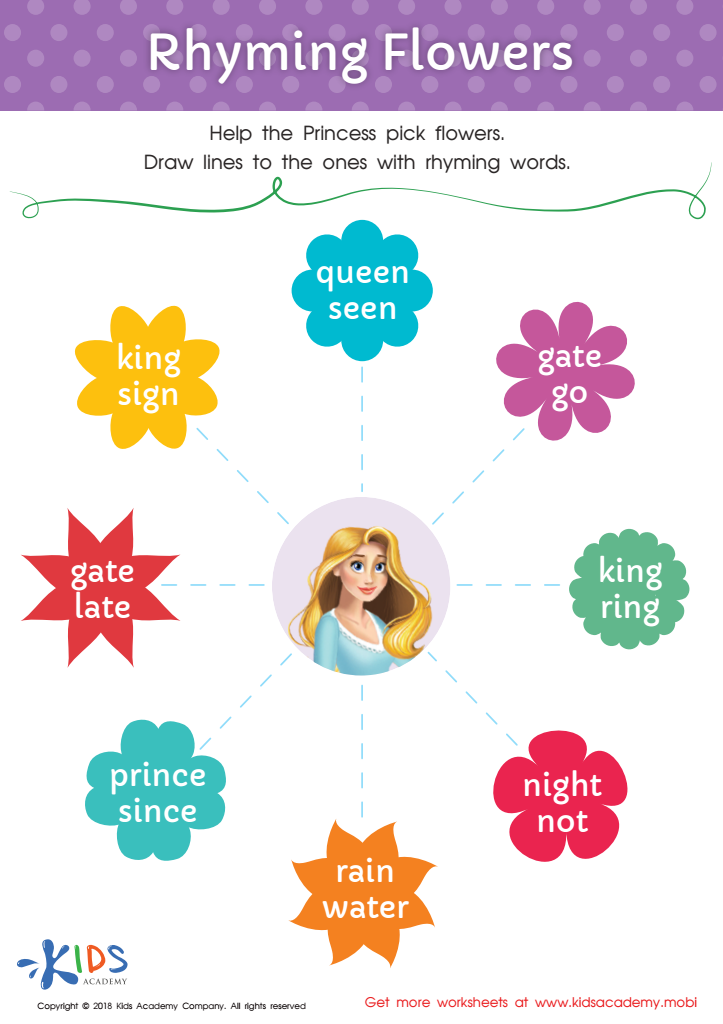
Rhyming Flowers Worksheet
Recognizing rhyming words boosts phonological awareness. With this skill, students can identify similar sounds in words and predict new words more accurately. This worksheet provides practice and is ideal for the reading classroom. Download and find the rhyming words! (80 words)
Rhyming Flowers Worksheet
Worksheet
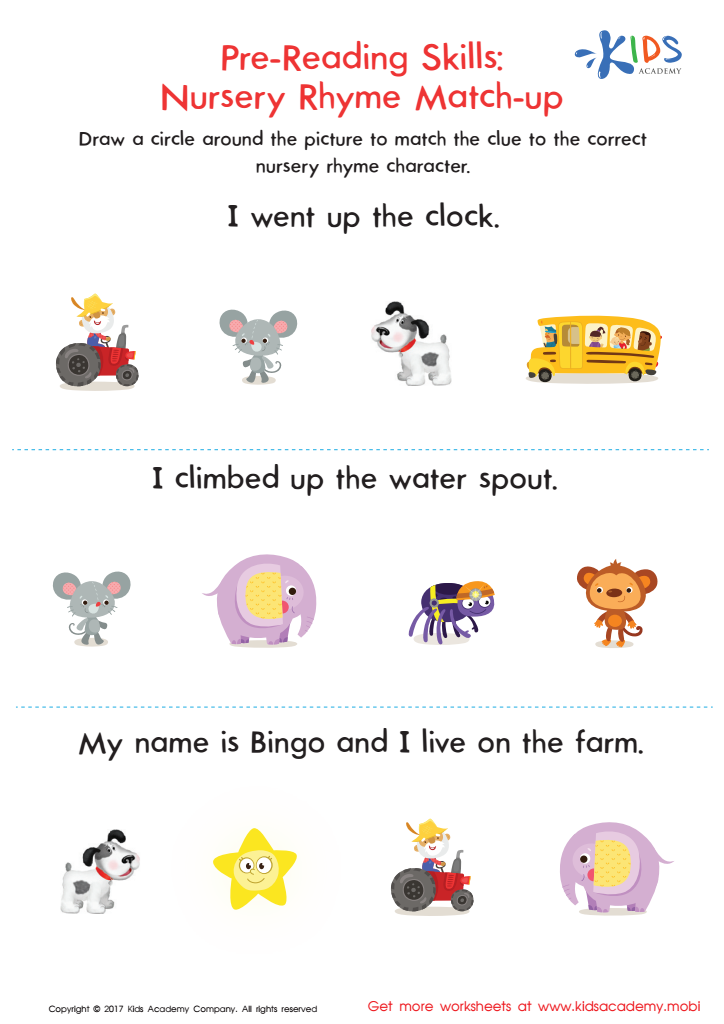
Nursery Rhyme Match–Up Worksheet
This worksheet helps kids build pre-reading skills using stories they know and love! By connecting with prior knowledge, kids can develop ideas about characters and set the stage for reading strategies.
Nursery Rhyme Match–Up Worksheet
Worksheet
Join Kids Academy for Free
Who is primarily going to use this learning content?








Rhyme recognition is a fundamental skill that parents and teachers should prioritize for children ages 5-7 because it serves as a critical foundation for early literacy development. Recognizing and producing rhymes helps young children become aware of the sounds within words, an essential component of phonological awareness. This awareness enables kids to start decoding words, a necessary skill for reading.
Moreover, engaging in rhyming activities enhances vocabulary, as children are exposed to a variety of words that sound similar but may have different meanings and uses. This exposure not only broadens their lexical range but also improves their ability to remember and retrieve words. Rhyming also teaches the rhythm and cadence of speech, which is vital for fluency and expression in both reading and oral communication.
Additionally, rhyming games and songs capture children’s interest and provide a fun, interactive way to develop these essential skills. They encourage active participation, making learning feel more like play than work. This positive association with learning can foster a lifelong love of reading and enrich overall language skills.
Hence, investing time in rhyming activities provides comprehensive benefits that extend beyond just reading readiness, contributing to cognitive development, language proficiency, and even social skills, as children interact and collaborate during these activities.







