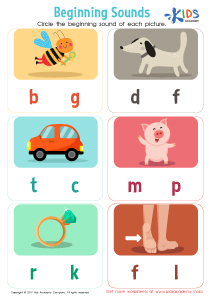
Rhyming skills Rhyming Worksheets for Ages 5-7
3 filtered results
-
From - To
Enhance your child's literacy journey with our engaging Rhyming Worksheets, specifically designed for ages 5-7. These vibrant and interactive resources help young learners develop essential rhyming skills, fostering phonemic awareness and language development. Each worksheet features fun activities, playful illustrations, and words that encourage children to identify and create rhymes. As they explore sounds, they'll build confidence in their reading and writing abilities. Perfect for home or classroom use, our rhyming worksheets engage children's imaginations while making learning enjoyable. Start your child on the path to literacy success today with our exciting rhyming resources!
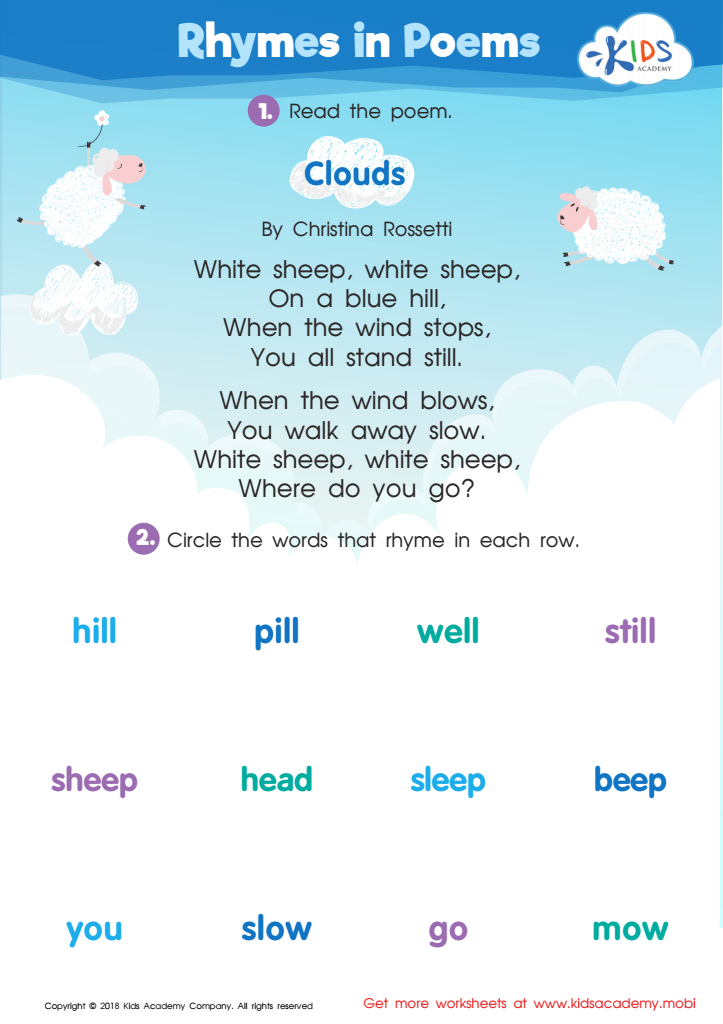
Rhymes in Poems Worksheet
 Assign to My Students
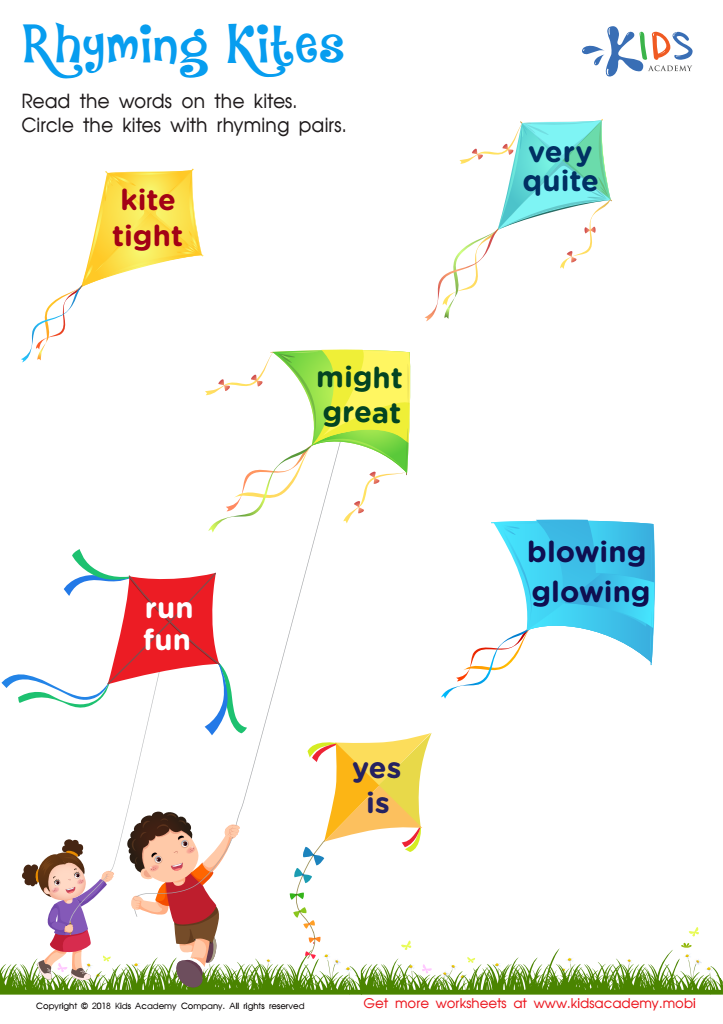
Rhyming Kites Worksheet
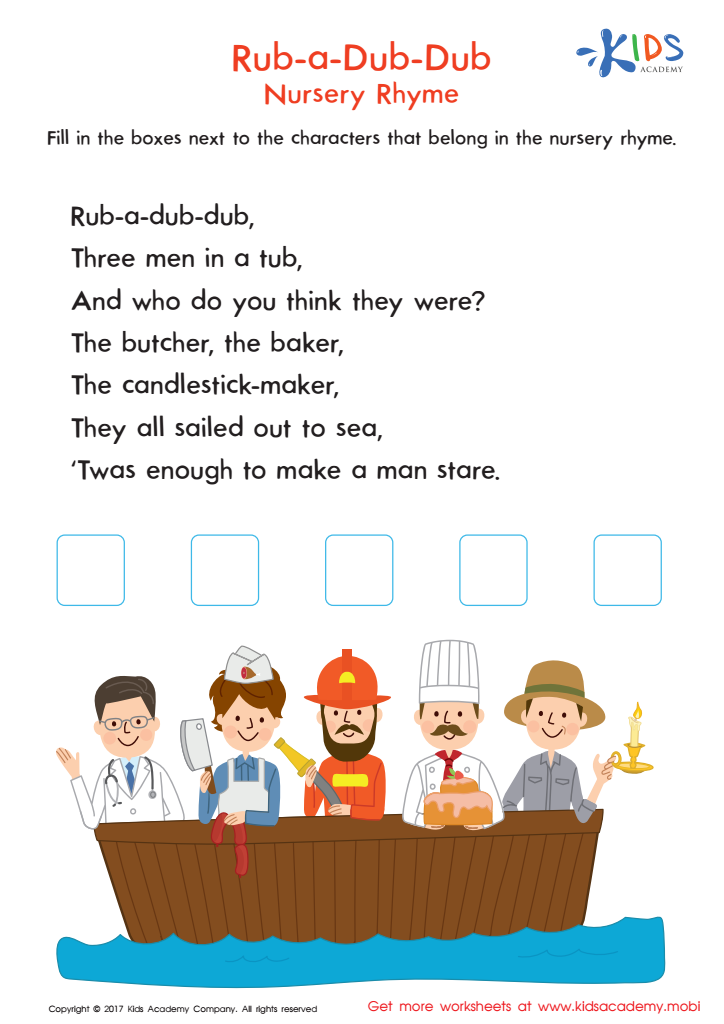
Rub a Dub Dub Printable







Rhyming skills are crucial for children aged 5-7 as they lay a strong foundation for literacy development. At this early stage, children are enhancing their phonological awareness, which is critical for reading and writing. Rhyming helps them recognize the sounds in words, making it easier to decode words as they learn to read. This awareness also enhances their spelling skills, as they understand how different letters and sounds work together.
Furthermore, rhyming activities can boost vocabulary development. When children engage with rhyming books, songs, and games, they are exposed to a variety of words and can learn new meanings in a fun and engaging way. This exposure not only enriches their language but also encourages creativity and self-expression through poetry and storytelling.
Additionally, rhyming fosters pattern recognition—a valuable skill in math and science—enabling children to see relationships between words and sounds. It also enhances listening skills and memory as children learn to recall and anticipate rhymes.
Ultimately, integrating rhyming into learning activities helps cultivate a love for language and literacy, setting the stage for future academic success. Therefore, parents and teachers should prioritize rhyming to nurture essential skills essential for children's growth and development.