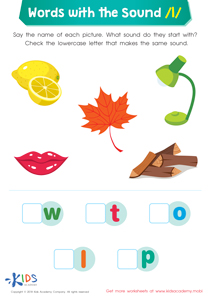
Uppercase identification Uppercase Letters Worksheets for Ages 5-7
5 filtered results
-
From - To
Welcome to our engaging Uppercase Letter Identification Worksheets for children ages 5-7! Designed to enhance early literacy skills, these worksheets provide a fun and interactive way for young learners to recognize and identify uppercase letters. Each activity reinforces letter recognition through colorful illustrations and engaging exercises that promote learning through play. Perfect for educators and parents, these worksheets cater to various skill levels, ensuring a comprehensive understanding of the alphabet. Help your child build a strong foundation in reading and writing while igniting their passion for learning. Explore our resources today and watch your child thrive in their literacy journey!
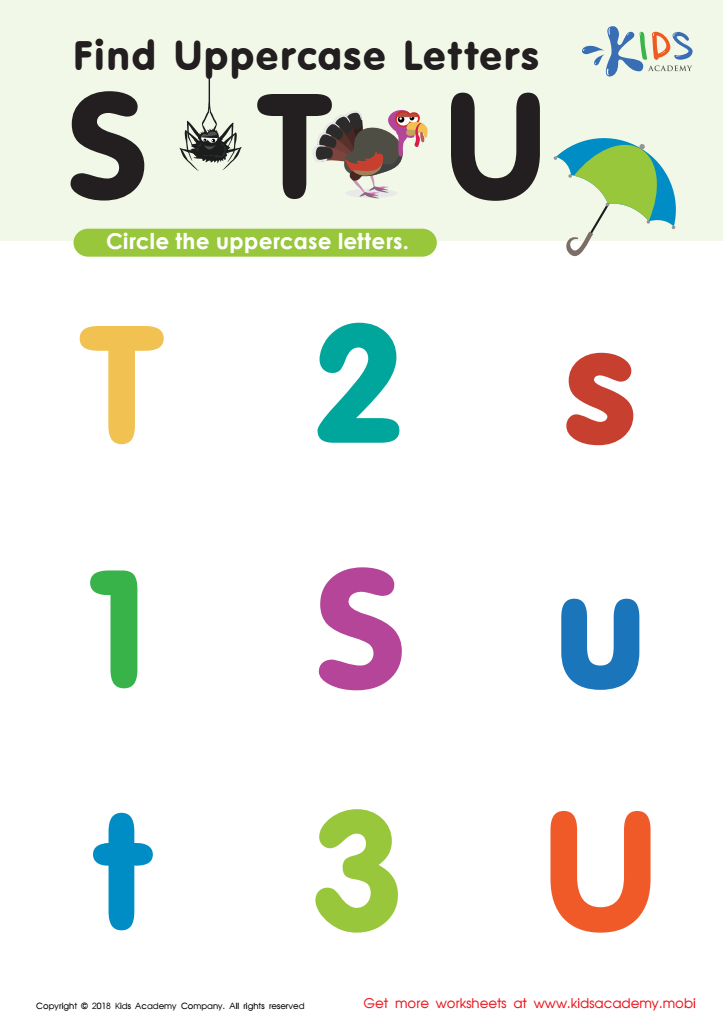
Find Uppercase Letters Worksheet
 Assign to My Students
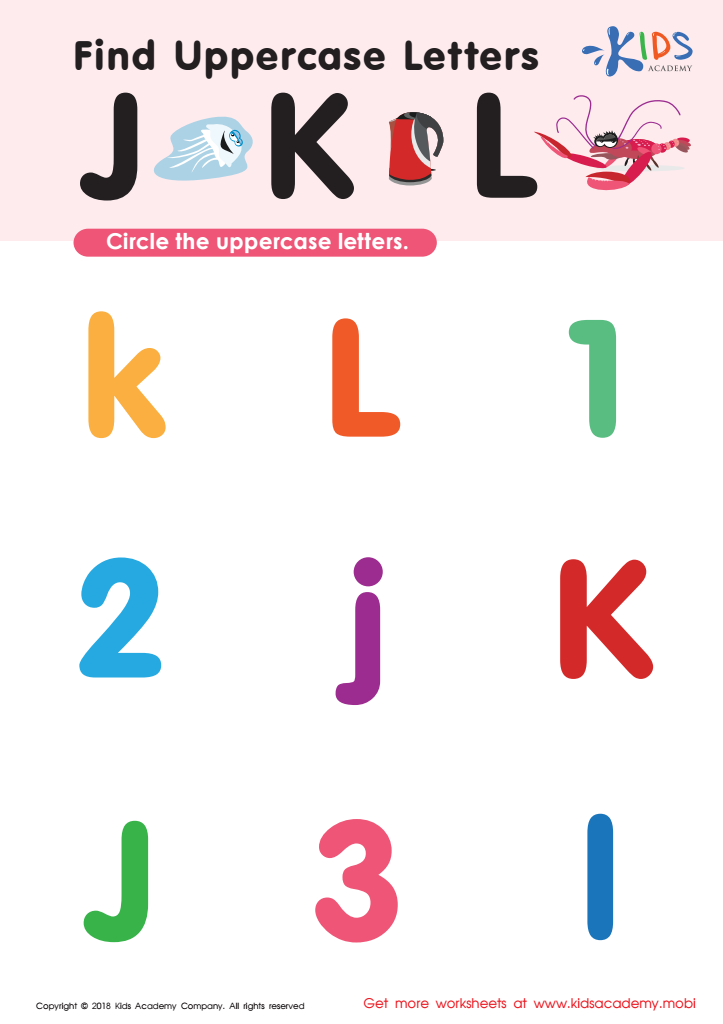
Find Uppercase Letters J, K, and L Worksheet
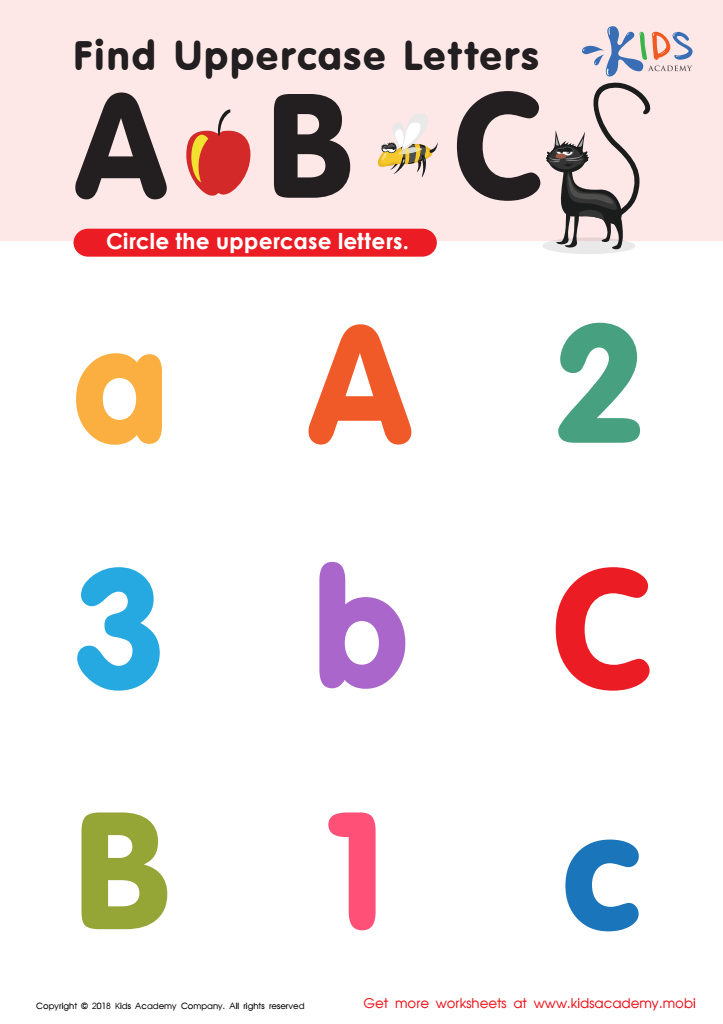
Find Uppercase Letters A, B, and C Worksheet
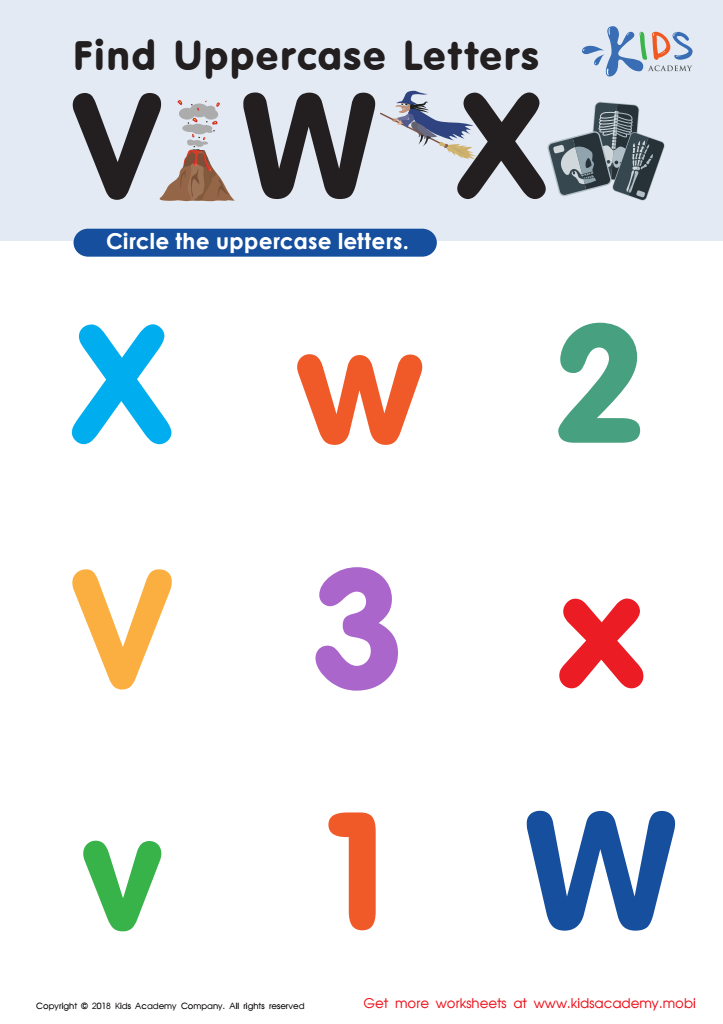
Find Uppercase Letters V, W, X Worksheet
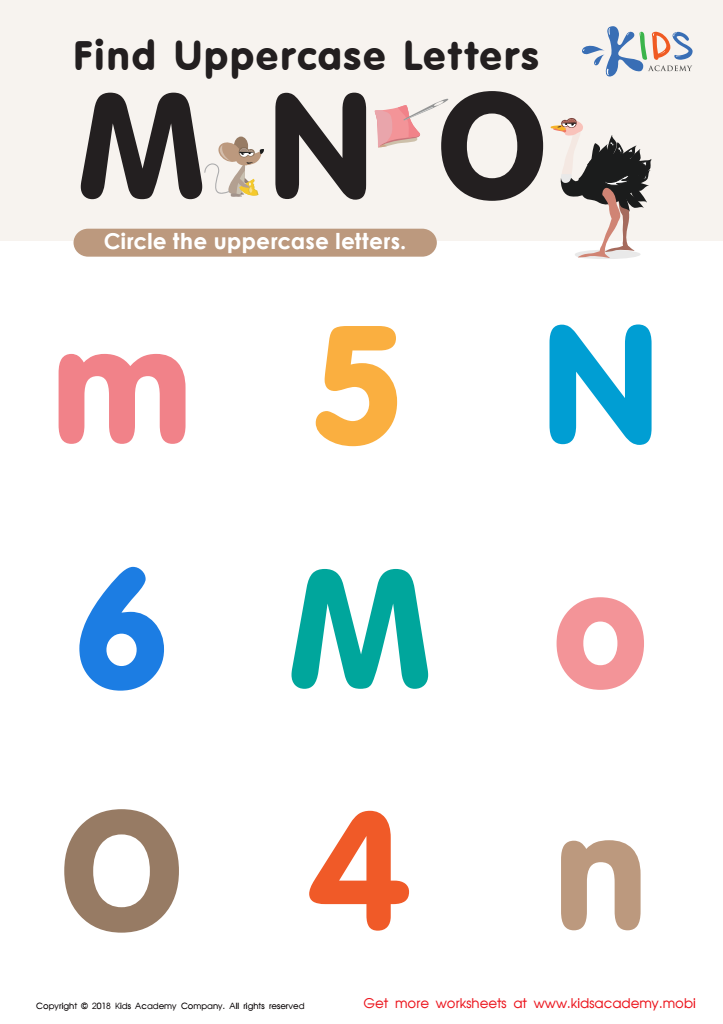
Find Uppercase Letters M, N, and O Worksheet








Understanding and identifying uppercase letters is crucial for children aged 5 to 7 as it lays the foundation for their reading and writing skills. At this developmental stage, children are transitioning from recognizing letters to connecting them with sounds, essential for literacy. Parents and teachers should care about uppercase identification because it not only fosters language acquisition but also builds confidence in young learners as they develop their phonemic awareness.
Uppercase letters play a significant role in children's daily lives. Many signs, labels, and texts they encounter use uppercase letters. By learning to identify these letters, children can better navigate their environments, enhance their comprehension skills, and build their vocabulary.
Furthermore, uppercase letters often serve as the first exposure children have to written language. They typically appear at the beginning of sentences and proper nouns, making them crucial for grammatical understanding. For teachers, guiding children through this identification process can enhance classroom instruction and promote a rich literacy environment. For parents, reinforcing uppercase letter recognition at home supports foundational skills, fostering individual growth and enthusiasm for learning. In essence, a solid grasp of uppercase letters is a indispensable stepping stone toward literacy and academic success.