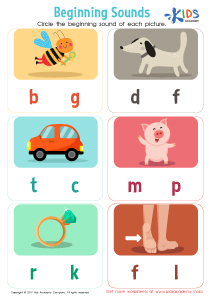
Long vowel recognition Vowels and Consonants Worksheets for Ages 5-7
3 filtered results
-
From - To
Discover engaging Long Vowel Recognition Worksheets, designed specifically for children aged 5-7! Our printable resources focus on helping young learners master the concept of long vowels through fun and colorful activities. Each worksheet encourages children to identify and differentiate between long vowels and consonants, promoting essential reading skills. Kids will enjoy practicing vowel sounds while enhancing their phonemic awareness through interactive exercises. Perfect for at-home learning or classroom use, these worksheets provide a solid foundation in literacy that keeps young minds captivated. Empower your child's reading journey with our expertly designed Long Vowel Recognition materials today!
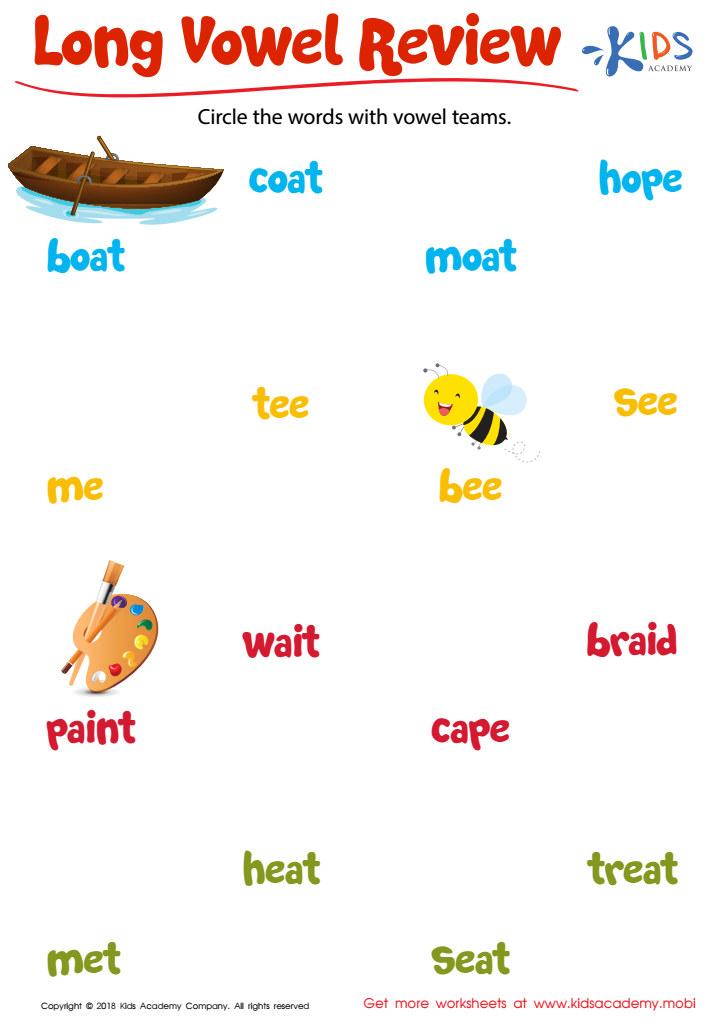
Long Vowel Review Worksheet
 Assign to My Students
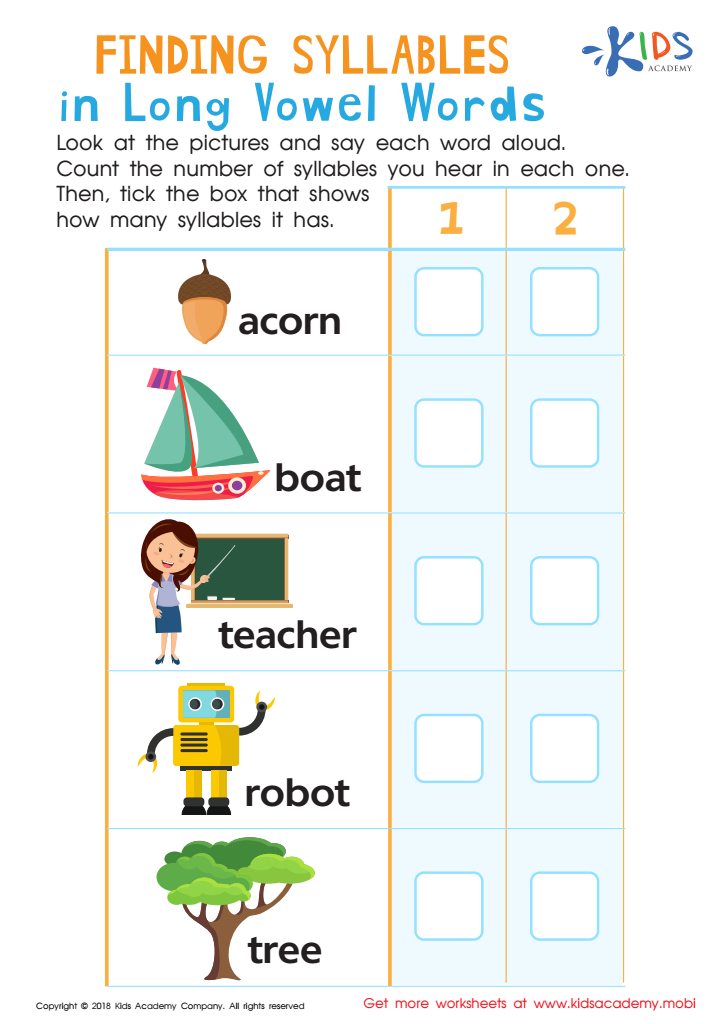
Finding Syllables in Long Vowel Words Worksheet
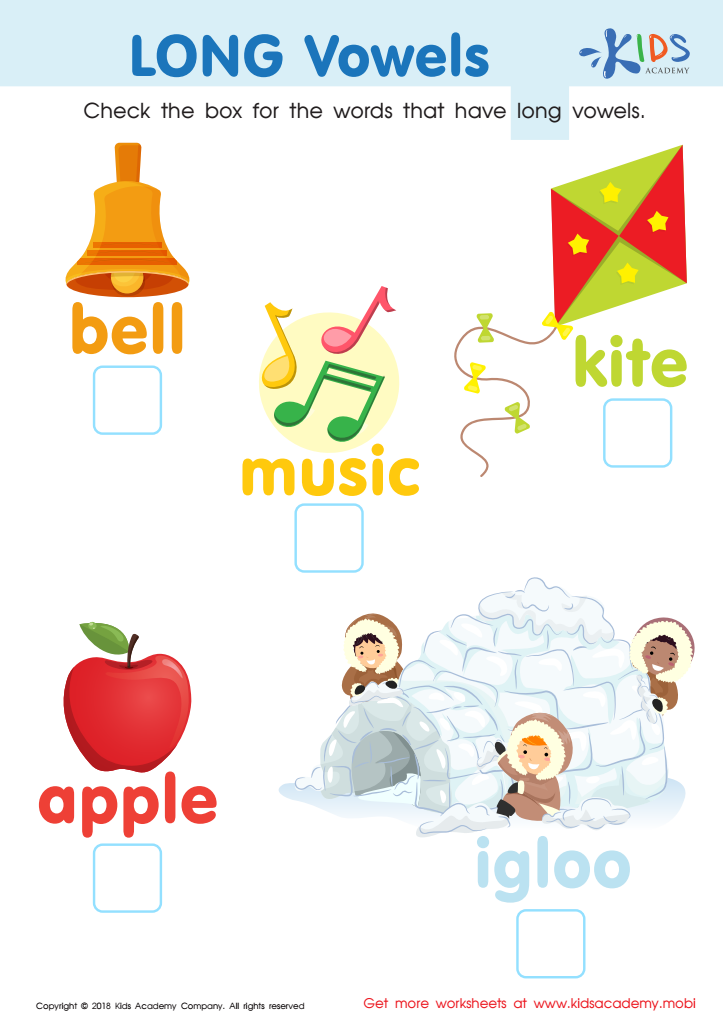
long vowels Worksheet



Understanding long vowel recognition is crucial for children aged 5-7, as it significantly impacts their reading and writing development. Long vowels are fundamental components of the English language, and recognizing them helps children decode words accurately. This skill enhances their phonemic awareness, allowing them to distinguish between different sounds and structures in words, which is essential for fluent reading.
Parents and teachers should prioritize teaching long vowels because they form the basis of many common words. When children grasp long vowel sounds, they can read more independently, boosting their confidence and enjoyment of literacy activities. Moreover, a solid foundation in vowel recognition fosters spelling skills, enabling children to write more effectively.
In the early stages of literacy development, children's brains are highly receptive to phonetic learning. Engaging with long vowels ensures that they develop accurate pronunciation, which is vital for effective communication. Successfully mastering long vowel sounds can lead to better overall literacy skills, including comprehension and vocabulary development. Thus, recognizing the significance of long vowels, as well as consonants, equips parents and teachers to support children's language development in impactful, lasting ways. Encouraging this recognition ultimately lays the groundwork for lifelong literacy and learning.