Logical thinking improvement Chess Worksheets for Ages 5-7
3 filtered results
-
From - To
Unlock your child’s full potential with our engaging Chess Worksheets designed specifically for ages 5-7. These carefully crafted resources bolster logical thinking and problem-solving skills while introducing youngsters to the fascinating world of chess. Through fun and interactive exercises, kids will develop critical cognitive abilities, enhance their concentration, and learn strategic decision-making. Our worksheets blend education and excitement, ensuring your child stays motivated and eager to learn. Perfect for beginners, each activity is tailored to nurture young minds, guiding them step-by-step towards mastery. Embark on this intellectual adventure today, setting the foundation for your child's future success!
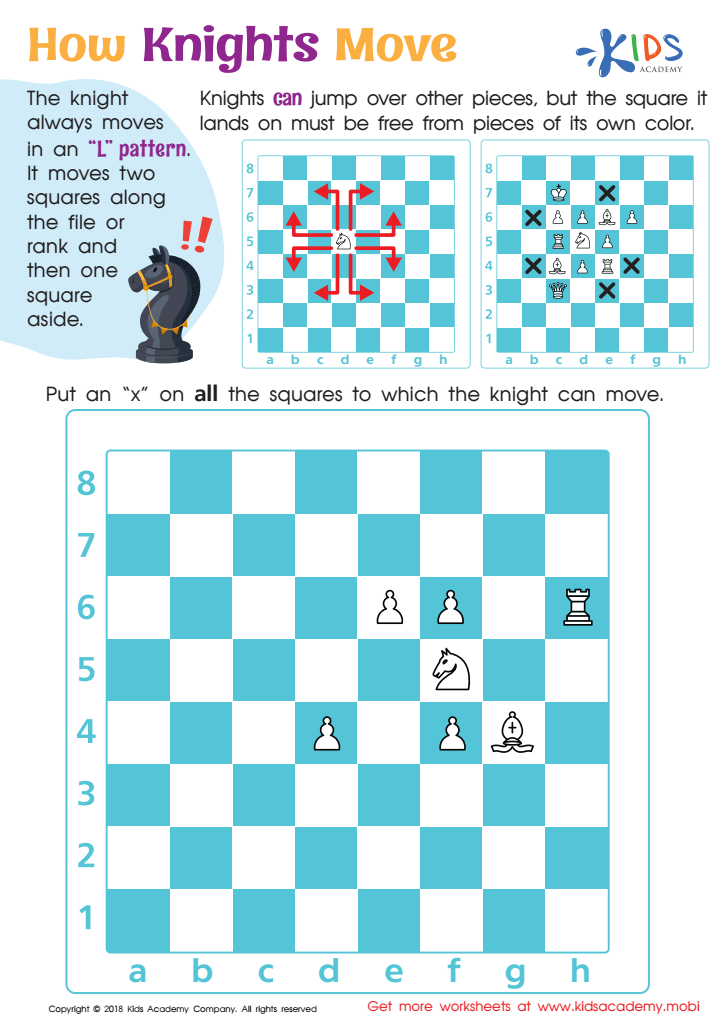
How Knights Move Worksheet
 Assign to My Students
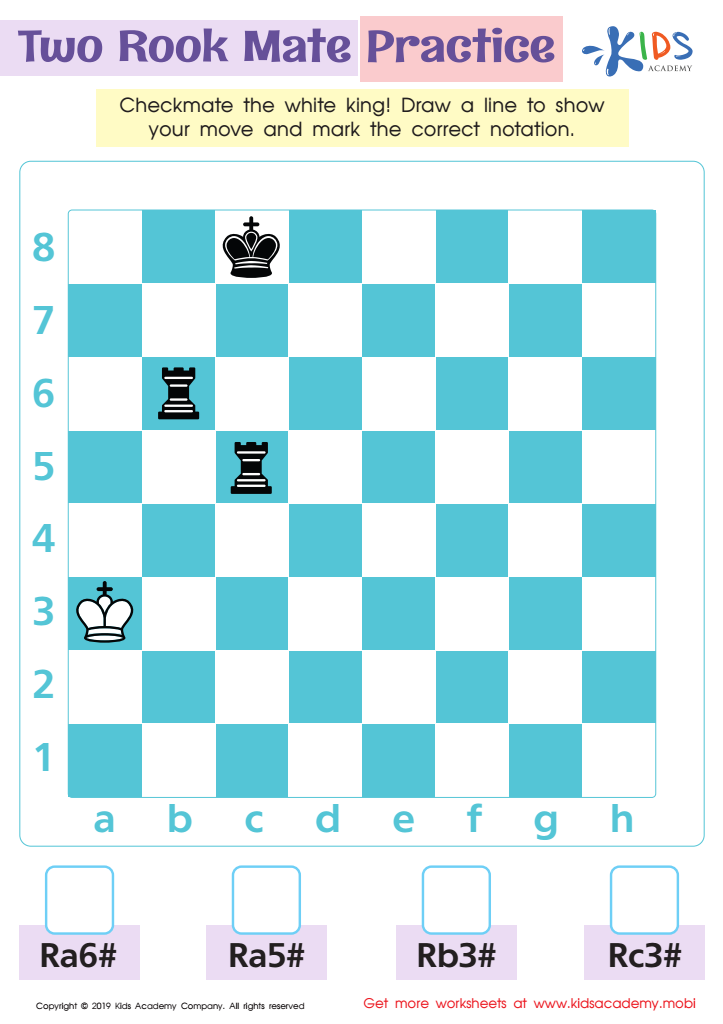
Two Rook Mate Practice Worksheet
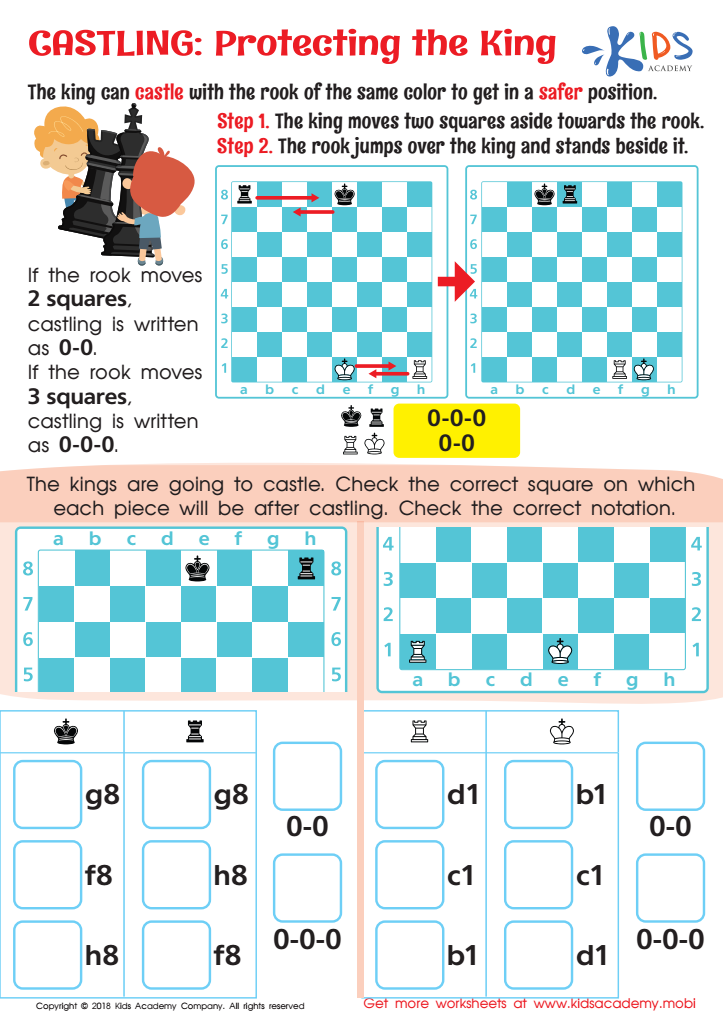
Castling: Protecting the King Worksheet


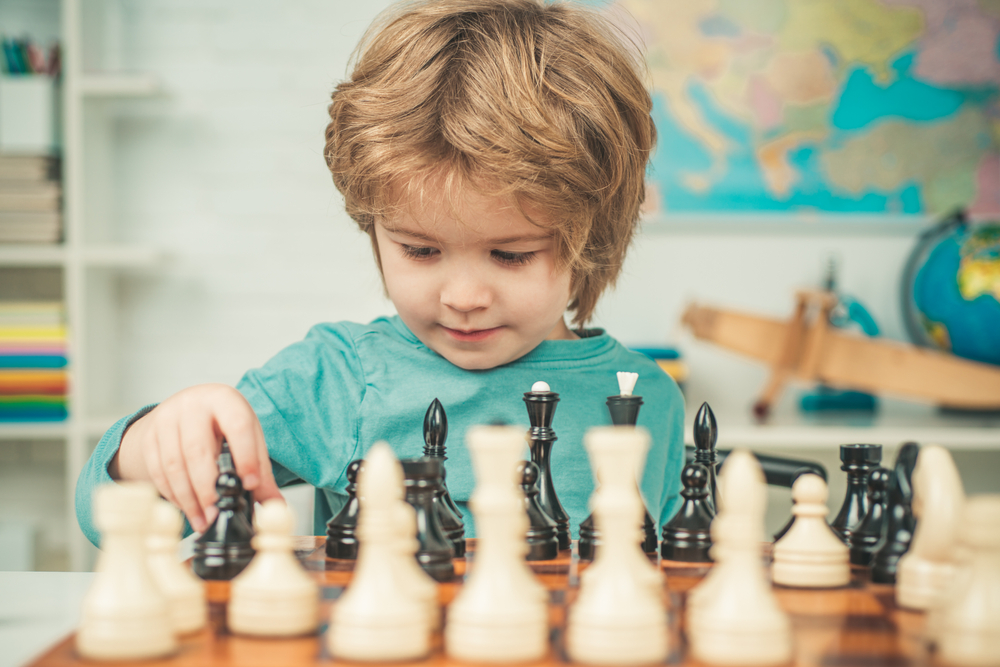




Parents and teachers should care about improving logical thinking through chess for young children, ages 5-7, as it offers numerous cognitive and developmental benefits during these formative years. Chess acts as a powerful educational tool, engaging kids in critical thinking processes in a fun, interactive way. The game inherently teaches children about planning, strategy, and foresight as they consider their moves and predict their opponent's actions. This early introduction to logical thinking helps to scaffold more complex problem-solving skills they will encounter in academic subjects such as mathematics and science.
Moreover, playing chess enhances memory and concentration, skills vital for academic achievement and daily life functioning. By remembering past moves and strategies, children exercise their working memory, strengthening neural connections essential for effective learning. The game's requirement for focused thought and patience promotes improved attention spans and the ability to stay on task.
Additionally, chess nurtures important socio-emotional skills like patience, perseverance, and sportsmanship. Children learn to handle wins and losses gracefully, fostering a growth mindset. These experiences build resilience and emotional intelligence, which are essential for overall personal development. Therefore, investing time in teaching chess to young children can provide a wholesome boost to their logical thinking capabilities and equip them with skills that benefit multiple facets of their lives.