Problem-solving skills development Chess Worksheets for Ages 5-7
3 filtered results
-
From - To
Unlock the genius in your child with our Problem-Solving Skills Development Chess Worksheets, tailored especially for ages 5-7! Designed to cultivate critical thinking and strategic planning, these engaging printables make learning fun and exciting. Kids will develop vital problem-solving skills as they work through increasingly challenging puzzles and scenarios, all centered around the fascinating game of chess. Perfect for both beginners and young enthusiasts, our worksheets provide a solid foundation for cognitive growth and confidence in making decisions. Give your child the gift of strategic excellence and watch them excel beyond the board! Download today and start the journey.
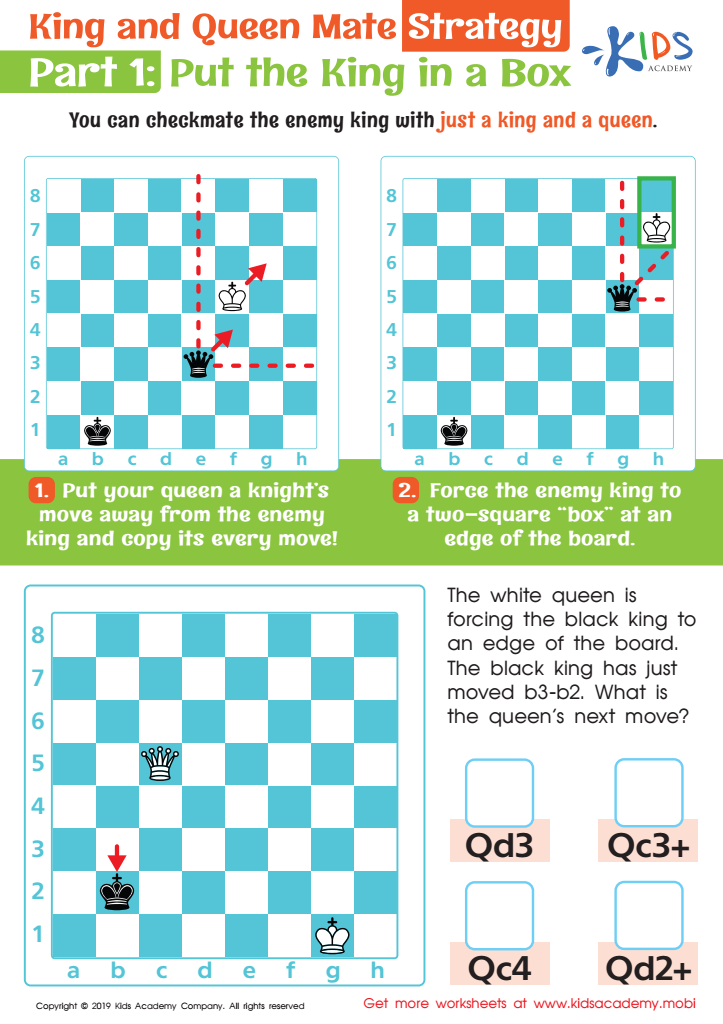
King and Queen Mate Strategy: Part 1 Worksheet
 Assign to My Students
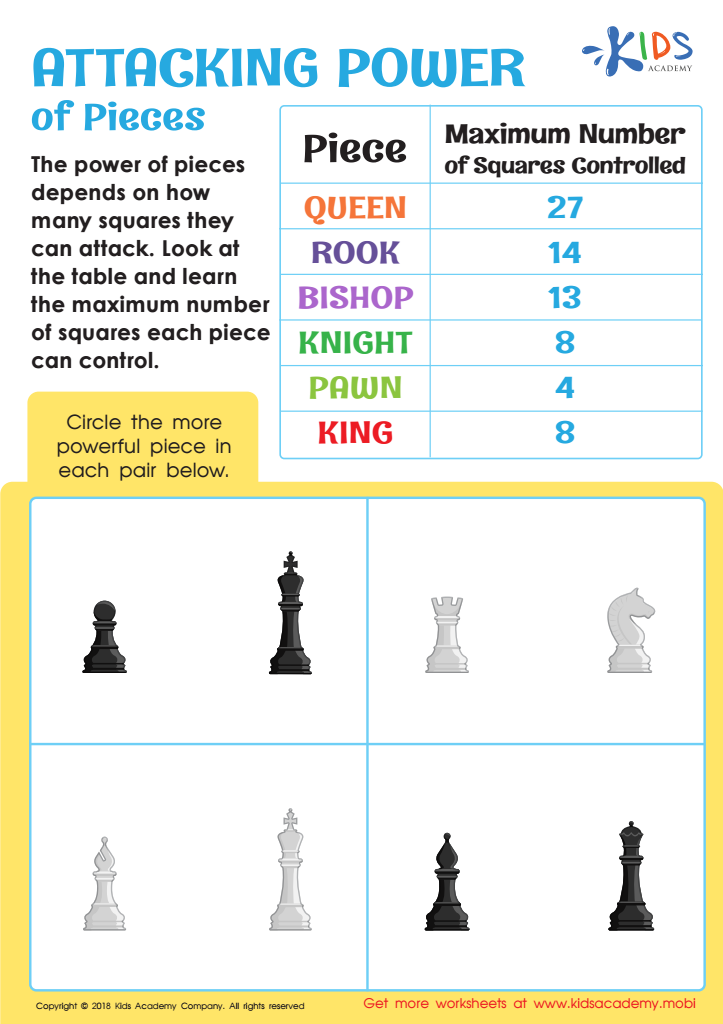
Attacking Power of Chess Pieces Worksheet
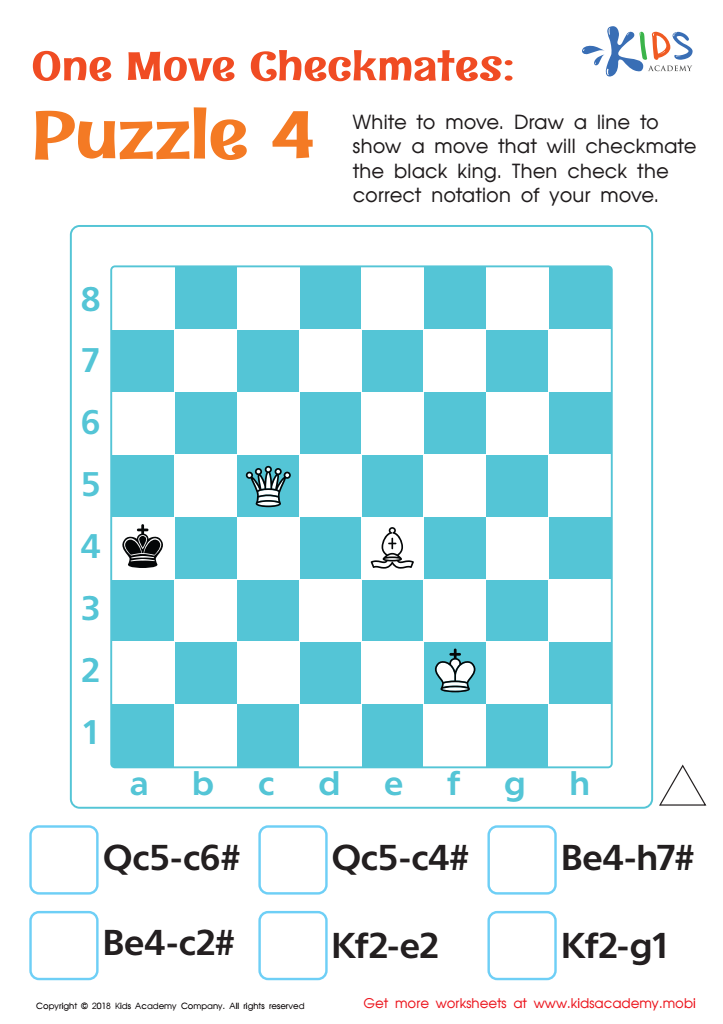
One Move Checkmates: Puzzle 4 Worksheet







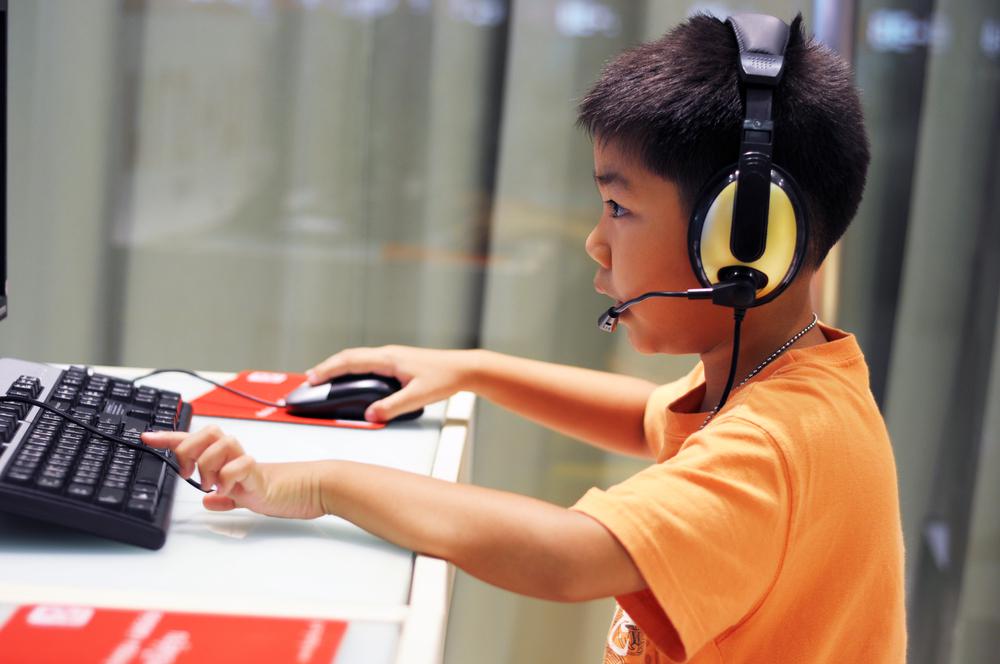
Developing problem-solving skills through chess for ages 5-7 is foundational for both cognitive development and future academic success. First, chess encourages critical thinking and decision-making. As children plan their moves, they learn to anticipate consequences, think several steps ahead, and evaluate the effectiveness of their strategies, essential skills transferable to everyday problem-solving situations.
Chess also introduces young minds to pattern recognition, which enhances their mathematical abilities. Recognizing patterns is a precursor to and a core component of math skills. By identifying and predicting opponent's moves, children develop logical reasoning and analytical thinking, crucial for coping with complex mathematical concepts and equations later in life.
Additionally, engaging with chess helps improve attention span and memory. Each game requires focus and concentration, aiding in mental endurance. These attributes are critical for maintaining attention in school and completing tasks effectively.
Emotionally, chess teaches patience, discipline, and resilience. The game requires time, and often, players need to accept loss and learn from their mistakes, critical aspects of personal development. The ability to handle setbacks positively builds a growth mindset, encouraging continual improvement in all areas of learning.
Overall, integrating chess into young children’s routines not only sharpens their problem-solving skills but also lays a resilient, well-rounded foundation for lifelong learning and personal growth.