Alphabetical order practice Worksheets for Ages 5-7
3 filtered results
-
From - To
Boost your child's early learning with our engaging Alphabetical Order Practice Worksheets designed for ages 5-7! These fun activities help young learners master letter recognition, enhance vocabulary, and sharpen organizational skills. Each worksheet presents a variety of exercises tailored to keep kids entertained while they learn. By arranging words, animals, and everyday objects in alphabetical order, children gain confidence and fluency in the alphabet. Perfect for classrooms or home practice, these worksheets are ideal for preparing little ones for reading success! Download now and watch your child’s skills soar with Kids Academy's quality educational resources.
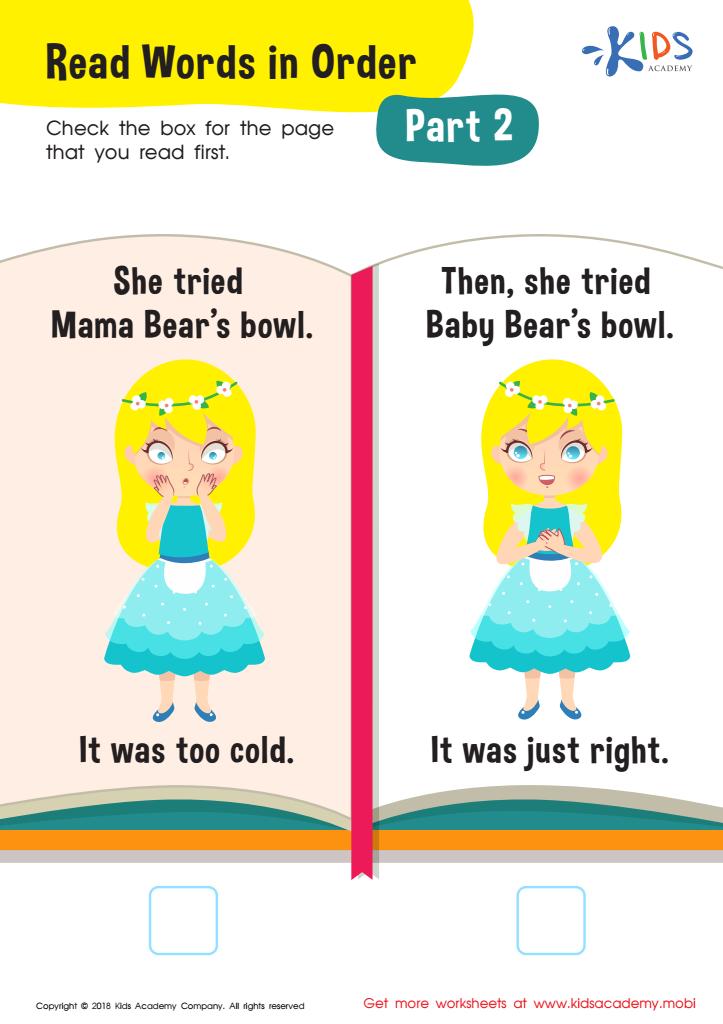
Read Words Order Part 2 Worksheet
 Assign to My Students






.jpg)

Alphabetical order practice is essential for children ages 5-7 as it lays the foundation for critical reading and organizational skills. By learning alphabetical order, young learners can better understand the structure of written language, which is crucial for efficient navigation through texts, dictionaries, and libraries. This skill aids in developing their ability to categorize and sort information, enhancing cognitive development and fostering a sense of order.
Moreover, mastering alphabetical order helps children improve their memory and recognition of letters, which supports early literacy. As they engage with alphabet games and exercises, children reinforce their knowledge of letter names, shapes, and sounds—building blocks for phonics and effective reading strategies.
For teachers and parents, emphasizing the importance of alphabetical order practice encourages structured learning and discipline. It prepares children for more complex tasks like research and querying data, making subsequent learning experiences smoother and less frustrating. Additionally, engaging in alphabet practice can be fun and stimulating. Through colorful activities, songs, and interactive games, young children can associate learning with enjoyment, fostering a lifelong love for education. Overall, incorporating alphabetical order practice in early education is an investment in a child's academic success and overall cognitive development.








