Check out this FREE "Basic Addition Skills" Trial Lesson for age 5-7!

Z

Favorites
With answer key
Interactive
  • 5-7
  • Basic Addition Skills
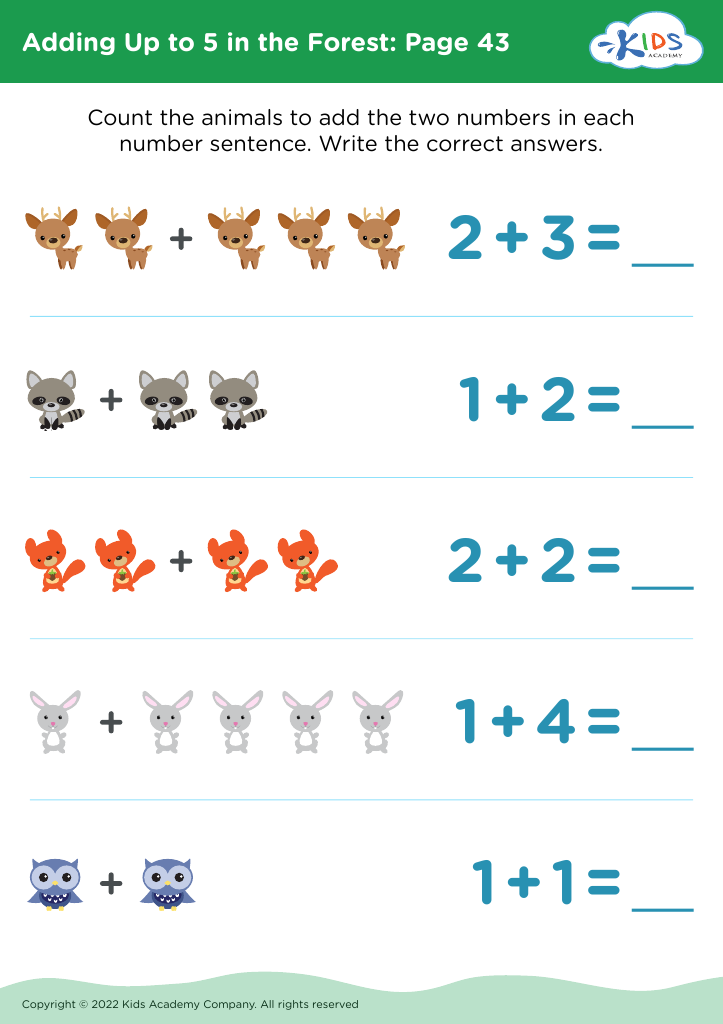
Adding Up to 5 in the Forest: Page 43
Worksheet
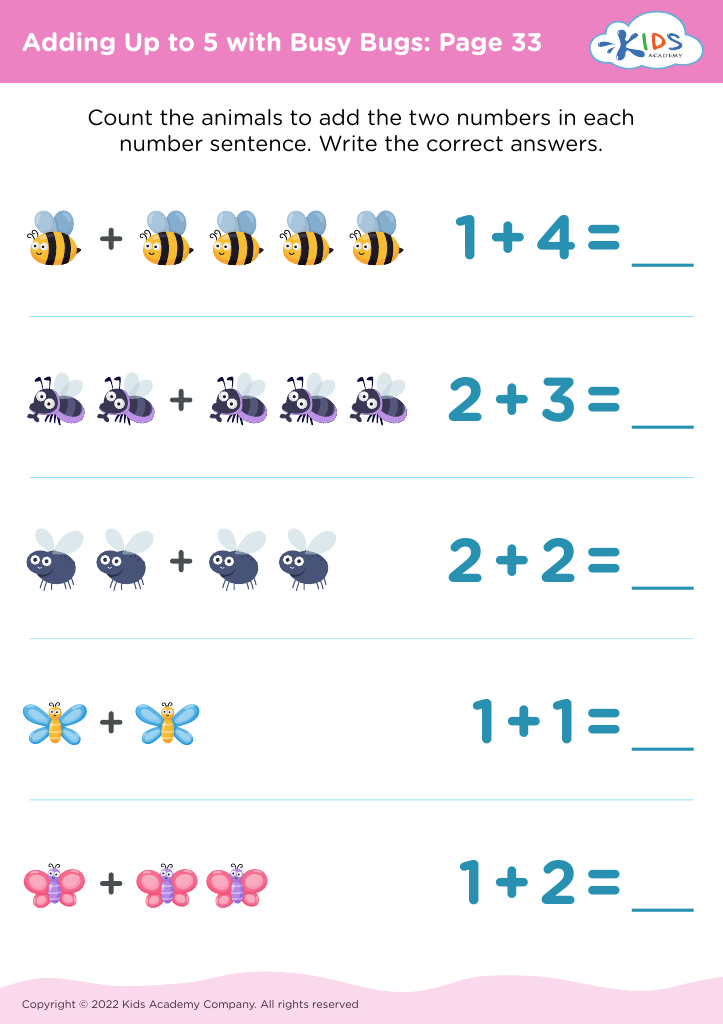
Adding Up to 5 with Busy Bugs: Page 33
Worksheet
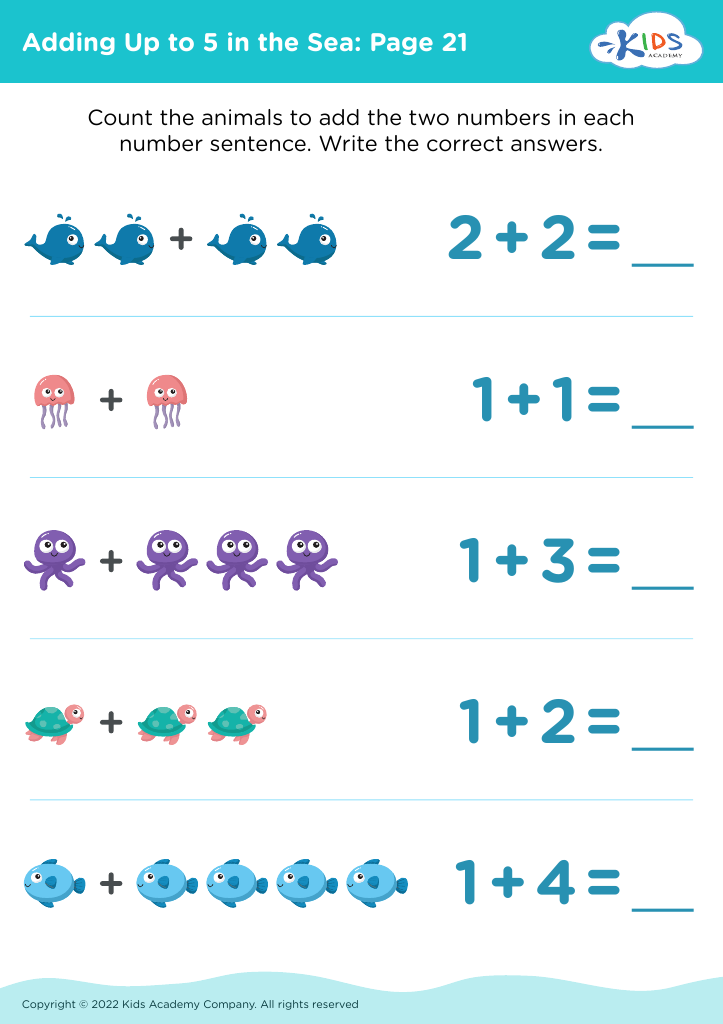
Adding Up to 5 in the Sea: Page 21
Worksheet
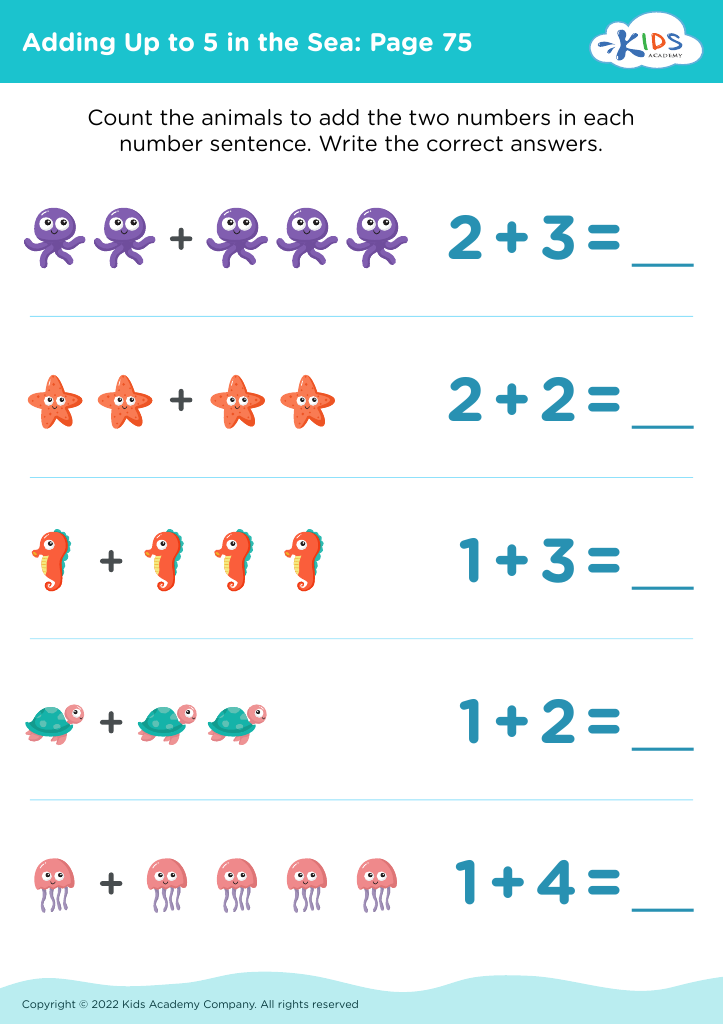
Adding Up to 5 in the Sea: Page 75
Worksheet
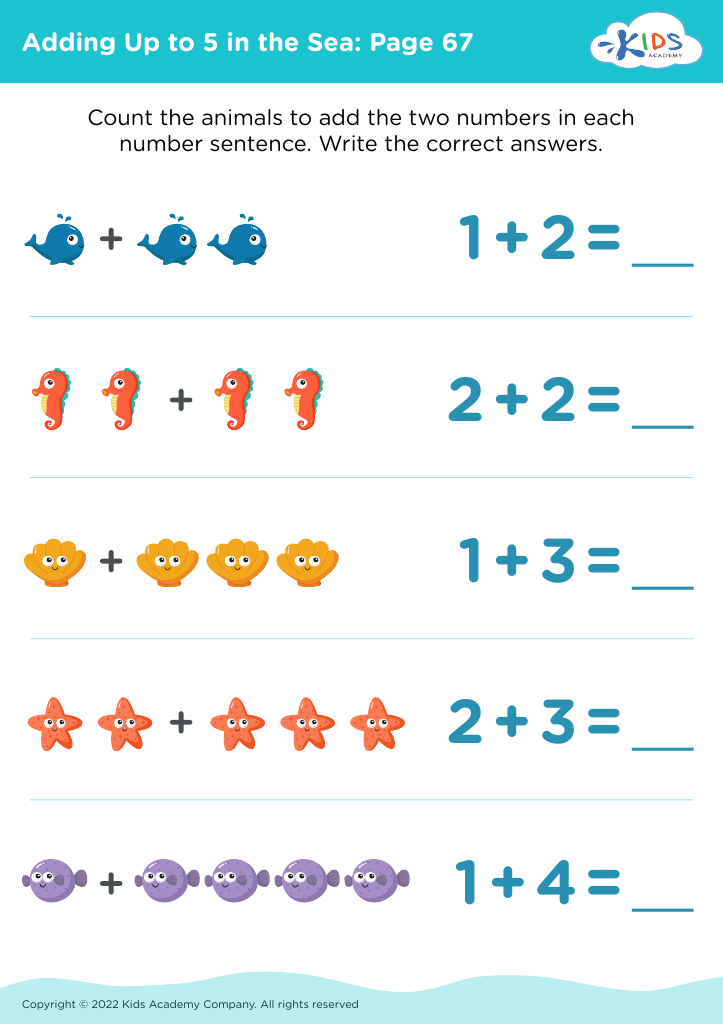
Adding Up to 5 in the Sea: Page 67
Worksheet
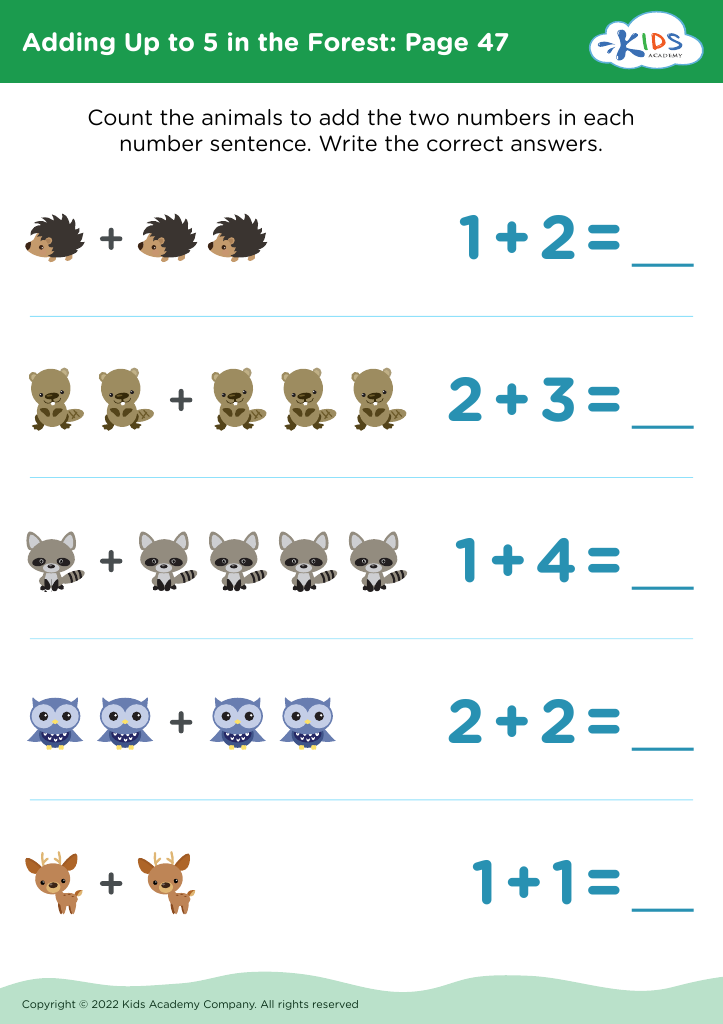
Adding Up to 5 in the Forest: Page 47
Worksheet
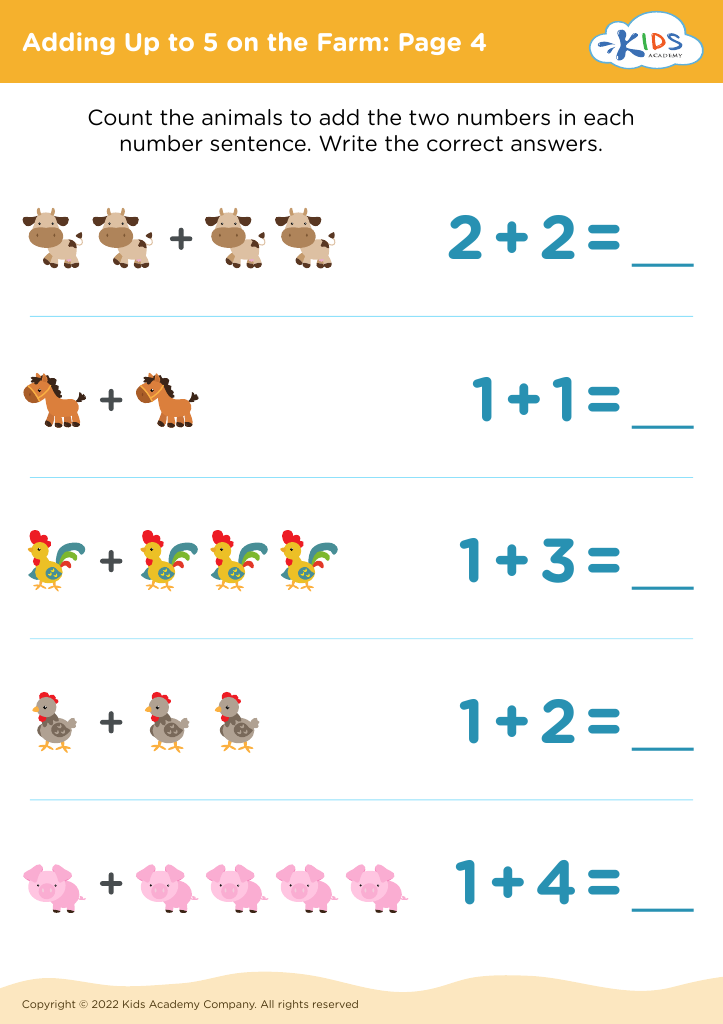
Adding Up to 5 on the Farm: Page 4
Worksheet
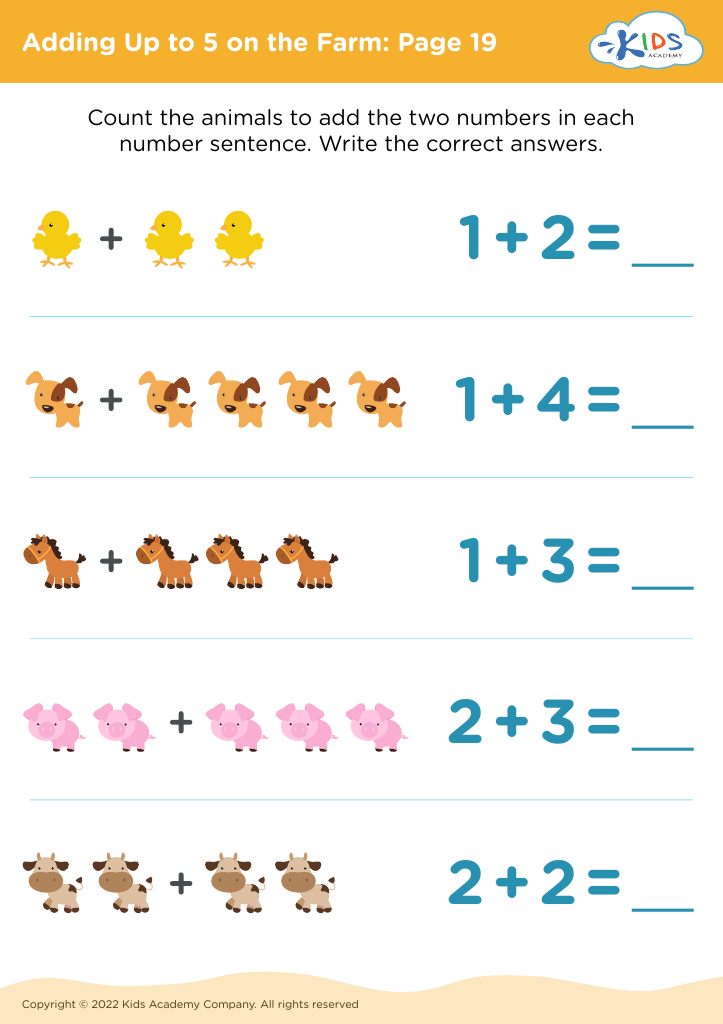
Adding Up to 5 on the Farm: Page 19
Worksheet
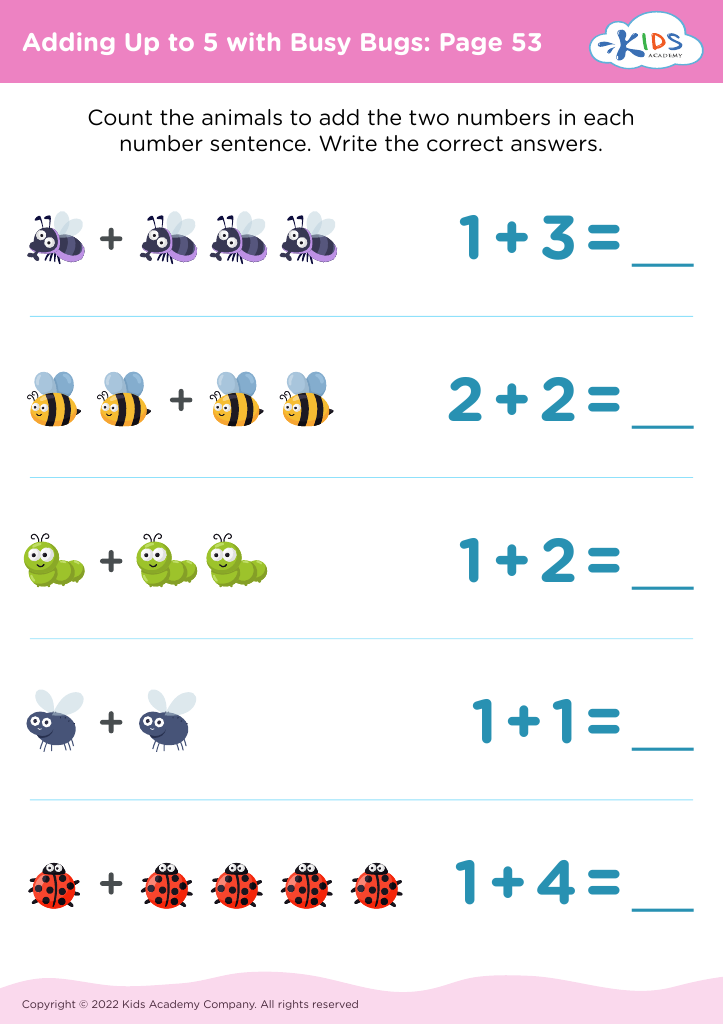
Adding Up to 5 with Busy Bugs: Page 53
Worksheet
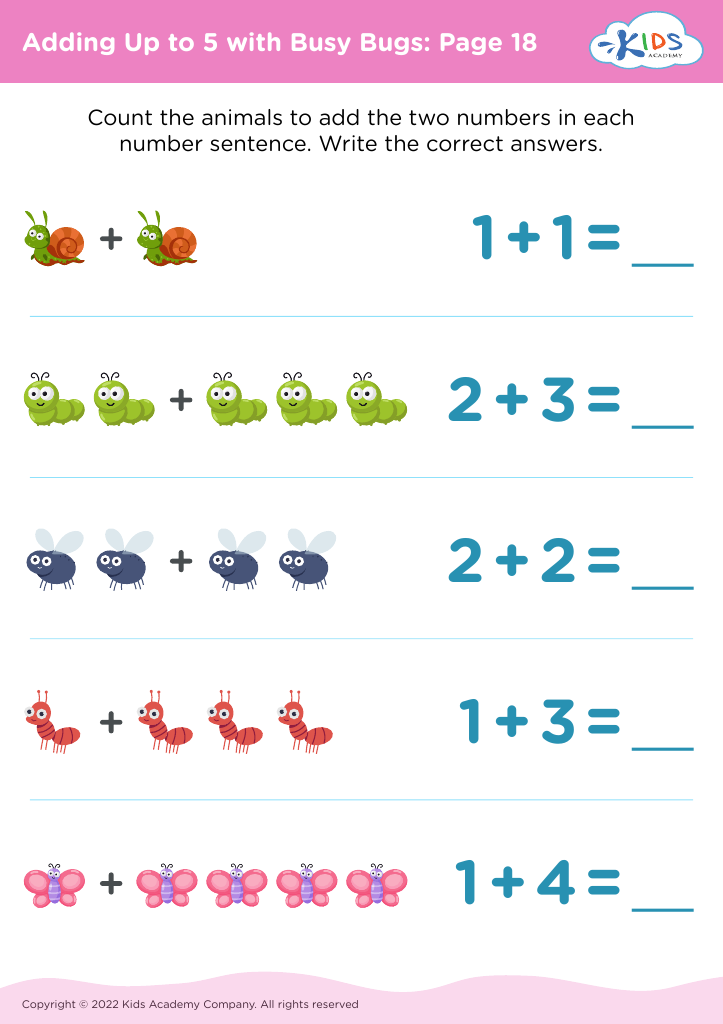
Adding Up to 5 with Busy Bugs: Page 18
Worksheet
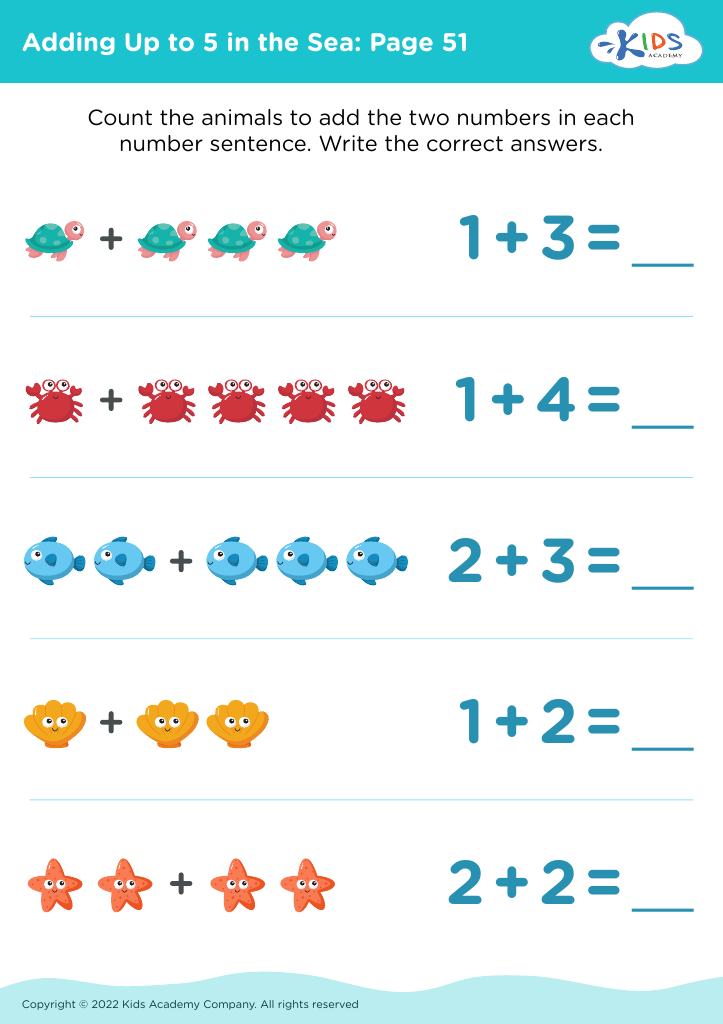
Adding Up to 5 in the Sea: Page 51
Worksheet
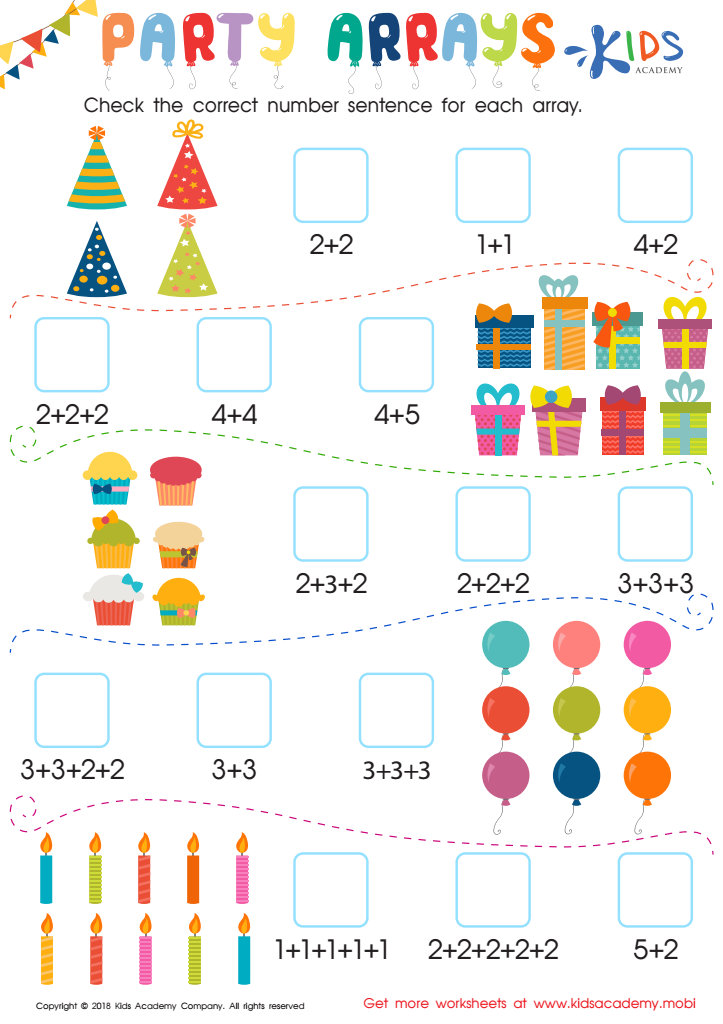
Party Arrays Worksheet

Party Arrays Worksheet

Help your child count the objects in each of the five arrays, then check the correct number sentence for each. This exercise will test their math skills and understanding of number sentences. Guide them to select the appropriate boxes.
Party Arrays Worksheet
Worksheet
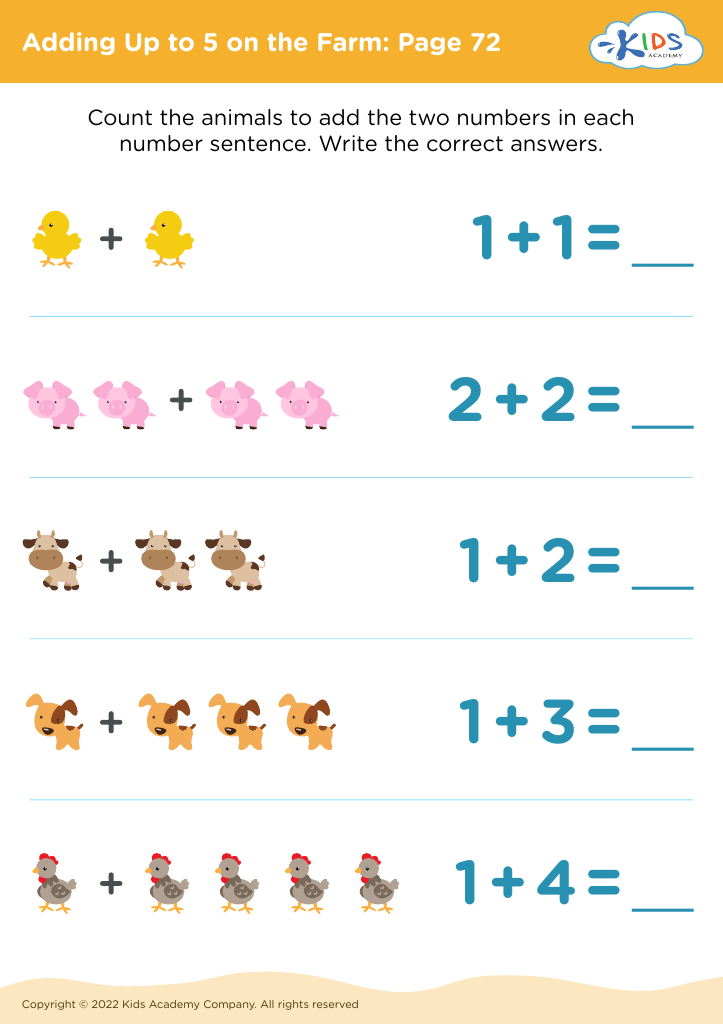
Adding Up to 5 on the Farm: Page 72
Worksheet
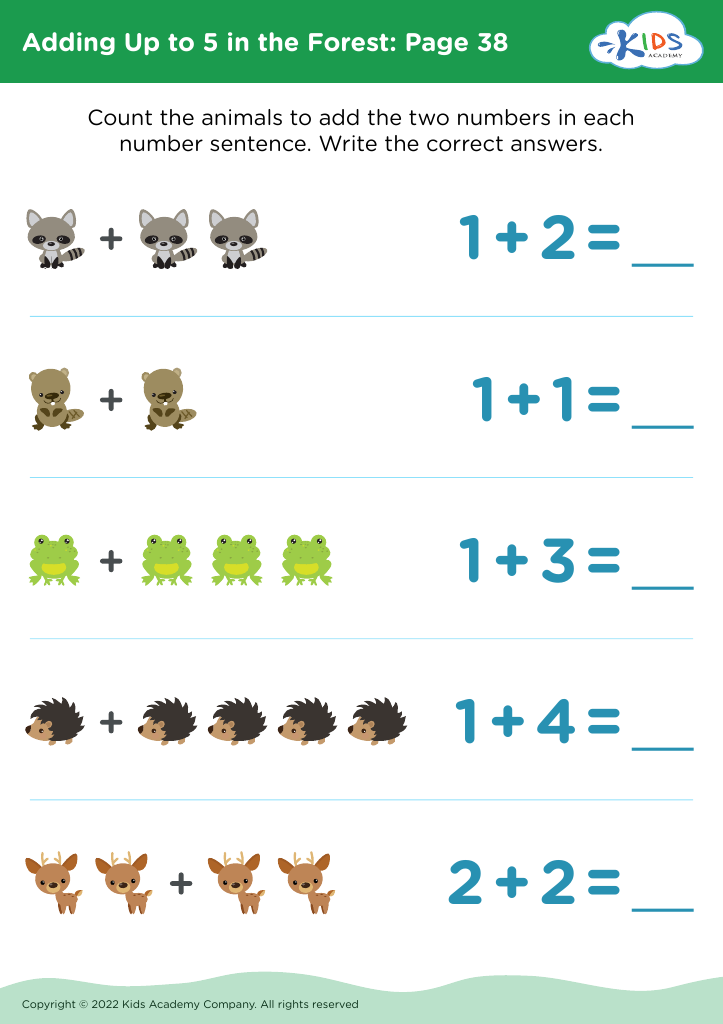
Adding Up to 5 in the Forest: Page 38
Worksheet
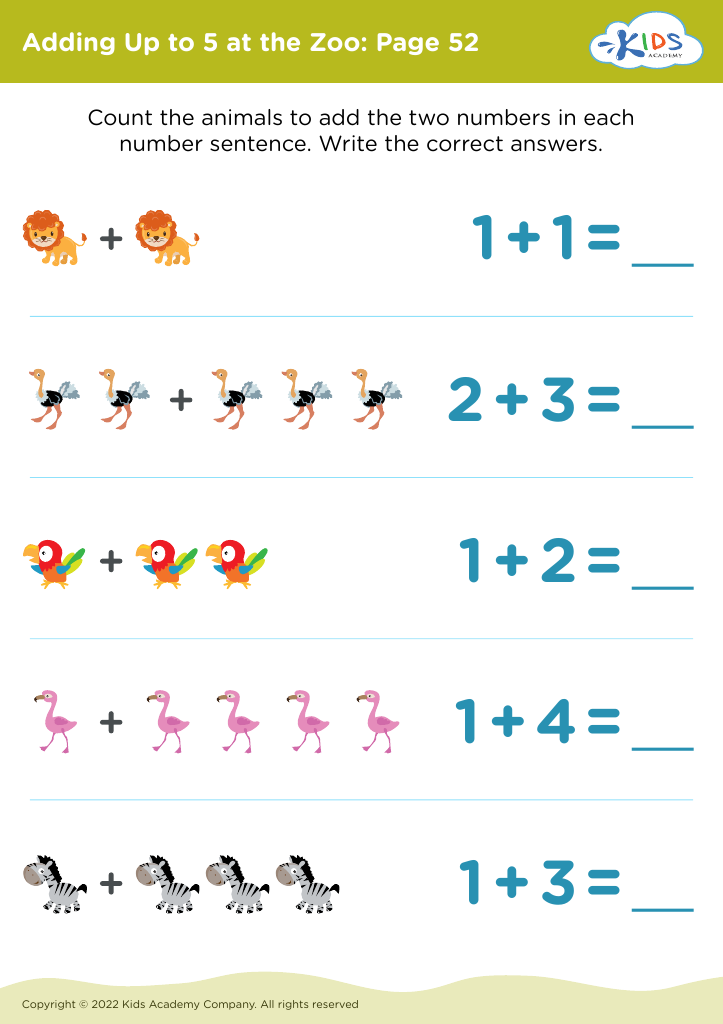
Adding Up to 5 at the Zoo: Page 52
Worksheet
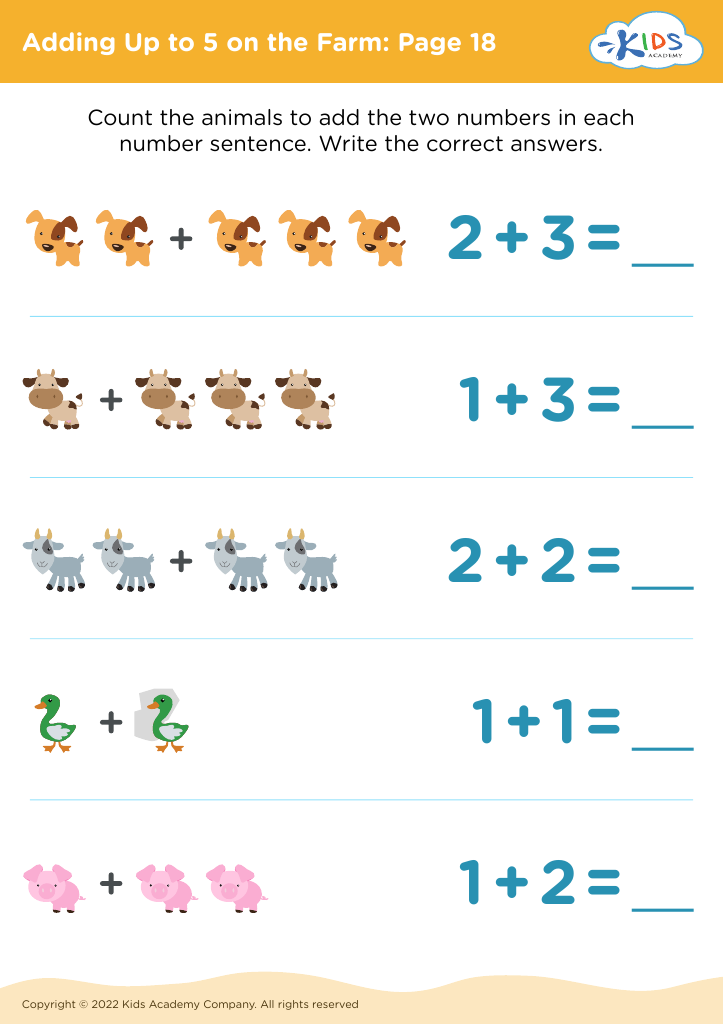
Adding Up to 5 on the Farm: Page 18
Worksheet
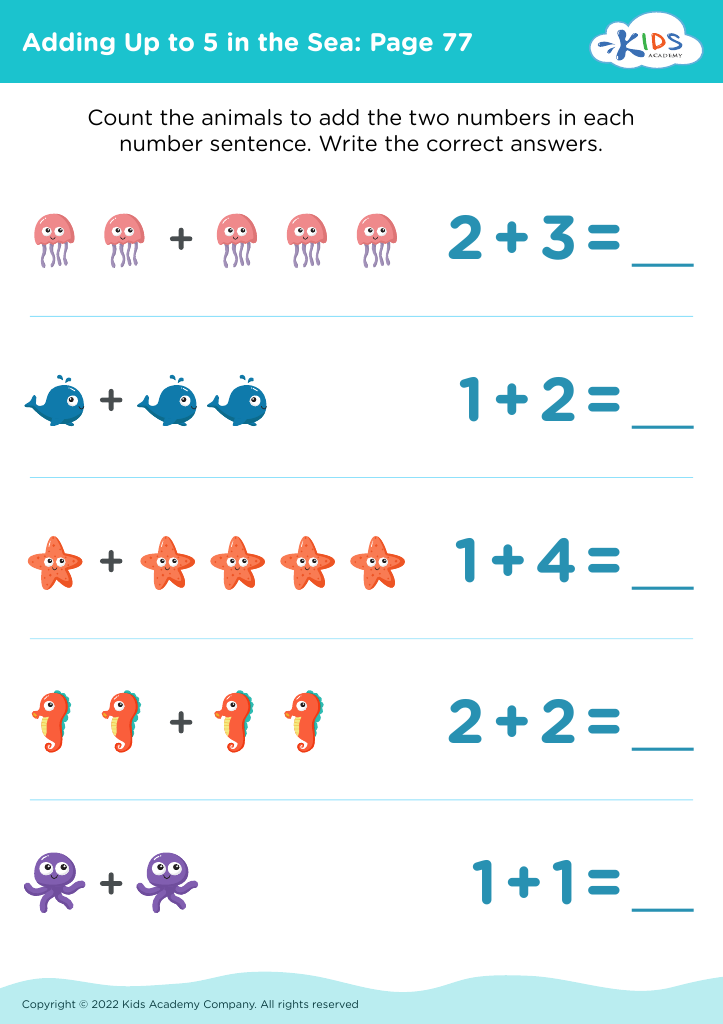
Adding Up to 5 in the Sea: Page 77
Worksheet
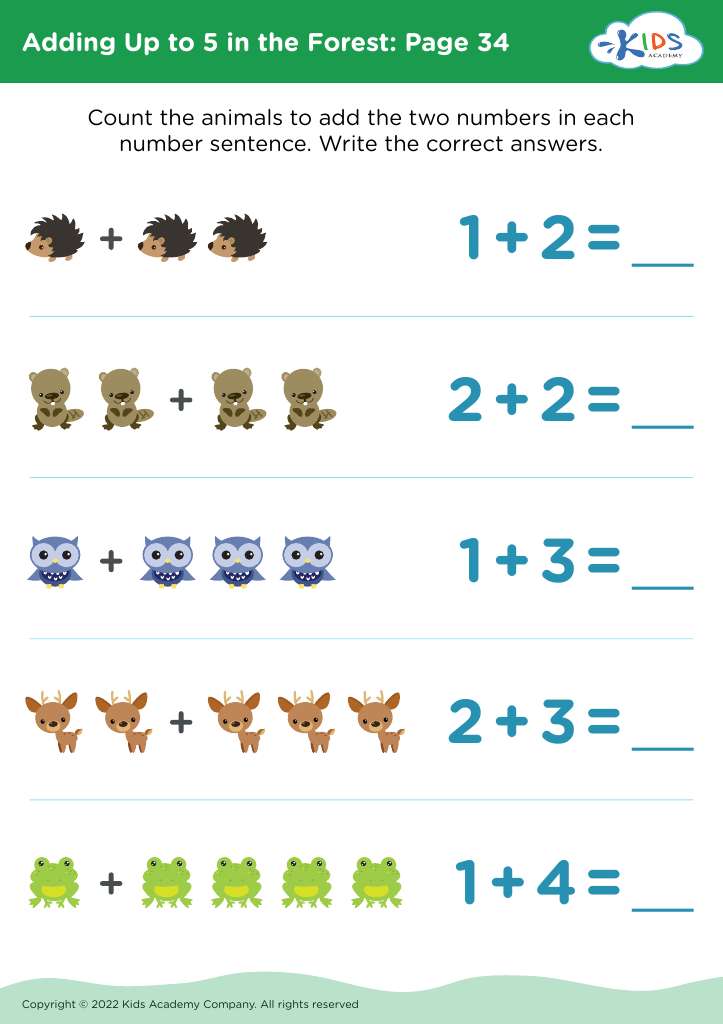
Adding Up to 5 in the Forest: Page 34
Worksheet
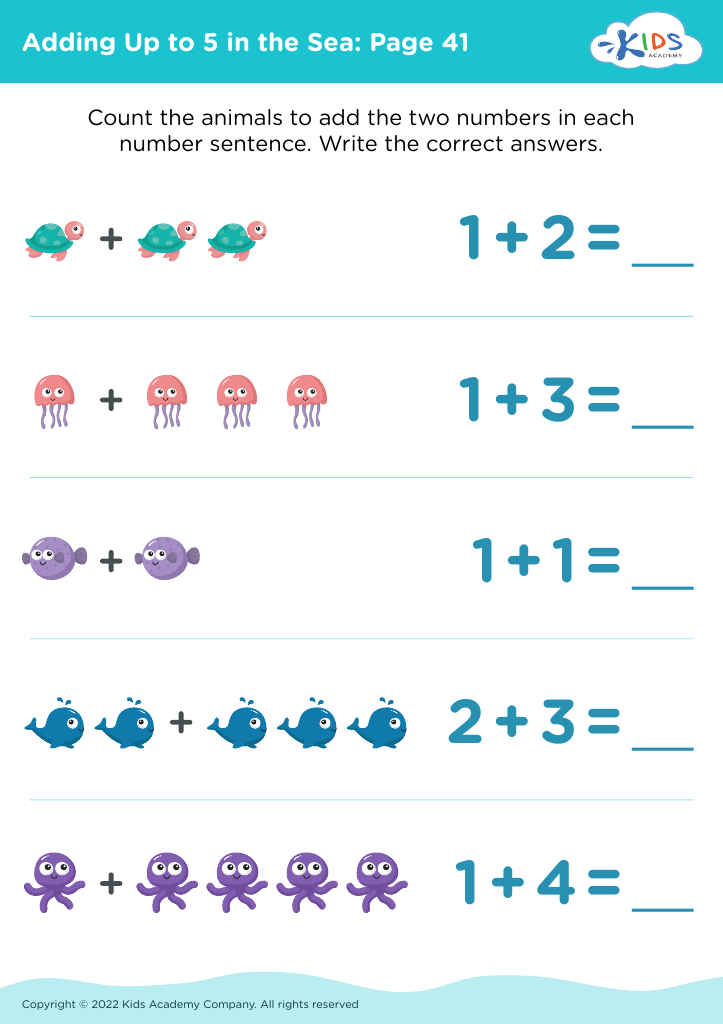
Adding Up to 5 in the Sea: Page 41
Worksheet
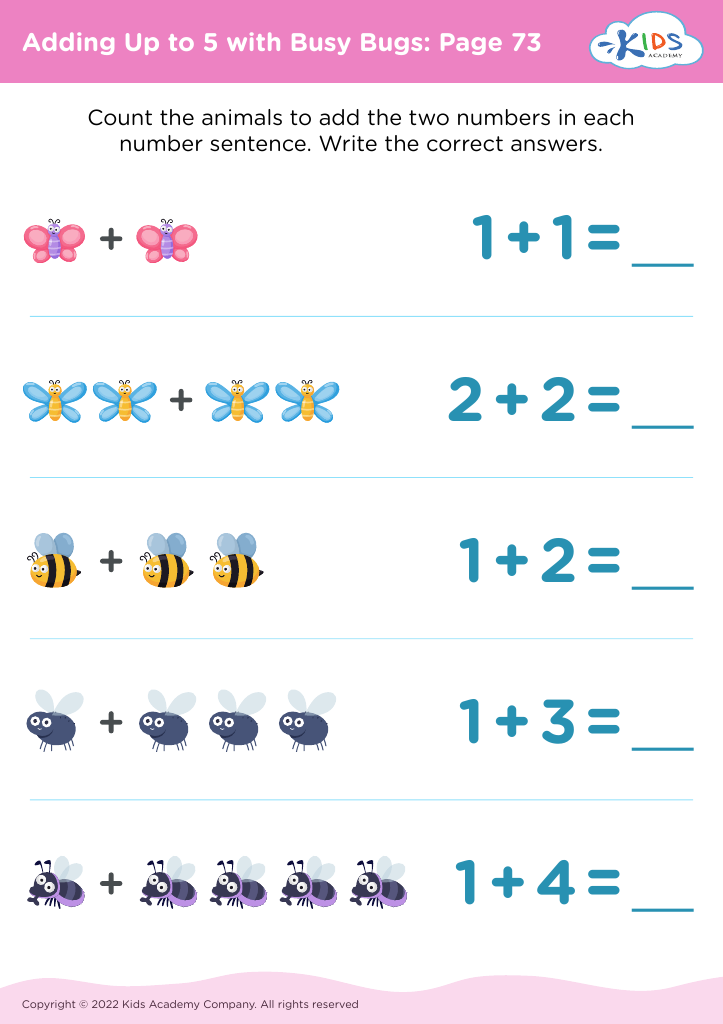
Adding Up to 5 with Busy Bugs: Page 73
Worksheet
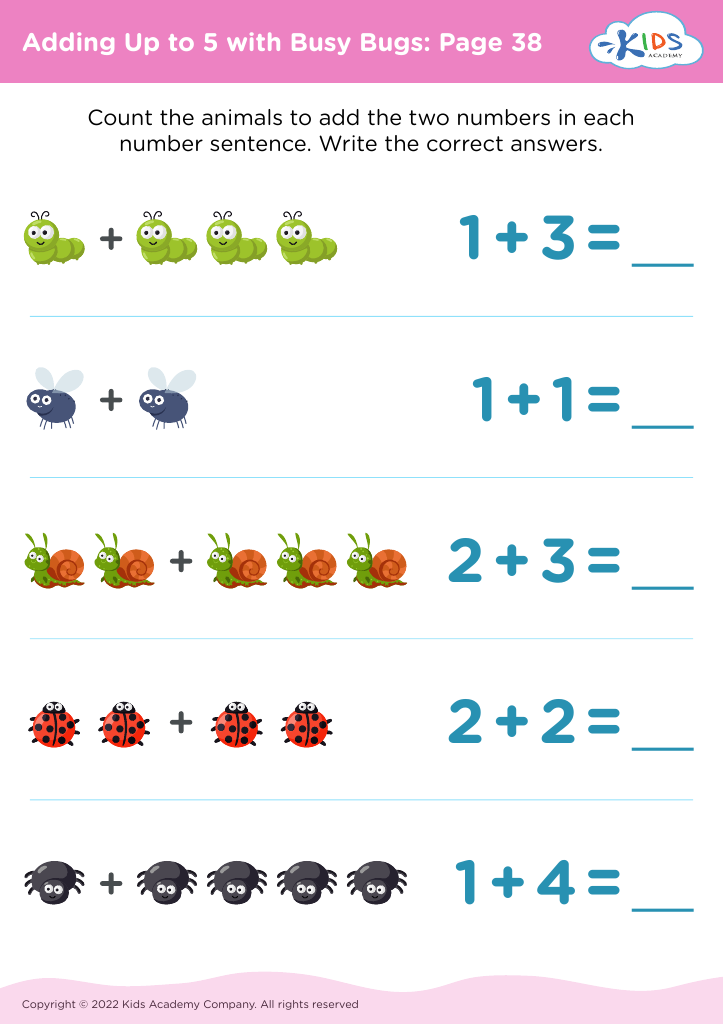
Adding Up to 5 with Busy Bugs: Page 38
Worksheet
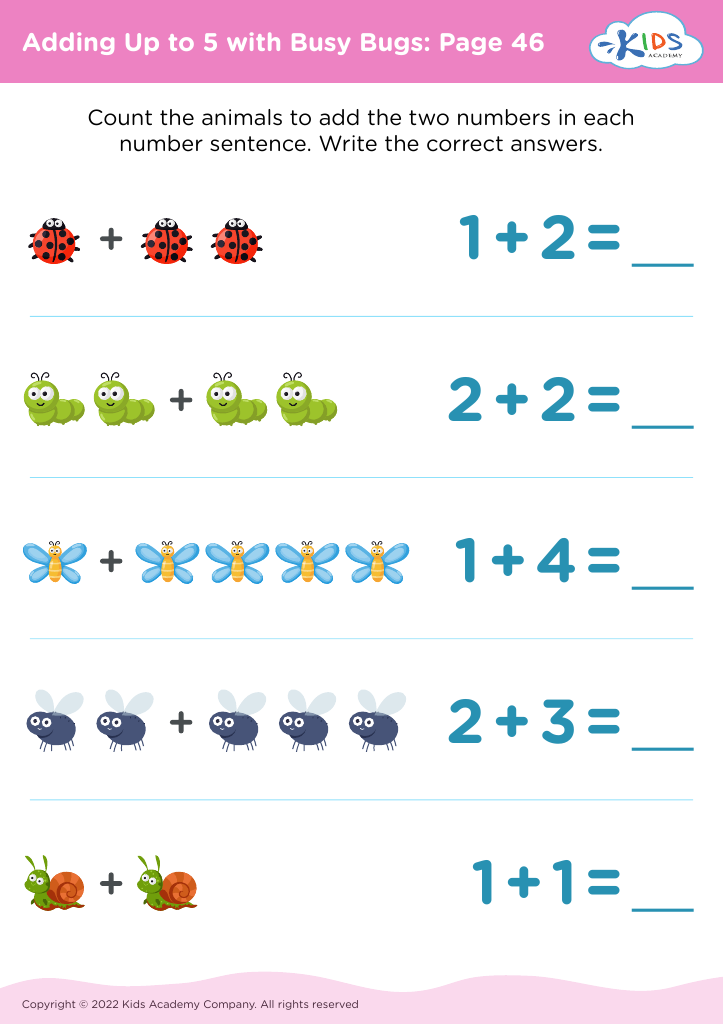
Adding Up to 5 with Busy Bugs: Page 46
Worksheet
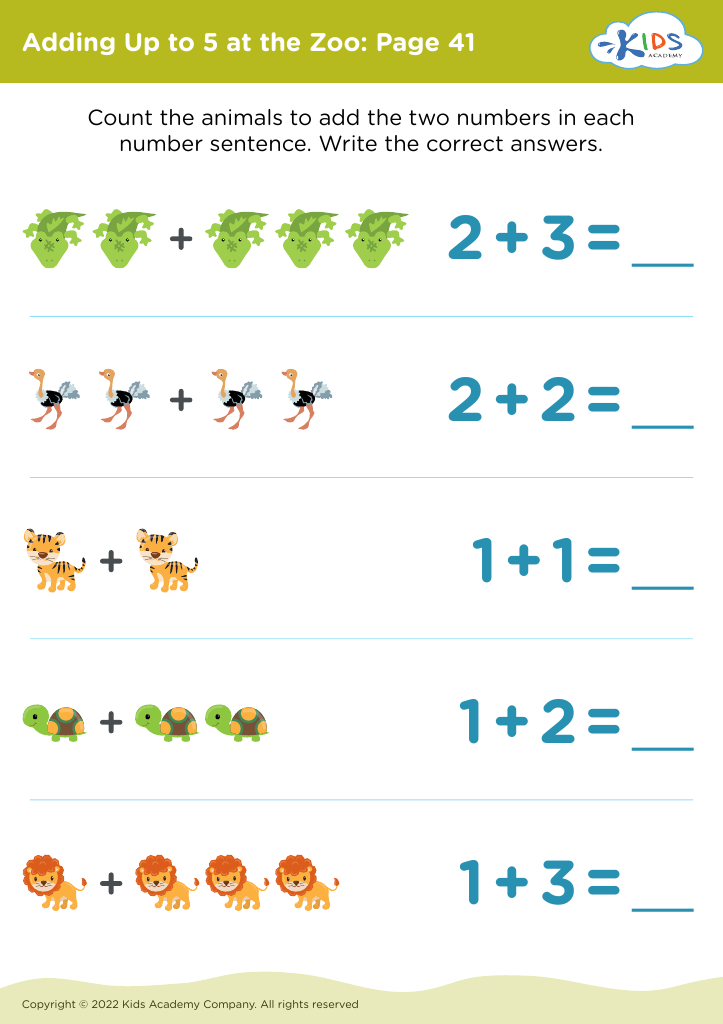
Adding Up to 5 at the Zoo: Page 41
Worksheet
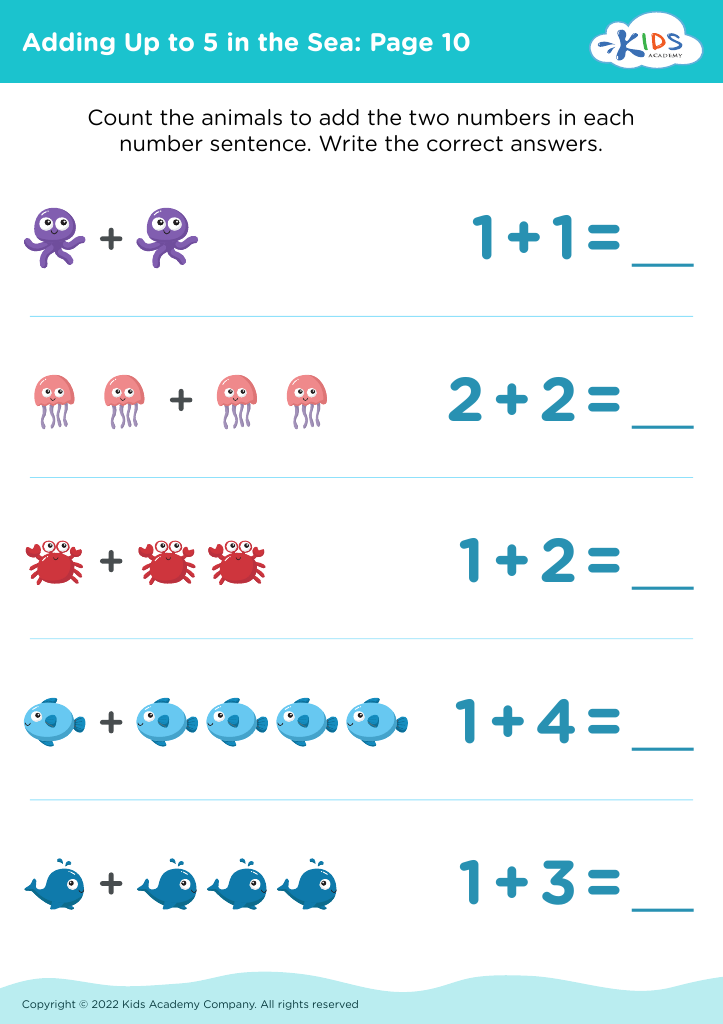
Adding Up to 5 in the Sea: Page 10
Worksheet


Basic addition skills are foundational for a child's mathematical development and overall cognitive growth from ages 5 to 7. During this critical stage, children are developing their problem-solving abilities and reasoning skills while forming essential numerical understanding. Mastering simple addition enhances their confidence and prepares them for more complex mathematical concepts, such as subtraction, multiplication, and division.

Moreover, basic addition skills are linked to everyday life experiences, allowing children to apply what they learn in practical scenarios like grocery shopping or handling money. By understanding addition, students also build a strong base for subjects like science and finances in the future.

Additionally, proficient addition skills can significantly impact a child's academic enthusiasm and motivation. When children feel competent in their abilities, they are more likely to engage actively in learning environments and pursue challenges with a positive attitude.

Parents and teachers play a crucial role in fostering these skills through interactive games, educational activities, and consistent practice, creating a supportive learning atmosphere. Ultimately, by prioritizing basic addition skills, adults can help cultivate a lifelong love for learning in children, equipping them with essential tools for success in school and beyond.