Comparing weights Worksheets for Ages 5-7
3 filtered results
-
From - To
Discover our engaging "Comparing Weights Worksheets" designed specifically for young learners aged 5-7! These worksheets provide a fun, interactive way for children to explore the concept of weight and understand how to compare different objects. Through colorful illustrations and age-appropriate tasks, children will develop essential math skills while enhancing their critical thinking abilities. Each worksheet encourages hands-on learning, helping kids to visually assess and compare weights using real-life examples. Ideal for classrooms or home learning, our resources make mastering weight comparison enjoyable and effective. Start your child's journey to confident arithmetic today with our carefully curated worksheets!
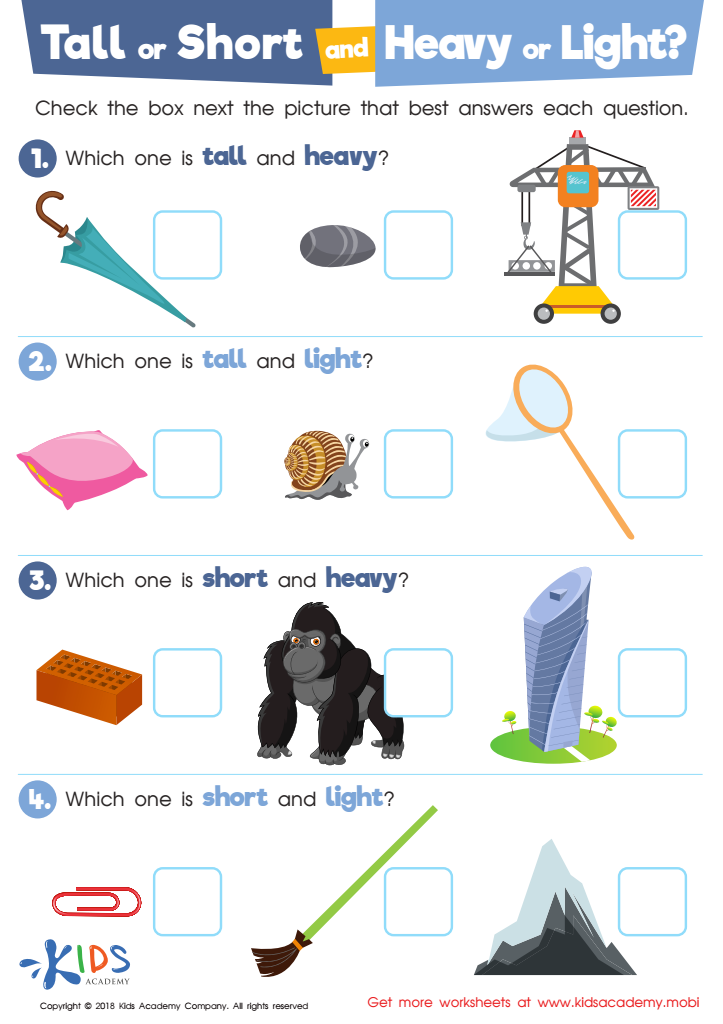
Tall or Short and Heavy or Light? Worksheet
 Assign to My Students
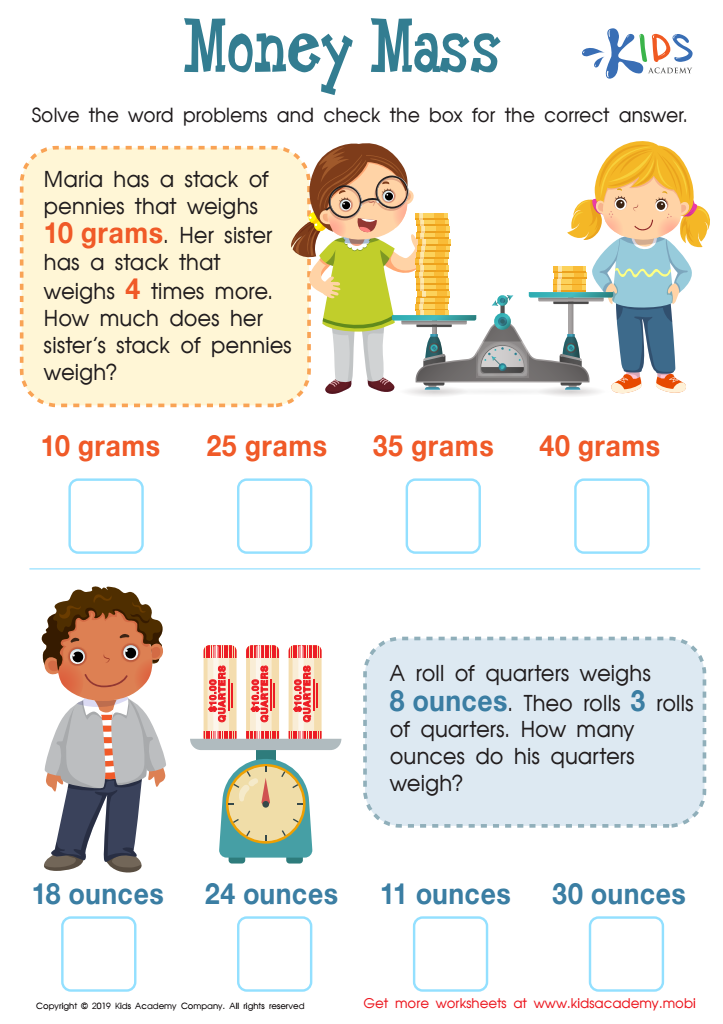
Money Mass Worksheet





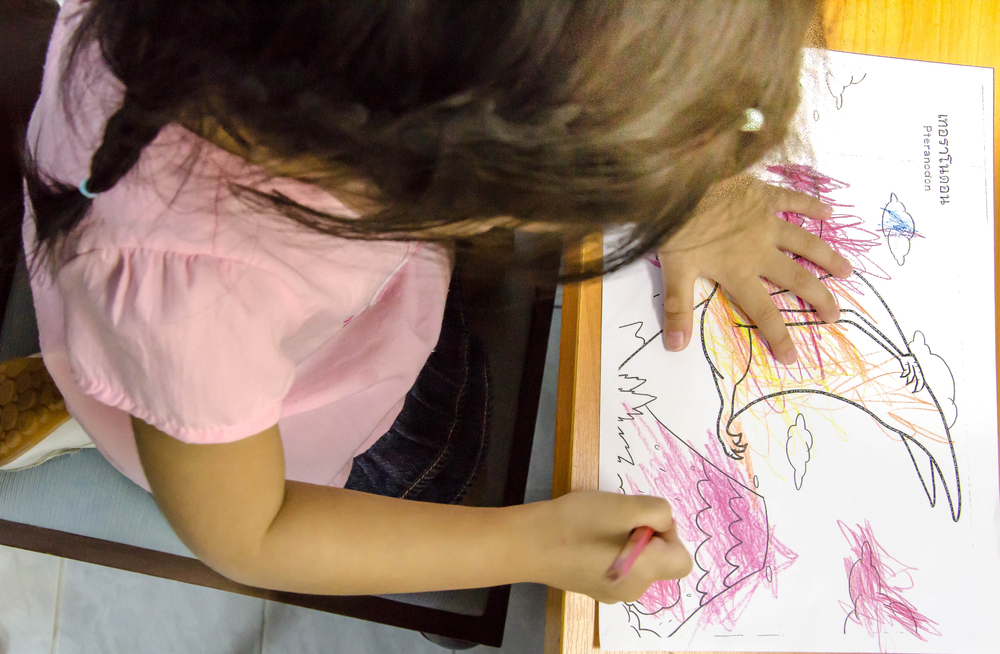

Comparing weights is an essential skill for children ages 5-7, as it lays the foundation for critical thinking and mathematical understanding. At this stage, children are naturally curious about the world around them, and engaging in activities that involve comparing weights fosters inquiry and exploration.
Teaching children to compare weights helps them develop number sense, which is crucial for early math proficiency. It introduces concepts such as heavier, lighter, and similar weights, allowing children to form a basic understanding of measurement. These skills often extend to real-life situations, such as understanding packages or ingredients during cooking, encouraging practical application of math in daily life.
Furthermore, engaging in weight comparison activities nurtures a child's ability to articulate observations and reasoning. This enhances communication skills and boosts confidence when discussing mathematical concepts. When parents and teachers take an active interest in these comparisons, they reinforce the importance of math in everyday life, making learning relevant and enjoyable.
Creating a supportive environment where weight comparison is viewed as an exciting exploration encourages a growth mindset, motivating children to embrace challenges in their future mathematical learning endeavors. Ultimately, these early development experiences pave the way for more advanced mathematical concepts and problem-solving skills in later years.








