Fraction identification Worksheets for Ages 5-7
8 filtered results
-
From - To
Our Fraction Identification Worksheets are perfect for kids aged 5-7, providing engaging and educational activities to understand fractions. These printable worksheets use fun graphics and simple instructions to help young learners recognize and identify fractions such as halves, thirds, and quarters. Carefully designed to match their developmental level, these exercises build a strong mathematical foundation while keeping students motivated and excited to learn. Ideal for both classroom and home use, our worksheets make mastering fractions an enjoyable experience for early grade students. Explore our collection and empower your child with essential fraction skills today!
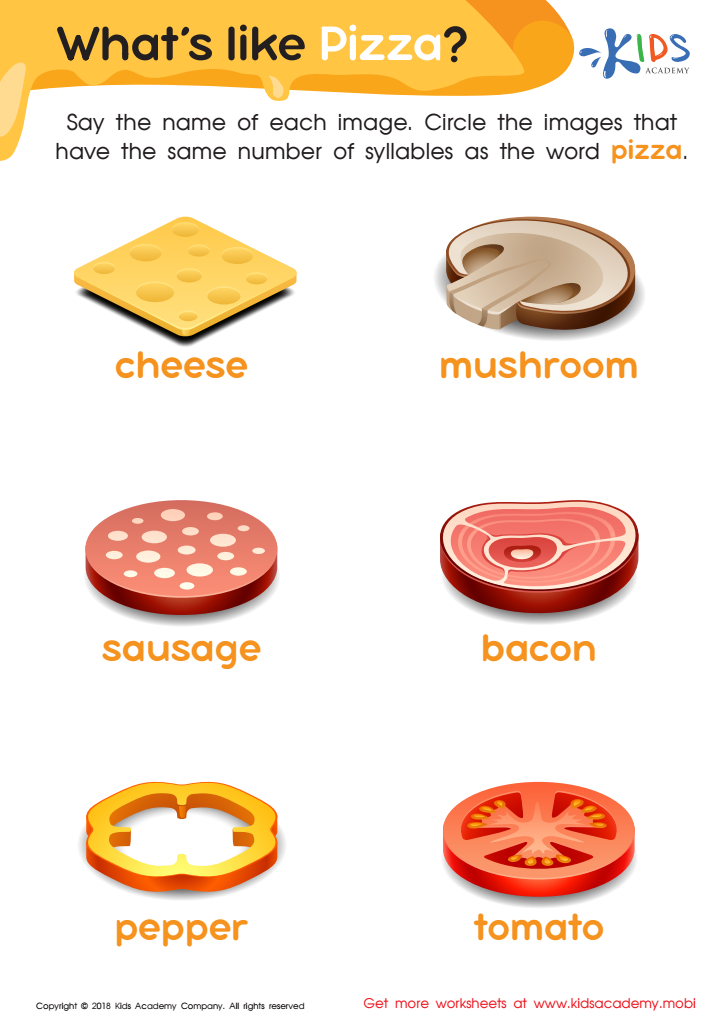
What's Like Pizza? Worksheet
 Assign to My Students
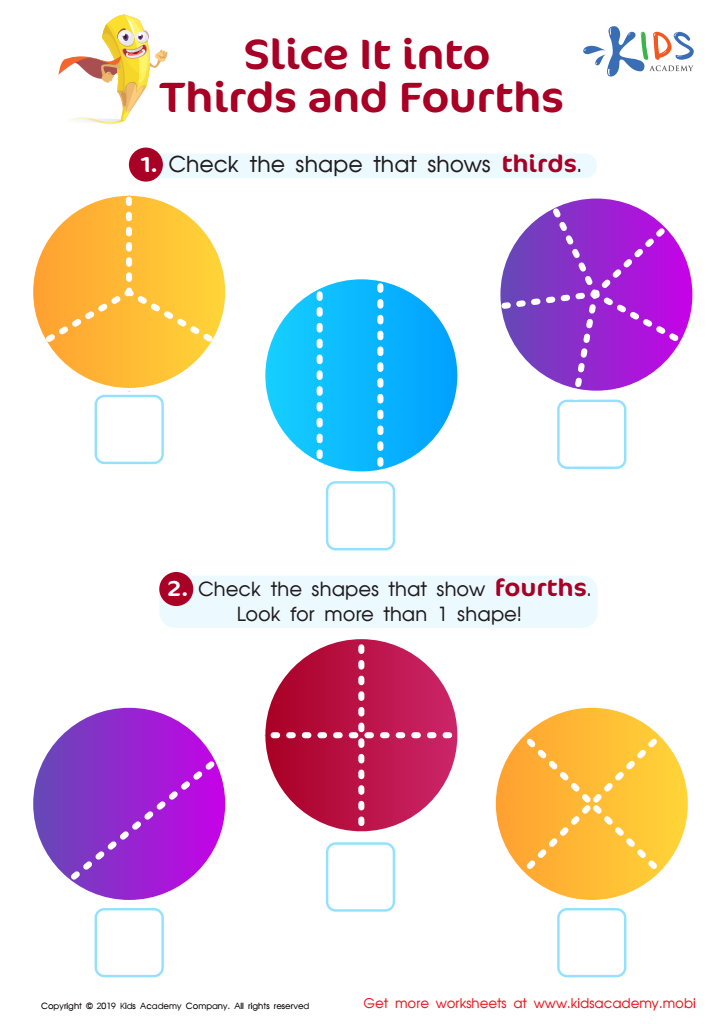
Slice in Thirds Fourths Worksheet
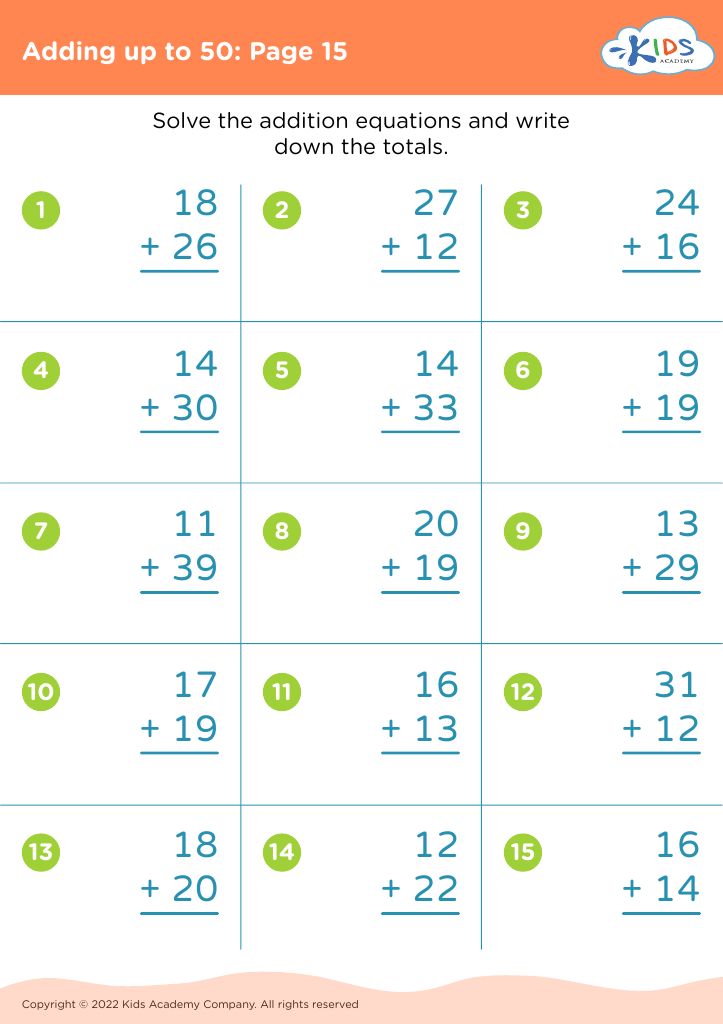
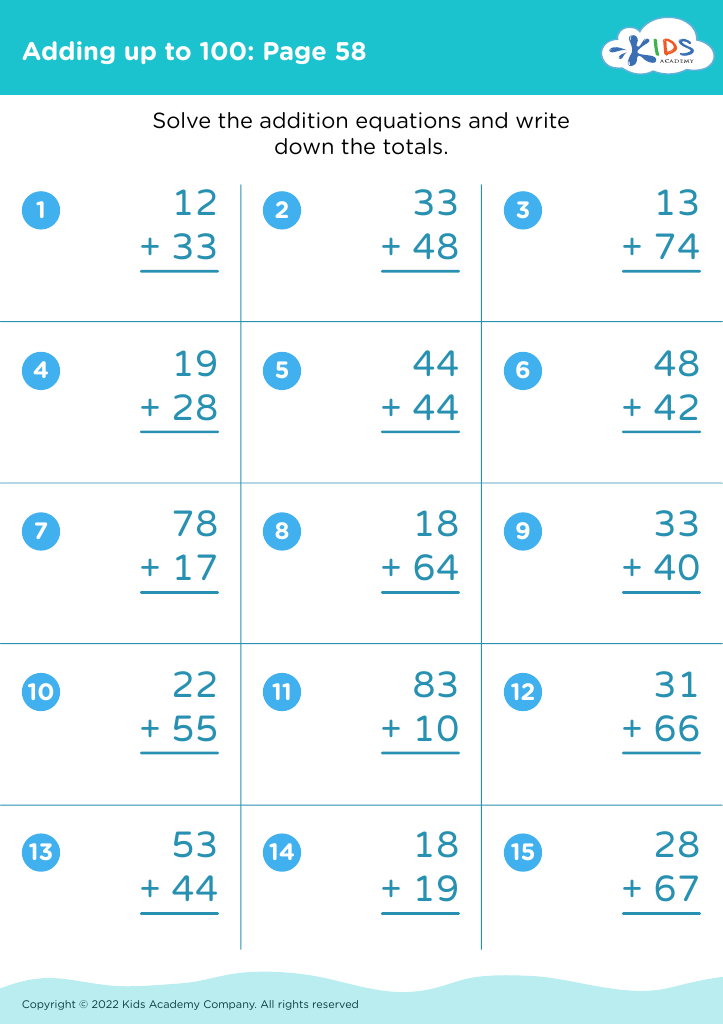






Understanding fractions at an early age, particularly between the ages of 5 and 7, is a critical foundational skill for young learners. During these formative years, children are developing essential cognitive abilities, and grasping the concept of fractions sets the stage for more advanced mathematical thinking. Early exposure to fractions helps young students comprehend the idea of parts of a whole, which is fundamental not only in math but also in real-life situations such as telling time, measuring ingredients in recipes, and understanding portions in general.
Furthermore, a strong grasp of fractions aids in mental math skills and flexibility with numbers. It enhances a child’s ability to perform operations with whole numbers, improve problem-solving techniques, and promotes logical reasoning. When parents and teachers emphasize fraction identification, they pave the way for academic confidence in mathematics. Early positive experiences with math concepts can lead to increased interest and reduced anxiety around the subject as children progress through school.
From a developmental perspective, learning fractions also strengthens fine motor skills and spatial awareness through activities like cutting shapes into parts or visualizing slices of a pie. Investing time in fraction recognition early on makes the overall math journey less daunting and more enjoyable, creating a solid groundwork for future success in math and science.








