
Improve handwriting skills Worksheets for Ages 5-7
3 filtered results
Difficulty Level
Grade
Age
-
From - To
Subject
Activity
Standards
Enhance your child's handwriting with our engaging "Improve Handwriting Skills Worksheets" designed specifically for ages 5-7. Our thoughtfully crafted worksheets focus on developing fine motor skills, letter recognition, and proper writing techniques. Each worksheet incorporates fun and interactive activities that keep young learners motivated and eager to practice. From tracing letters to writing simple words, our resources cater to different learning styles and encourage creativity. Ideal for both classroom and home use, these worksheets help foster confidence and competence in handwriting. Empower your child’s learning journey and watch their writing flourish with our specialized handwriting practice tools!
Favorites
With answer key
Interactive
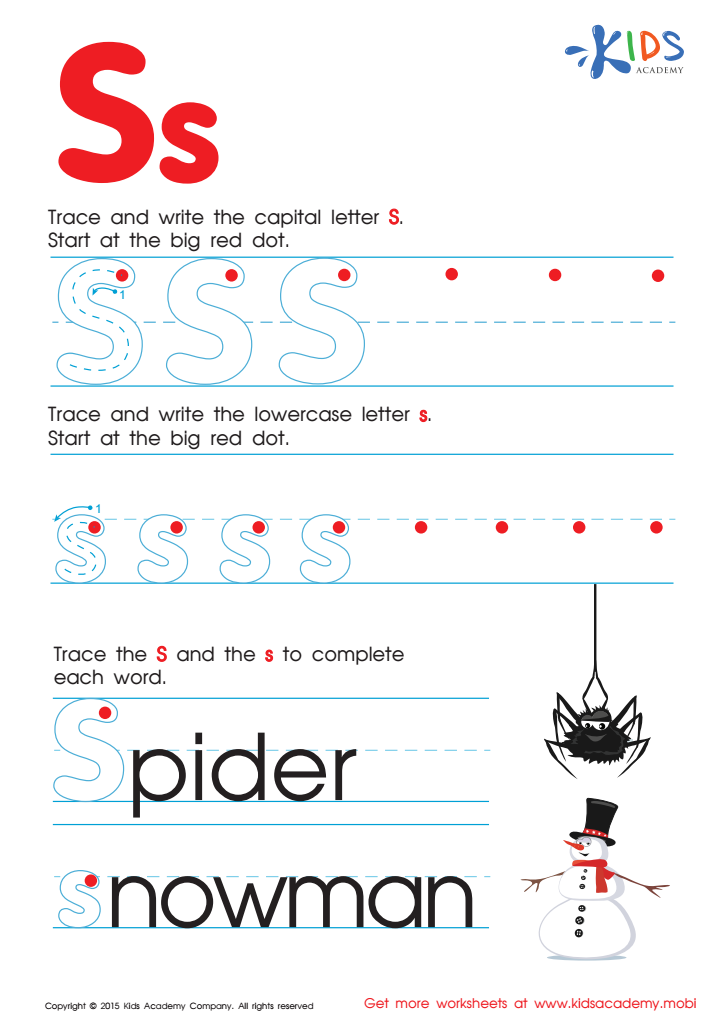
Letter S Tracing Page
Trace and write the capital and lowercase "S" on this ABC worksheet for kindergarten. Start with the big red dot and be careful. When you finish, help the spider and snowman in the pictures restore their words with the capital and lowercase letters. Continue learning the alphabet with Kids Academy.
 Assign to My Students
Letter S Tracing Page
Worksheet
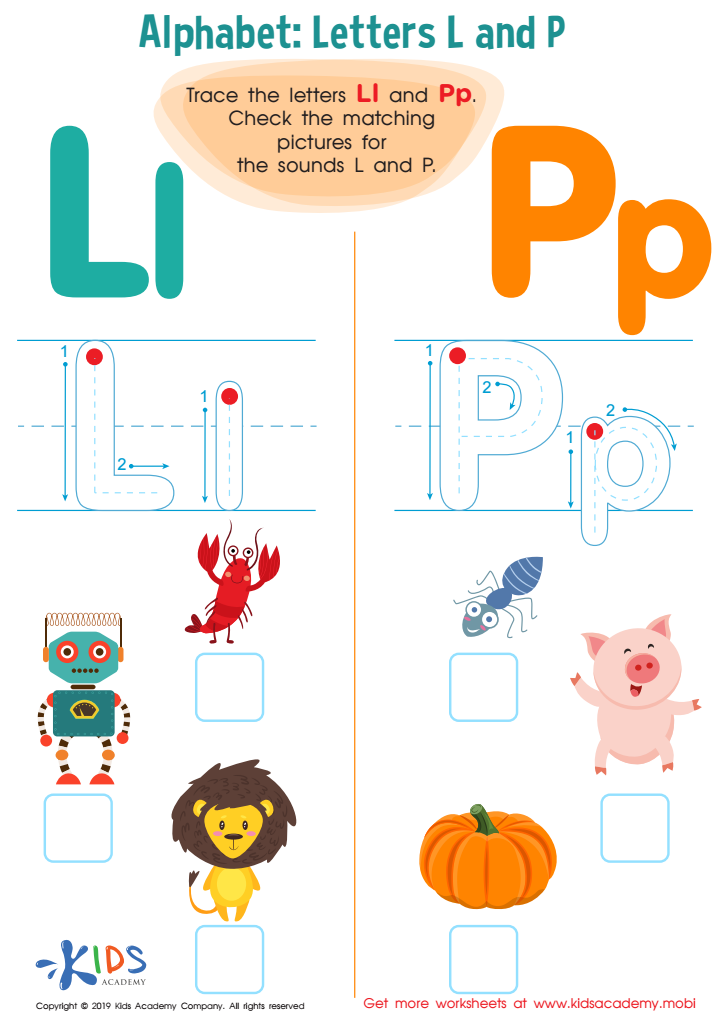
Letter L and P Tracing Worksheet
This traceable worksheet can motivate your students to learn and practice core skills. They'll trace the letters 'L' and 'P' and identify the pictures next to them. With this exercise, they'll unlock their learning abilities and excel in the subject!
Letter L and P Tracing Worksheet
Worksheet
Join Kids Academy for Free
Who is primarily going to use this learning content?




.jpg)


Improving handwriting skills in children ages 5-7 is crucial for numerous reasons. First and foremost, this developmental stage is foundational for a child’s fine motor skills, which play a significant role in their overall academic performance. Mastery of handwriting promotes confidence; when children can clearly express their thoughts on paper, they are more likely to engage actively in learning activities.
Handwriting is not just about forming letters; it’s also linked to cognitive processes. Research shows that practicing handwriting enhances memory retention and understanding, particularly in subjects like spelling and reading. Moreover, good handwriting continues to reap benefits beyond primary education, affecting students' performance in higher grades and standardized tests.
Socially, clear handwriting aids in peer interactions, allowing children to share notes or projects without frustration. Lastly, cultivating early good handwriting habits fosters a sense of discipline and pride in their work, promoting a positive attitude towards education.
Engaging parents and teachers in this process is essential, as they can provide encouragement, structured practice, and create motivating environments. By prioritizing handwriting during these formative years, we set the foundation for lifelong academic success and effective communication.








